

Walk into any camera store with $1,500 to spend, and you'll likely walk out with a $1,200 camera body and a $200 kit lens. It's the default package that manufacturers bundle together, and it seems logical enough. After all, the camera is the brain of the operation, right? The body has all those megapixels, the fancy autofocus system, the brand name emblazoned on the front. The lens is just glass.
This thinking is backwards, and it's costing new photographers thousands of dollars and years of frustration.
Your first lens choice will impact your photography far more than your first camera body ever will. Camera bodies become obsolete every few years, replaced by newer models with incrementally better sensors and features. Great lenses remain relevant for decades. So, reverse your typical budget allocation. Spend less on the camera body and more on quality glass.
The Longevity Argument: Investment vs. Depreciation
Let's talk about what happens to your gear five years after you buy it. That cutting-edge camera body you purchased for $1,800? It's worth maybe $500 on the used market if you're lucky. The sensor technology has been surpassed twice over, the autofocus system that seemed revolutionary is now standard on entry-level models, and the megapixel count that impressed you has been doubled by newer releases. Camera bodies depreciate faster than new cars.
Now consider a quality lens. A Canon EF 35mm f/1.4L or a Nikon 85mm f/1.4G that you bought used for $800 five years ago? It's still worth $600 to $700 today. Some legendary lenses actually appreciate. The Contax Zeiss Planar 85mm f/1.4, discontinued years ago, sells for the same price as many new 85mm options. Plenty of pros still shoot with lenses from the '90s and even '80s, because optical physics hasn't changed even if sensor technology races forward.
That's a massive difference in real-world value. Your $1,500 camera body costs you roughly $200 per year over five years if you're generous about resale value. That same $1,500 spent on an excellent lens? Maybe $50 per year if you eventually sell it, or much lower if you keep it for your entire career. Even better, your lens adapts to future camera bodies within the same system. Canon EF lenses from 1990 still work perfectly on Canon bodies today.
How Lenses Actually Make Your Images
Here's what camera bodies actually do: they capture the light that the lens projects onto the sensor, process that information, and save it to a file. That's it. Yes, they do this with varying degrees of sophistication when it comes to autofocus speed, burst rates, video features, and high ISO performance. But none of that matters if the light arriving at the sensor is mediocre to begin with.
The lens determines nearly everything about image character. It controls sharpness and how that sharpness is rendered across the frame. It determines bokeh, that beautiful background blur that separates your subject from distracting elements. Every lens renders out-of-focus areas differently. Some produce creamy, smooth backgrounds that make portraits glow. Others create nervous, busy bokeh that fights for attention with your subject. The lens controls color rendering and micro-contrast, those subtle tonal gradations that make images pop or fall flat. It determines distortion, whether straight lines stay straight or bend at the frame edges.
What does the camera body contribute? Sensor size affects depth of field and low-light capability. ISO performance determines how high you can push before noise becomes a problem. The processor affects file rendering and burst rates. These matter, sure, but they're secondary to the fundamental image quality that the lens delivers.
The Versatility Trap: Why Your First Lens Should Be Specific
The 18-200mm superzoom looks perfect on paper. One lens that covers everything from moderately wide to telephoto? Never change lenses. Ready for anything. This is the photographic equivalent of buying a vehicle that can drive on roads, float on water, and fly through the air. It does all three things poorly.
Superzooms make huge optical compromises to cover such a vast focal range. They're heavy, often weighing twice as much as a prime lens, which means they stay home more than you'd expect. Their maximum aperture is typically f/3.5 to f/5.6 or worse, limiting your ability to shoot in lower light or create meaningful background separation. The image quality is often acceptable at best, uninspiring at worst. They suffer from noticeable distortion at the wide end, softness at the long end, and compromised sharpness throughout. Most critically, they don't inspire you to use them.

When you have only one focal length, you learn it intimately. You begin to see the world in 35mm or 50mm, recognizing scenes that will work before you even raise the camera. This develops your eye faster than having a zoom range that lets you stand in one spot and twist a ring until something looks okay. Henri Cartier-Bresson shot most of his career with a single 50mm lens. He didn't need more focal lengths. He needed to master one.
Focal Length Recommendations by Shooting Style
If you're primarily interested in photographing people, whether formal portraits or candid shots of friends and family, your first lens should be either a 35mm, 50mm, or 85mm prime. The choice depends on your shooting distance and desired perspective. A 50mm f/1.8 is the classic choice, costing as little as $100 to $200 for the Canon or Nikon version. It provides a natural perspective similar to human vision, works beautifully for environmental portraits where you want to show some context, and its fast aperture creates gorgeous bokeh. At f/1.8, you can blur backgrounds even in bright daylight.
An 85mm f/1.8 is the portrait specialist. It costs slightly more, around $300 to $400, but provides more flattering compression for close-up portraits and even creamier background separation. Pro portrait photographers often consider 85mm the perfect focal length because it forces you to step back from your subject, creating a more comfortable working distance that helps people relax. The longer focal length also compresses facial features slightly, which is almost universally flattering.
For street photography, a 28mm or 35mm makes the most sense. These wider focal lengths let you capture environmental context while still getting close to your subject. A 35mm feels particularly natural for street work because it approximates the angle of view we naturally notice with our peripheral vision. You can include the gesture of a person, the cafe behind them, the light falling across the sidewalk, all in one frame. The Fujifilm XF 23mm f/2 (35mm equivalent), Sony FE 35mm f/1.8, or Canon EF 35mm f/2 IS all cost between a few hundred and are built to be carried everywhere.

Landscape photography is the one area where a zoom lens arguably makes sense as your first lens. Landscapes often require precise framing, and moving forward or backward isn't always possible when you're standing at a cliff edge. A 16-35mm f/4 provides the wide perspective that makes landscapes dramatic. Landscape lenses don't need fast apertures since you're typically shooting at f/8 or f/11 for maximum depth of field anyway, which is where you can save money without sacrificing quality.
The critical point is matching your primary interest. If you shoot people 80% of the time and landscapes occasionally, buy the portrait lens first. You'll take vastly better people photos and adequate landscape photos, which beats the reverse.
The Hidden Cost of Kit Lenses
Camera manufacturers bundle kit lenses like the 18-55mm f/3.5-5.6 for one reason: hitting a price point. These lenses are engineered to be cheap to manufacture, not to deliver exceptional image quality. They often use inexpensive optical designs with plastic lens elements, slower apertures to simplify construction, and cost-saving measures throughout. The result is a lens that technically works but rarely inspires.
Now, before we go further, let's acknowledge the exceptions. Not all kit lenses are terrible. Fujifilm's XF 18-55mm f/2.8-4 is genuinely good, sharp throughout its range and fast enough to be useful. Canon's RF 24-105mm f/4L IS that comes bundled with some bodies is actually an L-series lens, optically excellent. Olympus's 12-40mm f/2.8 PRO is legitimately professional-grade glass. If you're buying into one of these systems and getting one of these lenses in the bundle, you're not making a mistake.
But most kit lenses, particularly the budget 18-55mm offerings from Canon, Nikon, and Sony, are built to a price point. And that's where the false economy appears. You buy the camera with kit lens for $900, thinking you're saving money compared to buying the body alone for $750 and a better lens for $400. Six months later, frustrated with the kit lens's limitations, you buy that $400 lens anyway. You've now spent $1,300 total and have a kit lens sitting in your closet that you'll never use again and can't sell for more than $100. Skip the kit lens initially, and you'd have spent $1,150 and had better results from day one.
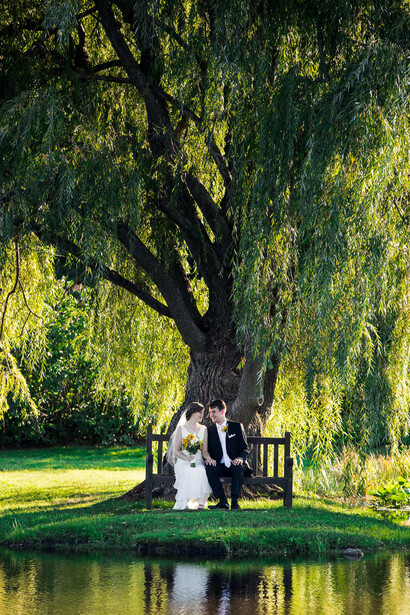
There's also a psychological factor that's rarely discussed. When your images aren't sharp or lack that professional quality, you naturally assume you're doing something wrong. You're not setting the camera correctly, not finding good light, not composing well enough. Sometimes this is true, but often the limitation is the lens. I've watched beginners blame themselves for softness that was purely optical, caused by a cheap lens that simply isn't capable of razor sharpness even in perfect conditions. A good lens removes that doubt.
The Dramatic Difference
The transformation from kit lens to prime lens is immediate and obvious, even to non-photographers. Take a portrait shot indoors with natural window light using an 18-55mm kit lens at 50mm, f/5.6. The image is acceptably sharp in the center, slightly soft at the edges, and the background is somewhat blurred but still distracting. Details are visible in the wall behind your subject, competing for attention. It looks like a snapshot.
Now shoot the same portrait with a 50mm f/1.8 prime at f/2. The sharpness is noticeably better, with crisp detail in your subject's eyes and facial features. The background melts into smooth, creamy bokeh, completely separating your subject from their surroundings. The image has a three-dimensional quality, with the subject appearing to pop forward from the background. The difference in low-light capability is even more dramatic: f/2 lets in eight times more light than f/5.6, meaning you can shoot at ISO 200 instead of ISO 1600, with cleaner results.
This difference is measurable in technical terms, but it's the aesthetic impact that matters. The kit lens image looks like it was taken with a kit lens. The prime lens image looks professional. Show both to clients, post both on social media, or include both in a portfolio, and the results speak for themselves. The prime lens image gets noticed. The kit lens image gets scrolled past.
The same principle applies everywhere. A landscape shot with a cheap 18-55mm at 18mm shows noticeable distortion, soft corners, and general lack of contrast. The same scene with a quality 16-35mm f/4 or even a modestly priced 24mm f/2.8 shows sharp corners, straight lines that stay straight, and punchy contrast that makes the image pop. Street photography with a superzoom at 35mm equivalent looks flat and uninspiring. The same scene with a dedicated 35mm f/2 has depth, character, and that indefinable quality that makes you want to look longer.
Here's what most photographers eventually realize: they've been blaming camera bodies for problems that were lens-related all along. Your entry-level camera with a great lens will produce images that look better than a professional camera with a mediocre lens in the vast majority of real-world situations.
Practical Buying Advice
If you're starting from scratch with a $1,500 budget, here's the smart allocation: spend $600 to $700 on the camera body and $800 to $900 on your lens. This might mean buying a used or entry-level body paired with an excellent prime lens. For Canon shooters, a used EOS R or RP body for $600 paired with the RF 35mm f/1.8 for $500 will outperform a $1,200 R6 with a kit lens in actual image quality. For Sony users, an a7 II for $600 plus the 50mm f/1.8 for $250 leaves room for a second lens. Nikon shooters can find a Z5 body for around $700 and pair it with the Z 40mm f/2 for $300.
Buying used lenses from reputable sellers is smart. Lenses don't wear out the way camera shutters do. A lens with 1,000 actuations and a lens with 10,000 actuations produce identical image quality. Check for scratches on the front element, test the autofocus if possible, and ensure the aperture blades move smoothly. Otherwise, used lenses are often indistinguishable from new ones. I've purchased $3,000 lenses used for $1,200 that looked untouched.

When should you add a second lens versus upgrading your body? Add a second lens when you've genuinely outgrown your focal length, not when you're bored. If you started with a 50mm and find yourself constantly wishing you could get wider shots, buy a 24mm or 35mm. If you're shooting portraits and want more compression, add an 85mm. Only upgrade your camera body when you're hitting genuine technical limitations: you need better autofocus for fast action, higher resolution for large prints, or specific features like in-body stabilization. Most new photographers upgrade bodies far too often and lenses not nearly enough.
Building a Kit That Grows With You
Your first lens sets your trajectory. Buy a kit lens, and you'll spend the next year taking acceptable snapshots while gradually realizing you need better glass. Buy a great prime lens, and you'll spend that same year learning to see, developing your style, and creating images you're genuinely proud to share.
Invest in glass that inspires you to shoot more. A lens that's technically perfect but sits at home because it's too heavy or doesn't excite you is worthless. A lens that stays on your camera because it's a joy to use, that produces images you love, that makes you want to go out and shoot even when you don't have a specific assignment? That's the lens worth buying. For most beginners, this means a fast prime in the 35mm to 50mm range. Light, affordable, capable, and specialized enough to excel at something specific.
The counterintuitive wisdom here is that constraint breeds creativity better than unlimited options. Give a photographer every lens ever made, and they'll spend half their time swapping glass and wondering which one to use. Give them a single excellent prime, and they'll figure out how to make it work for everything. They'll move closer, step back, change angles, wait for better moments. The zoom ring is the enemy of composition. The prime lens forces you to compose with your feet, which forces you to engage with your subject, which leads to better photographs.
Five years from now, you'll have a different camera. Maybe you'll have upgraded twice. But you'll likely still be using your first great lens, and it will still be producing the same excellent results. That's why your first lens matters more than your first camera.





Join the Fstoppers community for free
-
Post comments and join in the discussions
-
Browse the site ad-free
-
Share your work and get featured in the community
-
Compete in the photo contests for fun and prizes
1 Comment
Great advice. This is a "Yes, and...": Get that one great lens, and when the itch to add to it strikes, take some of that money and instead, invest in photography books -- the monographs of the giants of photography. Don't depend on IG or who's shooting exactly what you (currently) shoot and has a YT channel. The great thing about a book (in addition to the joy of holding a big heavy book and staring at an image undisturbed) is that those pages aren't going anywhere. Irving Penn won't care if you look at Newman next, or Leiter, or Arbus. Those Penn images will be right where they were before, not down a black hole of thousands of others, never to be found again. The history of the medium can be had, second hand, for embarrassingly low prices. Build your library, and that library will teach you how to build your gear.