
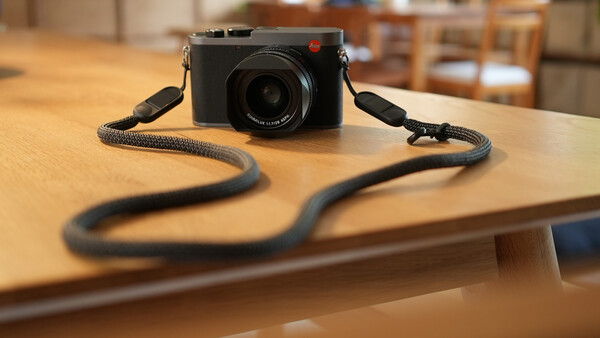
Compact fixed-lens cameras have been getting more and more popular in recent years, and the Leica Q series holds a spot at the top of that category. While the Q3 is already more than a couple of years old, there are some updates to the camera that make it more enticing.
Compact cameras are usually preferred by people who don’t want to have to carry a lot of lenses and accessories with them whenever they do photography. In the past, this meant sacrificing a lot of capabilities for the sake of portability, but as technology advances, such limitations now have workarounds that enable users to make the most out of such a camera.
Personally, having a compact yet capable camera changed my notion of a “personal camera.” Cameras take photographs, and usually our chosen professional gear can do pretty much what a more expensive and luxurious option can. However, having a personal camera can be a way to draw a line between working and playing. A personal camera isn’t necessarily just a camera that you personally own, but instead it can be a camera that you use when the goal is to create for yourself more than anyone or anything else.
The Leica Q3
The third-generation Leica Q3 was released back in May 2023, and it came with a lot of enhancements over its predecessor, the Q2. From the 47.3-megapixel sensor of the Q2, the Q3 now has 60.3 megapixels on a backside-illuminated CMOS sensor and uses an updated Maestro IV processor. The standard Q3 uses a Summilux 28mm f/1.7 ASPH. lens, while the later Q3 43 variant uses an APO-Summicron 43mm f/2 ASPH. lens.
Physically, the biggest enhancement would be the change from a fixed 3-inch LCD screen to a tilting screen that allows for better viewing at low or high angles. This did necessitate a change in the button layout and even an increase in the width of the camera body, but the added versatility definitely makes it worth it. In addition, the EVF on the upper-left side also comes with an increase in resolution to 5.76 million dots.
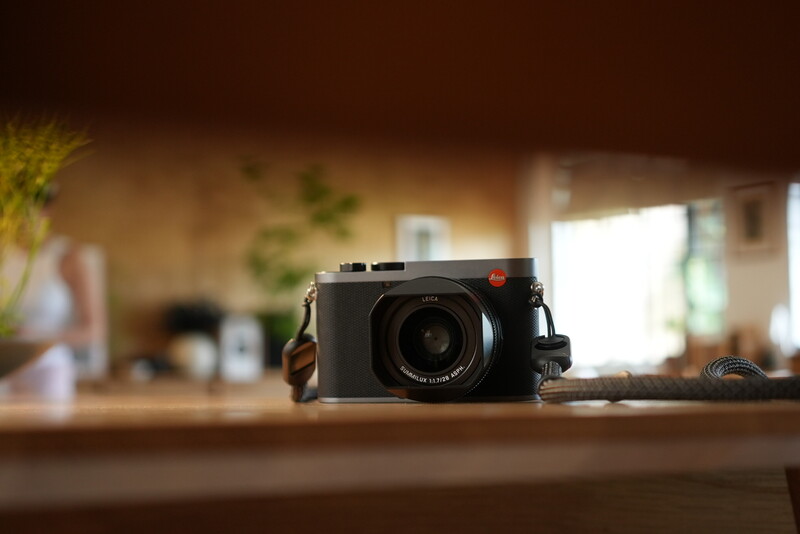
Functionally, the Q3 also comes with a much faster autofocus system that uses hybrid phase-detect and contrast detection. It’s now more able to identify subjects and track them as they move across the frame. With more modern features, it also comes with more seamless wireless connectivity with Wi-Fi, Bluetooth, and a multifunctional USB-C port for charging and data.
Three New/Underrated Features to Know About the Leica Q3
1. The New Metal Grey Edition
Leica cameras are known to come in varying styles that are often released months or years after the regular version comes out. This includes variants such as the Q3 43 and Q3 Monochrom, as well as other colorway variants across Leica’s camera lines, such as Reporter, Safari, Titanium, and this new Metal Grey Edition.
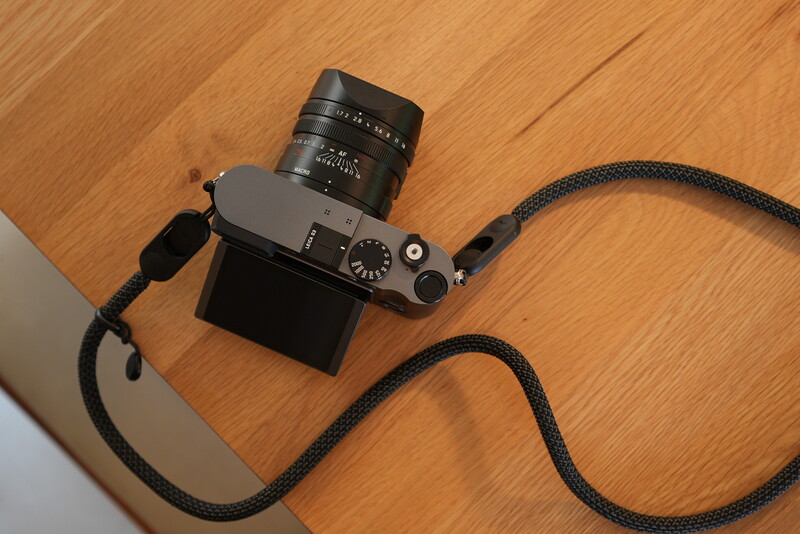
Functionally, it is the same Leica Q3 regardless of the aesthetic differences. However, someone who would get a Leica would probably also be enticed by aesthetic options as well. It’s important to note that at this point, these editions are more comparable to how luxury watches come in limited-edition styles that also often cost a little bit more than the regular version.
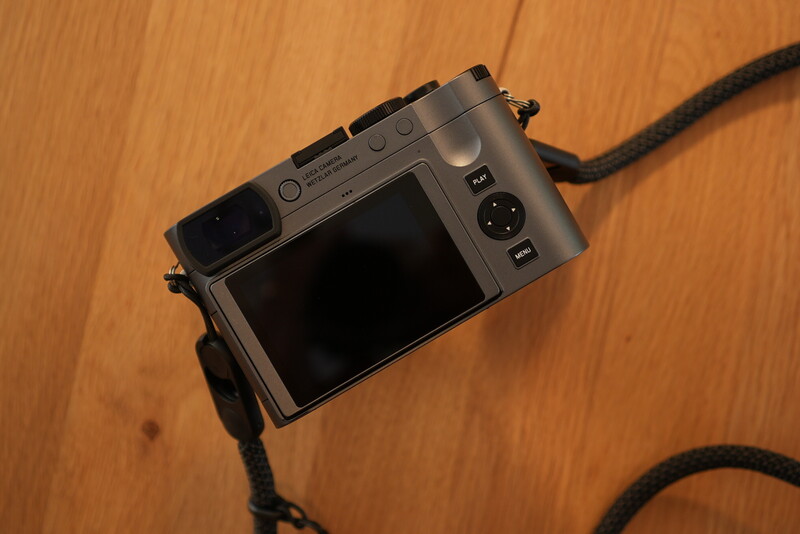
The Q3 Metal Grey edition has the same technology and form as the regular Q3 but comes in the new metallic grey finish with contrasting black control elements. The feet and f-stop scales on the lens also feature red engraving. There is no difference in functionality, but a huge chunk of the charm of using a Leica is the style and the experience, and that is all that the color variant will realistically offer you.
2. Feature Updates for Video
One less-talked-about feature now available on the Q3 is the capability to use microphones through the USB-C port. While the Leica Q system was definitely not made primarily for video, it is a welcome addition that the user can also use it for such. With this, the unique color profiles, the fast autofocus, and even the quick crop options can be used for video as well. The USB-C port on the side can now be used for compatible USB microphones.
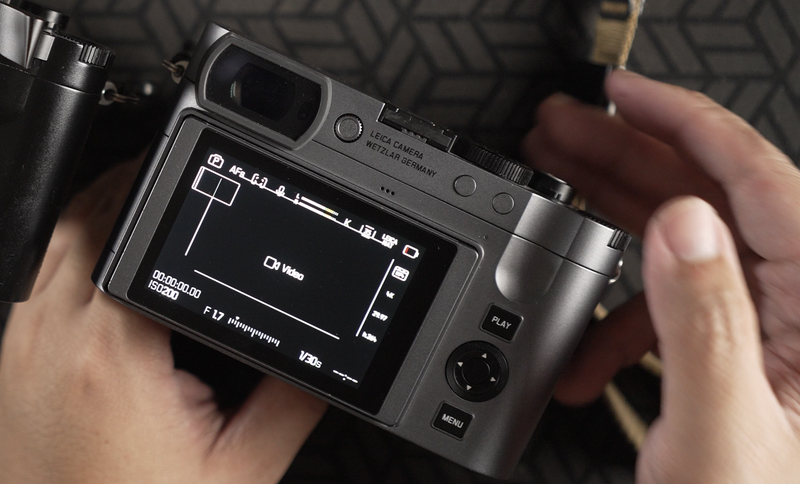
Wireless mics that come with USB-C receivers might not fit because of how the frame around the port prevents the full entry of the USB-C contacts, but the workaround for those I’ve tested (Hollyland Lark M2, Lark Max 2) is that one can use a USB-C cable on the 3.5mm receiver, and it should work if you find the right cable with the right compatibility. In addition, I’ve also used it with the Sony ECM-S1 and the RØDE VideoMic NTG using a long USB-C cable. Personally, since my Leica is my walk-around camera when traveling, the Q3 can also act as a camera for quick content that I’d want to do on location.
3. Perspective Control
Another feature of the Q3 is a neat function that is perfect for the architectural photographer in me. This might not be a feature that a lot of people would care about, but I would have to admit that this is one of the biggest reasons why I’m considering the upgrade.
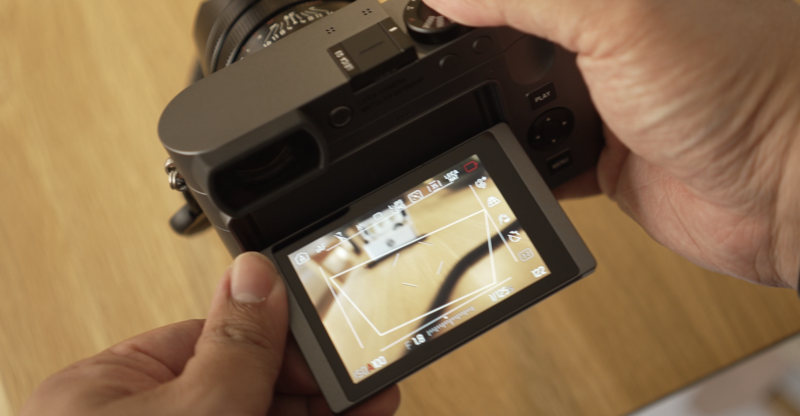
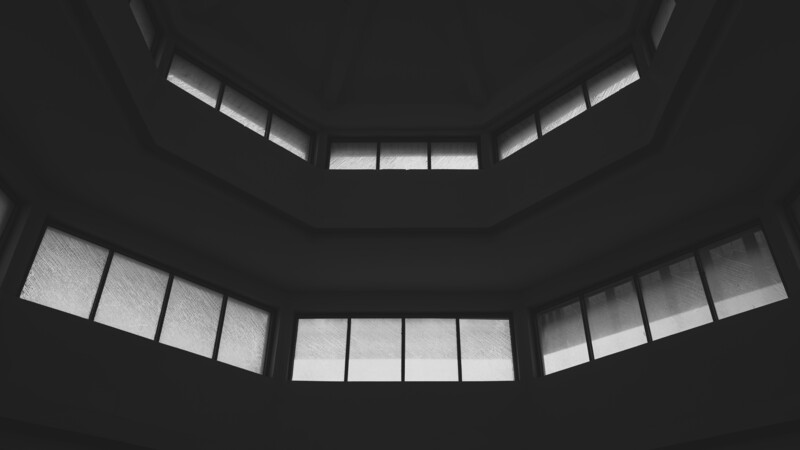
The Perspective Control feature automatically detects the camera’s angle and displays a corrected framing guide when the camera is tilted up or down. Think of this as an in-camera version of the auto perspective function in Adobe Lightroom that fixes perspective distortion in images. While this is obviously something that can be done in post, the whole point of the personal camera is to lessen the additional steps whenever shooting for personal use. The correction can be applied directly to JPEG files, while the raw DNG retains the original image data along with the perspective-control metadata, allowing the correction to be adjusted in compatible software if necessary. As someone who is used to bringing shift lenses when looking at architecture in a new place, this handy feature will mean bringing less of the gear that I use mostly for work. For a deeper look at architectural photography workflows, see Where Art Meets Architecture 1: Real Estate, Architecture, and Interiors.
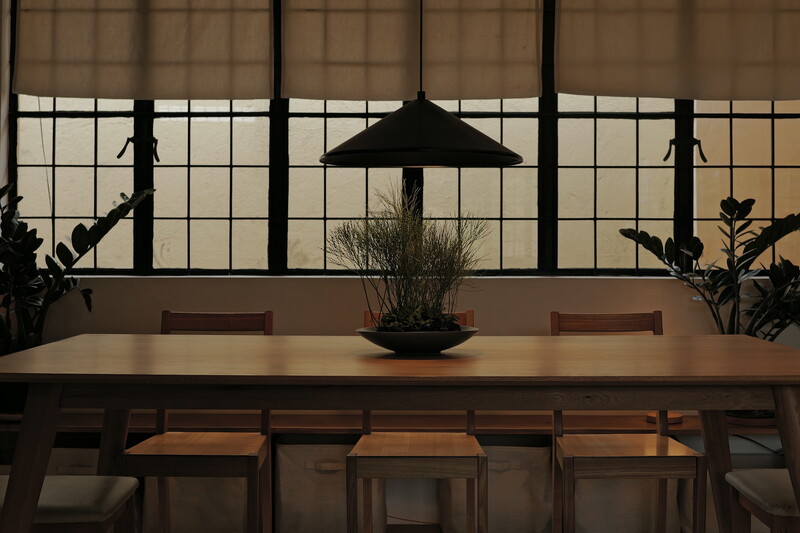
Of course, there are many more features to consider with the Leica Q3 and the new Metal Grey Edition. On its own, it is a really good travel and street photography camera, and because of the high-resolution sensor, it can also be used for many other applications. Regardless of what that is, it will be the experience that the form factor and output of the Leica Q will make it stand out.
What I Liked:
- New color variant
- Updated features for both photography and video
- Fast autofocus
- Seamless wireless connections
What Can Be Improved:
- Possibly a side-tilting screen that would benefit vertical shooting





Join the Fstoppers community for free
-
Post comments and join in the discussions
-
Browse the site ad-free
-
Share your work and get featured in the community
-
Compete in the photo contests for fun and prizes
6 Comments
I will state my bias straight up. I love my Q3 28 and I love my Q3 43. I sold off pretty much all of my Nikon gear and I had a good six months and this was a bold decision by me to go down this line, but I've absolutely not regretted it. These are beautiful cameras to use. Yes they are expensive but you know what? ife and life is short so why not? If you can afford it?..... I just wish every camera company would copy the menu system of the Q3. It is so simple to use. It's ridiculously simple. In fact when you first go through your menu you start to think things are missing but they're not. They just don't need to be there .....the pure shooting experience of the Q3 and 43 are fantastic. I don't have the monochrome but I'm thinking about it. People say they are a gateway to the M system..... if I wanna shoot manual focus I can do that on the Q3 but I have the benefit of auto focus still and the auto focus after the upgrades has been really good and I've shot six weddings now with a 43 and a 28 combination and it works perfectly. It makes you a discreet candid shooter of weddings no big zoom lenses shoving in peoples faces. I don't regret switching over to Leica..... oh but let's not talk about the colours out of these cameras. They're just beautiful straight out of camera. Barely need touch touching. I've had the Q3 28 now for about a year and the 43 for about nine months and I absolutely love these cameras every day and they make you want to take photos but like I said I'm biased and yep I know people will say you can take the same photo with this camera.......or that ... I'm sure you can, but if you are someone that owns a Q3, they will tell you that it's different. And if anyone wants an unbiased view of this camera from a shooting perspective hit me up on Instagram or direct message me on here and I'll give you the lowdown on what these cameras are like to use even for weddings and other professional work. They are more than capable. They are not just an expensive toy which is get portrayed a little bit by some people in the photography community.
Hey Nev, I have a friend who sold his Nikon gear to buy a Q3 28 and Q3 43, and he said it was the best decision he ever made. Buying a Q2M led me to buying an M10—which I love—but i'm seriously considering selling it for a Q3 43. M cameras are so limiting, but Qs are not.
Yeah look I was never a manual focused fan. I know there's lovely nostalgia with the M series and also the choice of lenses but I figured with the 28 and the 43 is a combination. I've pretty much got everything covered from 28 to about 100 mm and with the 28 I can always take two white angle shots and stitch it for a kind of panoramic look if I need it and then with the 43 I can shoot up to 100 mm and still get a good photo I just felt it simplified my setup and the auto focus now on the Q series is fantastic. Probably better than my XT5 ever was!!
I love that grey colour, it makes me want to sell more Nikon gear to buy one! I love my Q2M, so a Q3 or Q3M is not necessary, but if the Q3 43 comes out in grey, then I'm in trouble!
Enjoyed your video Nicco 👍
Thanks Simon!
i bought an m6 in 1999 and used it a lot during the waning days of film for me. paired it with 35f2 canada version and never had so much fun shooting streets of NYC with it. now 27 years later i still have fond memories of those days and have longed for the leica q3 because 28mm on fullframe dslr/mirrorless sony is my favorite focal length. i have ricoh gr3/4, rx1riii, and shoot daily with sony a1 /fx6 and about dozen gm lenses. the sony ecosystem is very good at pumping out and distributing content very efficiently but I miss the simple days of m6 and leica where it wasn't just a business but also a passion. now it's about a delivering images via sony converybelt system.