
At now 6 years old, is this compact retro camera still usable for photographers in today's day and age? We are of course talking about the original Fujifilm X-T30, which has become in fact my new favorite travel camera.
Now, as a Canon shooter just about all my life, I had my curiosities about the Fujifilm lineup but hadn't shot too much with them myself. That said, we got to play around with this particular camera a little bit through none other than my girlfriend, as she is something of a photographer herself and had the camera for taking a variety of shots. Then, when it came to travel, vacations, etc.
I usually like to have a smaller camera to carry around than something like my workhorse mirrorless Canon setup. In the past, I would usually bring around a film camera and a handful of rolls of film. As it is a smaller form factor, I like the film look for my vacation photos especially. The only issue here is when you are traveling abroad.
There are more limitations of course with film and getting everything scanned. You can only take a certain amount of photos and so forth. That is where this camera comes in at a smaller form factor than most of the 35mm film cameras that I have. And having a 26 megapixel APS-C sensor, it still produces a fantastic quality image.
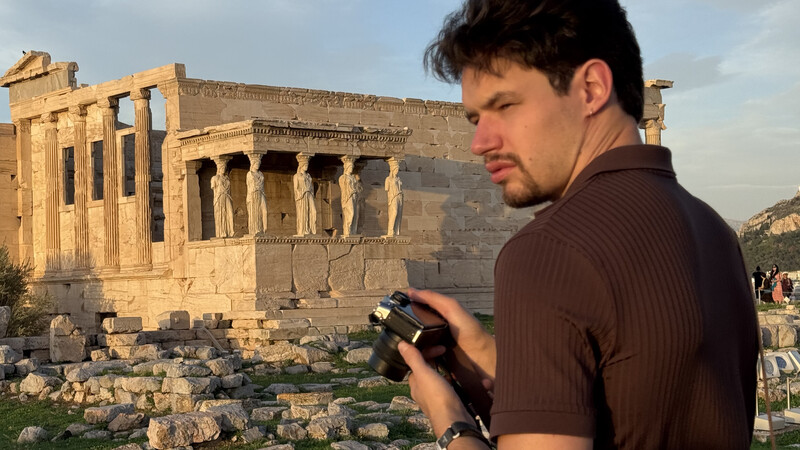
Even with the attached 18-55mm kit lens, it produces results that are clear, sharp, and consistent. It is great to throw in a small bag or just carry around because the vintage look of it makes it aesthetically pleasing. I would still get questions about it just like when I would be traveling around carrying one of my film bodies. The other benefit is that, rather than just having a fixed focal length, the kit lens does give you the ability to get more of a variety of shots, as sometimes when I'm traveling I find I like to zoom in on particular details of historic landmarks, etc. But with the Fujifilm X-T30 II and III out, does the original still hold up?
In my opinion, it absolutely does. And as somebody who has a background in 35mm film photography, it is a benefit that the original still has the in-body film simulations that you get with some of the newer models as well. It does have an onboard pop-up flash if you want a little more kick out of things. And sometimes I will pop an external flash on there just for an extra bit of light, as I do find the onboard flash can sometimes be almost too subtle.
So, if you are looking for a new travel camera while not breaking the bank, the other benefit is that, as these were released in early 2019, you can usually find one for a decent price on Marketplace or any other used camera store platform. And while I still rely on my Canon cameras, if I just need a small body to carry around that doesn't take up too much space, this is the one that I automatically will gravitate to. The other benefit is that, rather than bringing a large camera into any tourist sites or private property, this, based on the look and the form factor, seems to more or less glide under the radar.
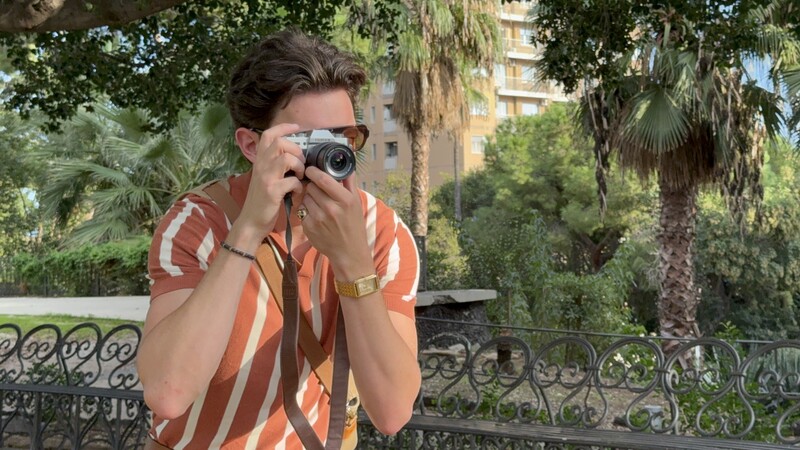
Because people view you arguably more as a tourist or hobbyist photographer and not as a pro walking in there with your full frame mirrorless with a 24-70 on it. So that is an additional benefit when you consider this as a travel camera. And if you're holding it around for a long time, it is light and compact enough that your hand won't really get tired at all, like sometimes happens with a larger body.
On release, it did come in black and silver. Personally, I like the look of the silver, as it matches the look of some of my other film bodies. And even at higher ISOs in low light settings, as I push the files up to two stops in Lightroom, I do find that they still hold up. Couple that with a little bit of AI noise reduction, and even in low light, you can still get a pretty clean image out of this. And while I'm always shooting raw, if you're not that particular, and if you know your exposure, then if storage is your concern, the JPEGs out of this camera, I find, are super clean. And you can adjust the film simulations to get the exact kind of look that you're after.
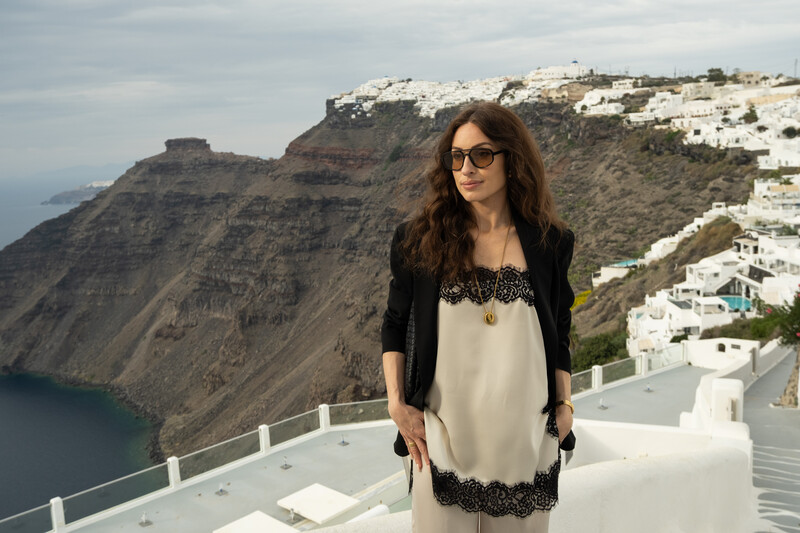
In fact, when I pulled the files into Lightroom after the fact, I was pleasantly surprised at the look that you get out of this camera, having never shot with one before. It did take me a minute to get used to the menu system, having not shot Fuji before. But it wasn't a very painful learning curve, and I could quickly search through the menu systems and figure out what I needed.
The multifunction dials and buttons are handy, being able to change all your settings quickly. Although sometimes with my larger hands, I do end up having them affecting the wrong thing, bringing my ISO up when it should be going down, etc. But that's more a user thing as opposed to the camera's actual usability.
All in all, if you're looking for a great travel camera that doesn't break the bank, that you can also use professionally, that gets some great results, is light and compact, and produces a clean, proper image, then maybe, just maybe, the original Fuji X-T30 could be for you too. And if you are into the newest iteration of this camera, you can find it here.




Join the Fstoppers community for free
-
Post comments and join in the discussions
-
Browse the site ad-free
-
Share your work and get featured in the community
-
Compete in the photo contests for fun and prizes
7 Comments
I’ll stick with my D3200 with the 18-200 lens.
It seems to be a natural progression moving down to simplicity. I am heavily invested in Canon gear for my bread and butter photography, yet my favorite go to camera is the fantastic Olympus TG-6...this little gem of a camera is very useful at events and street photography to make those simple spontaneous photographs that I would never get when pointing a large DSLR at people. I really think the race for bigger better and more pixels and low light is over, and that is a good thing...
Nikon Zf for fun and travel.
Z9's for work.
So I had the X-T10, and wish I still did. What makes the X-T30 original?
I think he ment the original X-T30.
We are now at the X-T30 III
The X-T30 Mark 3 is a fair price as well, at least where I live.
It's on my list of small and light cameras to have with me most times.