
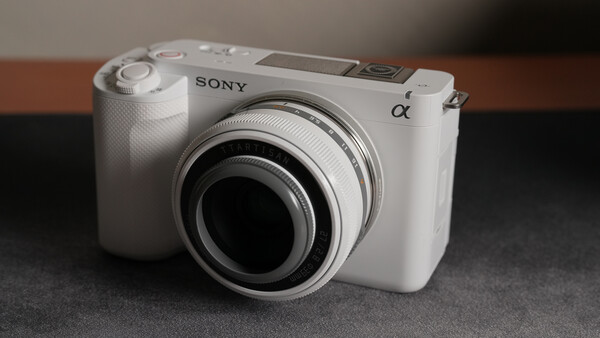
If you had just one lens in a very small pocket of your bag to accompany you for everyday creative pursuits, this tiny pancake lens might be worth a look.
Tiny compact lenses can have such an impact on a photographer’s creative journey. Sometimes they draw the line between carrying a camera every day and being able to shoot right when inspiration strikes. For any passionate photographer, whether professional or hobbyist, having a capable camera with you wherever you go can be very enabling. This is the reason why compact cameras like the Fujifilm X100VI or the Ricoh GR IV have been very popular in recent months. However, for a photographer who would prefer to have multiple lens options on other days but might be limited to just having one camera, having a compact everyday lens can pretty much make it feel like a different camera altogether.
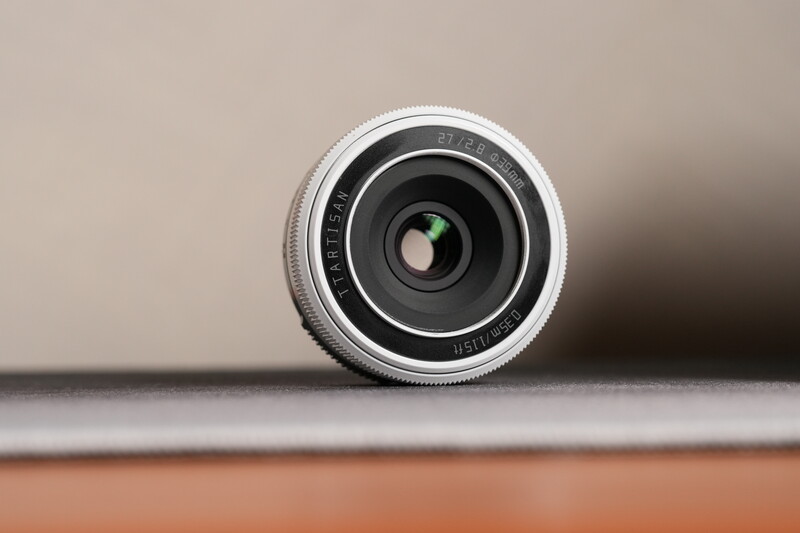
The TTArtisan AF 27mm f/2.8
The TTArtisan AF 27mm f/2.8 is a compact and lightweight lens. It is just 1.25 inches long and weighs just 88 grams without the lens cap. This tiny, barely-there lens would reduce the bulk of the camera setup to virtually just the size of the camera, since the length of the lens barely goes past the side grip of the body (if applicable). It makes the camera very easy to slip into a small bag or a compartment of a larger everyday-carry bag.
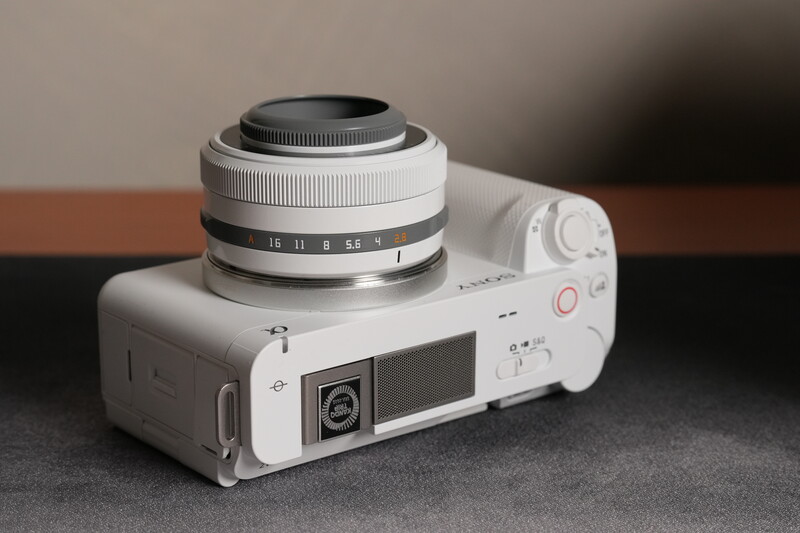
While it was made to be compact, the lens still has some physical control features. On the distal end is a thin focus ring with a grip texture on the hard plastic, just in case the user would like to bypass autofocus for any reason. On the opposite end is a physical aperture ring that covers the range from f/2.8 to f/16, with an additional stop for "A," which either switches to automatic or moves the control to the camera body. The aperture stops have physical clicks on them that can be favored as tactile feedback; however, it might be a limitation for creative use of aperture when shooting video.
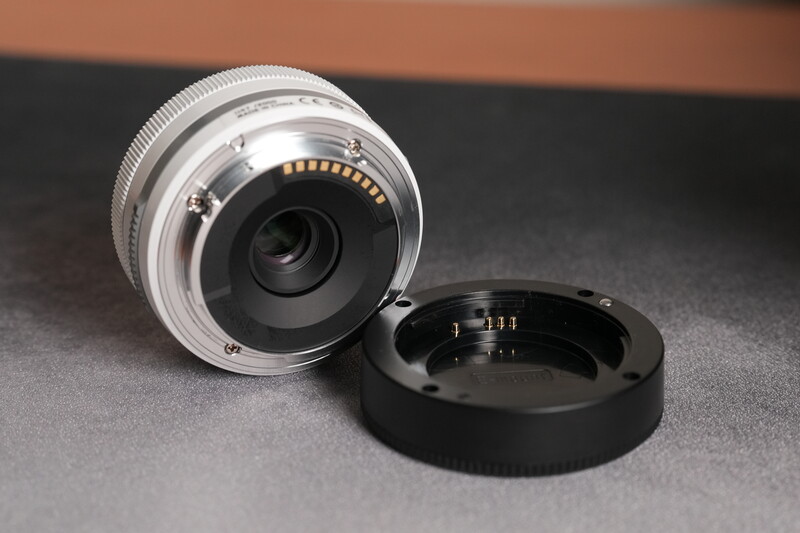
At the very bottom is a metal lens mount with electronic contacts that are standard for all autofocus lenses. What’s interesting about this portion, however, is the fact that the lens cap has electronic contacts as well. It also comes with a USB-C port on the side, as it turns into a sort of docking system to be able to apply firmware updates on the lens. This is a great way to minimize the lens size by placing the interface on the cap instead, and it should probably be a path that other brands take to minimize bulk on other lenses.
The 27mm Perspective
Having a prime on your everyday camera setup can either be a limitation or an enabling factor. Personally, I think it depends on whether your specific style matches what the lens offers. A 27mm on an APS-C camera gives you the perspective of a 40mm, which might be too tight for some but just right for others. Wider options such as 18mm (24mm full frame equivalent) often allow compositions that are more dynamic and use the background of a scene, while this tighter option can be quite helpful for isolation of subjects and patterns.

It’s impossible to talk about this aspect without mentioning personal preference, and while I generally prefer a wider prime for walking around, the 27mm perspective is still definitely workable, especially if one prefers to avoid distortion. Though the lens still has a bit of barrel distortion that can be noticed on horizontal lines, it is definitely less noticeable than what a wider lens would offer.
Autofocus

While pancake lenses are not new in general, it is definitely notable that most of them are either manual lenses or those with very slow auto-focus. The autofocus on this lens is able to keep up with the speed and accuracy of the AF tracking and subject recognition of the cameras that I’ve used it with, specifically a Sony A6700, Sony ZVE10 mark II, and a Sony ZV-E1 (on crop mode). For everyday shooting scenarios, the lens subjectively showed noticeable lag, which is good enough for what we’d expect from a budget pancake prime.
Image Quality
The same sentiments apply for the image quality. One major, yet totally expected, aspect about this lens is the strong vignette at f/2.8 that disappears past f/4. This is expected because this is a very small lens with a very small barrel, yet it offers such a wide aperture. This can still be quite functional in low-light situations, just as long as the vignette is accounted for.

As mentioned above, there is also a slight barrel-type distortion on this lens. While it is effectively a 40mm lens, that focal length—especially with a glass construction such as this—is no stranger to such optical aberration. Despite that, it is barely noticeable unless strongly emphasized lines are present in frame. More than that, someone who would use this lens probably won’t care much about distortion.

More importantly, the lens does give more than decent optical performance. Upon testing, f/5.6 gives the best center sharpness that is still quite close to what the maximum aperture offers. There can be some falloff in sharpness on the edges even at f/5.6; however, much like the point made above, this lens was not made for very technical uses but instead for casual everyday creative use.

Overall, considering the very friendly price point, the compact and lightweight build, decent autofocus, and the overall optical performance, this lens is surely something worth considering for photographers who’d like to have a small lens on a small camera to bring around wherever they go. This can be a great lens to have for sudden sparks of inspiration or unexpected encounters with places with great views or lighting. All things considered, it’s an affordable lens that I would be okay having in both unexpected situations and everyday scenarios.
What I Liked
- Lightweight compact prime option
- Decent autofocus speed
- Smart rear lens cover
- Limited edition white option
What Can Be Improved
- Pronounced vignette when shooting wide open




Join the Fstoppers community for free
-
Post comments and join in the discussions
-
Browse the site ad-free
-
Share your work and get featured in the community
-
Compete in the photo contests for fun and prizes
1 Comment
I'm not a Sony guy but this looks like a really sweet setup. I love a pancake lens! Still break out my canon 40mm 2.8 even though I've moved to RF glass.