
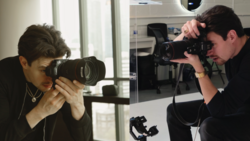
Recently, I had the chance to go hands-on with the Canon RF 24-105mm f/2.8 zoom lens to see exactly who this lens is for and if it is something that would fit into my existing workflow and maybe make it better.
For years, I have been shooting on similar lenses, whether it be the 24-105mm f/4 or the classic 24-70mm f/2.8, and during that time, I have preferred the longer range of having the 24-105mm. Unless I need the added stop of the f/2.8, the extra 35mm of focal length is definitely a bonus, especially if you are getting a variety of shots and frame sizes without wanting to take the time to switch out different lenses.
I am somebody who, based on the way I work, typically gravitates more towards zooms as opposed to primes, as I am moving in and out quickly and aim for efficiency on set. While technically primes may have superior image quality in some cases, this high-quality zoom definitely holds its own, and that's why it has earned its spot in my own kit. But is this now the reigning champion? I used this lens both for stills and video, as I routinely shoot both, to see how it held up in both situations, and to see if it is a better photo lens than video, better video lens than photo, or if it could be a great all-rounder.
Stills Performance
For stills, it is sharp, autofocus is responsive, and in lower light, or if I want less depth of field, the f/2.8 can definitely be handy. Most of the time, as I want a little more context in the background, or as I am looking to have the subject more than just the front of them in focus and have less fall off, I tend to stop down closer to f/4 anyway. I can say at f/4 this lens performs equal to, if not a little bit better than, the previous model of the same lens, being the EF variant. It also appears to be more consistently sharp across a series of shots, where you're less likely to have the odd shot be soft.
Stabilization Modes
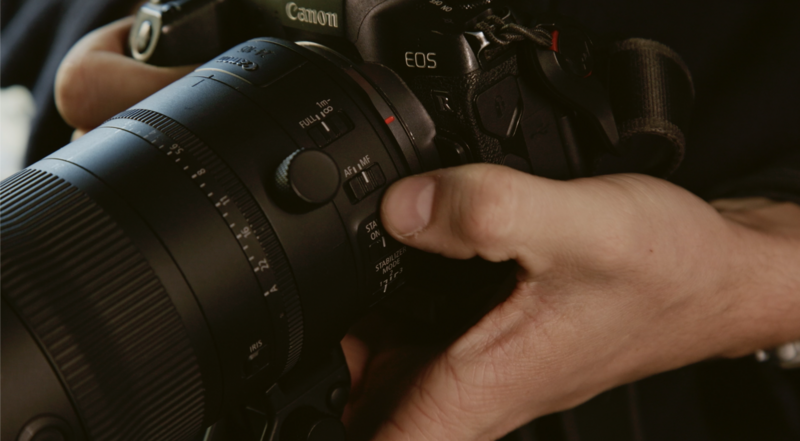
It has three stabilization modes, as opposed to its predecessor only having one. If you're curious what each of these do, mode one is for general purpose. This is going to be your all-purpose lens optical stabilization that will correct for any kind of movement. Mode two is made for panning with your subject, so if you're shooting cars driving by, this might be the one for you. Lastly, mode three is for more erratic movement, similar to if you are photographing sports and you're constantly moving the camera to keep up with athletes.
Build and Handling
It does have a tripod collar on it, which you may not be used to with this particular zoom range. Being an f/2.8, the lens is quite a bit heavier and longer when compared to the f/4 variant. It also extends further than its older brother. But the one thing that I personally really like is that all the zoom is internal with this, so you don't have the front element of the lens protruding whenever you go to zoom in. The sharpness holds its own across the range from 24 to 105, absolutely no problem.
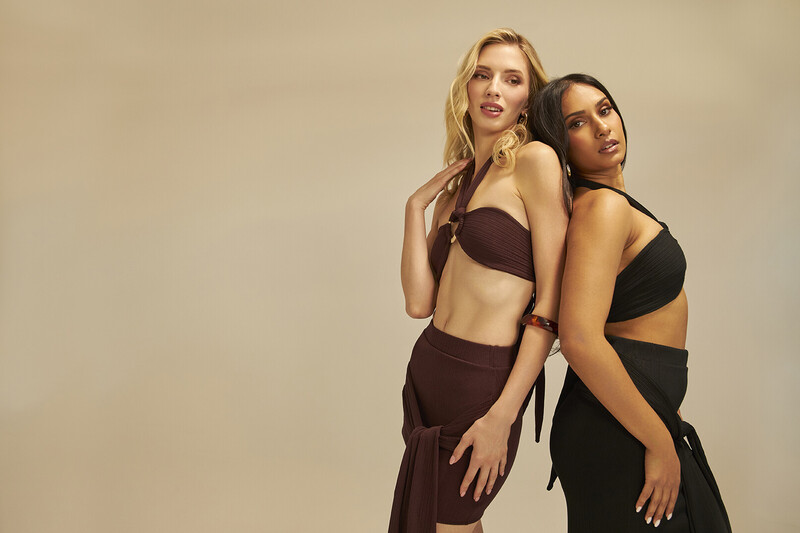
Most of my work is in the fashion and commercial advertising space, for your reference as to what I would be using this lens for. For video, this would be more so for a run-and-gun setup, something lower profile where I can have essentially one lens across the board and not have to worry about swapping lenses if I need to punch into a scene or widen out for a shot. Although the lens is quite heavy, it is a weight that isn't too heavy to carry around all day. I imagine if you're on a really long shoot, you might notice the weight by the end, but beyond that, being a little heavier isn't a deal breaker for me.
It does have an 82mm filter thread, so if you have larger-sized screw-on filters from any of your other lenses, they should work with this. It is naturally larger being an f/2.8 compared to the f/4, where the f/4 had a 77mm filter thread.
Video Capabilities
The big thing that makes this great for video is that it has a de-clicked aperture, meaning you can do iris pulls and either open up the iris or stop down in the middle of a shot without it being jarring based on the steps of aperture range. You just get a smooth closing and opening that will feel natural if you're going from somewhere dark to really bright, or somewhere brighter to really dark, which makes this potentially the perfect lens not only for stills, but also for documentary, indie, or run-and-gun filmmaking. Being the RF mount, you can even natively throw this on a Red Komodo and not have any problems. Although, with the Komodo, the focus works a little differently than any typical lens where you have specific points on the focus wheel. With this, and at least the last version of the Komodo I tried, you only have it where the focus changes to the degree of which you spin the rings. If you go faster, it will focus further back, and if you're slower, focus becomes more incremental, without relying on physical points on the lens barrel. It is harder with this to place specific focus points if you're using a focus puller or pulling between two specific marks. But if you're just going on the fly, then it is pretty okay. If you are using this in conjunction with a camera that has fast autofocus, then maybe you won't have to worry as much, unless you want to go full manual.
If you want to dive deeper into shooting motion alongside stills, the Introduction to Video: A Photographer's Guide to Filmmaking tutorial is a solid starting point.
Final Thoughts
With all that said, the things about this lens that do it for me are the zoom range at f/2.8, the great image quality you get from it, as well as the de-clicked aperture. Some potential cons, if you want to call them that, would be the heavier weight and that it is a larger lens to be carried around all day. But if you can tough it out, then the Canon RF 24-105mm f/2.8 might be the right lens for you.


Join the Fstoppers community for free
-
Post comments and join in the discussions
-
Browse the site ad-free
-
Share your work and get featured in the community
-
Compete in the photo contests for fun and prizes
1 Comment
Hey Fynn. Nice discussion. You answered pretty much all the questions I had about this lens. I wonder if you'd mind saying what gimbal you were using in the video, and whether you recommend it for an R5 II + 24-105 2.8L combo? I've just started shooting video, so your advice would be most welcome. --Gerard