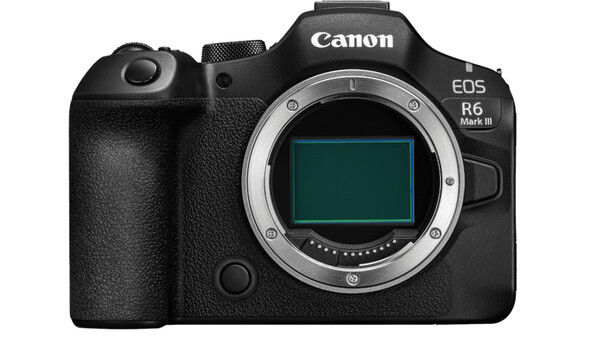
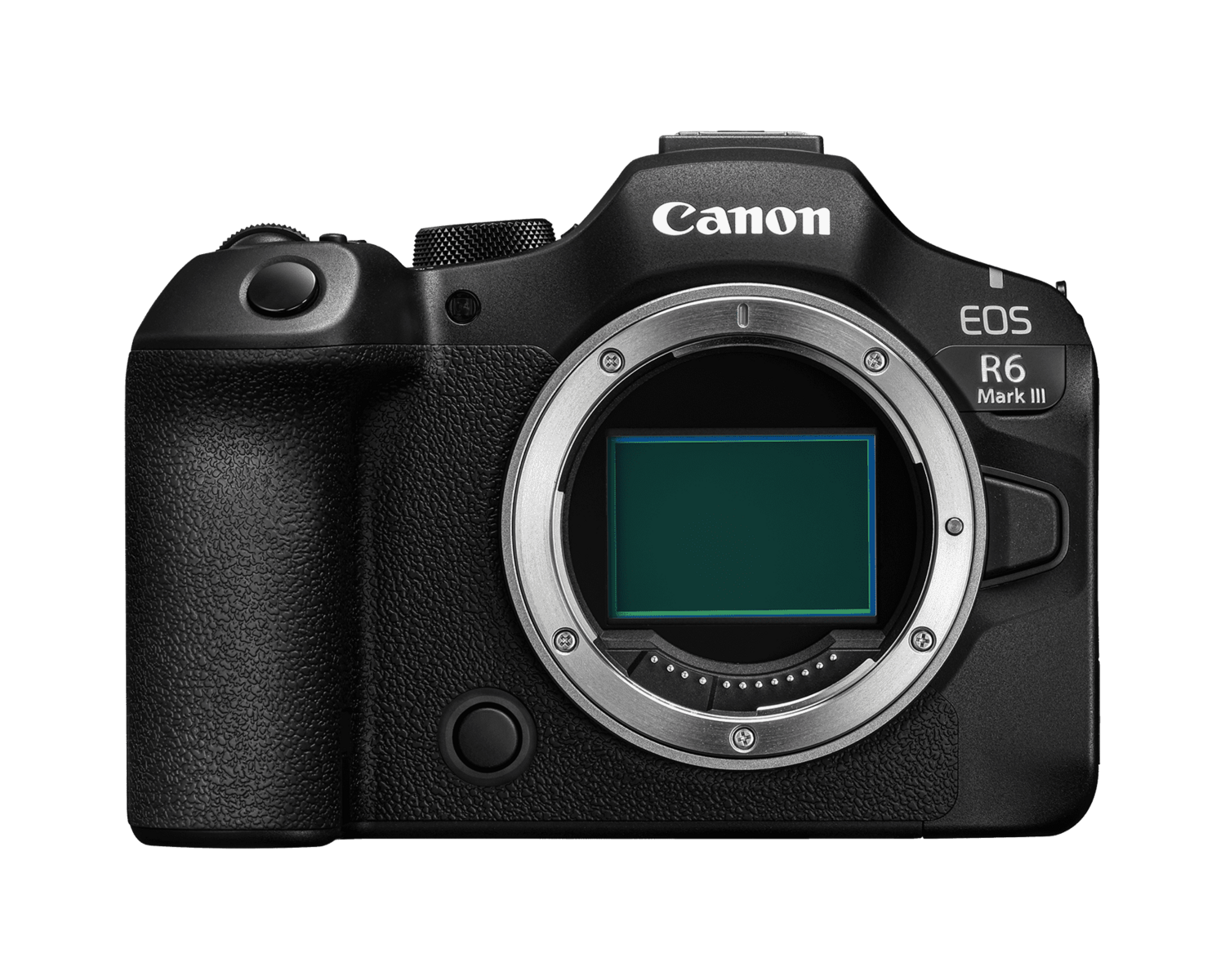
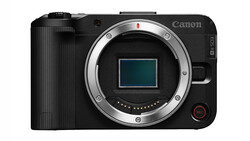
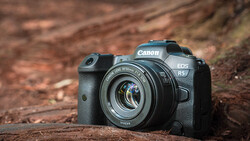
Canon has introduced the EOS R6 Mark III, a 32.5-megapixel full frame mirrorless body aimed at hybrid shooters who split their time between stills and video. It brings a new sensor, faster burst rates with a pre-capture mode, and a broader video feature set, including 7K raw options and 4K at up to 119.9p. It sits in the same do-everything slot as previous 6-series models, but with more headroom for advanced work.
Canon positions the EOS R6 Mark III as a bridge between enthusiast and professional use, pointing to increased resolution, stronger subject detection, and recording formats that travel well into post-production. The camera also adds practical workflow touches like proxy and sub-recording to the second card, waveform monitoring in the display, and expanded connectivity.
What’s New and Notable
The R6 Mark III moves to a 32.5 MP Canon CMOS sensor paired with the DIGIC X processor. For stills, the electronic shutter now reaches up to 40 fps and can capture 20 frames before the shutter press via a pre-continuous buffer, making it handy for unpredictable action. Mechanical and electronic first curtain top out at 12 fps, and shutter durability is rated to 500,000 cycles.
On the video side, the camera records up to 7K/59.94p in raw light, offers a 7K/30p open-gate mode for maximum vertical resolution and post-stabilization latitude, and hits 4K/119.9p for slow motion. Canon Log 2 and Log 3 are supported, along with waveform display, proxy recording, and main/sub dual-record options across the two card slots (CFexpress Type B and SD UHS-II). In Canon’s thermal guidance, several 4K modes show “no overheating restrictions,” while high-bitrate and high-frame-rate modes have documented shutdown windows.
Autofocus remains Dual Pixel CMOS AF with broad coverage, deeper subject-detection behavior, and very low-light sensitivity. Canon cites AF down to EV -6.5 for stills, up to 6,097 user-selectable points, and as many as 1,053 auto-selection zones depending on mode.
In-body stabilization is present and rated up to 8.5 stops of correction at the image center (7.5 stops at the periphery) when coordinated with certain RF IS lenses. Movie Digital IS can be added, and Canon also includes a subject-tracking IS mode for video that locks stabilization to your tracked subject.
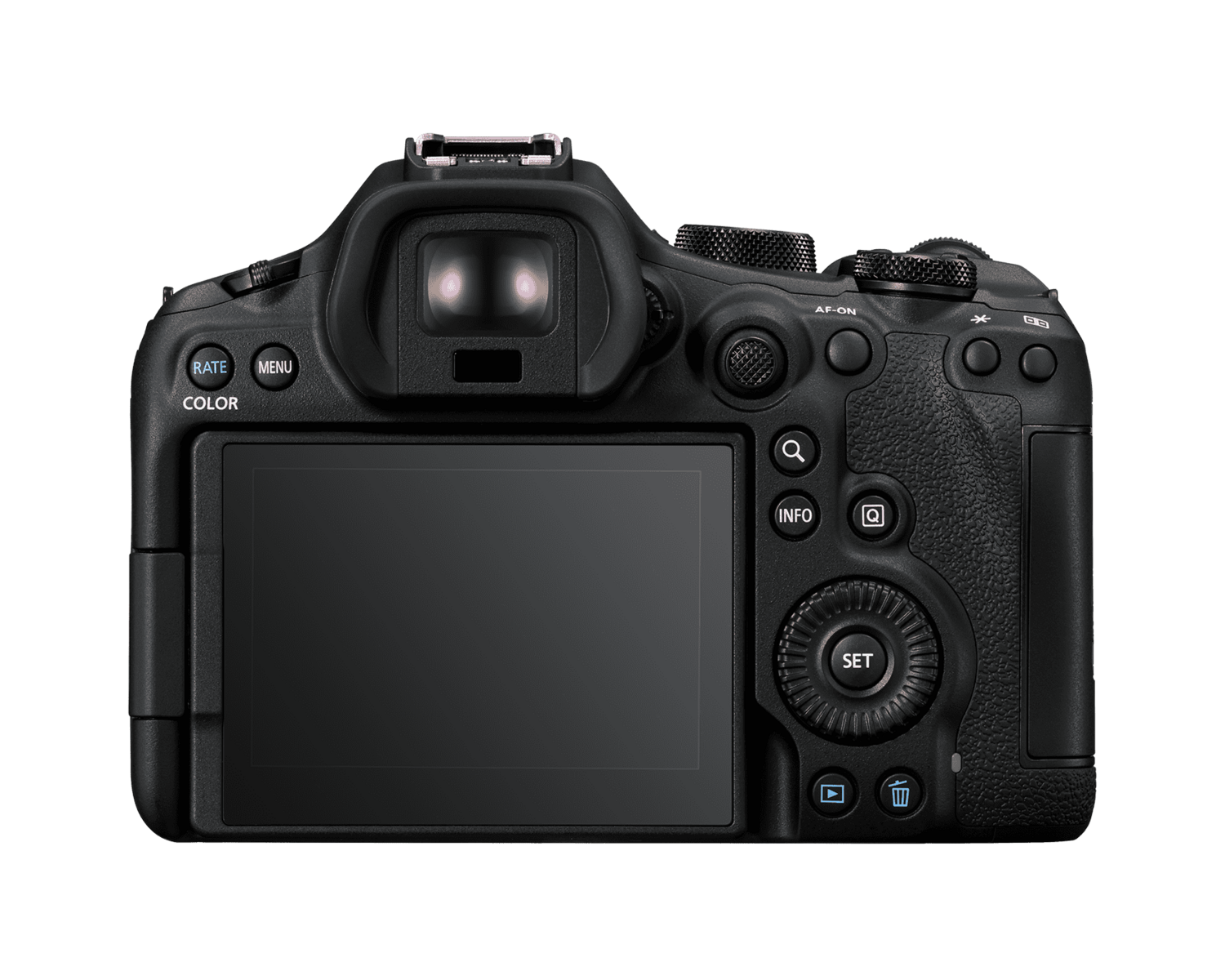
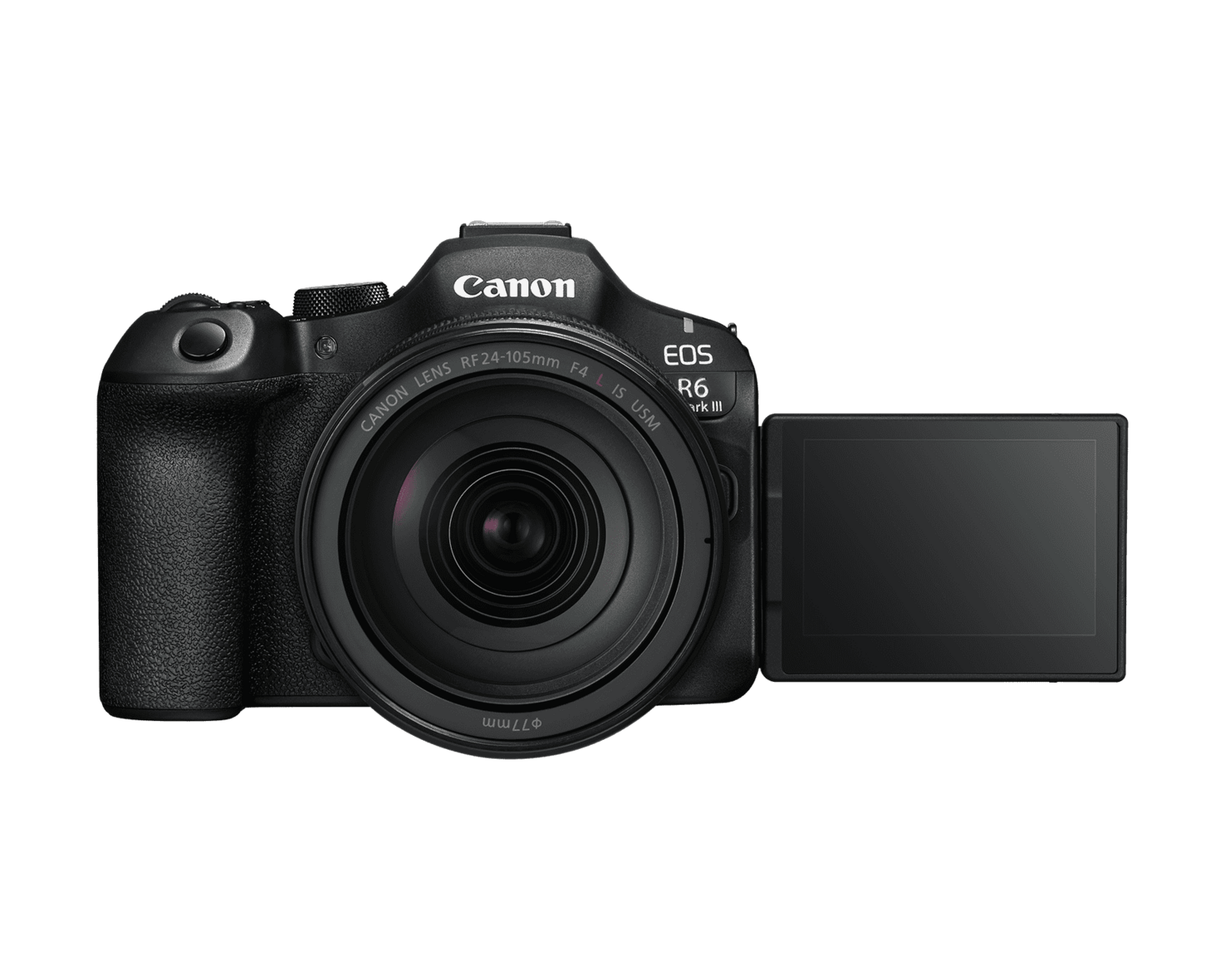
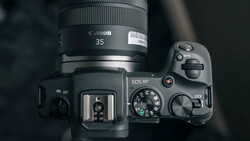
Ergonomics and I/O see a quality-of-life bump: a 0.5-inch OLED EVF with approximately 3.96-million dots and a 119.88 fps “Smooth” display option, a fully articulating 3.0-inch, 1.62-million-dot touchscreen, full-size HDMI Type-A, USB-C at 10 Gbps, and dedicated mic and headphone jacks. The body uses the new LP-E6P battery (LP-E6N/NH are usable with restrictions). Wi-Fi includes 5 GHz and 2.4 GHz, and Bluetooth 5.1 is onboard.
Canon lists the body at 609 g (body only) and 699 g with battery and one card, in a chassis primarily made of magnesium alloy. Dimensions are 5.45 × 3.87 × 3.48 in.
Key Specs
-
32.5 MP full frame Canon CMOS sensor, DIGIC X processor.
-
Stills burst: up to 40 fps (electronic), up to 12 fps (mechanical or EFCS). Pre-continuous buffer captures 20 frames (~0.5 s) before full press.
-
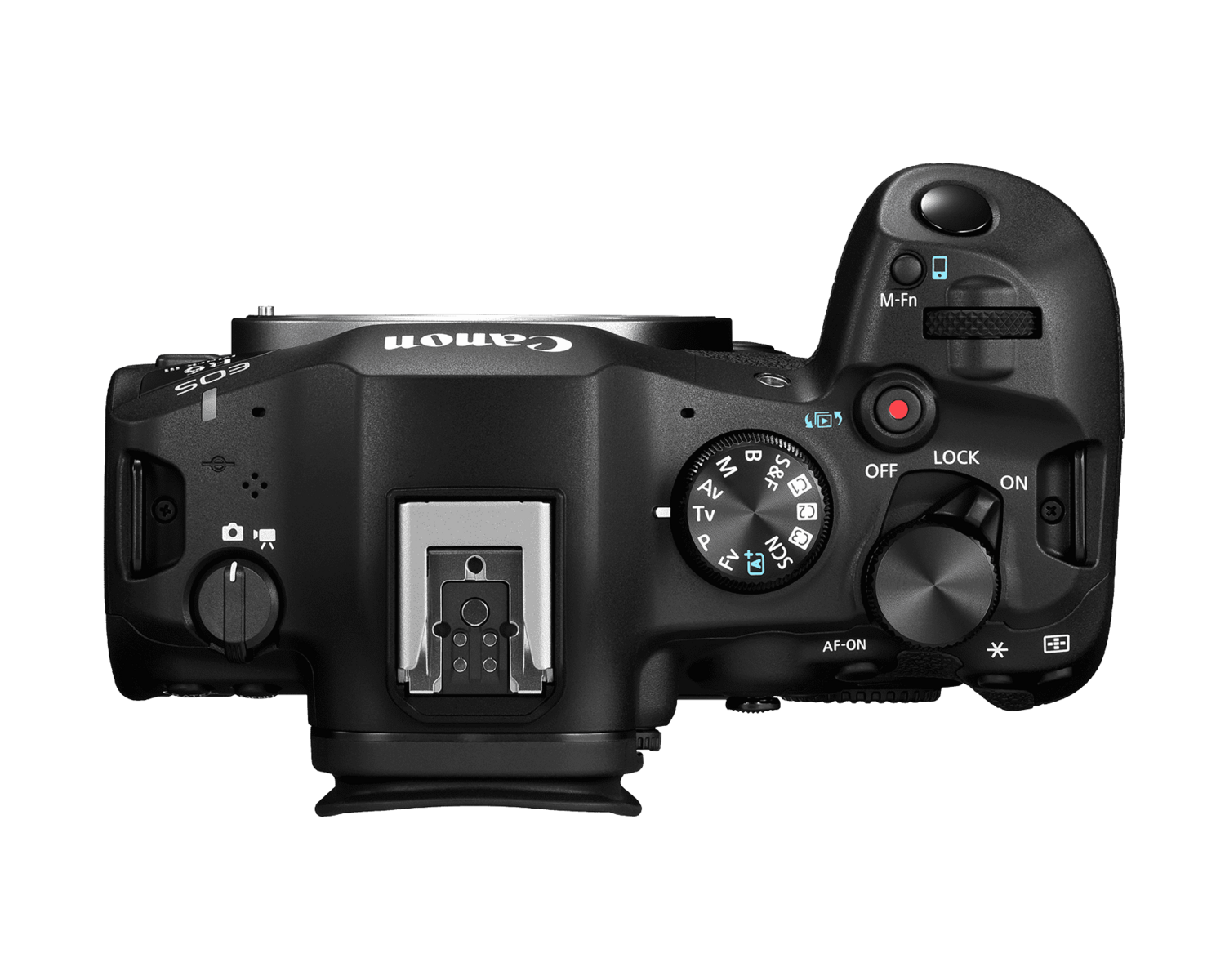
Shutter durability: tested to 500,000 cycles, shutter speeds 1/8000–30 s, plus Bulb.
-
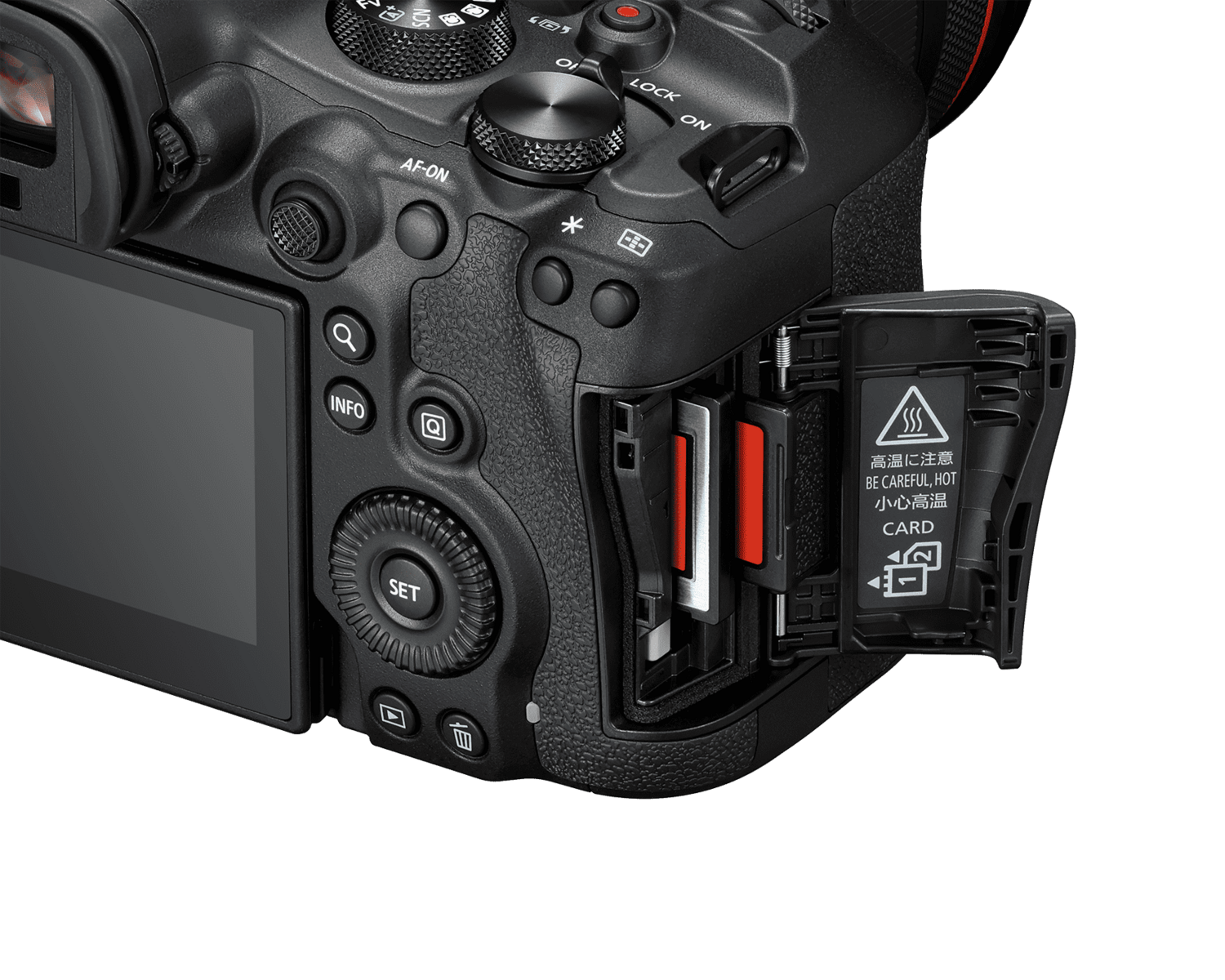
Dual card slots: (1) CFexpress Type B and (1) SDXC/SDHC/SD (UHS-II). Proxy, relay, and main/sub recording options available.
-
Video formats: up to 7K/59.94p raw light, 7K/30p open gate, 4K/119.9p, oversampled 4K/60p and 4K/30p. Canon Log 2/Log 3 and waveform supported.
-
Overheating guidance: several 4K modes show “no overheating restrictions”, published limits for 7K raw and 4K/119.9p from a cold start. Maximum per-clip duration is 6 hours below 100 fps and 2 hours at 100 fps or higher.
-
In-body image stabilization: up to 8.5 stops (center) with Coordinated IS, 7.5 stops at periphery. Movie Digital IS and subject-tracking IS available.
-
Autofocus: Dual Pixel CMOS AF, EV range -6.5 to 21 (stills). Up to 1,053 zones for auto selection, 6,097 selectable AF positions.
-
EVF: 0.5-inch OLED, approx. 3.96-million dots, 119.88 fps “Smooth” option.
-
Rear LCD: 3.0-inch vari-angle touchscreen, approx. 1.62-million dots.
-
Connectivity: USB-C (10 Gbps), HDMI Type-A, 3.5 mm mic and headphone, 5 GHz/2.4 GHz Wi-Fi, Bluetooth 5.1, UVC/UAC USB streaming up to 4K/60.
-
Battery: LP-E6P (LP-E6N/NH usable with limitations), CIPA rated up to approx. 390 shots via EVF (Power saving) or 620 via LCD.
-
Body: magnesium-alloy construction, 5.45 × 3.87 × 3.48 in, 609 g body only.
Why It Matters
Moving to 32.5 MP gives more cropping latitude for wildlife and sports without giving up the responsive feel of the 6-series. The 40 fps electronic drive and the 20-frame pre-continuous buffer increase keeper rates for peak action.
7K open gate at 30p future-proofs vertical and mixed-aspect delivery, and 7K raw light at 59.94p provides a robust capture for color work. Oversampled 4K improves detail at more common delivery frame rates, while Canon Log 2/3 and waveform support step up monitoring and grading control. Documented thermal behavior helps plan long takes.
Low-light AF down to EV -6.5 and high zone density cover tricky environments like receptions and theaters. The updated subject-detection behavior and video-centric focus features (including Focus Accel/Decel tuning) draw on Canon’s cinema bodies for more predictable pulls.
Up to 8.5 stops of Coordinated IS is among the most aggressive ratings in this class, reducing reliance on rigs and increasing handheld viability for both stills and video. Subject-tracking IS for video is a useful niche tool when you want the subject locked in place within the frame.
Dual media with main/proxy and main/sub options, 10 Gbps USB-C, full-size HDMI, and 5 GHz Wi-Fi make the R6 Mark III easier to integrate into mixed on-set and remote workflows, including 4K USB streaming.
Sample Images



Pricing and Availability
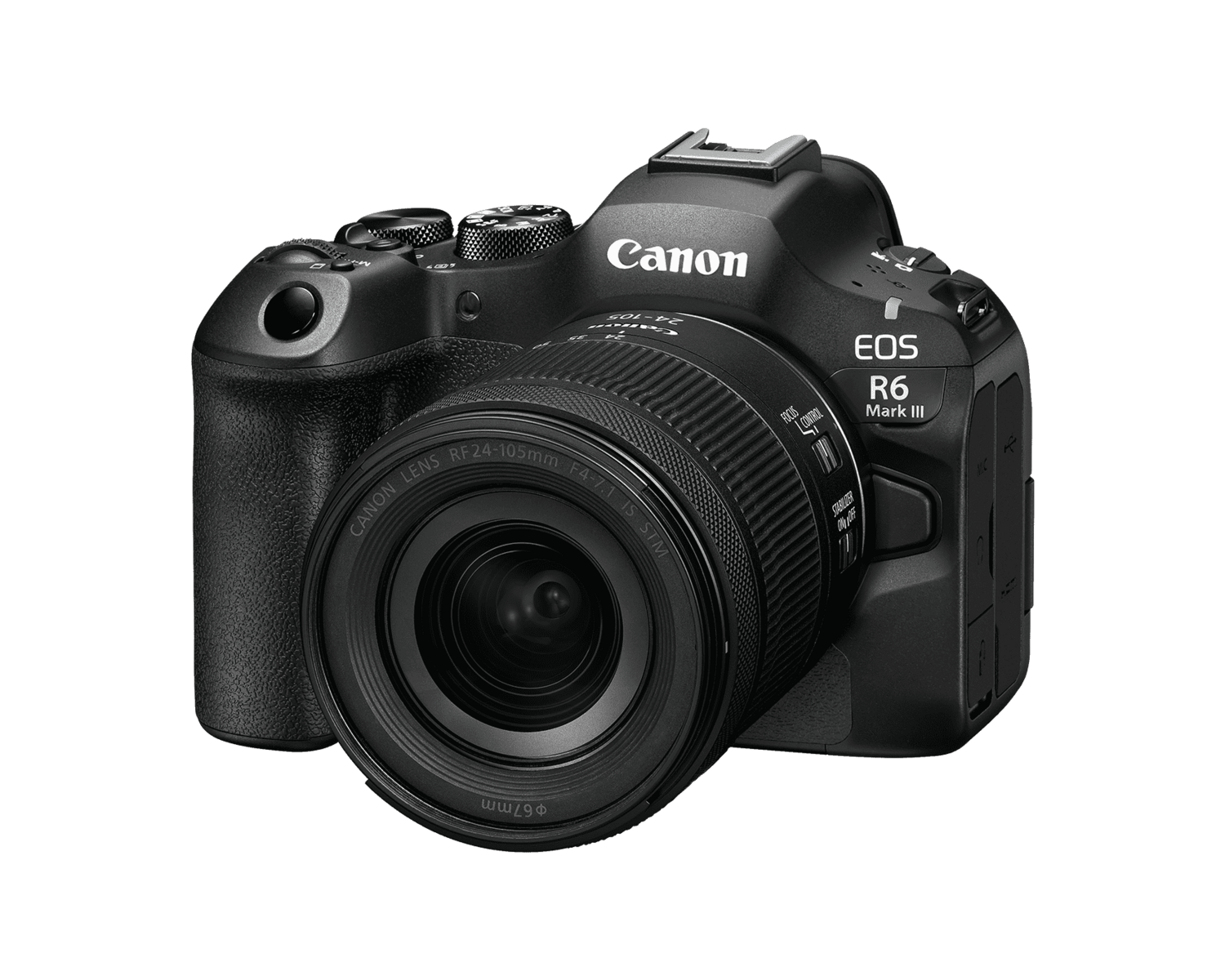
The EOS R6 Mark III body is expected in November 2025. Canon lists the following configurations and estimated prices: body-only at $2,799.00, a kit with the Canon RF24-105 F4 L IS USM at $4,049.00, a kit with the Canon RF24-105 F4-7.1 IS STM USM at $3,149.00, and a body bundled with Stop Motion Animation Firmware at $2,899.00.
System and Accessory Notes
The camera uses one LP-E6P battery, LP-E6N and LP-E6NH are supported with limitations. Storage relies on a CFexpress Type B card in slot 1 and an SDXC UHS-II card in slot 2. EF and EF-S lenses work via the Mount Adapter EF-EOS R.
Conclusion
The EOS R6 Mark III reads like a thoughtful iteration: higher resolution and faster rolling readout for stills, open-gate and raw options for video, and pragmatic monitoring and recording tools for a single-body kit. For creators who want one camera to cover sports on Saturday and client video on Monday, it lands squarely in that hybrid sweet spot.


Join the Fstoppers community for free
-
Post comments and join in the discussions
-
Browse the site ad-free
-
Share your work and get featured in the community
-
Compete in the photo contests for fun and prizes
1 Comment
8.5 stops stabilizer? Does that mean some lenses are can go greater than 1 second hand held?