
Macro and close-up photography is something we can all do, anywhere. We can find objects at home to photograph, or head outside into a local field or forest. It's a very enjoyable genre of photography. One of the more popular subjects to photograph is wildflowers.
There are, however, three mistakes I see people make, time and time again. I'm going to talk about these things, and also share how I use light to take control of my images and overcome some of these mistakes.
Obsessing Over Focus
People get fixated on nailing focus on a specific detail, and forget to look at the overall composition. This is particularly so with a macro lens that allows you to go in really close.
Knowing where to focus on an object like a flower is a challenge, particularly when working with such a shallow depth of field. Do you focus on the flower's petals, or its protruding stigma or stamen? Important decisions, but don't neglect the overall composition, because a perfectly sharp focal point doesn't make a great photo—a well-composed and constructed image does.
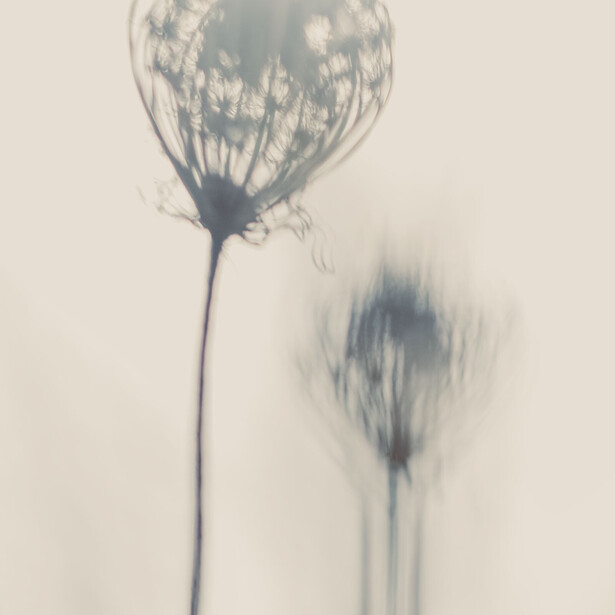
Sometimes it's good to ignore sharp focus entirely. If it's windy, you can embrace that and work with it. You can slow your shutter speed down and create an image with movement and motion. Communicating feeling and mood doesn't require technical perfection, just creative intention.
Ignoring the Background
This is a big one, and the most common mistake I see over and over.
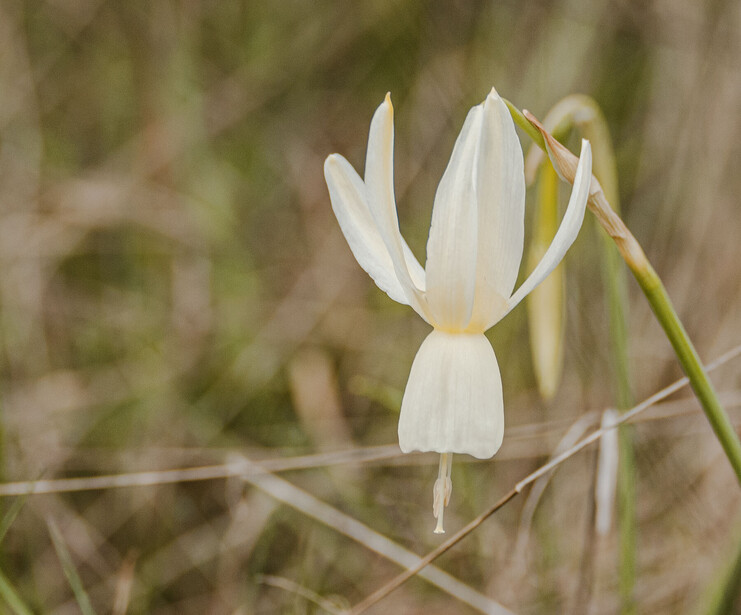
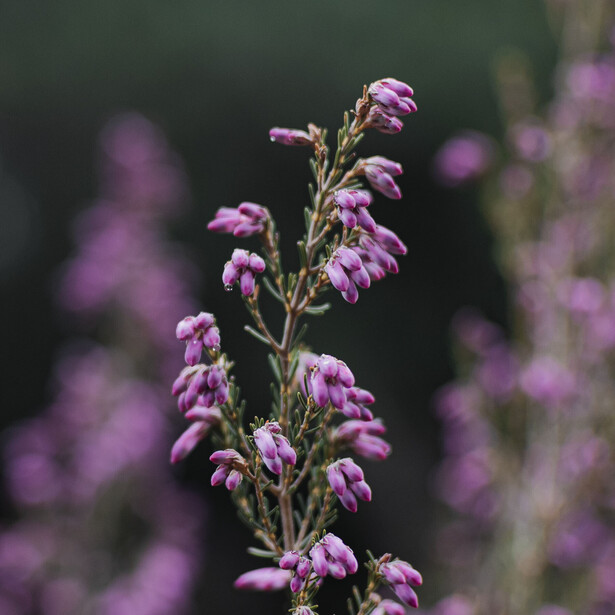
Because we're using very shallow depth of field and the photo is all about the subject, we know the background is a blur—but we don't actually pay enough attention to it. Any distracting objects, bright shapes, and cold patches will pull attention away from your subject and ruin the photo.
A common problem for wildflower photography is blades of grass, light-colored leaves, or patches of sunlight that create a bright spot. Sometimes we need to carefully remove the odd leaf, or blade of grass, or move the camera over an inch or two to find a better composition.
If the background competes with the subject for the viewer's attention, it's a huge fail.
Relying on Natural Light
Natural light can be beautiful, particularly when the sun is low and creates warmth and softness. But it's also unpredictable. In a forest, sunlight might not even reach the subject you may have found, so you have flat light to work with.
Overcast conditions and flat light mean low-contrast photos—photos where the subject blends in with the background, lacking separation and depth.
The only solution to come away with great photos is to take control of the light. Having our own light sources to work with allows us to make deliberate creative decisions, instead of leaving our image-making to chance.
Control the Light
Most people who light their subject use a little LED light panel, something that might cost $50-60, that easily fits into your pocket or small camera bag. They don't kick out a lot of light, but they're really useful for fill-in.
But you can employ a more advanced technique, using a much stronger light source to really take control of your light balance between the subject and background. For a deeper dive into this kind of work, Mastering Macro Photography walks through both the shooting and editing side in detail.
I usually take a Harlowe Mini II 20 W Bi-Color light with me in my bag, which kicks out up to 1,800 lumens. I use it set to daylight, at 5,500 K, although I love the ability to set it to something much warmer if I want to replicate low sunlight.
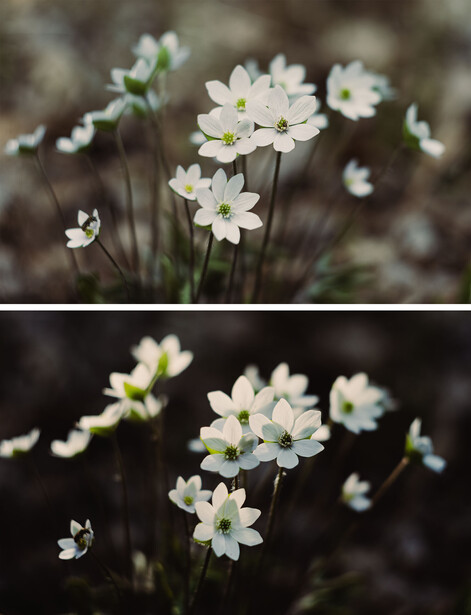
For some serious power, I use a Godox V480 flash with a tiny Godox X3 flash trigger for off-camera lighting. It might be worth mentioning I would never use a flash mounted on-camera to illuminate a subject, the results would be horrendous. Direct flash for any kind of photography is something to avoid in my opinion. It's best to use light to sculpt and create drama. Using a flash off-camera allows for some very creative results, and the sheer amount of power at your fingertips allows you to reduce the background to solid black if you wish, putting the focus completely on your subject.
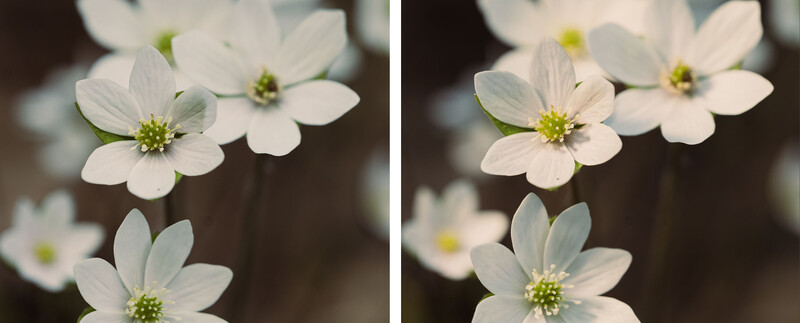
Below I created a scenario in my studio that replicates fairly overcast, flat conditions that you might encounter outside:
Photo 1: The subject and background don't have a huge amount of contrast in terms of luminosity or color.
Photo 2: I used my Harlowe Mini II 20 W Bi-Color light at full power to light the subject. I took my exposure from the subject, which results in a darker background and more separation.
Photo 3: I used my Godox V480 to repeat the same as above, but the huge increase in light results in a virtually black background.
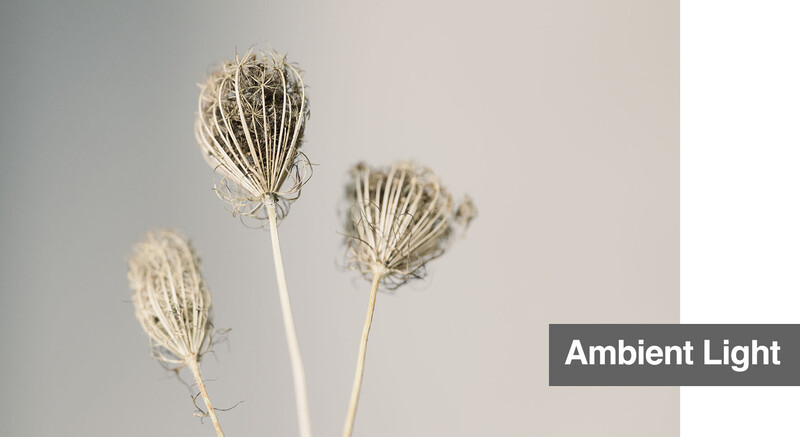
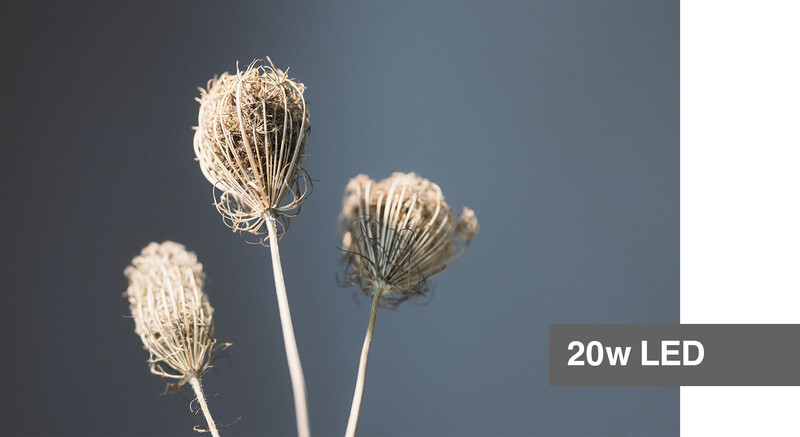
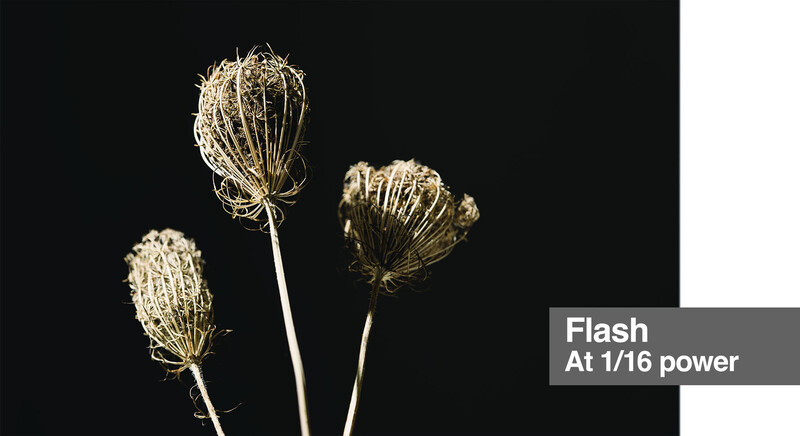
As you can see, using your own light source gives you complete creative control when doing macro and close-up photography. How much light you use is a creative decision. And it's incredibly satisfying and rewarding.

Join the Fstoppers community for free
-
Post comments and join in the discussions
-
Browse the site ad-free
-
Share your work and get featured in the community
-
Compete in the photo contests for fun and prizes
4 Comments
Thanks for the insight! Yes, neglecting a busy background ruins everything! You are using a kind of studio like set up. What hinders you to reduce the environmental light, prolong the shutter speed and have the save look and feel as with the flash?
Being out in the field with a flash you need to think about a diffuser to get a smooth light. Maybe you have to deal with a reflector or 'light guide'.
And even the 1st variant of your example is charming, due to it's lower contrast and colors you selected. It just feels calmer than the other two.
You can use strong undiffused flash to mimic bright sunlight, or a diffiuser for a softer look. When you use a powerful light source, you have complete control.
Great info when using different light sources and placement. But for me I have a number of macro lenses (for my Sony Cameras) and some lenses not listed as macro but also can be used close to a subject. Showing using the flash with a trigger and holding in different places helps a lot for captures of thought.
I recently got the Sony 100mm lens but using the flash on camera has been a issue of too bright in TTL mode. with the new options of the the A7RV and A7S III and Focus stacking things to learn is the f# used for the truly very close captures. If i may add something as far as camera used is 12MP camera vs the 61MP is the 12MP results will be better as far as size of each image capture and speed of processing after.
As far as the focus stacking there is a option you can choose for either and that is a three image capture for landscaping for far and near sharpness but also great for macro like is shown where you can get near and far sharpness also but not really looking like a macro per viewing.
The little light idea will be good to play with for many head lamps are LED today and some military ones have different colors to put on for another thing to play with.
I am one who for like ever never used a flash except a little flash that I used for flying hummingbirds far away using my 24-240mm long ago, it had reach.
Sometimes you have to ask What is a macro capture or is it just a close capture.
Hummingbird using FE 200-600mm F5.6-6.3 G OSS and A7M3 at 600mm and small Sony Flash but not really a macro maybe just getting close.
Macro narrow Field of View at F2.8 Sony FE 50mm f/2.8 Macro + A7SM2 at f/2.8
The flowers are a focus stacking using overhead LED lighting of over a 100 images at f/11 with the 100mm lens but a regular one image capture looks about the same. It is the focus point and the type of focus wide or tiny box at bottom of frame.
How Close Can You Get it AF's this close but image was not that close
Thanks for sharing your perspective and photos, appreciate it!