Autofocus is fast, reliable, and so baked into modern cameras that you probably never question how it’s tied to the shutter button. This argues that default setup quietly forces a trade you don’t have to accept once you start separating focus from exposure.
Coming to you from Craig Roberts, this practical video starts with a quick bit of history, from the Konica C35 AF to the Minolta 7000, before it pivots into a problem you’ve likely hit without naming it. Half-pressing the shutter usually locks focus and exposure at the same time. That feels neat until the spot you want sharp is not the spot you want metered. Roberts frames it as a control issue: you’re letting one finger decide two settings, even when the scene needs two different answers.
The fix is back-button focus, and the pitch is simple: move autofocus activation to a button under your thumb, then let the shutter button handle exposure metering and the shot. In real use, that means you can lock focus on the subject, then meter off a different tone without refocusing by accident. Roberts calls out a common landscape situation where the sky is too bright and pushes the camera toward underexposure, especially when you’re trying to hold detail. He also brings up ND grad filters as part of a workflow when the sky and foreground refuse to live in the same exposure. If you’ve ever recomposed after a half-press and ended up with a sharp tree and a soft subject, the tension here will feel familiar.
Where the video gets more interesting is when Roberts shifts away from sky-and-foreground talk and into movement in the frame. The point is not sports or birds, it’s the random moving thing you didn’t invite: a person crossing, a wave popping, a branch flicking in wind. With shutter-button focusing, the camera can decide that motion is the new priority right as you press to shoot. With back-button focus, you can set focus once, release your thumb, and keep that focus locked while the frame changes. That opens up a cleaner way to work in stages: focus, then meter, then recompose, without the camera renegotiating the deal mid-shot. He also hints at a second mode where holding the rear button gives you continuous autofocus, so you can choose “lock it” or “track it” without changing how you fire the shutter.
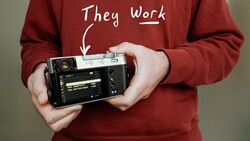
Roberts shares a personal setup choice that may surprise you if you’ve always lived in single AF or continuous AF. He keeps a Fujifilm camera set to manual focus on the dial, then uses the back button to trigger autofocus when it helps, treating manual focus as the default and autofocus as a tool you call up on demand. That approach has a practical upside when autofocus hesitates in low contrast or messy scenes, since your hand is already “allowed” to grab the focus ring without fighting the camera’s expectations. The part worth watching is how he describes the finger choreography, and how it reduces the little slips that happen when you’re trying to meter, focus, and frame while the light changes. He also mentions a preference about when continuous autofocus should live on the shutter button instead, which is the kind of detail that can save you an hour of menu-diving when your camera’s settings don’t match his exact layout. If you’re unsure whether this will feel awkward or natural, pay attention to how he suggests building the habit so it sticks. Check out the video above for the full rundown from Roberts.




Join the Fstoppers community for free
-
Post comments and join in the discussions
-
Browse the site ad-free
-
Share your work and get featured in the community
-
Compete in the photo contests for fun and prizes
3 Comments
Always I admired the people who managed to make a video topic based on natural behavior of any photographer, such as the using back button, only, for AF.
Thank You.
Back button focus is a waste of my time leave me alone with all this what's best. If it was better then the main button why was place on there. I noticed there always i someone trying to teach you something different. I didn't get this good by listening to people
There are a few of things you need to turn off and and turn on in the menu settings to get things going with this. But First how many can just press half way on the shutter button before going full press? Like all camera owners very few buy a book or get the PDF (less cost) on the camera. There are things in the Book/PDF that you will learn about and one is the Back Button Focus and how to set it up and use. I will admit I started with Sony back in 2014 and there were a few books by Brian Smith that covered the A7 and A7R but not A7S but I found in a book store (yes there were once books on cameras back then) that i read before buying and the things that could be done was an eye opener. I say this because most all photographers just look at and try to read that big piece of paper on things about the camera or go through the menu and change things that only they are used to never knowing what all is available in that $2-3+ camera. Like the A7RV and A7SM3 there are 600+ pages on each.
Back button focus as well as Auto Focus info fill a whole chapter as well as things on MF and AF through out the books and just making a video or just pressing a few buttons at the same time you should think and have play with a few times before that great image passes in front of you photo eye!