Chasing the newest body can make you miss the bigger question: did cameras already hit the point where they were good enough years ago? This video pushes you to rethink whether constant upgrades actually improve your work or just keep you busy comparing specs.
Coming to you from Craig Roberts of e6 Vlogs, this reflective video argues that 2016 marked a high point for digital camera design. Four releases from that year anchor the discussion, each used as evidence that meaningful gains in image quality have been rare since. The focus stays on real photographs, not charts or marketing language. You are asked to think about prints, books, and long-term projects instead of firmware updates. That shift alone makes the video worth your time if gear research has started replacing shooting.
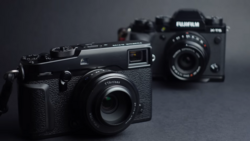
A large part of the argument centers on how cameras feel to use, not what they promise on paper. The comparison between older Fujifilm bodies and newer ones like the X-T5 highlights this clearly. Newer models offer faster processors, higher resolution, and more features, yet that does not always translate into better photographs. The video suggests that friction matters, especially when menus, screens, and automation pull attention away from seeing. When a camera encourages simplicity, you tend to shoot more and second-guess less. That idea runs quietly through the entire piece without being overexplained.
The Olympus section turns the conversation toward practicality and restraint. Rather than praising innovation for its own sake, the video questions whether current models like the OM System OM-1 or the OM-5 actually change the end result for most work. Computational features and stacked specs sound impressive, but the video pushes you to consider how often those tools are used outside of edge cases. There is also a strong reminder that handling, balance, and control layout shape how a camera fits into daily shooting. If the body encourages hesitation or distraction, technical gains lose their value. This part of the video quietly challenges the habit of replacing a capable tool simply because something newer exists.
The discussion of full frame cameras widens the scope beyond mirrorless trends. The video treats DSLRs not as obsolete relics but as complete systems that still hold up for demanding work. Landscape, weather-sealing, large prints, and professional reliability all come up without nostalgia or defensiveness. The video also touches on how older cameras still serve specific roles today, such as digitizing film or acting as dedicated studio tools. That perspective reframes “old gear” as settled, dependable equipment rather than something waiting to be replaced. The underlying question becomes whether the next major leap in camera design will require manufacturers to simplify instead of adding more. Check out the video above for the full rundown from Roberts.





Join the Fstoppers community for free
-
Post comments and join in the discussions
-
Browse the site ad-free
-
Share your work and get featured in the community
-
Compete in the photo contests for fun and prizes
2 Comments
May so-called "upgrades" aren't. A good example is the Olympus OM-D E-M1 MK3 where the most notable change from the MK2 was removing the effects settings from the main dial and burying them instead in the menu or the touch screen. We were told that it was "more professional" as "professionals don't use them". Utter HOGWASH and made the camera less easily useable.
For everyday use the other supposed improvements that I really didn't notice were eclipsed by this "professionalisation" aka camera snobbism. The only useful improvement was the small rear joystick, largely dissipated by relocating other buttons making switching between the two annoying.
I have both, the feature set, specs and performance are virtually identical, but for convenience speed and usabilty, the MK2 is the one I tend to go to. I like to have a second camera body, I may well "downgrade" and trade the Mk3 for another Mk2.
Your article nailed it.
Compared to DLSRs, it’s computational photography that makes newer mirrorless cameras well worth the upgrade—at least to those that have it; e.g. OM System. LiveND, LiveGND, LiveComp, Focus Stacking, Starry SkyAF. Not gimmicks, but ways of capturing your extended vision and staying true to #RealWorldPhotography without GenAI.