Most of your time with a camera happens under ordinary skies at ordinary places, yet the landscape images that get the most attention online are blazing sunsets over famous viewpoints. That gap shapes what you think a successful outing looks like, and it can make the scenes you actually encounter feel like second best.
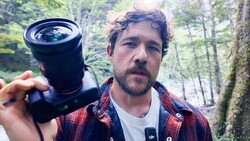
The assumption that a good landscape photograph needs dramatic conditions is the one Craig Roberts of e6 Vlogs takes apart, and he does it with a single, unglamorous word: pleasant. Roberts says his locations are never really what you would call epic, even the good ones. The light he gets is sometimes similar to what other landscape shooters call epic, but he settles on a calmer description. He also admits the obvious problem with that word. He doubts many people would click on a thumbnail promising pleasant conditions at a pleasant location. His argument is that pleasant is probably what you see most of the time when you're out with a camera, which makes it far more relatable than the escapist version of the hobby.
YouTube itself is part of the discussion. With so much content competing for attention, Roberts points out, everything has to feel bigger and more dramatic than real life, and a video that doesn't show a dream destination can seem like it's failing. He pushes back on that a little, noting that he is showing places you may never have visited and shooting in light that is epic to him, even if it runs flatter than the so-called ideal. He favors less-than-perfect locations, quieter areas, and the spaces between the famous spots. His own work has moved away from chasing colorful sunsets, and he says plainly that seeking epic all the time sounds exhausting. Pleasant, in his words, is what keeps his photography alive.
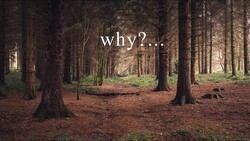
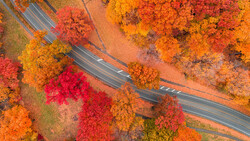
Overcast and flat light suits plenty of subjects that hard sun works against. Woodland, waterfalls, wet rock, moss, and autumn leaves often look better under cloud, because the sky acts like an enormous softbox. Shadows open up, highlights stay manageable, and colors come through with more saturation since there's less glare bouncing off every surface. With no glowing sky to carry the frame, composition, shape, and texture have to do the work. The local approach also sidesteps a problem that has grown alongside social media: a small number of famous viewpoints now draw heavy crowds, and places like Horseshoe Bend in Arizona have added parking fees and infrastructure to cope with the traffic. A field, lane, or river bend near home rarely has that issue. It also lets you return again and again, in fog, frost, rain, and summer haze, until you know exactly where the light falls in each season. A once-a-year trip to a well-known location can't give you that kind of familiarity. One easy way to start is to pick a short route you already walk or drive often and allow yourself to stop at anything that catches your attention, even when it feels too ordinary to bother with.
Roberts makes the case that many pleasing scenes begin as soon as you step out of your front door. When you load the car and head for a location you hope will deliver the same light others got, you pass through a lot of landscape on the way. Between home and epic, as he puts it, sits pleasant: scenes full of potential if you slow down and look. He's clear that those scenes can take more effort to capture than the dramatic ones, since there's no fiery sky doing half the job. He also separates two kinds of learning. Technical skills, he says, are often the easier part, while creative skills, the ideas and the way of seeing, are where the real challenge lies.
The rest of the case for pleasant over epic is in the video above.


Join the Fstoppers community for free
-
Post comments and join in the discussions
-
Browse the site ad-free
-
Share your work and get featured in the community
-
Compete in the photo contests for fun and prizes
No comments yet