
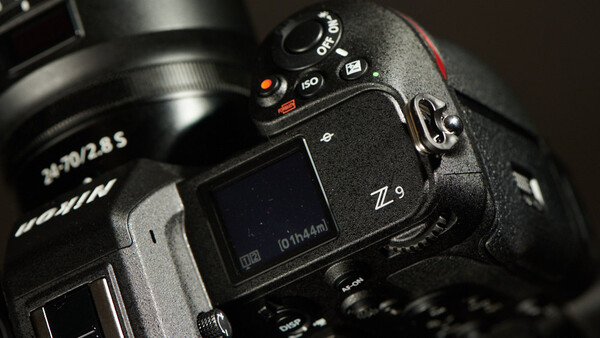
Today, I'm not talking about the newest camera on the market. But I'm talking about one of the best. And, in the end, that's kind of the point.
I'll admit, I've been struggling a bit in the last week — not on a personal level, but on a practical level. I've been reviewing a lot of gear lately, and there's one particular piece of camera gear that I'm working on a longer series about. That camera is terrific and has plenty of pros (along with some cons). The problem I'm having is not with writing about that camera product in a vacuum. The problem comes when I start to think of it within the larger ecosystem of cameras already in my collection.
In many ways, this is an indication of good fortune. I've been a professional filmmaker and photographer for over two decades now, and it's been a long time since I gave any thought to buying my first camera. That doesn't mean that I've always had the fanciest or most expensive camera on the market. But when making purchasing decisions, it's been a long time since I was operating from zero.
I mention that because it alters my purchasing decisions from someone who is just starting their journey into a sea of options. Instead, when I buy a camera, it's less about trying to imagine the elusive and non-existent "perfect camera" and more about asking a fundamental question: "How would this product fundamentally solve an issue that is having a tangible impact on my ability to serve my customers?" Or, at least, that's the question I should be asking.
Of course, I'm human too, and am just as susceptible to brand hype and YouTube gear lust as everyone else. So when a new product comes out, especially one that breaks ground by offering new features that my current gear doesn't possess, I get tempted. But what a camera can hypothetically do for your workflow versus where it ultimately ends up landing in your camera lineup are quite often two very different things. And in my decades of making camera buying decisions, if I'm being honest, the number of new bodies that genuinely added sustained value to my workflow, versus the ones that just made minor and ultimately insignificant upgrades, has been pretty minimal. In retrospect, the smarter thing to do is to always take time to cherish what you already have before going in search of greener pastures.
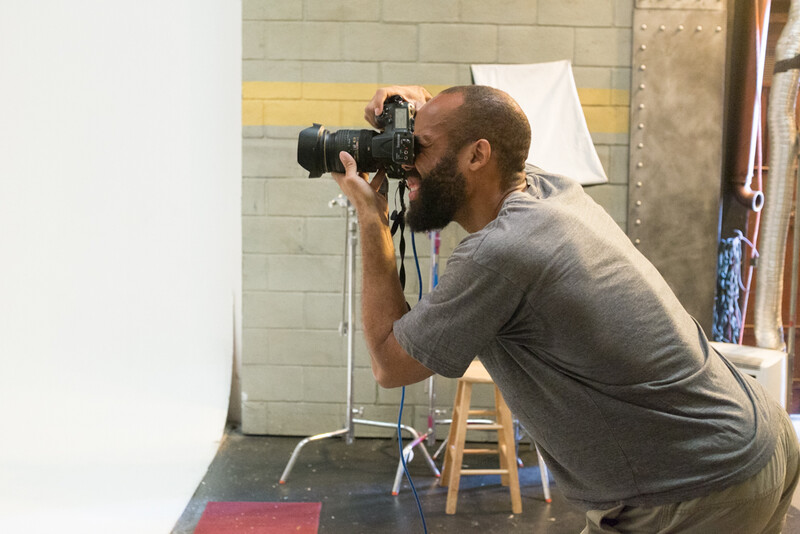
D850
Actually, my journey with the Nikon Z9 started at a very similar period to where I find myself now. Nikon has always been my home base of choice, and I had worked my way up through a long line of DSLRs until eventually landing on what I still, to this day, think is the best DSLR ever made: the Nikon D850.
That camera was absolutely perfect. The perfect number of megapixels. Great focus speed for my use case. The right ergonomics and body type. Legit, that was the tool that helped me create what I still feel was one of my most fruitful periods as a professional photographer. So much so that, even just last week, I found myself perusing the used sites and wondering if I might one day leave mirrorless cameras altogether and return to shooting with a DSLR.
The D850 only had one significant drawback: the video capabilities were just so-so. I definitely shot videos with the D850, and I did have other cinema bodies I could rent for my filmmaking. But the D850 was existing at a time when mirrorless cameras were really in the ascendancy and driving video innovation in a small form factor. Nikon, my legacy brand, was slow to the party. It took them a while to introduce their first mirrorless cameras and, even then, the early models were lacking in the video department compared to much of the competition.
That mismatch led to the first serious impulse to see if there might be a better product on the market that would suit my needs. I even flirted with the idea of leaving Nikon altogether. Unthinkable.
All this introspection led to a series of misguided — and expensive — camera purchases. I was determined to fix this perceived hybrid photo/video gap in my camera lineup. So, again and again, I kept putting down my credit card every time I saw a new camera released with better video specs.
But something else happened again and again as well. Every time — every single time — I bought a new fancy camera, I'd repeat the same pattern. I'd immediately thrust it into action and relegate my D850 to backup work. I'd push the limits of the new camera, trying in vain to maximize its technological capabilities while suppressing simmering thoughts that, regardless of the specs, I simply didn't like using the new camera. Then, inevitably, within two or three months — usually just long enough that I couldn't return the new camera for a refund — I finally would accept the fact that, regardless of specs, the D850 was simply the better camera for my particular workflow. It may not have been better on a spec sheet, but in terms of how I personally get the best images out of a camera, the D850 was head and shoulders above the rest. The lack of video specs was real. But in actual practice, the benefit of purchasing a new camera was not even remotely close to what I was losing by not shooting with the D850.
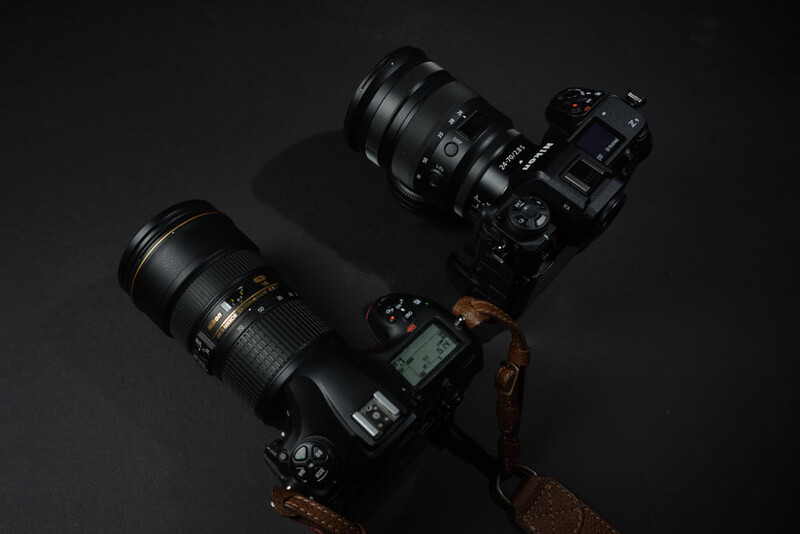
Enter the Z9
Years went by and, purchase after purchase, this pattern of yearn, purchase, regret, return to D850 continued to play out. By this point, I had a hodgepodge of disparate camera systems cluttering up my kit. And when it came to brand loyalty, I truly had one and a half feet out of the door.
But then came the Z9. It was Nikon's first mirrorless camera that legitimately had the internal video specs that I needed to truly consider it a hybrid camera. Some of the earlier Nikons had additional features that you could get by sending signals out to external monitors or other accessories. But the Z9 was the first time everything I needed was built into the same body with zero jerry-rigging necessary to get it all to work.
While much has been made of Nikon's excellent firmware updates that, in the five years since its release, have really made the Z9 into an entirely new camera, the Z9 — even with its initial firmware — was one of those rare cameras that came out of the box already optimized for my work.
Usually, "hybrid" cameras are better in one area than the other. Or they have a lot to offer but intentionally leave out certain features to protect that company's cinema line of cameras and prevent internal cannibalization. Even without artificial hindering, most mirrorless cameras make sacrifices versus more specialized cameras. They are "hybrid" after all, so you just have to live with some compromises. But the Z9? There were no compromises.
It had the same-sized sensor for stills that I'd grown accustomed to with my D850 — megapixels, check. It shot up to 8K video in a 4K world, so any concerns about video resolution went out the window. Even better, the Z9 could shoot internal raw video without needing an external recorder. That was one of the biggest drawbacks I was having with my earlier mirrorless experiments. The moment you put an external monitor on a tiny mirrorless body, it stops being tiny. Even worse than the overall size, the ergonomics of handling a mirrorless body with a mounted EVF never quite worked for me.
Speaking of ergonomics, this is where the Z9 delivered in ways that I wasn't expecting. I had always had the mid-sized Nikon DSLR bodies like the Nikon D750, D800, and D850. I'd never owned the larger built-in grip chassis like the D1, D2, etc. In fact, had the Nikon Z8 been released prior to the Z9, I probably would have opted for the smaller Z8 body. It's only because the Z9 came out when it did — right on the precipice of me potentially moving to another brand altogether — that the purchase became essentially one last Hail Mary pass to keep me in the system. But immediately upon getting the Z9 into hand, I discovered that I absolutely loved the larger body. In theory, one might think it heavy, but it really wasn't. Furthermore, because of the uber-comfortable grip, the slightly heavier Z9 is actually easier to hold for long periods of time versus its smaller counterparts.
The other low-key hero in the Z9 story? The battery. Don't get me wrong, Nikon has always been pretty good about battery life. But in the mirrorless world, the Z9 was on a level all its own. Being able to shoot entire video production days and maybe change the internal battery once was a legitimate game changer. Remember earlier how I mentioned that a new camera should actively solve problems? Improved battery life means fewer battery changes, which means fewer breaks in production, which means more setups per day. That's a tangible benefit.
The Z9 also addressed another key issue I'd been having. When I said that I sometimes still dream about going back to the DSLR days, that mostly has to do with the optical viewfinder. My transition to mirrorless was most stunted by my inability to adjust to staring at that little TV screen inside an EVF instead of seeing an optical image through a traditional viewfinder. Just the digital blackout alone was actively making photography harder when capturing fast-moving subjects, which is a large part of my stock and trade. The Z9 solved this issue by implementing a dual video feed EVF. So what was happening with the sensor and image capture wasn't going to interrupt what you were seeing through the EVF. Suddenly, it felt much more like operating with a traditional optical viewfinder. Problem solved. Improved shooting experience. One more tangible benefit.
The list went on — from the camera's focusing speed to its refusal to overheat, its physical durability, and how easy it was to balance larger lenses on the larger body. Setups that felt increasingly front-heavy in my D850 setup suddenly felt comfortable and balanced in the Z9 era. The Z9 was the camera that finally allowed me to enter the mirrorless camera world. It was the camera that finally was, objectively speaking, a big improvement to my workflow that solved legitimate obstacles to providing service to my clients. It was, unmistakably, worth the upgrade.
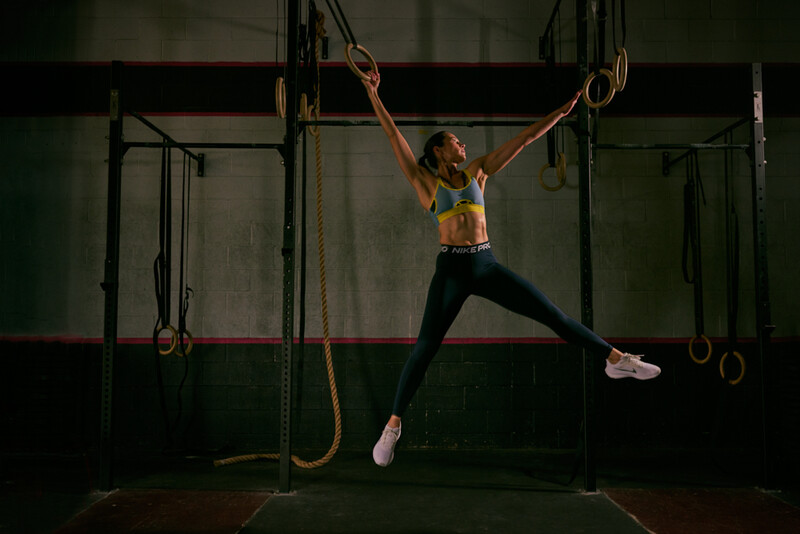
Long Live the King
All of which leads back to where I started this article. Trying to take an honest look inside a vacuum at a new photo tool is difficult when you've already found the perfect fit. It's not that the newer tool is worse. Rather, it's that the Z9 still seems to do it better.
Some of that could be written off by the price. The Z9 is the most expensive non-RED camera in the Nikon line. But is it? When I think about how much money I've spent on the Z9 over the last five years versus how much money I've spent on less expensive cameras that ended up being more expensive due to the number of external accessory purchases I needed to make in order to have them be as usable as the Z9, the oddity is that the Z9 has ended up being one of the cheapest cameras I've ever owned. Everything you need to work is just kind of there. And if you do feel the need to build it up — either to rig it more heavily for video or just add a simple external monitor — the Z9's basic girth is such that it can grow in size without sacrificing stability.
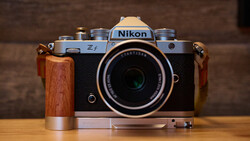
Again, it's not lost on me how fortunate I am. With the Z9, I legitimately purchased the best camera I've ever owned. In fact, while struggling to review a new camera the other day, I realized that I had unknowingly placed the product in a no-win situation. I realized that, in addition to the Z9 being my favorite all-around camera of all time, the Nikon Zf being my favorite "personal camera" of all time, and the RED KOMODO being my best "cinema value" camera of all time, I was currently in possession of three of my all-time favorites at once. So every new camera entering that ecosystem is going to be compared against a mature system with something of a gilded hierarchy already in place. Hard to compete with that.
But that realization also reminded me of what a successful gear purchase really is. It's not about always having the best specs available on the market at any given moment. It's about finding the right combination of tools to form an overall ecosystem that makes you as effective at your craft and as efficient in your business as possible. Adding a new piece of gear isn't about adding incremental specs. Investment is better served by identifying practical shortcomings in your workflow and finding ways to address them with tools that work seamlessly within that environment. The grass isn't always greener on the other side.

Join the Fstoppers community for free
-
Post comments and join in the discussions
-
Browse the site ad-free
-
Share your work and get featured in the community
-
Compete in the photo contests for fun and prizes
21 Comments
I was thinking about Nikon but why do the Z9 and Z8 have to be so big? I ended up with a used Sony A1 because of the size.
I can’t stand the Sony exactly because of its size.
It feels like it’s something I found on the bottom of a box of Cracker Jacks;
And that’s not a good thing.
Buy an A1 like everyone else. No need to drag that boat anchor around.
Why? Its more expensive, and a downgrade in many metrics. Ergonomics and raw video codecs specifically. Z9 is only one lbs heavier.
The exact reason my Sony sits on a shelf collecting dust, is because I can’t stand puny little cameras that feel like a child’s toy in my hand.
While I’m happy to hear you do “what everyone else does”, some of us have Man Sized Hands and we’re not like the rest of you.
I've had my Z9 since it first came out, and it's still the only camera I want to grab when making films and videos. Many people say its too heavy, but the weight works in your favour for getting stable hand-held footage.
Exactly. For video especially, I really prefer the added weight.
Apart from everything you wrote about the Z9, I think the firmware update that Nikon offered were indeed amazing. If they can keep doing it, I doubt we need the Z9Ii anytime soon. I used to complain about the weight, but the battery and its utility in harsh climates (extreme temperatures) makes it worthwhile.
And the bdoy adapts to weight by getting stronger :-)
I love my Z9s. They are workhorses from events to the studio. I think the D850 had slightly better image quality, however. And the TTL performance on the Z9 is abysmal. I've been fighting with it for over three years now. Even with a SB-5000. My D4 / SB-800 was an order of magnitude better.
Agreed on all points. Nikon user since 1980 and the days of F2 film cameras. I resisted switching to mirrorless due to the EVF's until the Z9 came along. Then I was sold. The best, most versatile photographic tool I've ever owned. After 4 1/2 years, I've not even come close to exhausting its possibilities. A joy to handle and use. Like you, got a Zf as my walkaround street camera, the perfect retro bridge between My Z9 and my F2........
Preach.
I was in the same boat -- I was ready to upgrade and wanted mirrorless for the benefits and almost left Nikon. Then the Z9 came out. Then I finally was able to snag one.
Less than a year later, I bought a second one. Best camera I've ever owned.
Shoutout to the Zf for being my fun camera that makes for a killer backup in a pinch as well.
I passed on the Z9 and waited for the smaller Z8 (got that on release), which is essentially the same body less the grip and weight). The Z8 is totally awesome still, I see no need to upgrade, apart from a smaller portable carry anywhere body, for that I still use my Z6 I today. Hoping Nikon get around to building a serious small full frame at some point - like the Q43 or the Sony DSC-RX1R III.
At last someone who appreciates the size and ergonomics of the z9! also came over from D850 and personally loved the form factor... just molded right into my hand and with the builtin grip have never had any joint or tendon problems. For me the only negative is they slowed way down on the updates compared to z8 and z6 which was weird as the z9 is the flagship otherwise happy.
The interesting thing about the z9 and z8 here in europe is that photographers flocked to the z8 when it was released and that had for me a very positive effect in that one could pick up a used z9 with ~10K images for the same as the z8 or 200-300 euro ($330) cheaper which for me was a no brainer.
The Z9 is my dream. But I have sooo much DSLR glass. I love my D500 and D750. Can I let them go and use an FTZ2 adapter with good results?
yes that willl work well but it depends if it was good quality f-mount glass. my old 105mm f/1.4 and 200mm f/2 were so much better on the z9.
Most F lenses work fine.
Lenses with the screw drive won’t autofocus.
One of my favorite lenses of all time is the 135mm DC, but autofocus is a no go with the FTZ’s.
The FTZ adapter is actually really good. Like you, I had a bunch of F glass when I first bought it as well.
Returned to loving Nikon again after leaving and having a small affair with Sony for a few years. I do like the Z9 and have 2 now but have to say use it less and less these days since Z6iii came out. Never ditched my 850 either - probably the best SLR ever made.