Smartphone cameras are good enough now that the question for many casual photographers isn't whether their phone can take the photo, it's whether they should still bother owning a camera at all. The answer has less to do with sensors and lenses than most gear debates assume.
That case gets laid out by Teo Crawford, who freely admits he uses his phone for photography and once shot travel video on a phone instead of his Sony camera. His argument isn't that a camera makes better images because of its specs. It's that the tool you use shapes how much you enjoy the activity, and enjoyment drives how often you actually pick it up. More practice leads to better results over time, which loops back to the most common advice given to beginners: shoot more. Crawford separates this out for people who treat photography as a hobby, an art, or a job, and he's honest that if you only want a few snapshots of a trip or your kids, none of this really applies to you.
He also dismantles a couple of assumptions along the way. A bigger sensor and interchangeable lenses give a camera genuine technical advantages in low light and image quality, but Crawford points out that technicality can act as a barrier. If someone is stuck thinking about settings instead of the moment, a phone might serve them better. He's blunt about editing too: the idea that a camera gives your photos a "look" is a misunderstanding. Warmth, contrast, and nostalgia come from the editing process, not the body. What a proper camera does is lay down a cleaner base file that's easier to work with, especially when shooting raw.
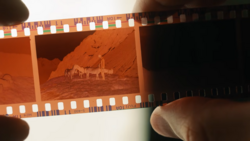
The through-line is a comparison Crawford makes to cars. A bad car still gets you from point A to point B, but a nice one makes you want to drive. He'd rather use a real camera than a "slate with a touchscreen," and that preference is the whole point. He even applies it to his own choice to shoot film, which he calls technically inferior and economically senseless, yet more fun, which for him means better photos.
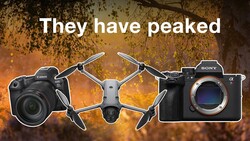
If you want to apply this yourself, the useful move is to stop shopping by spec sheet and start shopping by feel. Ask which camera makes you want to leave the house. That might be a heavy, deliberate body you enjoy holding, or a small one you'll actually carry every day. This lines up with a broader shift in the photography world, where compact cameras, point-and-shoots, and film gear have surged in popularity despite being weaker on paper than a modern flagship phone. People are choosing the experience on purpose. The friction of a dedicated camera, the deliberate act of raising it to your eye, is exactly what keeps some shooters engaged where a phone would have them scrolling instead. Picking a tool you look forward to using is a legitimate strategy, not an indulgence.
Crawford backs the idea with research rather than vibes. He cites a 2014 meta-analysis, which found intrinsic motivation was positively linked to performance, and the link was strongest when quality mattered more than raw output. Photography is a quality-based activity, since taking more frames doesn't automatically mean better ones. He also references Davis, Bagozzi, and Warshaw on why people adopt technology, separating usefulness from enjoyment. Usefulness mattered more, but enjoyment independently influenced whether people kept using a tool. A phone may be the more convenient device, yet if a camera makes you more excited to go out and more attentive while shooting, that enjoyment counts.
Crawford stops short of turning this into a license to overspend, joking that you can reference his theory next time you justify a purchase before adding that one camera probably suffices. It's a grounded conclusion: fun leads to motivation, motivation leads to consistency, and consistency is what actually makes you better.
Watch the full breakdown in the video above to see how Crawford connects the research to his own film habit and where he lands on the middle ground he prefers to shoot in.



Join the Fstoppers community for free
-
Post comments and join in the discussions
-
Browse the site ad-free
-
Share your work and get featured in the community
-
Compete in the photo contests for fun and prizes
3 Comments
i find the computational photography of the Apple iPhone not to my liking however this can be mitigated by the excellent but relatively expensive ( in terms of app subscriptions ) Leica Lux app
i prefer the photographs from the Samsung Galaxy S series however i noticed when i upgraded from my S20 to my S23 that the colours became more vibrant but more artificial
also, i find that the wide angle module of most mobile devices produces rectilinear distortion, some of which can be corrected in post-processing software if shot in raw, and some of which cannot, depending on whether the software has the appropriate mobile device lens profile
What I despise most about my camera is the terrible software, and this is about all camera manufacturers, not any single one in particular.
Where I prefer to use my iPhone is in things like time-lapse photography, slow motion video, and panoramic photos. On the iPhone, all three of those are exceedingly simple to execute, and the results are nearly instant. On my dedicated camera, I can do each of those with a tedious manual process that requires a computer and third party software.
When I point out that Apple has solved these problems with software TEN YEARS AGO, then curmudgeoney old photographers usually bark back, "It's not that hard to do" when they talk about the degenerate software on their dedicated cameras.
Just take a look at what DJI can do with their software on their cameras. Why cannot Sony, Canon, Nikon, Fujifilm, and Panasonic do the same? (OM System gets a pass here, since they are doing some cool stuff with software.) I think part of the reason is the curmudgeoney old photographers who "don't want their camera turning into a smartphone", but fail to explain the technology in dedicated cameras that they rely on and its already in use in smartphones doesn't somehow "turn their camera into a smartphone" (sensor stabilization, autofocus, touchscreen, et cetera -- hypocrites.) I think the other part of the reason is the superiority complex that these camera companies have: "Physics is on our side, so we don't have to innovate in software" seems to be the way they see it.
Where I like my dedicated camera is in the extended reach I get with zoom lenses, the ergonomics and feel of using a dedicated camera, the fun with playing with different interchangeable lenses (in particular, vintage lenses), and the variety of looks I can achieve with different lenses. And I don't regret buying a dedicated camera one bit because it's brought my life so much joy. But I'm not going to pretend that the software on the camera isn't pathetic and degenerate compared to what's available on smartphones.
If Apple were ever to make an interchangeable lens camera, then the camera companies should be deeply, deeply worried. Will Apple do it? Hard to know, but there was this interesting patent last year: https://ymcinema.com/2025/12/11/apple-modular-camera-system-interchange…
(Apple being Apple, they will probably "innovate" their own proprietary mount for this system, were it ever to exist.)
Now, cue the curmudgeoney old full-frame supremacists to scold me, but I challenge them to show me a dedicated camera that can take a panoramic photo as easily and forgivingly as this 10 year old iPad Air sitting on my desk.