Most people believe infrared photography only works under harsh midday sun in the middle of summer. A single shoot at an isolated hilltop church puts it to the test.
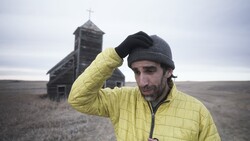
The location is St. Andrew's Church, a redundant chapel sitting some 300 m above sea level on Greyar Hill in the North Pennines. Jason Friend heads out there with a full-spectrum Sony body fitted with an infrared filter, which turns the setup into a black-and-white infrared camera. Friend has been waiting for the right conditions, but he pushes back on the idea that you must shoot infrared under a blazing noon sky. Treat infrared light the way you treat any other light. Wait for it to soften, drop a little, and cast shadows, and your files improve. He suggests shooting a few hours before or after midday rather than during it.
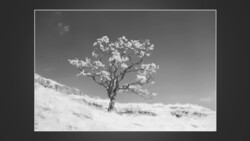
The real subject isn't the church itself but the hopper mausoleum in the graveyard, which Friend expects to look striking in infrared. He works handheld first to scout angles, then plants his tripod and talks through the entire capture: base ISO, f/11, a two-second self-timer, and a careful read of the histogram to protect shadow detail. His lens tops out at 28mm, so he zooms by moving his own body, and he fusses over gravestone placement so nothing overlaps or pierces the mausoleum. Later he switches to a 20mm lens to exaggerate the foreground and pull in a tree and the wider feel of the graveyard. He tries landscape, guesses at a square crop the camera can't preview, then reconsiders in post.
Friend moves each raw file through Lightroom for crops, vertical corrections, and dust cleanup, then into Silver Efex Pro for presets, control lines, and area selections. He lifts shadows without letting contrast go flat, darkens skies, and on one frame adds grain, something he rarely does. He also uses Lightroom's generative removal to clean a building out of one composition, then openly asks whether that crosses an ethical line. He lands on keeping it, reasoning that infrared already shows a world your eyes never see, and invites you to weigh in.
Infrared sits in an interesting spot right now. Full-spectrum conversions and clip-in filters have made it far easier to get into than it was a decade ago, and mirrorless bodies that people would otherwise trade in make ideal dedicated infrared cameras, exactly what Friend does when he holds onto his Sony infrared body while the rest of his Sony gear moves on. The principle he leans on carries beyond this niche. Golden-hour thinking applies to infrared just as it does to color landscapes, because directional light and long shadows shape a photo regardless of which wavelengths the sensor records. If you want to try it, that shift in timing costs nothing and works with whatever conversion or filter you already own. The generative-fill question he raises also lands squarely in a debate running through the whole field, from contest disqualifications to stock-agency policy, and infrared makes a useful place to think it through since the image is already a departure from reality.
Watch the video above to see which of the four frames Friend picks as his favorite and how he decides the object removal was worth keeping.



Join the Fstoppers community for free
-
Post comments and join in the discussions
-
Browse the site ad-free
-
Share your work and get featured in the community
-
Compete in the photo contests for fun and prizes
No comments yet