
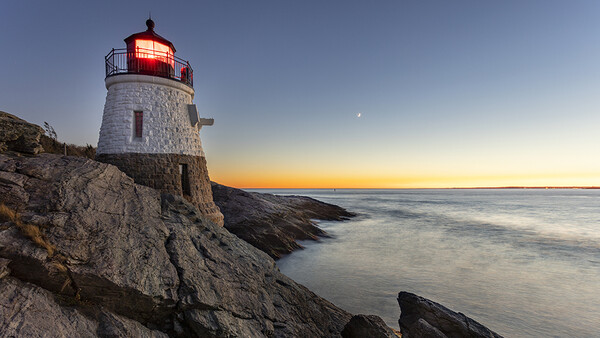
I have a strange obsession with photographing lighthouses. They have a way of making a landscape that much more interesting, and I often find myself taking a road trip just to photograph one. Here are a few tips to help make your photos stand out from the scores of other tourists making the same images.
Of course, when engaging in this type of photography, always practice safety. Grippy, waterproof boots are a must if you're going to be trekking off the shoreline to set up a tripod. A headlamp is always a good idea if you're ambling up and down rocks in the hours before daylight or after sunset. If it's cold, HotHands and gloves are key accessories.
With safety out of the way, let's get to the tips themselves.
Come Early, Stay Late
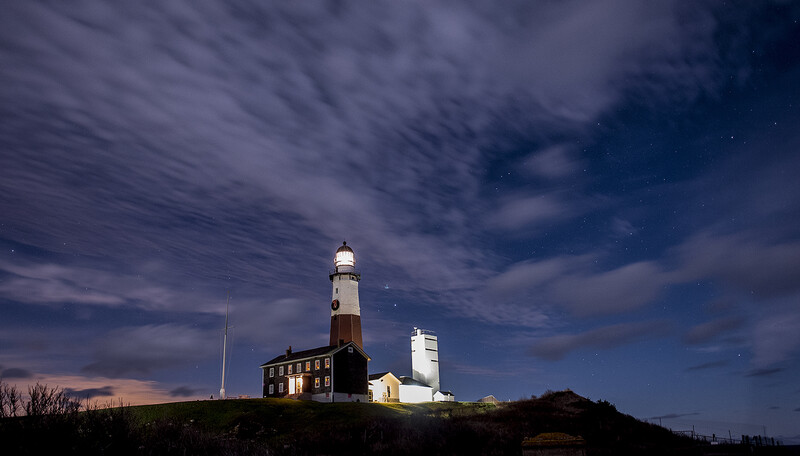
While it's much easier to sleep in and leisurely make your way out to the sights during midday, it's also the time when all the non-photographers will be doing the same thing and generally making the same exact photos you are. They'll also probably be in your photos as you try to compose with hordes of tourists running about. While I generally find just before sunrise to be the best time to get photos of a lighthouse undisturbed by crowds in the best light, after the sun goes down can work too, since most people have no desire to stumble around in the dark for a photo. But with just the right skies and a little luck, you can turn a lighthouse that everyone sees one way during the day into an entirely different photo in the middle of the night. Here's the Montauk Point Lighthouse in New York a couple of hours before sunrise, complete with stars visible in the sky:
Try a Long Exposure
Most non-photographers will walk up to the first tourist photo spot, pull out their phone, snap a picture, and move on. But if anyone can take that picture, can you say that you really made that photo? Indeed, if "making" rather than "taking" is what you're out to do, trying out a long exposure can get you a markedly different look than a straight-up photo without any thought or technique put in.
Instead, strap on the neutral density filter (I often use a rather hardcore 10-stop ND filter such as the B+W MRC Nano Master #810 ND Filter) and ratchet down the shutter speed to make clouds streak across the sky and turn water into glass. Because an ND filter acts almost like sunglasses for your camera, your shutter speed will be forced to slow down to expose for the same amount of light. If you place your camera on a tripod and use one of these, you can drag the shutter out quite a bit with no ill effects. Here's an example of the same sunrise at Portland Head Light in Maine at 210 seconds and 1/6 second:
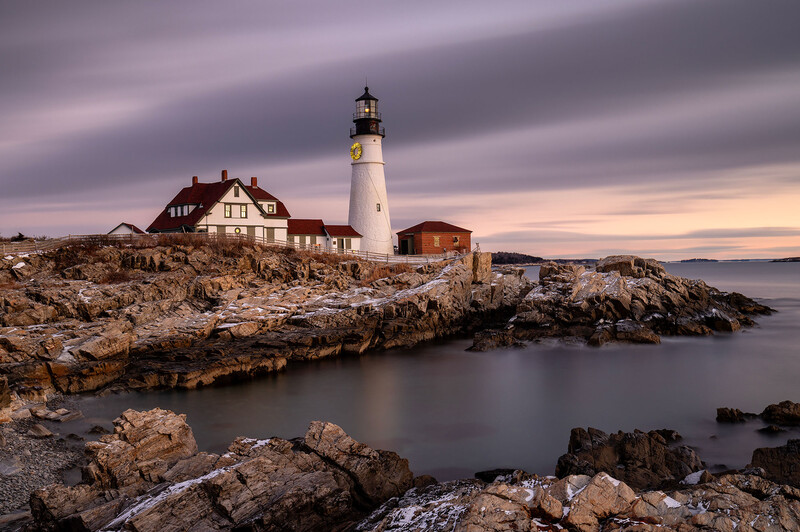
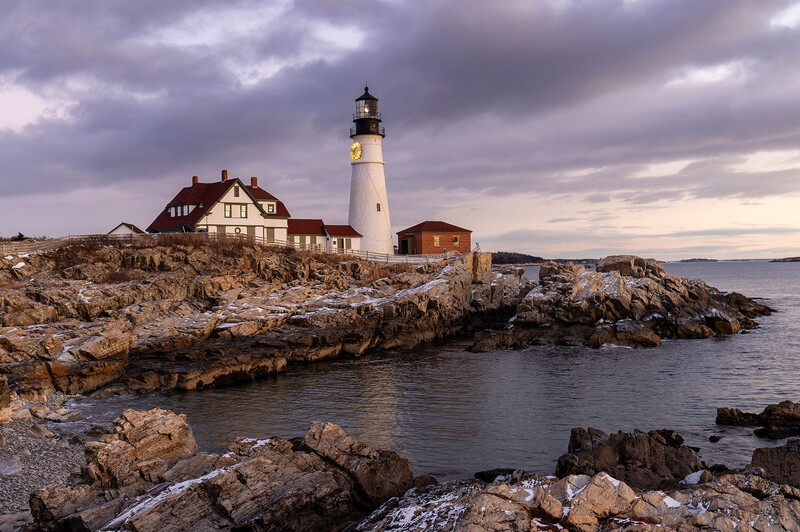
Same morning, very different photo. If I'm going to take the effort to almost fall to my death on some slippery, snow-covered rocks in the dark, I'm going to make sure it's at least a cool picture. I feel that the long exposure goes a long way toward making that the case. Pro tip: Especially in cold weather, where gloved hands make pushing the shutter button not only a chore, but another way to introduce camera shake into the photo, I recommend carrying a remote shutter release. I used a Canon Wireless Remote Controller RC-6 with my Canon EOS R5 to make these photos. I picked the R5 because of the high-resolution 45 MP sensor that allowed for a lot of detail.
If you want a deeper workflow for scenes like this (light, composition, and post), Photographing the World: Landscape Photography and Post-Processing is a strong fit: Photographing the World: Landscape Photography and Post-Processing.
It’s Ok Not to Shoot the Lighthouse
Especially when I'm in a new area, I can be pretty bad at picking out the right angle for sunrise or sunset without advance scouting. I have very often found myself facing the wrong direction and fighting the sun rather than using it to my advantage. This is where I would suggest abandoning the notions you have about a picturesque lighthouse photo, and shooting what you got. While the lighthouses are definitely the main attraction (for me, anyway), there are also often things around the lighthouse that can prove to be visually interesting. Here's one suggestion:
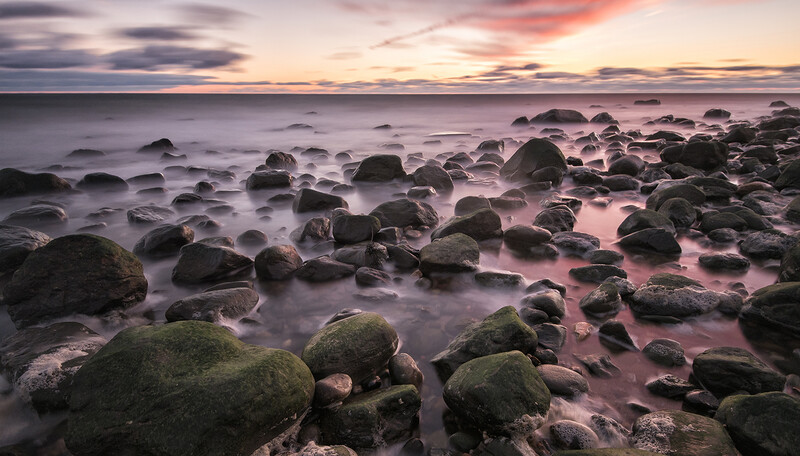
There's almost always rocks and water around, and with some long exposures (72 seconds in this case) and a sunrise that just won't quit, it's worth pointing the camera where the color is to make a photo that still has visual interest, even if it doesn't have a lighthouse.
Are you a lighthouse aficionado? Share your favorite lighthouse photos in the comments below!


Join the Fstoppers community for free
-
Post comments and join in the discussions
-
Browse the site ad-free
-
Share your work and get featured in the community
-
Compete in the photo contests for fun and prizes
No comments yet