

Researchers at the University of Washington have embedded rice-grain-sized cameras into a pair of off-the-shelf Sony WF-1000XM3 wireless earbuds. The prototype, called VueBuds, captures low-resolution black-and-white images, transmits them over Bluetooth to a phone, and processes them through an on-device vision language model that can answer questions about whatever the wearer is looking at.
Glance at a shelf in a grocery store and ask which jar is the mustard. Look at an unfamiliar dog in the park and ask the breed. Face a transit sign in a foreign city and get directions read aloud. The system responds in about a second, using a small AI model running locally on the phone rather than in the cloud. The team presented the research at the CHI 2026 conference in Barcelona in April, and the system performed about as well as the Ray-Ban Meta smart glasses in user testing, despite capturing only grainy grayscale images.
The intended applications are genuinely valuable. For people with low vision or blindness, VueBuds could describe scenes, read text, and identify objects in a hands-free, ambient way that existing accessibility tools do not support well. The research team reported significant interest from the visually impaired community after the paper was published, with people describing use cases ranging from navigating unfamiliar environments to understanding social cues they cannot see. For travelers, the system could interpret signage and packaging in real time. For workers in physical trades, it could provide visual AI assistance without requiring a screen. The humanitarian case is real.
The privacy implications are also real, and they are the part of this story that the photography community should be paying the closest attention to.
The Camera You Cannot See
Smart glasses have spent the last several years testing the boundary between wearable technology and covert surveillance. When Meta released the first-generation Ray-Ban Stories in 2021, the privacy conversation was immediate: the glasses looked like normal sunglasses, they recorded video, and the person being recorded had no reliable way to know the camera was active unless they noticed a small LED indicator on the frame. Privacy advocates pointed out that the LED was easy to miss and easy to cover. Meta responded in 2023 with the second-generation Ray-Ban Meta glasses, which featured a brighter, pulsing LED and a tamper-detection system designed to prevent recording if the indicator was obscured. The debate continued, but the underlying social contract held, barely: if someone is wearing unusual glasses with a visible camera module on the frame, you can at least suspect you might be recorded.
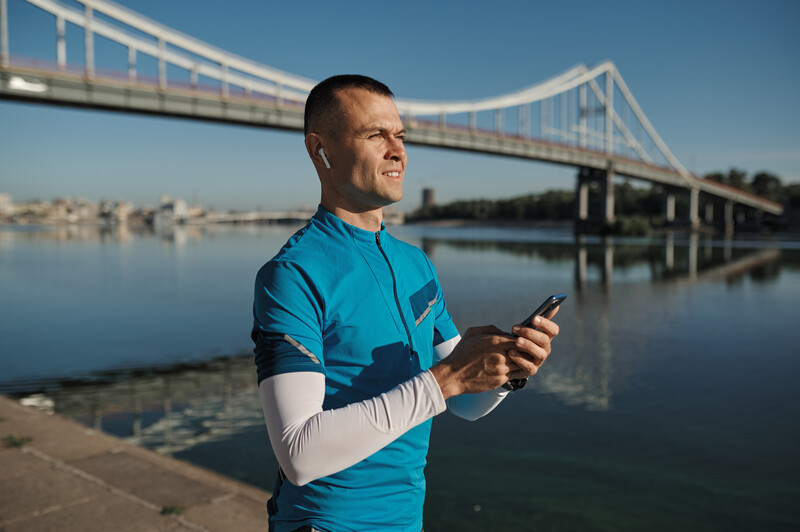
Earbuds eliminate that suspicion entirely. There is no visible lens. There is no camera-shaped object pointed at you. There is no social signal that recording is happening. A person wearing wireless earbuds in 2026 is so common that it communicates nothing beyond "this person is listening to something." The VueBuds prototype does include a small indicator light that activates during recording, but the light is on a device inside someone's ear, facing away from the people being captured. The privacy measure is technically present and practically invisible.
The VueBuds researchers addressed this directly. All image processing happens on-device (not in the cloud), users can immediately delete captured images, and the system is designed for query-response interaction rather than continuous recording. These are meaningful design choices that reflect genuine concern for privacy. But the design choices of a university prototype do not constrain the design choices of the commercial products that will follow it. Once the engineering proves that cameras can be embedded in earbuds at consumer scale, the question is not whether someone will build a version without the privacy protections. The question is when.
What This Means for Photography and Consent
Street photography has always existed in tension with the expectation of privacy. In the United States, photographing people in public spaces is broadly legal under the First Amendment, but the social contract around that right has always depended on visibility: the photographer is holding a camera, the camera is pointed at the subject, and the subject can see that they are being photographed. The subject may not like it, but they know it is happening. That knowledge is the foundation of whatever consent framework street photography operates within, even in jurisdictions where legal consent is not required.
Invisible cameras dissolve that foundation. When the camera is a rice-grain-sized sensor inside an earbud, the subject does not know they are being photographed. The photographer (if we can still call them that) does not raise a camera, does not point a lens, does not make eye contact over a viewfinder. The act of photographing becomes indistinguishable from the act of walking past someone while listening to a podcast. The social signal that says "a photograph is being made of you right now" disappears completely.
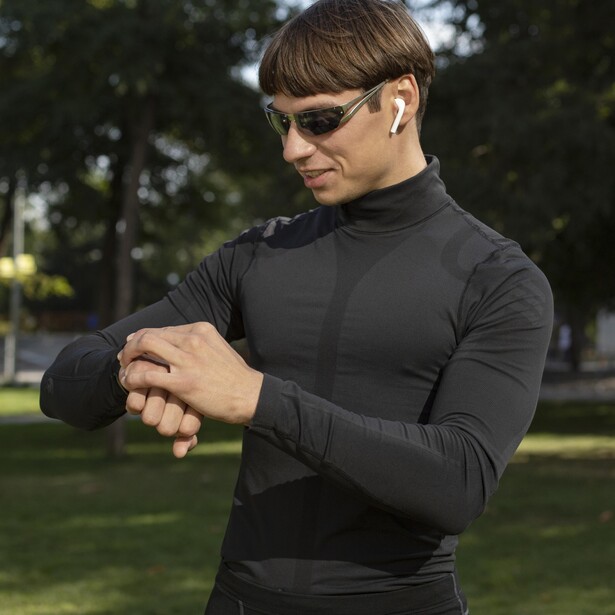
This matters for photographers for two reasons. First, it accelerates the erosion of public tolerance for being photographed. Every incremental step toward invisible, ambient, involuntary image capture makes the public more hostile toward all cameras in public spaces, including the visible, intentional, transparent ones that street photographers and photojournalists use. The person who objects to being photographed by a street photographer with a Leica is, in part, reacting to a broader surveillance environment where cameras are everywhere, hidden in glasses and earbuds and doorbells and dashcams. The visible camera becomes a proxy for the invisible ones, and the photographer holding it absorbs the frustration that belongs to the systems they have nothing to do with.
Second, it forces the photography community to articulate what distinguishes intentional photography from ambient capture. When a street photographer frames a composition, waits for a gesture, and presses the shutter at a specific moment, the resulting image is the product of a creative decision. When a future commercial version of earbud cameras moves beyond query-response to continuous capture, and an AI model selects the "interesting" frames from a constant stream, the resulting images are the product of an algorithm. Both produce photographs of people in public spaces. Both raise privacy questions. But they are not the same act, and the photography community will eventually need to explain why, clearly enough that legislators and the public can understand the distinction.
The Legal Landscape Is Not Ready
Current privacy law was not designed for cameras that are invisible and always present. Wiretapping and recording consent laws in the United States vary by state: some require one-party consent (only the person doing the recording needs to consent), others require two-party or all-party consent. But these laws were written for audio recording and have been inconsistently applied to visual capture. Federal law does not broadly prohibit photographing people in public, but state and local ordinances, civil liability for intrusion upon seclusion, and specific regulations around photographing minors create a patchwork that even lawyers have difficulty navigating.
The European Union's GDPR is more restrictive: capturing identifiable images of people can constitute processing of personal data, which requires a legal basis. Street photography in the EU already operates in a gray zone under GDPR, and the addition of invisible cameras in wearable devices pushes that gray zone toward outright conflict. If earbuds can capture faces continuously and an on-device AI can identify individuals, the legal framework that governs that interaction is not street photography law. It is biometric surveillance law, and the penalties are severe.
None of this is hypothetical. The VueBuds prototype exists today. The engineering is proven. The components (low-power cameras, Bluetooth transmission, on-device AI processing) are all available at consumer scale. The path from university prototype to commercial product is well-worn, and the market incentive is obvious: earbuds are the most widely adopted wearable device in the world, and adding visual AI capability to them creates a product that hundreds of millions of people would buy without a second thought.
What Photographers Should Do
The honest answer is that there is no action item that solves this. Photographers cannot prevent the proliferation of invisible cameras. They cannot lobby for laws that distinguish between a Leica and an earbud (though they should try). They cannot control how the public perceives visible cameras in an era of invisible ones.
What photographers can do is be deliberate about the ethics of their own practice in a way that creates distance between intentional photography and ambient surveillance. That means being transparent about when and why you are photographing people. It means engaging with subjects rather than treating them as data. It means producing images that reflect a human creative decision rather than an algorithmic selection. And it means being willing to explain, when asked, what you are doing and why it is different from the camera in someone's ear.
The VueBuds prototype captures grainy, low-resolution, black-and-white images. The commercial products that follow will capture high-resolution color. The AI models that process them will identify faces, read expressions, and infer intent. The cameras will be in earbuds, in rings, in shirt buttons, in badge clips, in every wearable surface that can accommodate a sensor smaller than a grain of rice. The question for photographers is not whether this future arrives. It is whether photography, as a deliberate act of seeing and framing and choosing, remains distinguishable from the ambient capture that surrounds it. The answer depends on photographers being intentional enough about their practice that the distinction is visible, even when the cameras are not.



Join the Fstoppers community for free
-
Post comments and join in the discussions
-
Browse the site ad-free
-
Share your work and get featured in the community
-
Compete in the photo contests for fun and prizes
5 Comments
When they start making black-painted brass ear buds, that develop a lovely patina after decades of use, I might show some interest. 🙂
I no longer identify strictly as a "street photographer", but I still practice the genre and have for over 25 years. These are legitimate questions about what these tech advances mean for consent, privacy, and authorship.
But for me, the deeper concern is philosophical. Photography is not just the act of recording light. It's an act of seeing and of being seen. The more we remove the photographer from the process, the closer we move toward intrusive observation and away from the human exchange that gives documentary and street photography their ethical and artistic weight.
And that would be a sad day.
Ha, ha ,ha, espionage is no longer a highly skilled profession.
What else would John le Carre have written if he had lived?
Wow — earbuds with earwax and good bokeh
ewwwww