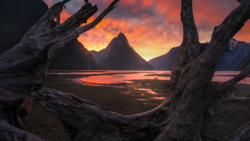
Big landscape scenes fall apart fast if the foreground, light, and framing are not controlled together. When you’re working near water and mountains at sunrise, small choices decide whether the scene feels intentional or scattered.
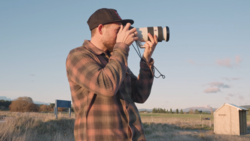
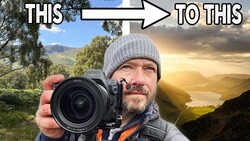
Coming to you from William Patino, this calm, practical video follows an early morning river shoot in a steep valley using an ultra-wide 10mm prime. Patino works close to the water, watching how cascades and small changes in flow affect the frame more than the mountains ever will. The mountains stay put. The river never does. That idea shapes how he moves through the scene and chooses where to stop rather than chasing every viewpoint. The lens choice matters here because being physically close forces a commitment to foreground structure instead of relying on distant drama.
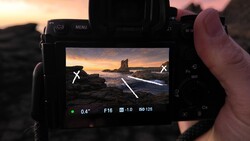
He spends time explaining why not all moving water works and why too many cascades can feel chaotic. Static patches and glare kill momentum, while small drops and swirls guide the eye. He constantly checks frames on the back of the camera, not to judge color but to evaluate balance and shape placement. There’s no rush to lock in settings. Shutter speeds hover around 1/5 to 1/3 second to keep texture without turning the river into mist. Aperture stays moderate because depth of field comes easily at this focal length, especially when not working extremely close.
The video then shifts from the field into processing, starting with unprocessed raw files that look nothing like what the eye saw. Patino exposes for highlights almost all the time, accepting clipped shadows and occasional bright edges near the sun. He explains how clipped highlights can still feel natural while lifted shadows carry most of the usable data. The point isn’t technical purity. It’s maintaining believable contrast. He walks through a fast, restrained workflow in Camera Raw, focusing on exposure balance, temperature control, and localized adjustments rather than heavy global moves.
Color gets treated cautiously. Warm highlights stay warm. Midtones often cool slightly. Foregrounds keep more contrast. Backgrounds fall away through darker tones and reduced clarity. Brushes replace automatic sky selections so the horizon can stay bright while the upper sky rolls off. Nothing looks finished, and he says that directly. Files get saved, left alone, and revisited later because fresh eyes catch exaggeration faster than tools do.
Composition becomes the real lesson as he compares similar frames side by side. A single rock added or removed shifts weight across the frame. Major shapes never stack on one side. He describes the process as a seesaw, with visual mass counterbalanced across the image. Converging lines, diminishing plants, and narrowing riverbanks do the heavy lifting. Vertical frames get tested, then mostly rejected, because horizontal framing offers more control over depth and structure in these environments.
Field decisions remain practical throughout. Auto white balance stays on. Summer sunrises mean early alarms and fatigue. Not every morning produces a keeper. Conditions dictate direction, not plans. Atmosphere appears, disappears, and forces a pivot without hesitation. Check out the video above for the full rundown from Patino.

Join the Fstoppers community for free
-
Post comments and join in the discussions
-
Browse the site ad-free
-
Share your work and get featured in the community
-
Compete in the photo contests for fun and prizes
No comments yet