Snow breaks your normal exposure instincts and can make a strong scene look flat, muddy, or oddly busy. If you care about landscape work, winter is one of the easiest times to come home with a file that feels disappointing even when the location looked perfect.
Coming to you from Mads Peter Iversen, this practical video lays out a winter mindset that starts before you even leave the house. Iversen treats snow like a short-lived opportunity in places where it arrives and disappears fast, so you watch forecasts and you move when the window opens. He points out how snow predictions can become noisy and overhyped, which means you need a simple system for deciding whether to go now or stay put. The useful part is the framing: being reactive is not being frantic, it is being ready with a plan, a route, and a scene in mind so you are not inventing everything in the driveway. If you tend to “wait and see,” this section should feel uncomfortably familiar.
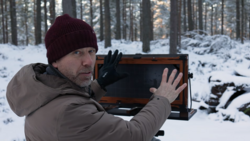
He then gets direct about clothing, because you can’t make careful choices when you are shivering and rushing. The advice is to think like people who stand still outside in winter, which is why he suggests looking at hunting or fishing style winter gear instead of the typical athletic layering mentality. He shares the kinds of footwear and glove setups that let you stay out longer without giving up dexterity, including mitten-style designs that let you pop fingers out briefly and then cover back up. He also pushes wool as a material choice rather than a branding decision, and he treats it like a baseline rather than an upgrade. If you have ever cut a session short because your hands stopped cooperating, you already know this is less about comfort and more about control.
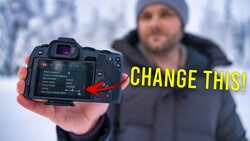
The technical core starts when he talks about exposure in snow and how easily your camera drifts toward dull gray. Instead of guessing, he leans on the histogram and encourages pushing exposure brighter than your meter wants, while staying short of blown highlights. He explains how that plays out differently if you are using an auto mode with exposure compensation versus full manual, and he keeps the focus on what you see in the data rather than what you feel in the moment. Then he shifts into shutter speed, and this is where the video gets quietly sneaky, because snow is not just a white background, it is moving detail that can either clutter the frame or add a sense of motion. He gives ranges that change the look from crisp dots to streaks to a softer, fog-like wash, and he ties the choice to taste, focal length, and how hard the snow is falling.
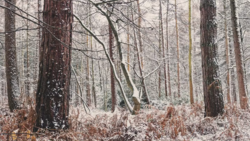
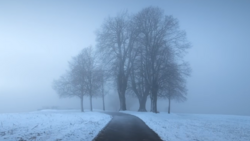
After that, the video opens up into the parts that usually separate a decent winter photo from one you actually want to keep. He talks about going out even when it is not snowing, using clearer skies and low sun to get shape in the snow through shadows and texture. He brings up golden hour and blue hour specifically, and he also nods to night shooting over snow without turning it into an astrophotography lecture. There is a compositional trick involving glittering snow that depends on getting low and close, letting the foreground fall out of focus, and controlling how big those bright circles get by how far you open the aperture. He also describes a cleanup mindset for scenes where dead vegetation pokes through thin snow, plus the idea of showing up early to avoid footprints you will regret later, and he hints at a minimalist approach that can feel almost unfairly effective when the ground turns clean and simple. Check out the video above for the full rundown from Iversen.
And if you really want to dive into landscape photography, check out our latest tutorial, "Photographing the World: Japan II - Discovering Hidden Gems with Elia Locardi!”

Join the Fstoppers community for free
-
Post comments and join in the discussions
-
Browse the site ad-free
-
Share your work and get featured in the community
-
Compete in the photo contests for fun and prizes
2 Comments
"Snow breaks your normal exposure instincts and can make a strong scene look flat, muddy, or oddly busy. If you care about landscape work, winter is one of the easiest times to come home with a file that feels disappointing even when the location looked perfect."
I was thinking the total opposite: my experience is that winter is much easier to come home with a dramatic photo that does not disappoint. Snow eliminates a lot of busyness by concealing foreground debris such as weeds or clumps of dirt mixed with rocks and grasses... elements in a scene that often make a picture look cluttered. And the picture would only look muddy if it were underexposed (easy to solve that problem in camera or in post-processing), otherwise snow naturally increases the contrast of a picture.
Absolutely love that last shot!