
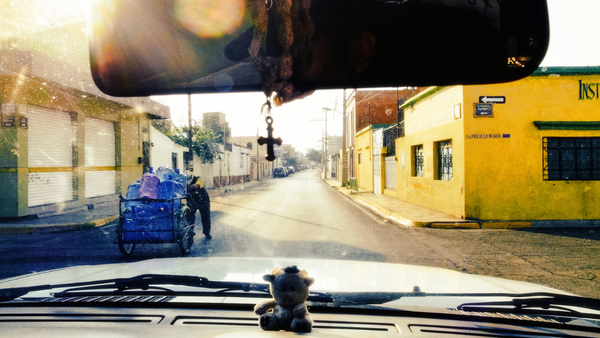
Travel photography is having an identity crisis. Not because cameras have become worse, not because destinations have become less interesting, and certainly not because photographers have stopped traveling. The problem is something else: too much travel photography today feels interchangeable.
Scroll through social media and the pattern becomes obvious. The same overlooks. The same framing of famous landmarks. The same dramatic grading. The same human silhouette standing in front of something culturally significant while pretending not to know the camera is there. Different countries, same photographs.
Travel photography, once rooted in curiosity and observation, increasingly feels shaped by algorithms and visual templates. Instead of discovering places, photographers often arrive already carrying a preloaded version of what those places are supposed to look like. And that is where the distinction between tourist and traveler becomes critically important.
This is not a moral argument about tourism itself. Tourism is normal. Tourism is valuable. People deserve leisure, discovery, and beauty. But photography asks for something different. It asks for involvement, and that involvement changes the way we move through the world.
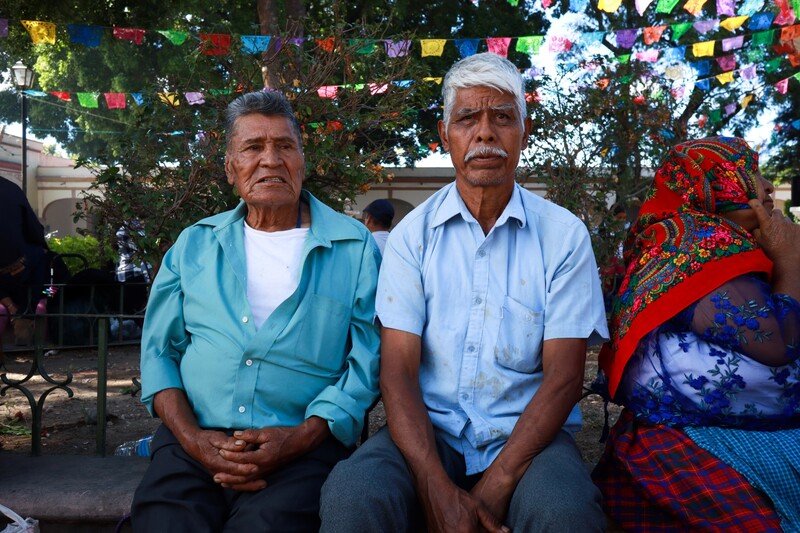
Tourists Photograph Places. Travelers Photograph Experience
A tourist and a traveler may visit the exact same city, walk the same streets, and use the same camera. Their photographs can still feel radically different. The tourist photographs confirmation. The traveler photographs encounter.
This difference is not about budget, duration, or passport stamps. You can be a traveler twenty minutes from home and a tourist while backpacking across three continents. The distinction is psychological.
Tourist photography often follows an inherited script: see landmark, photograph landmark, move on. The process becomes surprisingly transactional. The photograph serves as proof of attendance, a visual receipt documenting completion. "I was here. I saw this. I checked this box." And while those images may still be visually attractive, they often struggle to communicate anything beyond location.
Traveler photography works differently. It is slower, more uncertain, and sometimes less immediately spectacular, but it carries emotional residue. The traveler is not simply asking, "What is this place famous for?" They are asking something more uncomfortable: "What does this place actually feel like?" That question changes the photographs we make.
Tourists love packages where they can visit a lot of cities in the same trip: they collect and check the box. I have heard people say that despite loving the place where they are at the moment, they will not go back, because they have already been there and they want to visit other places. Can you see this? It is a sort of collection, a way to put flags on the world map. The tourist is a collector, and often the travel is made for others, because they don't really know the place, the food, or the people: they just need to tell others they have already visited that country.
The Problem With Checklist Photography
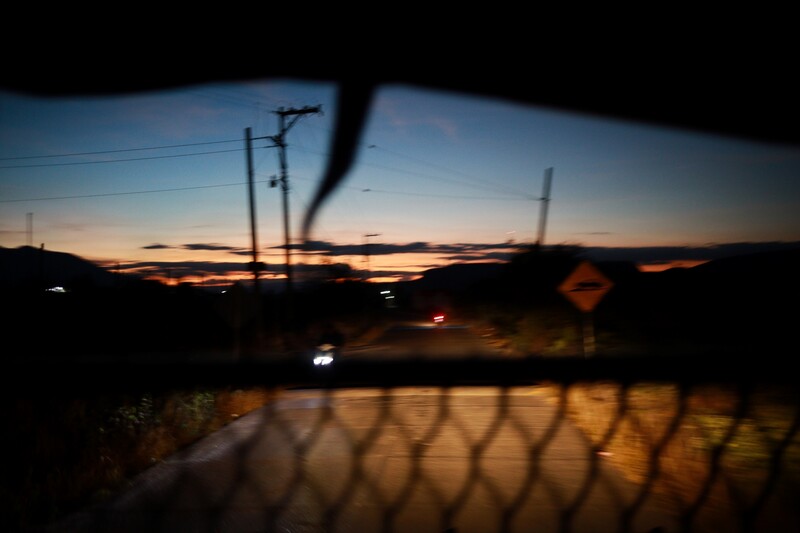
Much of contemporary travel photography operates through what could be called checklist logic. We travel with saved Instagram posts, YouTube recommendations, Google Maps pins, and location guides that silently dictate our behavior before we even arrive. The result is predictable: we stop exploring and begin reproducing. Entire cities become scavenger hunts for photographs already made by someone else.
This phenomenon is not accidental. Social media rewards familiarity. Audiences engage more quickly with images they already recognize, and iconic scenes perform well precisely because viewers understand them instantly. Photographers adapt accordingly, and soon creativity is replaced by replication.
The irony is difficult to ignore. Travel, traditionally associated with discovery, becomes an exercise in visual conformity. And photographers, people supposedly obsessed with seeing differently, can become some of the most visually obedient travelers of all.
You can witness this almost anywhere: the same sunrise viewpoints crowded with tripods, the same murals photographed from identical angles, the same cafés, restaurants, alleyways, temples, and rooftops reproduced endlessly with minor aesthetic variation. Thousands of photographers chasing uniqueness through imitation. That is not exploration. It is content production.
Why Great Travel Photography Begins With Discomfort
Places rarely reveal themselves immediately. The first hours are usually misleading. This is the phase where we photograph stereotypes: the romantic version, the cinematic version, the version we expected. Our eyes are still controlled by assumptions.
The traveler understands that perception needs time to recalibrate. This is why some of the strongest travel photographers return repeatedly to the same locations or remain in places longer than seems efficient. Real observation begins after novelty fades.
This is uncomfortable, because modern photography culture rewards speed. We feel pressure to produce, pressure to come home with enough images to justify the trip, pressure to post, pressure to succeed. The consequence is obvious: we photograph before we understand.
But understanding requires lingering. Walking without purpose. Returning to the same street. Watching light change. Accepting periods where nothing happens. This may sound inefficient. It is. But photography is not manufacturing. A meaningful photograph often arrives after boredom, uncertainty, and failed expectations have already done their work. The traveler accepts this process. The tourist usually avoids it.
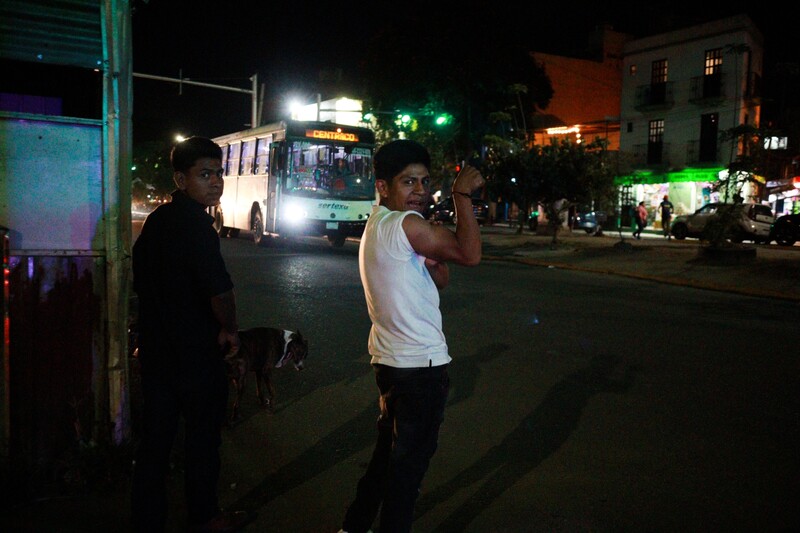
I walked through streets where I had no idea where I was. I found myself lost many times. I traveled using public transportation rather than comfortable private cars. I photographed at night in ugly and dangerous spots of the cities. That is the real traveler.
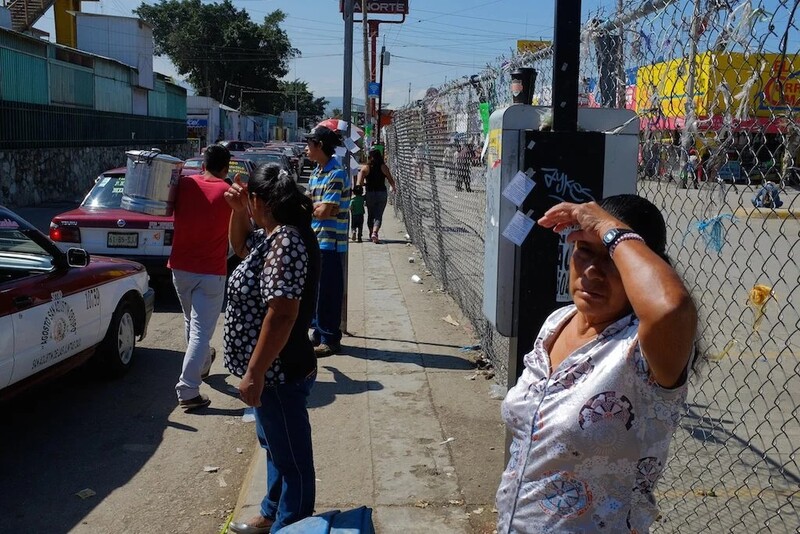
Stop Hunting Only for Beautiful Places
One of the most limiting myths in travel photography is the belief that compelling photographs require extraordinary destinations. This assumption quietly shapes photographic behavior. We chase beauty. We prioritize spectacle. We seek places already certified as visually successful.
But photography is rarely sustained by beauty alone. Beautiful places are easy to admire. They are not always easy to interpret. And interpretation matters. Some of the most memorable travel photographs emerge not from postcard destinations but from transitional, imperfect, and psychologically ambiguous spaces: bus terminals, peripheral neighborhoods, roadside economies, rain-soaked streets, unremarkable hotels. Places tourism often ignores.
These environments contain texture because they are lived rather than performed. They resist cliché, and they force photographers to engage more honestly. A traveler notices these spaces. A tourist often moves past them on the way to somewhere more photogenic.
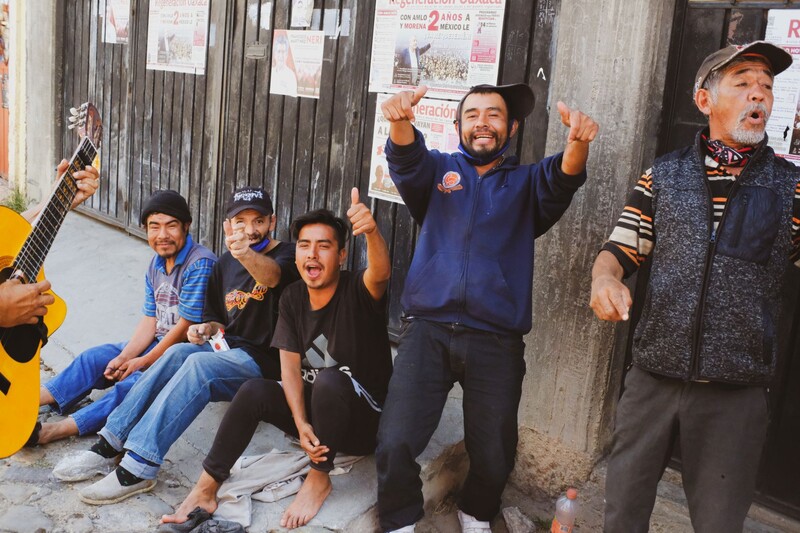
The Camera Should Not Protect You
There is another uncomfortable truth worth discussing: many photographers travel defensively. The camera becomes armor, a professional identity, a protective device separating us from vulnerability. We hide behind equipment, technique, and constant shooting. We remain physically present but emotionally insulated.
This is especially common among photographers obsessed with productivity. Shoot more. Cover more. Collect more. But photographs shaped by emotional distance often reveal their limitations. They may be technically flawless, with perfect exposure, strong composition, and excellent editing, and yet strangely forgettable.
Because photography does not only record subjects. It records relationships. How close were you? How attentive? How patient? How willing were you to be altered by what you encountered? These questions matter more than many photographers admit. The traveler does not arrive armored against experience. They remain permeable, and permeability changes photographs.
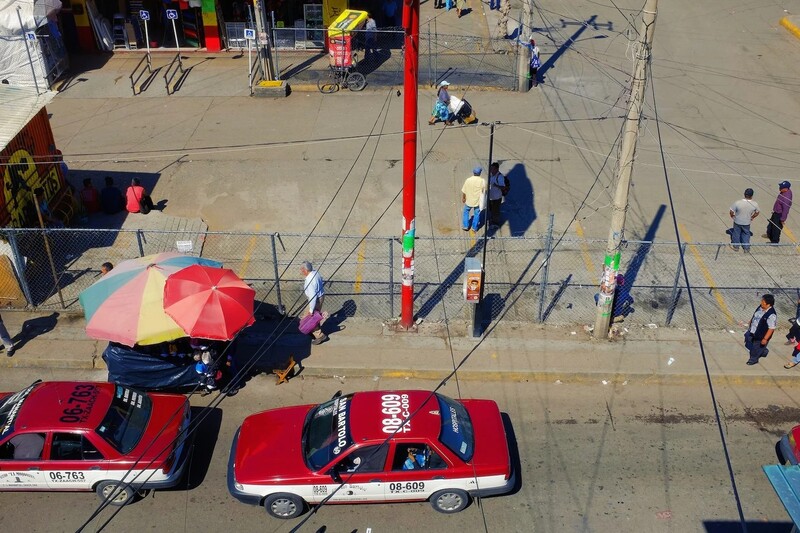
Photograph Less, Experience More
This may sound almost heretical inside contemporary photography culture, but many photographers would benefit from taking fewer photographs while traveling. Not because shooting is bad, but because constant shooting can become avoidance. Some photographers never stop long enough to actually inhabit a place. The camera remains permanently raised, and observation becomes extraction. The irony is painful: in trying to preserve experience, we sometimes fail to live it.
Traveler photography involves a different rhythm. Sometimes the camera stays down. Sometimes you watch first. Sometimes the photograph arrives later, or not at all. And that is acceptable. Not every meaningful encounter owes us an image. This attitude does not weaken photography. It strengthens it.
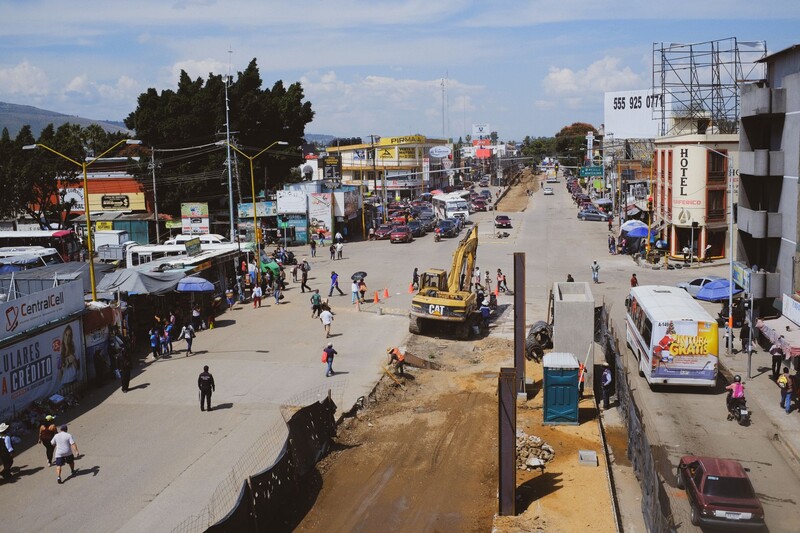
Your Best Travel Photograph Might Not Be the Famous One
Years later, photographers often remember unexpected images more vividly than iconic ones. Not necessarily the cathedral, not the famous overlook, not the internationally recognizable landmark. Why? Because these photographs are attached to lived memory. They contain emotional specificity. They remind us not merely where we traveled, but how we inhabited those places.
And perhaps that is ultimately the point. Tourist photographs often describe geography; traveler photographs describe experience. One records location, the other records transformation. The difference may not always be visible to social media, but it remains visible to us, and, eventually, to anyone willing to look closely.
So the next time you travel with a camera, resist the pressure to merely collect. Ignore the silent checklist. Stop asking what the destination owes your portfolio. Ask something harder instead: what is this place trying to teach me before I photograph it?
Because great travel photography does not begin when you arrive. It begins when you stop behaving like a visitor and allow yourself to become part of the landscape you are trying to understand, when photographs become responses rather than reflexes.
Join the Fstoppers community for free
-
Post comments and join in the discussions
-
Browse the site ad-free
-
Share your work and get featured in the community
-
Compete in the photo contests for fun and prizes
14 Comments
The difference between tourist photography and travel photography is that travel photographers must capture the imagination of those in the audience viewing their work. Obviously we've all seen pictures of the Eiffel Tower. It's the images though that capture the spirit of a place which motivate someone to book a trip to Paris... the unique variations in culture, or off-the-beaten-track sights. "Hidden gems" is the title given to so many travel articles in magazines.
Tourist photography is about none of that. Tourist photography is all about creating memories. All I care about 30 years later are the moments that we shared together. Without photos, we would have forgotten so much of our travel, or forgotten that we were young once.
Very well articulated! My travel photography is very much in the tourist style, and for the purpose of capturing memories and the people I was with, there's nothing wrong with that. However I really like the idea of taking a different approach when revisiting a city or place and focusing on the experience and life around me. I'll be visiting Lisbon and Cadiz shortly, both cities I've been to on more than one occasion. This time I'm going to be a traveler 😁
More judgmental, lecturing, performative trash from Alex Coghe.
When, oh when will you call out the histrionic, selfie-taking, social media whores? You know, those wannabe "influencers" who are all flooding Capri and taking photos of themselves? The ones who take a selfie one meter from a wild bison? The ones who fall off bridges to their deaths for the narcissistic selfies? For some reason, the people who have been defecating on travelers give those women a pass.
No, you're calling out people who have a bucket list, who want to make the best of what life they have left, and who want to take photographs of beautiful things.
I don't have to ask myself "What is this place trying to teach me?" because I learn from every travel experience I have ever had, and I have come back from it changed and improved. And many of those experiences didn't even involve taking a photograph.
I do not use social media. That probably blows your mind. You probably cannot understand people who aren't addicted to the likes.
You write: "I walked through streets where I had no idea where I was. I found myself lost many times. I traveled using public transportation rather than comfortable private cars. I photographed at night in ugly and dangerous spots of the cities. That is the real traveler."
Do you want a trophy? I don't care if you deliberately take snapshots of ugly garbage (that's the essence of street trash snapshots). I also don't care if you think I'm a "fake traveler" because I don't put myself in dangerous situations. Would you give that same travel advice to female solo travelers?
That might be cutting too close to the bone for you, Alex. We all know that you like to take photographs of hot girls without their consent.
Dear FStoppers: Please fire Alex Coghe.
I'm sitting here wondering if Fstoppers would actually be a better place if Alex Coghe were fired and you remained. Hmmm..... Alex initiates a discussion. Granted, it draws flak, most noticeably and consistently from you. What do you bring to the table besides insults and criticism?
You wrote: "Alex initiates a discussion."
That's how you described his words. "Initiating a discussion." That's dishonest of you. You diminished his words. He did more than just "initiating a discussion" and you know it, but I'll spell it out for you so you cannot deny it.
Alex accused his audience of:
- having an identity crisis
- having experiences that are "interchangeable" (I.e., boring, repetitive)
- carrying a preloaded version of what those places are supposed to look like
- taking pictures that struggle to communicate anything beyond location
- just needing to tell others they have already visited that country
- turning entire cities into scavenger hunts for photographs already made by someone else
- creating an exercise in visual conformity
- not being "real travelers" (according to his own selfish preferences)
- engaging with the subjects dishonestly
And he does all this while being a street trash snapshotter. Everything he creates is cliché and kitsch, and when it's not that, it's intrusive, non-consensual, and voyeristic. He already admitted that he likes to take non-consensual photos of hot girls, and for some reason, you think that my criticism of him for doing exactly that is the offensive thing here. Why are you defending him so hard?
You write: "You would have no platform without Alex, so consider being thankful for the opportunity."
It's nice you feel that way, Ed, but I don't care how you feel.
I still like your photos a thousand times better than Alex Coghe's trite snapshots of non-consenting hot girls.
Don't you find it ironic that Fstoppers has placed two of Alex's articles that you despise so much in the "featured" articles section? Maybe that's an answer to your plea to have him fired. I wouldn't hold your breath waiting for that to happen.
I wondered the same thing, to be honest. I'm hoping to get more people on the anti-Alex Coghe bandwagon. You'll be here to defend him and talk about his feelings and your feelings, neither of which I care about.
This whole "don't be a tourist, be a traveler" narrative is one of the most pretentious trends on social media.
The internet is obsessed with "hidden gems," "secret spots," and "living like a local." As soon as someone discovers one, they post it to hundreds of thousands of followers, turning it into the next tourist hotspot. The irony is incredible.
And "live like a local"? Really? Which local? A software engineer in Copenhagen or a family surviving on a dollar a day in rural India? People don't actually want to live like locals. They want curated authenticity with Wi-Fi, air conditioning, and the option to leave whenever they feel uncomfortable.
I'm also tired of hearing people say they "stepped out of their comfort zone" because they spent an hour wandering through a dirty market in New Delhi before returning to a comfortable hotel.
There's nothing wrong with being a tourist. Just admit that's what you are. Travel doesn't become more meaningful because you replace one label with another.
This article suggests that we do not know how a suburb looks like. Thus, you have to shovel it to us. Those are places that everyone knows. Not even the locals would take pictures there besides of their intimate friends. The pictures shown here are not special to a local atmosphere or situation. They do not even have documentary value. So, explain to me why you take them! I see no reason besides negligence for the things that are interesting and that a local would be proud of.
As to traveler versus tourist: There is no inherent difference. Some visitors are more open and some not. Some have an interest for the country, and some only for the tourist places.
He is doing what every street trash snapshotter (incorrectly called "street photography") does.
1. "I live in a city."
2. "I feel arrogant and self-important about living in this city." (In his case, it's Ciudad de Mexico, but it's usually New York City)
3. "I want to take snapshots of this city to earn dopamine hits from social media likes."
But his own snapshots aren't turning into anyone's desktop wallpaper. No one is ever going to buy a print of his street trash. Worst of all, someone else's snapshot of the Fushimi Inari Shrine is going to get a million more likes than his own snapshots. That's why he is crapping on beautiful locations and beautiful pictures. He's jealous that someone else is getting more dopamine hits from social media likes. Notice how he frames "travel photography" entirely in social media terms.
He's also writing this article for a second, more scurrilous reason. He was very recently called out for being openly defensive about the fact that he likes to take non-consensual photos of hot girls in public. He's trying to change the subject with this article.
I travel 4 to 6 months each year. My photographic objective is to create a visual tale we share with others as well as remind my aged mind of the incredible places and people we’ve visited. From a quality photography pov, that’s a misguided objective, the subject of your article. I realized this a few years ago when I noticed images that went to print tended to be older shots taken with lesser gear of none postcard worthy subjects. But they were far more imaginative and better/more creatively composed. I remind myself of that every day I’m traveling. I can afford to miss a few postcards.
Travel vs Tourist photography hummmm!! How about the Trained Eye or the What the Mind Sees photography. Do we really need to travel or be a Tourist to far away places. How about getting an original image that no one even thinks can be captured because of all the ex pros are now giving tours to all those places far away and making $$'s off those getting the same images over and over.
The Trained Eye or the What the Mind Sees is the photographer that when driving to and fro never gets anywhere fast because of stopping here and there or you have to stop and spend the night on a trip but while others sleep you are out exploring or just on a quite walk enjoying the peacefulness BUT with camera on your shoulder or in a tear drop bag with a nice telephoto and a few others that might be handy it can be night or day. Your the photographer that is never at the breakfast or dinner table for there ia always a sunrise/set and always bringing a meal home mid morning after golden hour and down loading images to your computer and maybe editing one then some nap time. Every day is like this. It is not so much the captures but the joy of being out and about and really seeing what others do not.
Yes, i am an introvert as well as my wife see understands my camera and computer time yes alone time and the great (to her) images she sees that I get metal prints and give as gifts like she does with her cross-stitch's.
I can be anywhere and see the capture what others do not see. Back in the film days of the 70's to 2000's while serving in the Navy in the med I did not drink or smoke so it was me and my camera out and about not drinking in a bar but there were $5 MWR tours to places other did not have a dime for. But now I have converted boxes of prints to digital for me when I finally find that old folks home. No one wants to watch a slide show more than 30 minutes but now with a couple of HD's full I can revisit places.
What I see or my mind today sees is always close by no manner where, say Google photos can give you places like why go to an island to see black sand when can just go up the road and capture it. Go to the local zoo instead of going to Africa. Also why go out to the desert with all the snakes to capture the milk way when it is right out in front of your house.
1. A stop in Ga. on the way home I went out with my T2i and promote control and capture a small town at night.
2. On the way to my deer stand and came a cross ice sculptures that nature made, yes camera bag was with me. A7SM1 and FE 16-35mm F4 ZA OSS only Macro like I had.
3. While wedding parties slept I saw the MW above the hotel A7SM1
4. Driving down a road saw this and stopped kids toys on a branch of fence wood using tire for teeth, do you ever stop for the unusual sights T2i camera and kit lens
I love your photos, and I appreciate how you take the time to notice things that "normal" people would overlook. To me, this is an important skill that I have been aiming to improve: the ability to see the composition in my mind's eye based on the biased information I receive from my own eyes. I'm aware there is a book called "The Photographer's Eye" by Michael Freeman. Have you read it, and if so, do you recommend it?
I travel a fair amount and have been all over the world. Cameras of all types have always accompanied me on those travels (for both business and pleasure), but I rarely am satisfied with the images that I create during that travel.
If I'm being honest with myself, I would always assume that when people would see my photographs of these distant places they would always wonder (silently, of course) why he would bring back these photos of such iconic and memorable places. Put another way, I was taking photographs for the entirely wrong reason(s).
And so ... while I'm not exactly convinced by the tourist vs. traveler argument (there's nothing wrong with either as long you're being responsible in your thoughts and actions while touring or traveling), I will approach upcoming travel (two years in Europe) with a different mindset and photograph for myself and no one else. Maybe that will make a difference.
If it doesn't ... no worries. Photography has always been about the journey, never the destination.