
Articles from Alex Coghe
Photographs That Stay: A Quiet Approach to Making Memorable Images
You know, there is a difference between a good photograph and one that stays. Not louder, not more dramatic, not even technically better. Just… harder to forget.
Staying Longer Than Necessary
I realized at some point that most of the photographs I was making came from leaving too early — not physically, but mentally.
Why So Many Photographers Hate Juergen Teller
There's a particular kind of photographer who becomes visibly uncomfortable the moment Juergen Teller enters the conversation. You know the type. They can explain sensor readout speeds like nuclear engineers. They spend three weeks comparing corner sharpness at 400%. They speak about cameras the way Formula 1 mechanics speak about engines. Their hard drives are graveyards of technically flawless emptiness.
The Geometry of Indifference
There is a kind of photography that pretends to be neutral. Flat surfaces, clean lines, ordinary spaces. Nothing dramatic, nothing loud, nothing that asks to be looked at twice. It's often dismissed as cold, detached, even empty. But that reading is too easy. What we call indifference is rarely indifference. It is a position.
What Photographers Can Learn From Hunter S. Thompson
Hunter S. Thompson is certainly one of my references — not because he ever cared about photography, but because he understood something most photographers avoid.
The Power of Almost Nothing: Why the Square Frame Changes Everything in Street Photography
There's a strange misconception in street photography: that more is more. More chaos. More layers. More subjects. More "decisive moments."
I Still Shoot With an iPhone 8 in 2026 and I Don't Plan to Upgrade
Let's get this out of the way: this is not nostalgia.
Most Photographers Are Boring
There, I said it. Not bad. Not incompetent. Not untalented. Boring. And boring is far worse.
Why 28mm, 35mm, and 50mm Shaped the Way We Photograph Cities
In photography, style is often discussed in terms of subject matter, color, or composition. Certainly important aspects to consider, but much less frequently do we talk about something equally decisive: focal length. Yet if you look closely at the history of urban landscape photography, focal length reveals itself as a kind of quiet grammar.
Street Photography Is Dead. Smartphones Killed It and That’s a Good Thing
There's a sentence that keeps coming back in photography circles: street photography is dead.
New Topographics in the Age of Permanent Change
Look around any expanding city today. Warehouses rise where fields stood five years ago. Housing developments stretch toward dry hills. Highways carve through fragile terrain. Data centers replace factories. The landscape is no longer something we visit. It is something we continuously build, erase, and rebuild. It is progress, they say.
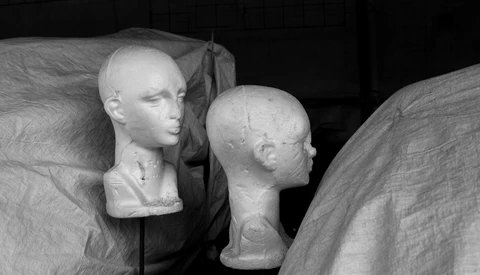
The Face Is Not Innocent
Portraiture did not begin with photography. It began with control. Long before the camera, someone was already deciding how a face should be seen, remembered, and fixed in time. The portrait has always been an act of authority. Photography didn't change that; it just made the act faster and more invisible.
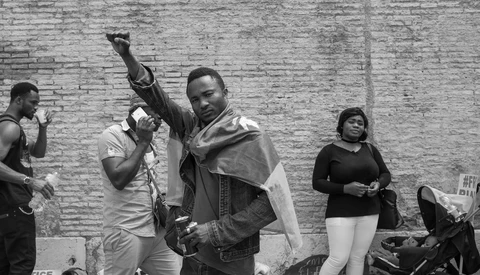
The Most Important Skill in Street Photography Has Nothing to Do With Your Camera
Street photography is about decisions, not perfection. That’s the difference between a picture and a moment that stays alive.
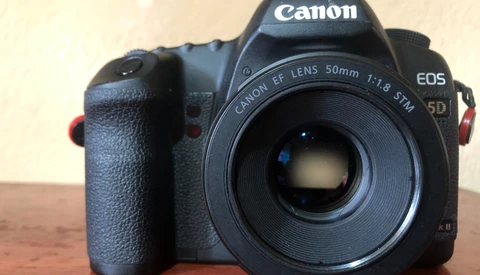
Why I Went Back to DSLR After a Decade of Mirrorless
I was an early mirrorless adopter. Not in the “influencer early” sense, but back when using mirrorless for professional work still meant explaining yourself. Other photographers said I was crazy, that I was just betting on a passing technology.