
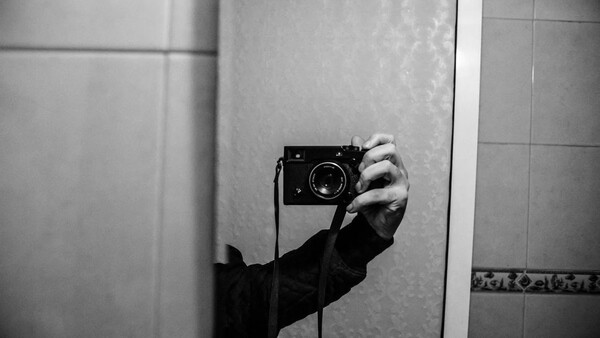
One of the strangest things about photography isn't the endless debate over cameras, editing software, or artificial intelligence. It is the quiet assumption that mastering one photographic discipline somehow grants authority over every other one.
Spend enough time on photography websites, social media, or discussion forums and a pattern begins to emerge. Street photographers are told they rely on luck. Landscape photographers are accused of photographing the same locations everyone else has already photographed. Wedding photographers are dismissed as service providers rather than artists. Fine art photographers are criticized for creating work that supposedly only exists to impress galleries. Documentary photographers are told their pictures lack technical polish, while commercial photographers are often accused of producing images without any emotional depth. What fascinates me is not the criticism itself. Photography has always been full of disagreements, and that is healthy. What fascinates me is the confidence with which photographers dismiss genres they have never seriously practiced. That confidence is rarely questioned.
I don't do that.
Personally, I don't feel qualified to critique the work of photographers who have spent decades specializing in weddings, macro photography, astrophotography, or highly conceptual fine art, because it is not my thing. I can appreciate their photographs as a viewer, and I can certainly express whether an image moves me or leaves me indifferent, but I would hesitate before explaining to them how their discipline should be practiced. They have invested years solving problems I have never had to solve, developing skills I have never needed to develop, and refining a visual language that is not my own. So why do people photographing flowers or shooting weddings think they are entitled to criticize a street photograph when they are not able to make a decent street photograph, or are not even interested in doing it? Most of the time the comment reveals anger or snobbery.
It doesn't happen with every genre. There is hesitation to do it with some specific genres. For some reason, that same hesitation often disappears when the conversation turns to street photography. People who have never spent years photographing unpredictable human behavior in public spaces suddenly become remarkably confident in explaining what street photography is, what it should be, and why it supposedly fails. I have always found that asymmetry fascinating. Respecting another photographic discipline should begin with acknowledging that every genre contains complexities which remain invisible to those who observe it only from the outside.
A wildlife photographer would probably never claim to understand what it takes to photograph a Formula One race after watching a few YouTube videos. A portrait photographer would hesitate before explaining to an architectural photographer how to photograph buildings. Outside photography, we accept this almost instinctively. We don't ask an orthopedic surgeon to perform brain surgery simply because both wear white coats. We don't expect a documentary filmmaker to direct a Broadway musical without understanding that the two disciplines demand completely different skills.
Photography, however, seems to encourage the opposite mentality. The camera becomes the common denominator, creating the illusion that every photographic language can be judged through the same lens. I am sorry, but nothing could be further from reality.
Every photographic discipline develops its own priorities because every discipline is trying to solve a different problem.
And street photography asks something entirely different. The street offers no rehearsals, no second takes, no controlled environment, no cooperation from strangers, and absolutely no obligation to reward your patience. The photographer has no influence over the light, the people, the weather, or the thousands of tiny variables that shape a fleeting moment. Observation replaces direction. Anticipation replaces planning. Timing replaces control.
The objective is different because the language is different. Yet this is precisely where so many discussions begin to collapse. A photographer accustomed to complete control may look at a street photograph and immediately notice uneven lighting, distracting backgrounds, imperfect framing, or visual chaos. Those observations are not necessarily wrong, but they may also be completely irrelevant. The apparent imperfections are often inseparable from the authenticity of the moment itself. Remove the chaos and you may remove the photograph. Another accusation is about ordinary people in the frame: I have news for you, the world is full of ordinary people, and we street photographers are interested in this and not in spectacular subjects, because telling what is happening in the mundane is interesting to us. I am not pretending that is something relevant to you, but I am not doing the same and criticizing your photography for that. It is just a different approach, and a different way to live photography.
A documentary photographer may struggle to connect with a heavily constructed conceptual image because the emotional power does not come from witnessing reality but from building an entirely new visual language. Looking for spontaneity inside a carefully designed photograph misses the point just as much as demanding studio perfection from a split-second street photograph. Neither photographer is necessarily wrong. Both are simply judging one language according to the grammar of another.
This confusion has become even more obvious as digital photography has expanded the number of creative approaches available. Some photographers build extraordinary images through extensive compositing, multiple exposures, texture overlays, digital painting, or artificial intelligence. Others deliberately limit themselves to almost no post-processing at all, believing that the integrity of the photographic moment is part of the work itself.
Personally, I know exactly where I stand. My own approach values observation over construction and reality over manipulation. I don't expect everyone to share those priorities, but I also don't assume they should. The problem begins when personal preference becomes universal truth. Every photographer has the right to decide how they want to work. No photographer has the authority to declare that every other approach is automatically inferior simply because it does not resemble their own.
Ironically, the photographers who make the strongest claims about another discipline are often those who have spent the least amount of time practicing it. Watching street photography videos, reading books about Henri Cartier-Bresson, Garry Winogrand, Luigi Ghirri, and Stephen Shore, or commenting beneath articles about documentary work does not provide the experience of spending years navigating unpredictable cities while trying to anticipate human behavior. In exactly the same way, photographing strangers on a sidewalk does not suddenly qualify someone to lecture successful wedding photographers about client management, lighting design, business logistics, and the countless invisible responsibilities that define their profession. Experience matters. Not because it makes someone infallible, but because it teaches humility.
The more deeply we immerse ourselves in one discipline, the more we begin to understand how much there still is to learn. Ironically, genuine expertise usually produces curiosity rather than arrogance. The internet seems to encourage the opposite. It rewards certainty, instant opinions, and absolute statements because they generate engagement. Saying that an entire genre lacks value is easier than admitting we simply do not understand its objectives. Perhaps that is why so many conversations about photography eventually become conversations about the photographer rather than the photographs. Instead of discussing ideas, we examine portfolios. Instead of debating methods, we question credibility. Instead of asking whether an argument makes sense, we ask whether we personally admire the person making it. None of this improves photography. It simply replaces discussion with tribalism.
Photography has never been one language. It has always been many languages sharing the same tool. The camera is merely the instrument. What changes from one genre to another is not the equipment but the intention behind its use. That distinction deserves far more respect than it currently receives. The healthiest photography community would not be one where everyone agrees. Disagreement is often valuable because it forces us to examine our assumptions. What matters is understanding the purpose of a photograph before deciding whether it succeeds. We should be careful not to confuse unfamiliarity with superiority. And that is the first step to evolving, not just as photographers, but as human beings.
Not every photographer needs to love street photography, landscape photography, wedding photography, conceptual photography, or documentary work. Taste will always remain personal. Respect, however, should never depend on whether we practice a genre ourselves. It should begin with the willingness to understand what that genre is actually trying to achieve before deciding that it has failed.
Join the Fstoppers community for free
-
Post comments and join in the discussions
-
Browse the site ad-free
-
Share your work and get featured in the community
-
Compete in the photo contests for fun and prizes
2 Comments
I think I understand where you’re coming from, Alex. I can appreciate how frustrating it must be when someone starts talking about your work without realizing how hard it is, or what’s important to you and why you photograph. I suspect we've all been there.
Respect, however, needs to go both ways between article authors and their audience.
Here a few statements that I’ve heard from several different authors in response to readers' comments:
• You’re off the topic of my article.
• You didn’t read what I said in the article.
• My article wasn’t speaking to the issue you raised.
• You don’t have my decades of experience, therefore my opinion is better.
• I taught photography for decades, therefore I’m an authority.
• You sound like a troll, so your criticism is just intended for no other purpose than to be mean and degrading.
• You are a lousy photographer, therefore your opinion does not count.
• You don’t show your work, therefore your opinion does not count.
• You’re not an expert in my genre, so you’re not qualified to criticize my work.
Communication breaks down when one or both sides fail to respect the opinions of the other. All of these type of replies do just that. I do indeed feel like I can comment on another genre for which I am less familiar. After all, photography is not brain surgery. I don't need 20 years of schooling, or a license to practice photography. I’m not judging, labeling, or demanding that anyone agree with me. I’m merely expressing an opinion. This is a social media site open to all people, no matter how well qualified; it’s not a museum board of directors meeting. I know you would like to have a more professional discussion sympathetic to your values as a photographer. Fine. I’d like to have customers lined up at my front door to buy my photographs. It may not happen.
I actually agree with much of what you're saying. Everyone should be free to express an opinion, regardless of experience or genre, and I don't believe expertise should be used to silence disagreement.
The distinction I make is a different one: criticism and trolling are not the same thing. A thoughtful critique, even a harsh one, is valuable because it engages with the ideas or the work. A troll or hater, on the other hand, is usually recognizable by the tone and the intent. The goal isn't to discuss but to provoke, mock, or attack the person instead of the argument.
I'm happy to engage with criticism. It's part of writing publicly. What I don't see any value in is rewarding bad faith. But, in part recently, I clarified my position: I will ignore completely anonymous accounts that is prettu clear were made only for attack and not constriuctive discussions.