
A few years ago, I got a friend request I didn't expect. It came from Efrem Raimondi. If you're not familiar with the name, you've almost certainly seen his work without knowing it. Raimondi was one of Italy's most respected portrait photographers, the man behind decades of images of Vasco Rossi, Italy's biggest rock star, as well as portraits of Monica Bellucci, Joe Strummer, Formula 1 driver-turned-handcyclist Alex Zanardi, Riccardo Muti, footballer Zlatan Ibrahimović, and even seven-time Prime Minister Giulio Andreotti. He shot for GQ, Vanity Fair, and Rolling Stone and worked with brands like Prada and Trussardi. He sat on the Hasselblad Master Jury. He was, by any measure, a master. So when Efrem Raimondi reached out to me, it stopped me in my tracks.
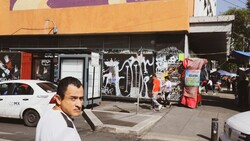
Because he didn't just add me. He wrote to me. He told me he liked my Italian blog, Fotoreportando, the ideas I put into it, and—this was the part that floored me—my photography. My photography. A portraitist of that caliber, someone who had spent a career distilling the psychology of the most photographed faces in Italy, telling me he appreciated what I was doing in the barrios of Mexico City. It made no sense to me at the time, and honestly, it still doesn't entirely. But I've come to understand it wasn't really about my photographs. It was about how Efrem looked at photography in general.
Raimondi always resisted being boxed in as simply a "portrait photographer," even though it was the label that stuck to him his entire career. In interviews, he pushed back hard against the idea, common among photographers and audiences alike, that a portraitist's job is to capture someone's soul. He didn't buy it. His position, repeated in different ways over the years, was closer to the opposite: a portrait doesn't reveal the subject at all. It reveals the photographer. That idea runs through his most famous images. Ask anyone who followed his work and they'll bring up two photographs almost immediately: Ibrahimović's battered feet instead of his face, and the tangle of marks left on the studio floor by Alex Zanardi's wheelchair after Raimondi invited him to simply move around the white backdrop. Neither image shows a recognizable "hero shot." Both say more about their subjects, and about Raimondi's eye, than a hundred conventional headshots could. That's the thread that connected his work on rock stars and mine on Mexico City street corners, even though on paper the two bodies of work couldn't look more different. Efrem wasn't interested in fame or subject matter as a filter. He was interested in whether a photographer had a point of view sharp enough to survive contact with whatever was in front of the lens: a famous face, a barrio wall—it didn't matter to him.
After he reached out, we linked to each other's blogs, the way photographers used to do more often before everything collapsed into social feeds. His own blog was sharp, restless, written the way he talked in interviews: direct, a little combative, never neutral. I don't read many photographers' blogs, if I'm honest. Most of what gets written about photography online is safe, decorative, forgettable. His wasn't. Every time a new post landed in my inbox, I'd stop what I was doing and read it. Sometimes I had something to say back, and I'd leave a comment. More often I just read, because there was always a real position in there, something worth disagreeing with or learning from.
Knowing that a photographer of his stature was, in turn, a regular reader of mine—commenting, engaging, treating Fotoreportando as a peer's blog rather than some outsider's project—changed how I thought about my own work. It's one thing to photograph what you believe in. It's another to have someone whose portraits you've studied for years tell you they see something real in what you're doing.
Efrem Raimondi died suddenly in February 2021, of a heart attack, at 62. He'd been photographing since 1980, when he covered the aftermath of the Irpinia earthquake, and he never really stopped being a documentarian at heart, even once fashion magazines and record labels started calling. Three years after his death, a Rieti photography association mounted a retrospective titled "Portrait for Sale," a title that feels exactly like something he would have chosen himself, wry and a little confrontational, right up until the end.
I didn't know Efrem in person. We never shared a studio, a coffee, a physical room. What we shared was a correspondence between two people who took photography seriously enough to argue about it, across a friend request, a handful of blog comments, and mutual respect that crossed an enormous gap in fame and genre. That's a strange kind of relationship to grieve. But it's a real one, and it shaped how I think about my own pictures more than plenty of relationships conducted in person ever have.
If there's one thing I carry from him, it's this: don't photograph the subject. Photograph what you actually see. Everything else is decoration.
He said it himself, better than I can, in an April 2020 post on his blog titled "Ritratto e retorica." The translation from his Italian is mine:
I never understood all the rhetoric of the portrait and all that emphasis that accompanies it. As if we were facing another place, an offshoot of photography that who knows what it will give life to.
And what does it give life to in the end? To a photograph, in fact.
And this is. From here it starts.
— Efrem Raimondi
Thank you, Efrem.
Join the Fstoppers community for free
-
Post comments and join in the discussions
-
Browse the site ad-free
-
Share your work and get featured in the community
-
Compete in the photo contests for fun and prizes
2 Comments
You said: "Don't photograph the subject. Photograph what you actually see." It makes me wonder what I see. With portrait, street, wedding or any photography where there's a human element, I suspect you "see" joy, happiness, sadness and the whole gamut of emotions. And that's what you capture in a picture.
Indeed, one of my old favorite programs made that statement. ABC's Wide World of Sports was an American television program beginning in the 1960s which I distinctly remember for its opening ("the thrill of victory and the agony of defeat")... the agony part showing a downhill skier crashing. We could all feel the pain and disappointment. The photographer undoubtedly saw and felt it too.
Seeing something in a landscape or nature picture can be harder to diagnose. My first couple years of photography was preoccupied with seeing color. Colorful sunsets, red roses, blue skies. Then something clicked and I became attracted to black and white. Color simply evaporated. I started seeing contrast, texture, shapes and lines. But it's still a relatively less emotionally compelling picture, compared to a photo capturing the raw emotions or tears of someone winning an Olympic gold medal. My photography feels more like a diagnostic tool, analyzing geometry. I'm not sure that I can make any more out of it than it is. I would be happy to take your advice though. What and how do we learn to see?
I do landscape too, Ed. Not the classic landscape, the urban landscape, that we can associate with new topographics. But I consider being part a bridge between documentary and landscape, just think about to Robert Adams work or Andreas Gursky or Joel Sternfeld. There is a political reading in their vision. But, coming back to the question: what I see... it is not just what we see rationally in fron of us...I think we can explore further...think about...the mindset. Your mindset, in that moment, makes you decide what and how to photograph, to change a little bit, maybe the point of view.