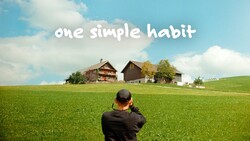
The places you see every week are the ones you're least likely to photograph, since they feel too familiar to bother with. Familiar doesn't last, and the village fair or street corner you skip this year is exactly what someone will want to see decades from now.
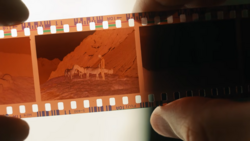
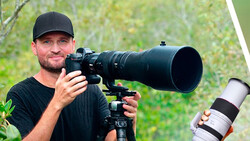
Teo Crawford traces his whole approach to a small box of slides his grandmother handed him in Japan, shot mostly by his grandfather on a 1967 trip through Kyushu. Plenty of photos from 1967 exist, but these hit harder for him because he knows the people involved, including a younger version of his grandmother he'd never seen. He describes a "radius of personal reality," the limited area where your life actually happens, and argues that documenting it is meaningful whether or not anyone else cares. Living in a small country, he finds that radius stretches across most of Austria. That idea gives you a workable boundary for a project, one drawn around the places you already move through rather than the places you'd have to fly to.
At the start of this year, Crawford decided to push into parts of Austria he didn't know well, starting with traditional cultural events that mix old customs with present-day life. His first stop was a Maibaum fair on May 1 in Axams, a town just outside Innsbruck. Communities across the country raise a tall, decorated tree trunk using long wooden poles and a lot of coordinated muscle, a custom with roots going back to the Middle Ages. There's music, food, and a tradition of climbing the pole to win a prize. He calls it a small and somewhat shy beginning, and the fair itself was modest, with a fire engine and an inflatable dart target set up for the kids. Small fairs like this one are worth your time, since their scale lets you see how a community runs its own celebration.
During the Great Depression, the U.S. government's Farm Security Administration sent photographers into small towns and farms to record ordinary daily life, and those images now sit in the Library of Congress as one of the most studied visual records of the era. Much of what makes them valuable today is what made them seem routine at the time: kitchens, storefronts, county fairs, people waiting around. You can borrow the same logic on a personal scale. Seasonal events are especially useful because they repeat, so you get a second, third, and tenth chance at the same scene, and over the years, your archive starts to show change on its own. Keep dates and place names with your files, since a photo without them loses much of its value to anyone looking back later. Scanning family slides or prints belongs in the same project, because it ties your current work to an older record of the same people and places.
Between fairs, Crawford took a trip to Burgenland in August, the easternmost of Austria's nine states and the only one he had never visited. Having spent most of his time in the mountainous west, he found the flat landscape changed the whole feel of the place. His most recent work centers on the Almabtrieb, the autumn tradition of bringing cows down from their mountain pastures before winter. The animals wear elaborate headdresses of greenery, flowers, and ribbons along with large bells, and towns hold fairs to welcome them back. His first attempt, in Fügen in the Zillertal valley, fell apart when the event was canceled after a death in the farmer's family, so he drove deeper into the valley to find another one. Once the cows arrive, you get roughly a one-minute window, and he's candid about which frames from that rush worked and which didn't. He also walks through how he approached strangers for portraits, a low-key detail shot of dancers' legs picked out by patches of light, and a portrait where he had a man turn toward the sun with his eyes in shade to pull attention to his outfit. A week later, he shot a smaller Almabtrieb in Hart, where the cows had little room to pass and the farmers pushed them hard from behind.
The portrait Crawford made by turning a stranger toward the sun, with his eyes in shade, comes late in the video.


Join the Fstoppers community for free
-
Post comments and join in the discussions
-
Browse the site ad-free
-
Share your work and get featured in the community
-
Compete in the photo contests for fun and prizes
1 Comment
I do not have a single picture of my paternal great-grandfather, and only a few of my grandfather at any age, or father as a youngster. The size of the collection grows a little bit of me as a kid in the 1960s as cameras became more ubiquitous, but not so many that it would take up more than a single binder of prints.
With everyone having a camera in their pocket, photography is not nearly so selective as it was. Kids entering the world today will have more pictures of them as children than they'll know what to do with, provided the hard drive or memory device survives. And the fact that so much video takes the place of still pictures, I wonder whether anyone 50 years from now will even have the chance of discovering a box of prints of their grandparents when they were younger... like the story of the young guy making this video.