

There's a fairly common way to begin a piece about two photographers: describing when they met. This isn't that kind of story. Between Luigi Ghirri and Claude Nori, there's no iconic image shared together, no textbook foundational episode, not even the certainty that they ever needed to truly define their relationship.
And yet, between Italy and France, between silent suburbs and summer memories, something rarer than a collaboration was built: a similarity of gaze. It's as if two people, without speaking much, had decided to answer the same question.
Luigi Ghirri and Claude Nori, and the Invisible Conversation That Shaped How We See the Ordinary
There are friendships that happen in full view, and others that exist almost entirely in the way two people look at the world. Between Luigi Ghirri and Claude Nori there is no myth of a famous duo, no iconic portrait of them together, no clearly staged artistic alliance. And yet, something between them feels like a conversation that lasted years.
It wasn't spoken loudly or documented as a manifesto, but it was present in books, in magazines, and in the slow circulation of images across Europe in the 1970s and 1980s.
A Europe of Quiet Images
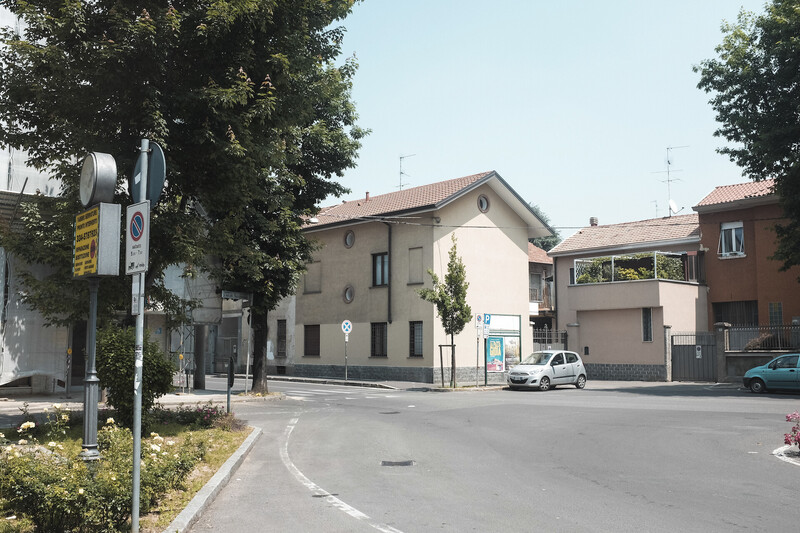
At that time, photography in Europe was shifting—not toward spectacle, but toward attention. Ghirri was building a language of distance. His work was not interested in drama. It was interested in what happens when you stop trying to force meaning onto the world: gas stations, empty horizons, signs that no longer fully communicate, spaces that exist without asking to be noticed.
Nori, through his work and through Contrejour, was moving in another direction, but not an opposite one. His photography leans toward intimacy, toward memory, toward bodies in time, light on skin, emotional fragments that feel like they were never meant to be staged. Two different temperatures, but the same refusal: photography as noise.
The Other Side of Attention
If Ghirri teaches distance, Nori teaches closeness. But neither is about technique; it is about the ethics of looking. Where one steps back, the other leans in, but both avoid aggression, and both avoid the idea that photography must dominate its subject.
There is a shared discipline here, even if it never needed to be formalized. Photography, for both, is not extraction. It is recognition, and recognition requires time.
Viaggio in Italia and the Shift in Perspective
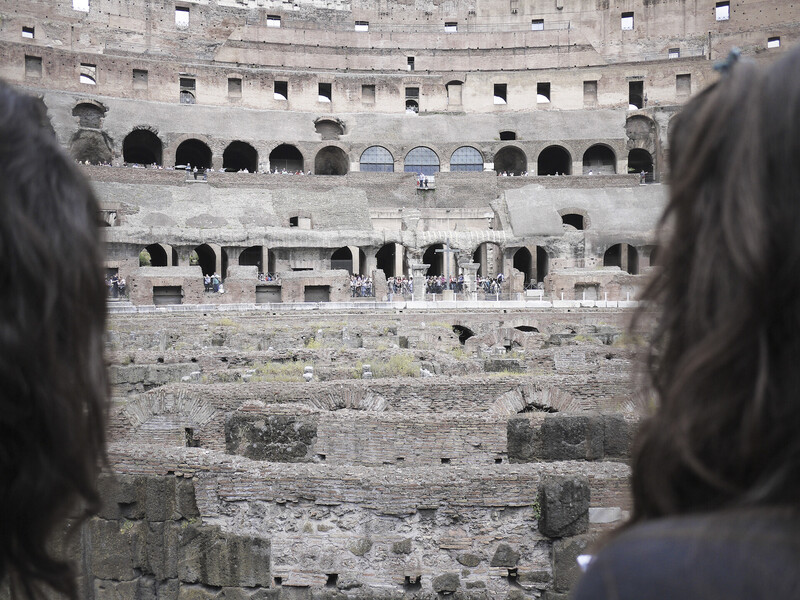
One of the invisible points of convergence is Viaggio in Italia. It was not just an exhibition; it was a repositioning of photography itself, a way of saying that the landscape is not outside meaning. It is already meaning, if you know how to look.
In France, this shift was observed with attention—not as a trend, but as a signal. Something had changed in how photography could describe reality without turning it into spectacle. Nori, who was deeply embedded in editorial photography through Contrejour, was part of that broader sensitivity, not as an echo, but as a parallel awareness. Different countries, same atmospheric change.
Friendship Without Documentation
There is a temptation, when writing about photographers, to search for dramatic meetings, decisive moments, and legendary conversations. But most real artistic friendships are not like that. They are slower. They happen in exchanges of work, in awareness, in silence between publications, in knowing that someone else, somewhere else in Europe, is trying to solve the same problem without needing to explain it.
It is entirely possible that Ghirri and Nori never needed to define anything between them, because they already understood the essential part: the image does not need to shout.
What Remains
If there is something that connects them beyond geography and style, it is this: photography does not evolve through isolation. It evolves when one way of seeing meets another, and recognizes itself without needing translation. No manifesto is required, and no shared signature.
Only the quiet certainty that someone else is looking at the world with similar seriousness is enough to change how you work—even from a distance, and even without ever needing to perform the friendship in public.






Join the Fstoppers community for free
-
Post comments and join in the discussions
-
Browse the site ad-free
-
Share your work and get featured in the community
-
Compete in the photo contests for fun and prizes
No comments yet