
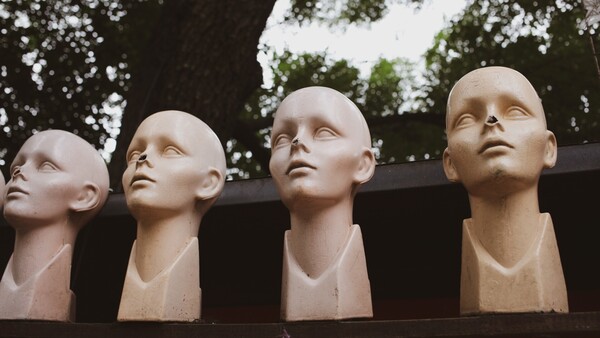
The tragedy is believing that loving cameras is the same thing as loving photography.
Every now and then I make the mistake of wandering into a camera store, not because I need anything in particular, but because there is something strangely fascinating about watching photography trying very hard to forget what it is. The scene rarely changes. There is always somebody turning a lens toward the ceiling to inspect sharpness, someone else scrolling through menus with the concentration of an air traffic controller, another customer asking whether this year's autofocus is finally reliable enough to justify replacing the camera he bought nine months earlier, while somewhere in the background a YouTube review is probably being filmed, destined to become another 45 minutes devoted to the microscopic differences between two machines that will both be obsolete long before anyone remembers the photographs they produced.
What always strikes me isn't the technology itself. I like cameras. I've spent most of my life carrying one, and I still enjoy the reassuring mechanical certainty of a shutter closing exactly when I ask it to. The camera has never been the problem. The problem begins when the camera quietly replaces the photograph, when conversations drift so completely toward engineering that nobody notices the original subject has slipped out of the room without saying goodbye.
It happens so gradually that almost nobody questions it anymore. Photography becomes an endless sequence of comparisons, specifications, firmware updates, laboratory measurements, and buying advice, as though the medium had somehow reached the extraordinary conclusion that understanding a sensor is more important than understanding the strange, unpredictable, and often contradictory creatures standing in front of it. You can spend an entire afternoon surrounded by people discussing photography without hearing a single conversation about photographs, which would be absurd in any other creative discipline and yet has become perfectly ordinary in ours. Imagine walking into a bookshop where aspiring novelists spend hours comparing keyboards without mentioning a single novel, or a gathering of filmmakers where every discussion eventually collapses into sensor size while nobody brings up Fellini, Tarkovsky, or Varda. You would suspect that something essential had been lost. Photography, however, has become remarkably comfortable with this arrangement. Do you think Fellini was talking about the cameras grabbing the scenes or about life?
I sometimes wonder whether many people actually love photography or whether they simply enjoy belonging to an industry built around perpetual consumption, because the behavior looks suspiciously familiar. The objects change, but the ritual remains the same. One year it's cameras. In another life it could have been hi-fi systems, mechanical watches, or espresso machines. There is always another product promising to solve a problem that nobody had until an advertising department decided it existed, and there is always an audience eager to believe that the missing ingredient separating them from meaningful work can be purchased, charged overnight, and delivered before the weekend.
The uncomfortable possibility, of course, is that the missing ingredient has never been inside the box.
Nobody has ever looked at The Americans and wondered whether Robert Frank would have benefited from faster subject detection. Nobody stands in front of a Koudelka print trying to calculate its dynamic range. Nobody remembers Saul Leiter because of the coatings on his lenses. The photographs survived because they carried something infinitely more durable than technology. They carried a point of view, and points of view have always been inconvenient because they cannot be downloaded, upgraded, or compared in a spreadsheet. They demand something far less comfortable than shopping. They demand attention. Curiosity. A willingness to spend years looking before expecting to be seen.
Perhaps that explains why technical discussions have become so attractive. Technical knowledge behaves politely. It rewards effort with certainty. If you study autofocus systems, eventually you understand autofocus systems. Human beings are considerably less cooperative. Spend 20 years walking the streets with a camera and you may still fail to understand why one fleeting gesture suddenly contains an entire story while another, photographed with flawless technique, remains emotionally weightless. The camera cannot answer that question because it was never designed to. Asking it to do so is rather like asking a typewriter to write a novel by itself.
We need to be authors and not camera testers. But I see more camera testers than ever, and this affects photography. Recently, a man came to me expecting a tutorial, when I am more in the line of a philosophical approach to photography. If a tutorial is what you are after, there is no shortage of them, and something like The Well-Rounded Photographer: 8 Instructors Teach 8 Genres of Photography will serve you far better than I will.
Somewhere along the way we confused mastering the instrument with mastering the language, and because instruments can be measured while languages cannot, we slowly drifted toward the comforting illusion that photography had become a branch of engineering. It never did. Engineering builds the tool. Photography begins only after the tool has disappeared from your thoughts, when what remains is the difficult task of deciding what deserves to be remembered and why. I am talking about emotions, memory, and documents, not pretty pictures.
That is the part no specification sheet has ever managed to explain, and perhaps never will.
Join the Fstoppers community for free
-
Post comments and join in the discussions
-
Browse the site ad-free
-
Share your work and get featured in the community
-
Compete in the photo contests for fun and prizes
13 Comments
I guess sometimes I miss the film era, especially when I started using Bronica S2A cameras. After I figured out the system that I wanted, it faded into the background. I used it for several decades, and the thing about the cameras. Once I adjusted to some of the quirks of the gear it never got in my way, it was incredibly heavy, but it produced wonderful images that I could produce because I didn’t have to be thinking about the camera all the time. In other words, I totally agree with what you’re saying here. I also miss the era when you could buy a camera and use it for 30 years. By the way, I still use a DSLR from 2007 and another from 2012. Those cameras also don’t get in my way.
My Nikon D800 is almost half way to your 30 year mark. It's still working fine. Now I just need for myself to survive the rest of the way to make it another 15 years. That could be difficult.
Same for my D3200. I actually didn’t even buy the 3200 until about four years ago. I still use a D 200 sometimes just for the amusement value of the CCD. I often use smaller cameras when I’m traveling or out and about just because I like to not remember that I have a camera until I actually need it.
Continuously criticizing the mindset that obsession with camera gear avoids the proper focus on photography, seems to just get us stuck in the mud. When are we going to stop talking about who is writing what, and focus our attention on photographs? When I try to do that, I'm criticized for being too technical, or that I don't understand street photography. It's hard to place the focus on images when we criticize each other so much for our opinions.
Seems to me that the proper framework must be established in order to have a productive conversation about art or photography. When my wife and I discuss a book, we interpret what we've read from each of our own life experiences, not necessarily the author's. It leads to different conclusions. A discussion of photography has to operate the same way.
Another thought provoking article Alex :)
I wonder if, based on the natural assumption lots of people (including (edit: I should have said me here originally) up to the point of reading this article) that people make of film having been better than digital in some regard because the technology was simpler/more real/mechanical/etc., that we might have it wrong. If film was still the dominant force I think we'd have an endless spec race for new emulsions, new sizes, other new ways of getting more (and getting people to open their wallets)... So I think this has less to do with photography and more to do with society's infatuation with newer/better, driven by the idea of endless, unceasing growth.
Why do we need photography experts with expensive tools? My phone say Pro in the name, ergo I am a professional when I take photos with it.
The idea behind this article is quite simple, derivated from the personal experience here, in social media and in real life: talk about cameras and everyone (photographers or those defining themselves as photographers) will have something to say. But talk about "how much political is the gaze of Josef Koudelka in his work" and you will obtain, a reply, maybe two if we are lucky and then the discussion will end. This is because society created a world of consumers. Culture, usually, is not popular or celebrated.
So write an article about the work of Josef Koudelka and see what happens. Pointing to what's wrong about consumerism doesn't ever start the conversation about culture. And predetermining that practically nobody will reply defeats the discussion before you even write it. Write something like that and I promise I'll respond.
I can write, of course, here an article dedicated to Koudelka, but my example was about the real life experience. Maybe I was not clear in my comment...
Indeed! - I have always maintained the best camera is one that disappears between you and your subject - i.e. a camera that does not dominate the dialog between your vision and the final photograph.
I could easily make a similar discussion on how the finely crafted photographic print is no longer considered the final artwork ...
Good point! That was exactly with people I photographed in the past, especially erotic photography I used compact cameras in order not hiding my face behind a camera and not having that interruption of the dialog between me and the subject.
Bravo Alex! It's more about images bring created with what we recognise what's important in front of the camera using what's in our mind behind the camera, then using the tool correctly to capture that essence and edit to suit. The image is the attraction, engagement and memorable impact, yet probably gets 1% discussion in tutes. Yes, we need to know what settings to use but it ain't that hard. It's not photography, it's the photo.
After nearly 60 years of photography and psychology and philosophy as professions, I wrote a book about it called "Behind the Seen" aka "The psychology of imagery" but don't worry, it's at no cost, no catches so this isn't a sales push. You're welcome to download it here at https://sites.google.com/view/behindtheseen
Skip through, or think and practice the sections, or print it out and use it as a doorstop. It's 333 pages but you could study it or just do the crossword at the back.
Alex, delete this if you think it's inappropriate.
Thank you, Adrian for your comment and for sharing that. I don't think is a bad thing to share it by the moment all the community can have a book to read. I will download it soon and I will read it.
Hello Alex,
Your article certainly shares my very thought and attitude towards photography - not that I ever thought about it in the way you have written it. All I can say is - absolutely, because to me, when I am out there focusing on the subject and looking for the best angle, the camera in my hand sort of disappears, forgotten.
Perfectly said by Santillo Photography Quote "I have always maintained the best camera is one that disappears between you and your subject - i.e. a camera that does not dominate the dialog between your vision and the final photograph."
Over our various local exhibitions here in Hassocks UK, I get such a kick when a viewer looks well into my print and sees what I saw to take the shot and sometimes even observes and comments on something I did not even think about to finish with - "You certainly have a good eye." That, for me is a fabulous compliment. I don't hold much for "Oooo I love the colours, what camera did you use and what lens?"
Thank you for sharing your thoughts on this subject - I picked your article up on Pentax Forum where I am a member.
Kind regards - Dinah