
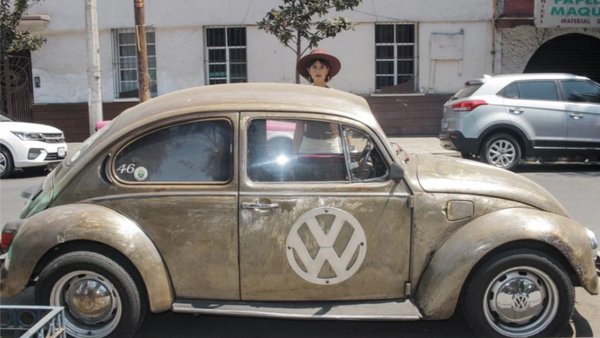
There's a particular kind of photographer who becomes visibly uncomfortable the moment Juergen Teller enters the conversation. You know the type. They can explain sensor readout speeds like nuclear engineers. They spend three weeks comparing corner sharpness at 400%. They speak about cameras the way Formula 1 mechanics speak about engines. Their hard drives are graveyards of technically flawless emptiness.
And then Teller shows up — flash straight to the face, awkward framing, deadpan expressions, skin that looks like skin. Photos that seem almost offensively casual. Sometimes ugly. Sometimes absurd. Sometimes brutally honest. Somehow, against all logic of the modern photography internet, the man leaves a deeper cultural mark than armies of photographers producing polished visual anesthesia. That's the part that irritates people. Not the photos themselves — the freedom.
Because Teller represents something dangerous to a certain photographic mindset: the possibility that emotional relevance matters more than technical seduction. That possibility terrifies an industry built on optimization.
Spend enough time online and you start noticing the pattern. Entire ecosystems of photographers now operate like unpaid laboratory technicians for camera companies — endless discussions about dynamic range, autofocus tracking, lens rendering, codecs, micro-contrast, firmware updates, "cinematic look," YouTube thumbnails with shocked faces and titles written like survival warnings. Meanwhile, almost nobody talks about vulnerability, obsession, psychological tension, or authorship. Photography became a place where people discuss cameras to avoid discussing themselves.
But life is more important than photography. Photography can be a consequence of life, not the opposite.
Why does Teller create such violent reactions? Because his work forces an uncomfortable question into the room: what if photography was never about perfection to begin with?
The internet trained photographers to chase approval through refinement — cleaner edits, better color grading, sharper lenses, more expensive gear, more controlled lighting, everything polished until the image becomes socially acceptable wallpaper. That's also why most photographers online prefer to talk about gear instead of life. It's sad to say, but often it's because they know everything about technical topics and nothing about how to live. Teller walks in and detonates all of it with snapshot aesthetic.
Snapshot aesthetic is not laziness. That's the misunderstanding made by people who think intention only exists when it arrives wrapped in technical sophistication. Real snapshot aesthetic is dangerous because it removes the protective armor photographers hide behind. Suddenly composition isn't enough. Lighting isn't enough. Sharpness isn't enough. You actually need presence, instinct, personality, and the courage to risk looking ridiculous. Snapshot aesthetic re-shaped the way we look at many photographs. And yet most photographers would rather discuss bokeh.
A huge amount of contemporary photography is engineered to impress other photographers. It's an insular visual economy of people rewarding each other for the same safe technical achievements — images designed to generate immediate admiration without leaving any psychological residue. Teller often does the opposite. His photographs don't beg for applause; they resist it. They can feel crude, invasive, strangely intimate, anti-beautiful. Sometimes they look like they shouldn't work at all. And yet they stay in your head longer than thousands of perfectly edited images evaporating through social media every hour.
That's authorship — not style. There's a difference. Style is repeatable. Authorship is existential. You can copy lighting setups, presets, film simulations. You can buy the same camera. You can imitate visual trends until your work looks algorithmically approved. But you cannot fake a worldview. Teller's is unmistakable because he never appears desperate to be liked, and that alone already separates him from most of the photography internet.
Because today, too much photography is based on fear — fear of imperfection, roughness, ambiguity, of making images that divide people, of looking unprofessional, of not appearing technically elite. So photographers attack people like Teller because his existence destabilizes the rules they built their identity around. If someone can succeed while rejecting conventional photographic beauty, then maybe all those endless technical rituals were never the point.
Teller is guilty of the worst crime: he made inroads into the fashion photography industry by doing whatever he wants. Photographers hired by Vogue are generally expected to respect a certain aesthetic specific to the famous and historic magazine. Teller doesn't appear to have been given that memo. He openly challenges fashion photography itself — which may explain his long association with William Eggleston, another photographer who draws strong reactions from the photography community, and with whom Teller has collaborated on published work. That realization hits hard for the academic photographer — especially for photographers who invested years trying to become perfect instead of trying to become personal.
And maybe that's why Teller still matters. Not because he makes "beautiful" photographs, but because he reminds us photography was never supposed to be safe.

Join the Fstoppers community for free
-
Post comments and join in the discussions
-
Browse the site ad-free
-
Share your work and get featured in the community
-
Compete in the photo contests for fun and prizes
6 Comments
I never heard about this photographer. There are always people who will complain and whine. Photography is pretty simple, you do you, everything else is just noise.
He is currently one of the most famous photographers in the fashion industry. But you are right about the fact haters always will be of everything. Mine would just be an observation, because I love his style, going against a lot of status quo and challenging the same fashion industry through a different attitude and approach.
In my case transitioning from a long history of film and silver print to digital was technologically bewildering. I firmly believe an artist (which is what I call myself, warranted or not) needs to understand the medium they are working in (or more accurately the evolution of personal style, if one sticks to the medium). The basics of composition, or more accurately the visual dynamics of representing 3 dimensions in a 2 dimensional space applies to all visual media and not just photography or video. This is something sorely lacking in most photographers, and generally those who can transcend the murky depths of technology will probably end up in cinema, where the real photographers are plying their craft.
I have gone quite deep into the technology of digital photography only to know enough to reject some arbitrary measure of perfection, whether that is color science, sharpness or how one can manipulate an image in post to achieve the measures of "perfection" that peers in the many online communities are judging their own or others work.
So things like lens imperfection, digital noise, what the camera produces imperfectly in terms of colors and exposure is freeing in the sense that if you understand well enough what you and the camera is doing, you are free to let things go.
In my case, I generally work with the camera JPEGS, do 90% of my composition in camera and only do very light editing in post. This is not dissimilar to working in silver halide where I found darkroom work and image manipulation boring, In my photography, what you see is what you get, but I am only creating images for my own emotional and sometimes intellectual (political) expression, otherwise, what is the point of being an artist?
And my advice to those photographers who want to get over chasing the technology and develop a personal vision, stop staring at your computer or iPad screen and start printing!
Hi, Ray. Thanks a lot for this comment. We share a lot about the approach. I also think that one goal is to reduce more and more the time we spend in front of a computer making more photos and living real life. Many photographers tend to forget how much is important, exactly as for a writer, to have a life rich of experiences in order to have something to tell.
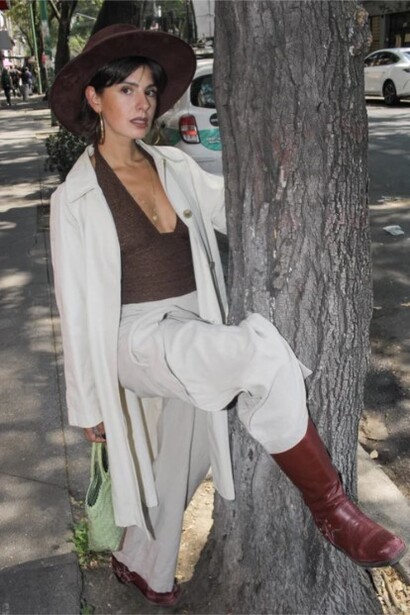
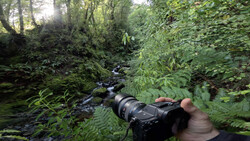
I can certainly agree that some fashion work is woefully overdone with editing pushed beyond all limits and skin that looks like silly putty. However, this approach is going too far in the opposite direction. The second image of the model straddling a tree is ridiculously sloppy. It does no justice to the point of the image, which is to make the clothes look like something the intended audience would want to wear. The cluttered background and unappealing flat lighting is an obvious conceit and betrays any real attempt at 'innovation'. There are better and far more aesthetically pleasing ways to avoid the trap of over processing.
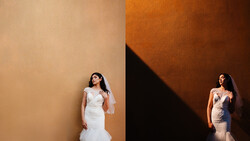
I thank you because your comment contains the same critics tha Juergen Teller receives. The photos here of course are mine and not from Teller. And they are part of my new project HAMILTON. The result is exactly what I want to achieve. The pleasing is exactly what I want to avoid, and so Teller does. I don't expect many photographers get it exactly for the reasons exposed on th article. Fortunally we are all different and to me photos that are now easily replaced from AI are the thing to avoid.