
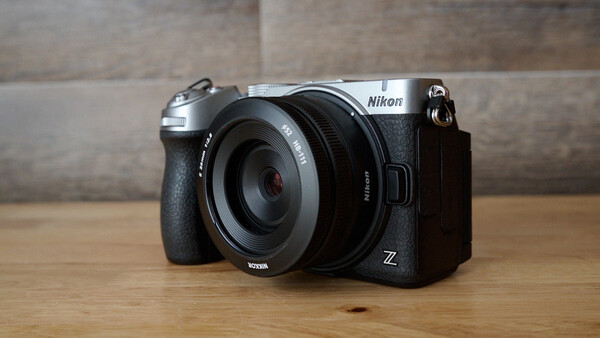
Today, I’ll give you my initial hands-on impressions of Nikon’s new entry-level mirrorless camera, the Z5IIC.
The first impression I’ll give you, straight off the bat, is that it’s hard to review this camera without reviewing multiple cameras at once. More on that in a second. But whenever I review a camera, I always do my best to isolate a particular camera’s attributes rather than set them in relation to the entire marketplace. But as the Z5IIC’s moniker suggests, this entry sits in a very particular position within the industry and, more specifically, within Nikon’s own ecosystem, so placing it into context becomes a requirement.
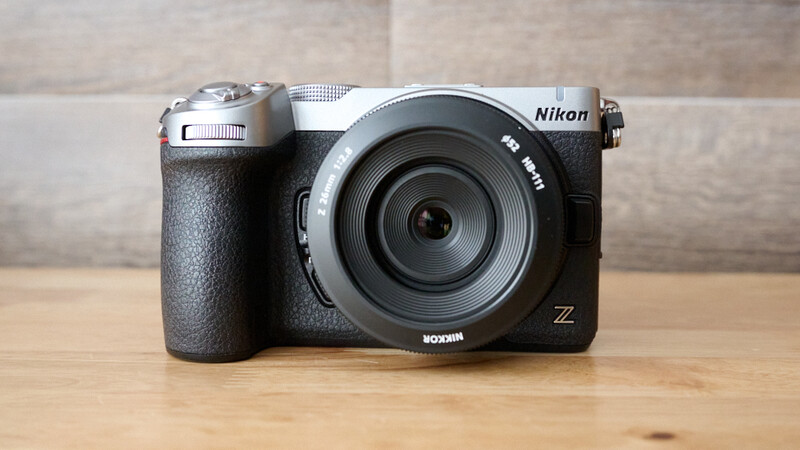
But first, let’s look at what the Z5IIC actually is. The Nikon Z5IIC is a full frame 24.5 MP hybrid mirrorless camera. In Nikon’s press materials, they said that the “C” in the name stands for “casual,” and much of the camera’s design follows suit. It should be stated up front that comparisons to Nikon’s line of professional tools are a bit unfair since this camera has been explicitly built with entry-level customers in mind—the type of customers who are just learning about photography and for whom features like Scene Mode are going to be the difference between getting a decent image or a blurry mess. Nikon has built this camera around trying to make things easier for beginners. At $1,399, it is the gateway drug into the Nikon lineup. The tool a casual user will purchase as a step up from shooting with their phone but before they are ready for a higher-end (and higher-cost) body.
For photographers making that same transition, Photography 101 offers a useful grounding in camera fundamentals.
The headline feature of the camera is that it lacks an EVF. Strange that the most notable aspect of the camera is something that isn’t there instead of something that is. I’m going to dig more, much more, into that throughout this review, but Nikon says that market research is telling them that more users, younger users in particular, are generally screen-first users and losing the EVF can actually be an advantage to those types of consumers. Again, I will push back on that gently in a moment. But one clear advantage of losing the EVF is that it allows Nikon to offer the product at a lower price point. This can serve to entice new users into what is an excellent ecosystem where they can grow as their skills progress.
But, okay, I’ve got a lot to say about this camera, so let’s address the elephant in the room now, so we can move on to what makes this camera unique.
The notable elephant in the room is the quote I’m sure you’ve heard repeated in a number of reviews thus far. The Z5IIC is, at the most basic level, just a Z5II with the EVF chopped off and a $300 drop in suggested retail price. So, I think you have no choice but to consider the two cameras together rather than as fully separate entities.
And while this isn’t explicitly a Z5II review, I would like to take a moment to let you in on a little secret. The Z5II is an excellent camera. I’ll admit I didn’t pay much attention to it when it was first released a little over a year ago. I am a Nikonian and already own a pair of Z9s, which pretty much service all of my needs for professional work. I have a Z f which I love that handles fun photography. And I had a ZR for some time that handled video very well. I won’t dig much into the Z9, but the Z f and ZR both factor into my reaction to the Z5IIC. Again, more on that later.
But while my current kit meant that I didn’t need to pay much attention to the original Z5II when it was released, I did get a chance to use it briefly a few months ago for a lens review and couldn’t fight the obvious thought in my head. This is a darn good camera.
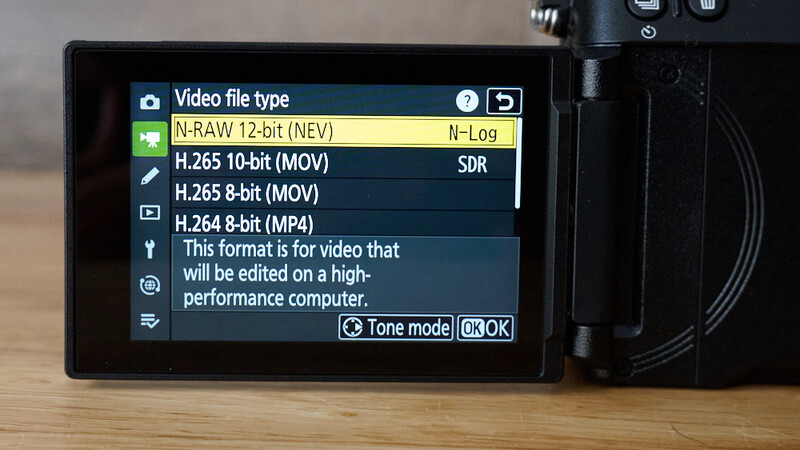
Prior to the Z5IIC, the Z5II was the most affordable full frame Nikon. It shares the excellent stills capabilities of my beloved Z f, just in a less “stylish” body. And, remarkably, it allows you to shoot N-RAW video up to 30 fps. Because I am primarily a filmmaker these days, that is the detail that snuck up on me. While the sensor is different, so the N-RAW footage in the Z5II and Z5IIC isn’t exactly the same as what’s coming out of my Z9, it’s still darn good, and to be able to potentially use an entry-level camera as a B or C cam with matching raw formats was intriguing. Long story short, I felt the Z5II was the best-value camera on the market.
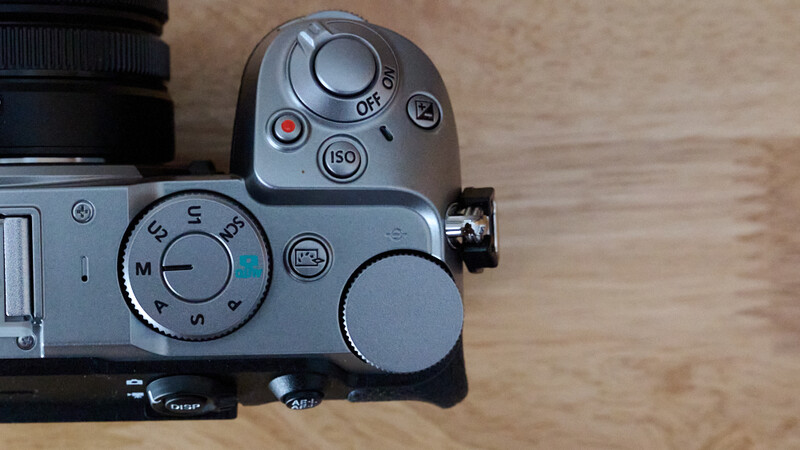
Okay, now, with that out of the way, let’s turn our attention to the Z5IIC. Because it is essentially “just a Z5II with the EVF chopped off,” it shares much of the same value proposition. The same excellent stills and AF performance. Amazingly, at $1,399, the same N-RAW video up to 30 fps. They’ve even added a nice tally lamp. A nice addition for those who will use the Z5IIC for filming themselves, probably a notable mandate for a camera designed to be “casual” in 2026.
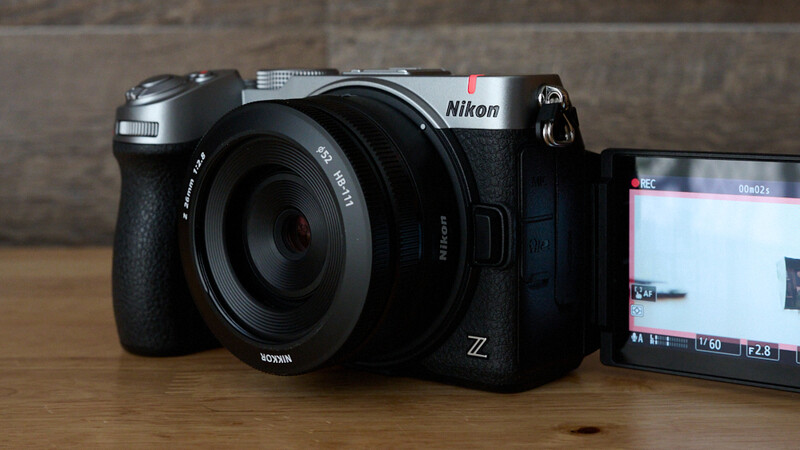
As I hinted at before, they now have that Scene setting on the top dial, which allows you to quickly cycle through different types of typical scenes. Parties, pets, sunsets, etc. Again, the idea being that folks still learning photography can get a helping hand with exposure. There’s even an option to add customizable levels of grain to your images. I didn’t try this much. Not because I don’t think it’s cool. Rather, I’m just well aware that my short-term memory would fail me, and I’d be liable to accidentally leave heavy grain on for all my shots going forward without intending to.
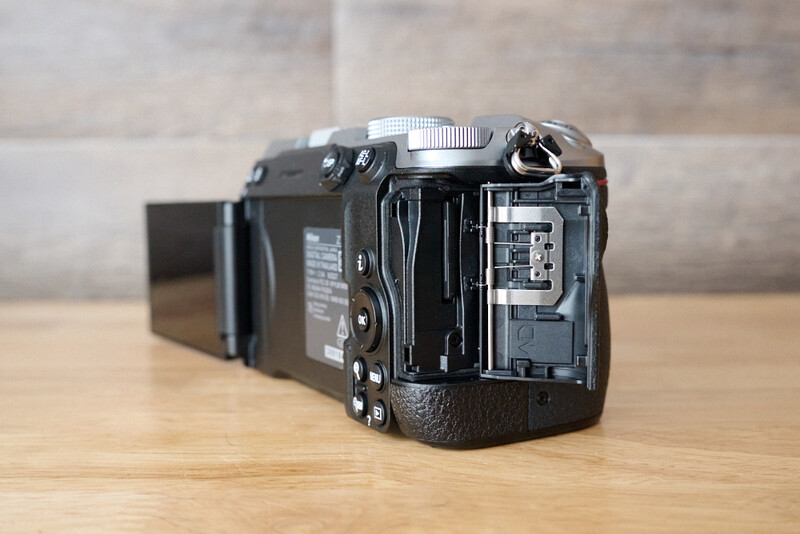
It is worth mentioning that, in going from the Z5II to the Z5IIC, you also lose the second card slot. In full transparency, my genre of photography has never been one that required a second card slot. I don’t do events, weddings, or situations that are unrepeatable or where I’m not already tethered to a redundant computer system. But if that is you, going from two cards down to one may be worth considering.
And, of course, there’s that EVF. I’m going to do my best not to go on an old-man rant about why EVFs are a significantly better way to shoot than LCDs. I’ve done that in the past multiple times, and I’ll skip it here. Instead, my main curiosity is why not having an option for an EVF would be an advantage. I get that you might not want to use it. But my response would be, just don’t use it then. For instance, with my Z f, I leave the LCD completely shut 99% of the time I’m shooting because that’s my particular preference. I’m not suggesting everybody should shoot like me. I’m just saying that, even though I don’t use the LCD all the time, I am still glad it’s there for those occasions when using the EVF proves impractical or inconvenient. To me, having an EVF is always going to be better than not having an EVF. Just because it’s there doesn’t mean you can’t shoot with the LCD instead. It’s just an option in the event you need it on a bright summer day or when you need more stability. And since the Z5IIC without the EVF is only marginally (just barely) lighter than the Z5II with the EVF, why not have it there just in case?
Okay, old-man gripe over. In fact, one could also argue that Nikon’s product strategy here is spot on. Those who don’t want the EVF or extra card slot can save $300 by opting for the Z5IIC, while those like me who require an EVF still have an identical option for only a marginal amount more. The card slot difference is really more up to your workflow. Again, if you are using this only as a casual camera, I can see that having two card slots is probably not a top priority.
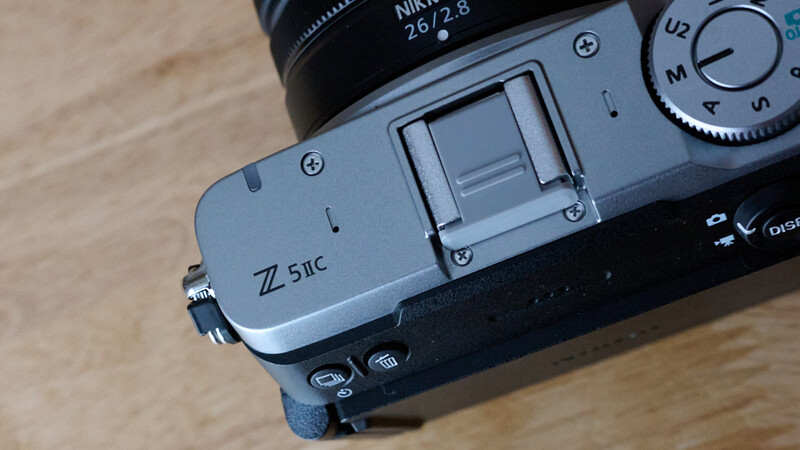
One thing the Z5IIC does offer that the Z5II, at least as of yet, can’t match is the two colorway options. Despite it objectively being my least feature-rich camera, I’m not sure that I will ever part with my Nikon Z f. Why? Because it’s just so darn cool. I’ve spent more money to dress up my Z f this year than I’ve spent on clothes in a decade to dress up my own body. I just love the way the camera looks. And, thus, I carry it with me more often than the more utilitarian-looking cameras in my collection.
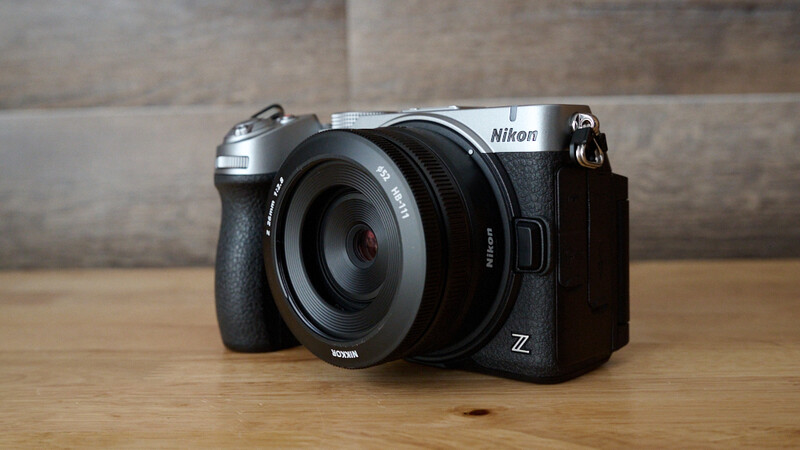
The review model of the Z5IIC I got was the silver-topped model. And although it’s not quite as pretty as the Z f, the Z5IIC is a darn good-looking camera. Combined with something small like the 26mm f/2.8, it’s almost pocketable. Part of me almost wants to buy one on looks alone.

Given the casual intention, this does seem like a body one might expect to see a side tripod socket on for content creators to mount vertically, but, alas, none exists. On the upside, this does mean that, unlike my Z f or ZR, the card slot is back where it should be, on the side instead of in the battery compartment. Speaking of batteries, the camera uses the same EN-EL batteries that most Nikon users probably already have a drawer full of. That helps, as it keeps overall costs of camera acquisition low for existing Nikon users.

The LCD on the Z5IIC is less detailed than the one on the Z5II. But it’s still serviceable. Having owned the ZR, I did get spoiled by the larger LCD, but this camera is significantly less expensive than that one, so using the standard-sized LCD is logical.
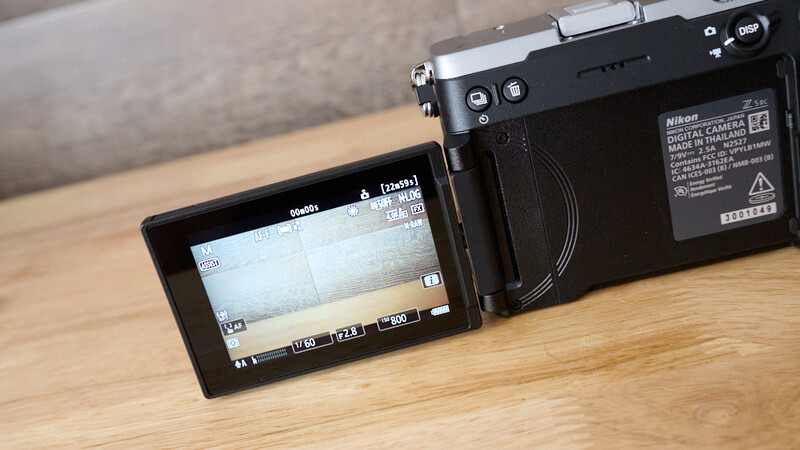
Like the Z5II, there’s no digital top display. So, if you’re coming from a higher-end Nikon, you may miss the ability to check settings without referring to the LCD. But I can’t say that was a big issue for me.
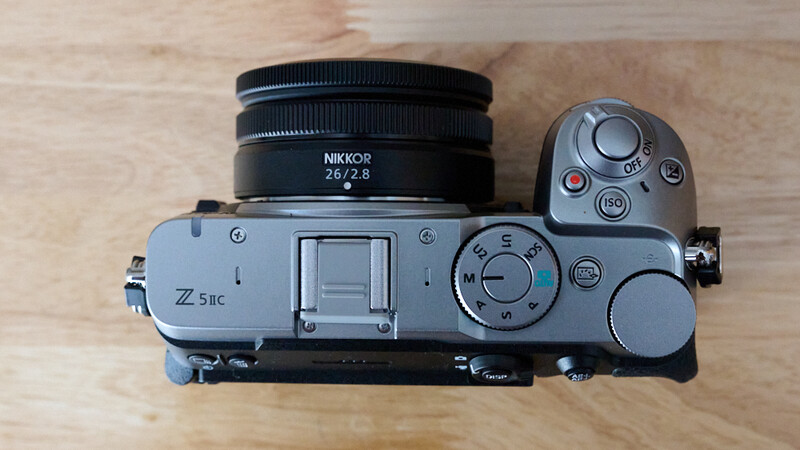
Because I’m used to shooting with the Z f, the image quality felt very familiar to me. 24.5 MP is plenty for casual photography. I had a pre-production model, so I wasn’t able to do deep pixel peeping in my post-production software. Everything you see here is a JPEG straight out of the camera. But, again, this camera isn’t the type where megapixel count and lab tests are the most important thing. The important thing with this camera is ease of use and portability.

The camera does lack a joystick on the back for adjusting your autofocus point. You’ll need to use the screen for that. There’s no dedicated AF-ON button, but I simply reprogrammed the well-placed AE-L/AF-L button for that purpose.
Pros
Image quality
Ease of use
N-RAW video
Autofocus speed
Compact and lightweight
Portability
Card slot placement
Scene Mode
Stylish body
Cons
No EVF
Single card slot
Micro HDMI port
Conclusion
At $1,399, the Nikon Z5IIC probably is the best value for money in the budget category for mirrorless cameras. The N-RAW video alone puts it over most of the competition. The main question one should ask isn’t whether the Z5IIC is great. The question is which camera in the Nikon lineup is the best fit for what you shoot.
Nikon users in the $1,000 to $2,500 category are spoiled for choice right now. Like I said, my ramblings about the lack of an EVF are easily dampened by the existence of the Z5II. Now users who are screen-first and budget-conscious have a clear entry point with a solid tool that can serve multiple purposes. If you need the EVF and extra card slot, just add $300 and get the Z5II new (or search for a used one). If you need more video options, step up slightly to the ZR. If you want to go all in on style, step into the Z f. Heck, even the Z6III can be gotten on sale from time to time if you have a more flexible budget.
But, on its own, the Z5IIC presents a very viable and very valuable option for the casual user. And in a stylish body that packs a lot of specs into a small form factor.





Join the Fstoppers community for free
-
Post comments and join in the discussions
-
Browse the site ad-free
-
Share your work and get featured in the community
-
Compete in the photo contests for fun and prizes
1 Comment
I’m not sure that review is quite right. As an everyday carry camera that can stand up to brands like Fuji, it has a lot to offer. I picked up the Nikon Z30 as my EDC, and honestly, I don’t miss the viewfinder at all. Plus, the pictures it takes are fantastic. I have my Nikon Z6ii and S lenses, so when I want to get serious about photography, I use those. But for just wandering around and checking out places, the Z30 is perfect. I usually use it with the kit lens or my 26mm Nikon pancake lens. I think the Z5IIC is what a new Z30 should be... Imagine the Z5IIC with a retractable kit lens like the Z30....