
It has been a long time since I felt genuinely excited about a tripod and gear head, mainly because this segment of the industry has felt largely stagnant.
Most geared heads on the market today are just iterations or outright clones of designs that have existed for decades. And because they follow the same blueprint, they tend to inherit all existing limitations — some even introduce new ones. After months of research, I came across the Rogeti T32MAX tripod and RG-1 geared head. The design of the RG-1 was what caught my attention at first glance, as it looks nothing like a conventional geared head. From what I read, it seems to address several frustrations that I've long accepted as unavoidable compromises.
As a hospitality and industrial photographer, a solid precision tripod is a non-negotiable part of the trade, especially at high-level production. Therefore, as a professional photographer, I truly appreciate innovative designs from Rogeti that aim to ease our pain points. Designs like this require thinking outside the box, stripping away how things are done traditionally and keeping only what truly matters. If you're looking for a tripod system that attempts to solve long-standing frustrations rather than simply repackaging them, this may be one worth paying attention to. This will be the first time that I'll be evaluating a product from the perspective of my professional work, where precision, speed, and reliability are tested rigorously.
Specifications
Rogeti T32MAX Tripod
- Tripod Model: T32MAX
- Leg Sections: 3
- Leg Tube Diameters: 22 mm / 25 mm / 28 mm
- Leg Tube Material: Carbon fiber
- Leg Tube Angles: 23° / 0°
- Leg Tube Graduations: Yes
- Net Weight: 1.38 kg (excluding center column)
- Collapsed Length: 57.5 cm (excluding center column)
- Center Column Diameter: 32 mm
- Safe Load Capacity: 15 kg
- Foot Pads: Rubber
- Foot Spike Interface: M10
- Bubble Levels: 2 (on column)
- Working Height: Dependent on center column configuration
Rogeti C32G / C32GK Geared Center Column
- Center Column Models: C32G / C32GK
- Mounting Plate: 3/8" screw / Arca-Swiss clamp
- Weight: 0.62 kg (C32G) / 0.64 kg (C32GK)
- Material:
- Worm Gear: Stainless steel
- Gears: Copper
- Column Body & Housing: Aluminum
- Safe Load Capacity:
- 6 kg (inner column extended)
- 15 kg (inner column retracted)
Rogeti RG-1 Geared Head
- Net Weight: 700 g
- Dimensions (L×W×H): 100 × 85 × 100 mm
- Maximum Load: 12 kg
- Movement Range:
- Tilt: −105° / +105°
- Roll: −20° / +20°
- Pan: 360°
- Gear Type: Worm gear
- Gear Materials:
- Worm Wheel: Brass
- Worm Shaft: Stainless steel
- Housing Material: Aluminum
- Bubble Levels: 3 (cylindrical type, made in UK)
- Clamp Standard: Rogeti Standard (Arca-Swiss compatible)
Build Quality and Features
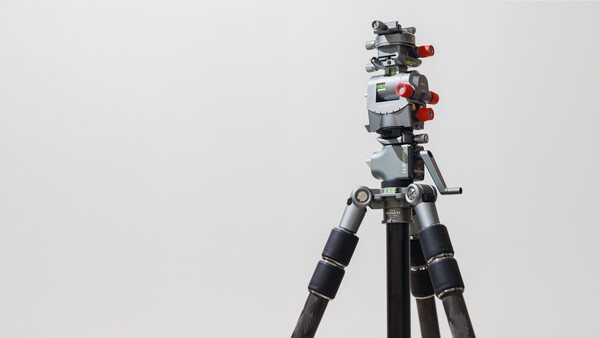
Right off the bat, if you care about how your equipment looks, this is a rather good-looking tripod. A mixture of silver, black, and some red accents gives it a luxurious look — you can tell the designer has some taste. But because of its slightly reflective finish, it can introduce some reflections into your product shots, so you may need to work around that. Personally, I have not found it to be a big issue yet. If anything, I would be a little cautious when using it so I could preserve its beautiful finish a little longer. Don't be fooled by its elegant appearance: depending on your configuration, the total weight of your tripod system can end up being quite significant. In my case, the total combined weight of the T32MAX tripod, C32GK center column, and RG-1 head with CAP-GZA comes in just slightly under 3 kg. On paper that may not sound "light," but in reality, all the weight is put to good use, especially given the solid overall construction and a load capacity of up to 12 kg. Since there are no unusual, bulky protruding parts, the overall profile of the tripod is also surprisingly slim, which makes storing and transporting easy.
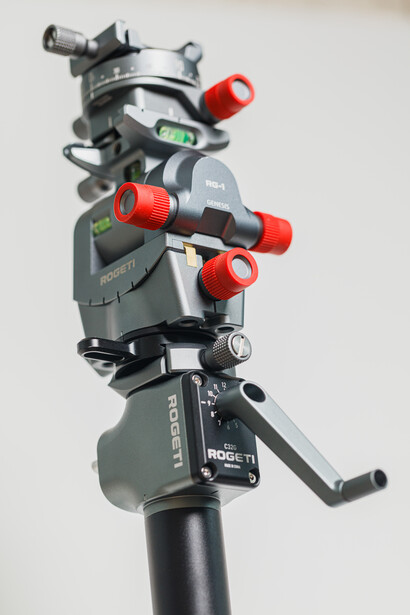
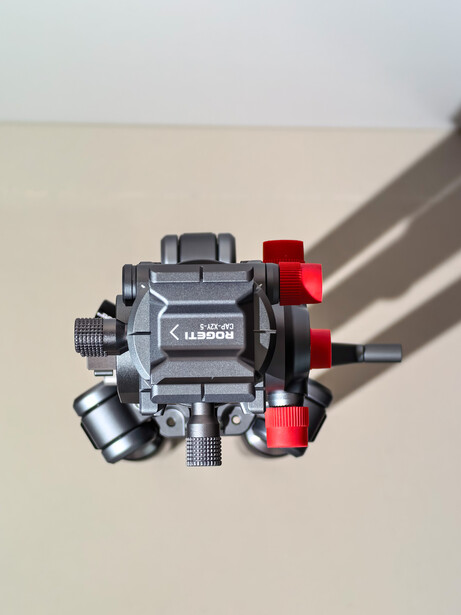
The one design aspect that attracted me to the RG-1 is its fully symmetrical pitch and roll structure, which means it does not change the perspective of the camera during leveling. This makes it more intuitive to use compared to traditional geared heads that often feel biased toward one direction. It's also worth mentioning that the ±20° roll adjustment, primarily intended for leveling, sits independently beneath the pitch axis and moves in an arc. This ensures maximum stability in the head and allows the camera to maintain a perfectly level horizon throughout the entire tilt range. The RG-1 also offers an impressive ±105° pitch range (210° total), which is far beyond what most geared heads can manage, allowing the camera to point straight up or down or even tilted for vertical compositions. This configuration is particularly important: once you level it properly using the fine-tune knob, the entire platform stays level across the full pitch range, eliminating the need for constant re-leveling that traditional heads often require. Having such a wide pitch angle also allows the bearing platform to tuck itself neatly into the main body when fully tilted, reducing its packed size and making it more impact-resistant during transport. This is one of those rare cases where clever engineering actually improves both the shooting experience and travel practicality at the same time.
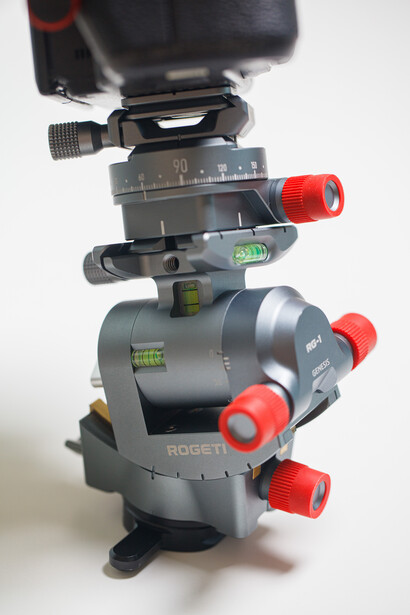
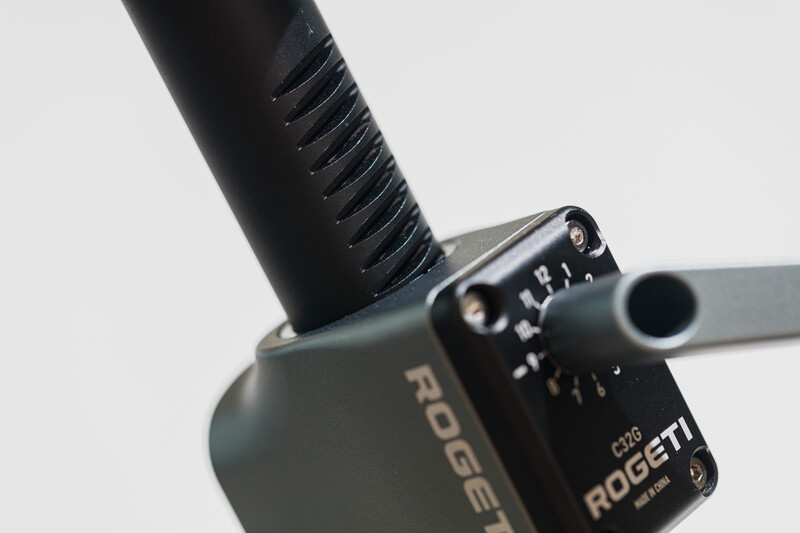
One thing I immediately appreciated when handling the geared head is that everything you can touch on the RG-1 — except the rubber knob covers and bubble level vials — is made of some form of metal. While many geared systems rely on plastic worm gears, pinions, and racks due to the simplicity of production and low cost, Rogeti uses all metal for the RG-1: stainless steel worm shafts, brass worm wheels, and an aluminum housing. The C32G/C32GK center column continues that philosophy with stainless steel gearing, bronze pinions, and a one-piece aluminum toothed column. Thanks to their excellent design and manufacturing process with tight tolerances, Rogeti was also able to achieve oil-free operation despite having all-metal meshing. This level of construction ensures durability and longevity, and it's crucial for professional photographers to have that kind of reliability, as the geared tripod system will undeniably be the single piece of equipment we touch the most — apart from the camera and lens.
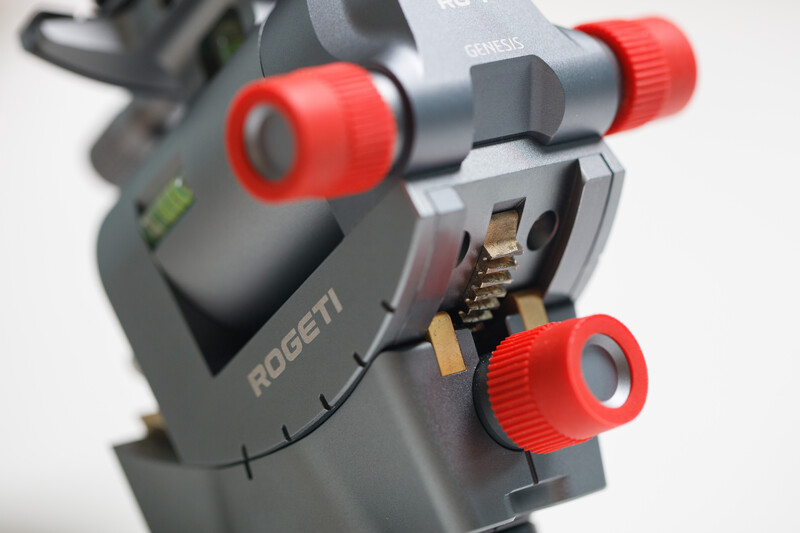
The RG-1 design is quite elegant and keeps things minimal and functional. The bare head itself contains two main geared knobs controlling the primary axes — tilt and roll — all positioned on the right side by default. You can also configure it for left-hand operation by rotating the head 180°. Note that you will lose direct visibility of the bubble level vials when you flip it that way, which is why I would not recommend it. Rogeti's default setting makes more sense: it's much safer to hold the camera with your right hand before you release the clutch on the left for quick tilt adjustments. You can also find a pan axis locking knob at the lower left of the head. While the current knob layout is good, I would personally prefer at least one of the axis controls to be on the left so I could operate both axes simultaneously with both hands for faster operation — and this can be achieved by flipping the roll axis control to the left side.
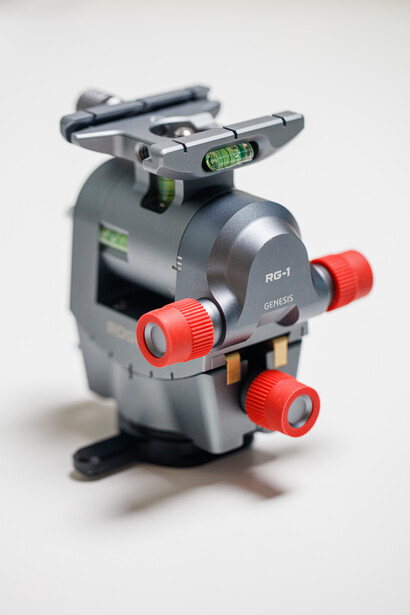
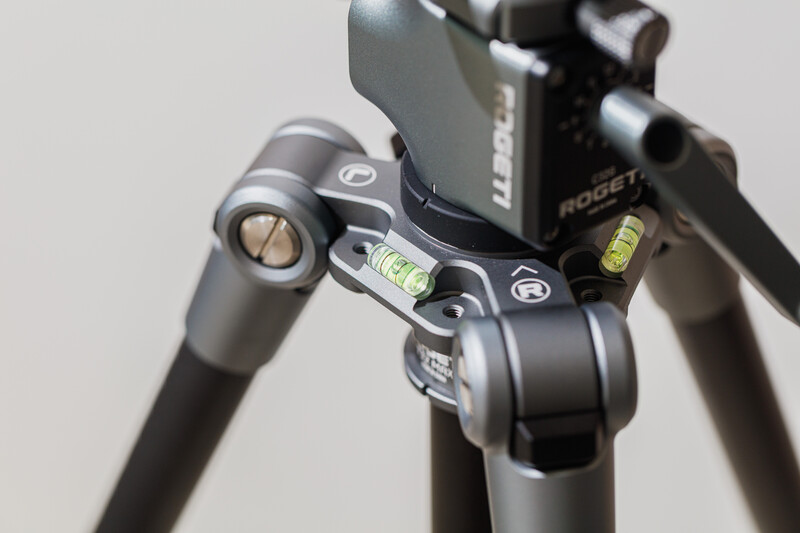
The knobs themselves are quite small but thankfully have just the right amount of torque to make precise adjustments, though if you have a heavy setup and are at the extreme end of the tilt axis, you may find them tougher to turn. In that case, releasing the clutch and going for manual adjustment might be easier — using both knobs simultaneously might help too, though you may find it a bit awkward. The geared knobs are color-coded with red or black rubber covers, so you can instantly identify which controls the geared movement and which releases attachments. It is also worth mentioning that bubble level vials are placed exactly where you need them: two on the legs and three on the head for easy leveling.
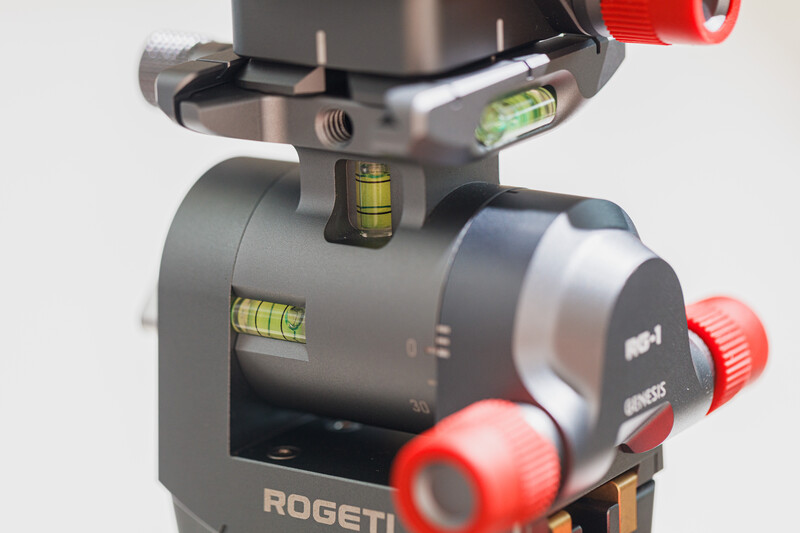
The Rogeti T32MAX legs themselves are made with high-quality carbon fiber, keeping the weight reasonable while maintaining optimal stability. I'll be honest — I was initially skeptical when I saw the thickness of the legs, especially compared to what I'm used to. But after using them, I realized a lot of thought went into the design to arrive at this profile. There is a careful balance here: a combination of quality build, clever design decisions, and just enough mass to remain steady. This is likely contributed by Rogeti's decision to position the thicker leg sections of the T32MAX at the bottom, effectively shifting the tripod weight to where it matters most and improving overall stability. This is probably why the tripod feels far sturdier than it looks, yet portable enough that you won't dread moving it around during a shoot.
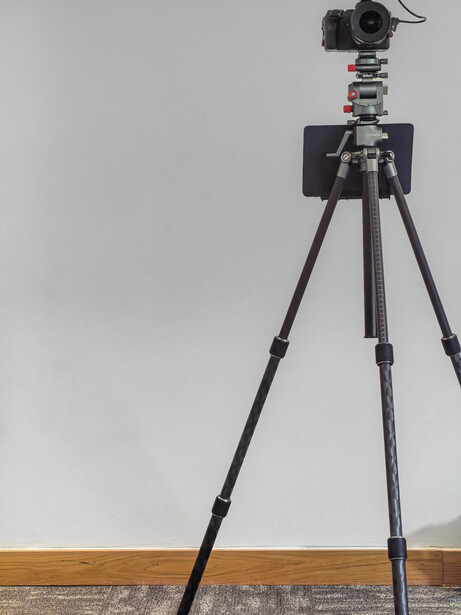
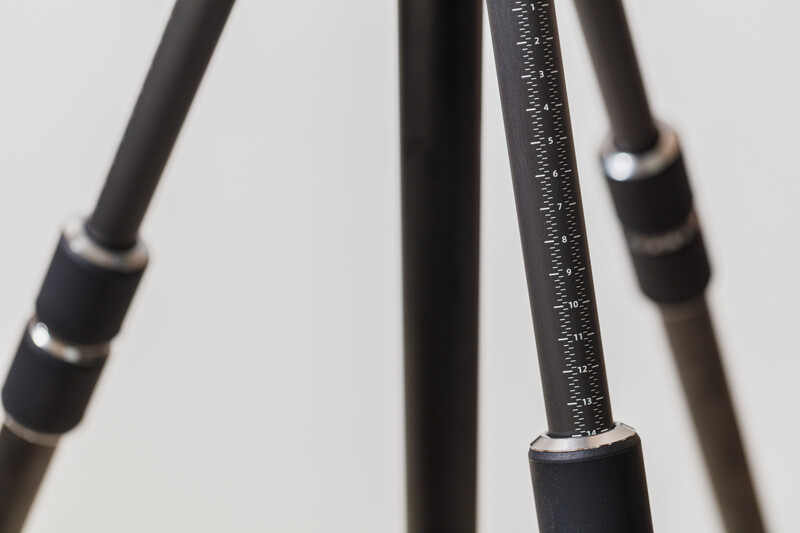
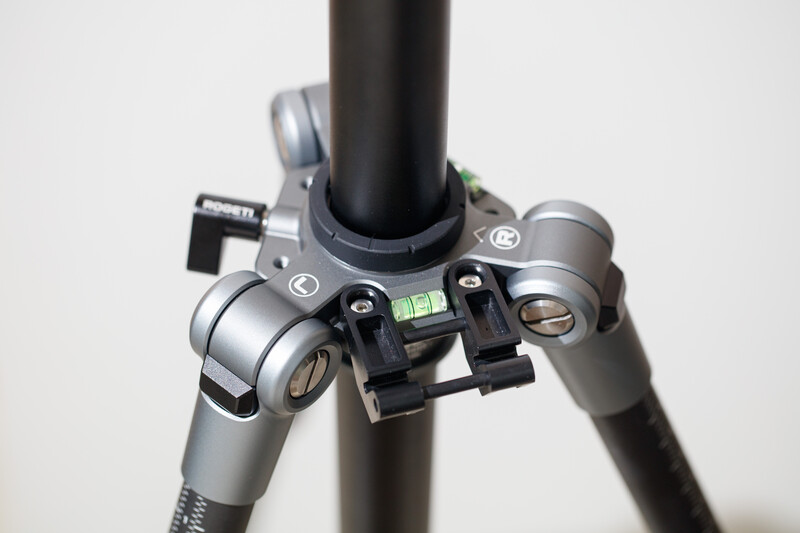
In case you're unfamiliar with the setup, there are markings on top of the T32MAX tripod legs. Each leg is labeled "F" for front, "L" for left, and "R" for right, making the setup process straightforward — though feel free to use it however you like, as I don't see this affecting operation other than varying the position of the mounting bracket for the tablet holder. You can also find scales engraved on all three upper leg extensions for easy reference, which can be used for precise height adjustments when needed. The T32MAX features quite a number of design innovations that might stand out to those accustomed to conventional tripods. One of them is that the leg locks are re-engineered and thoughtfully positioned higher up on the tripod legs, away from the tripod feet. By positioning each lock near the top of each leg, this effectively reduces the distance your arms need to reach, allowing you to make quicker leg adjustments to compensate for uneven surfaces. Note that while the RG-1 is extremely handy for leveling the camera, having perfectly leveled tripod legs as the base is still crucial for maximum stability.
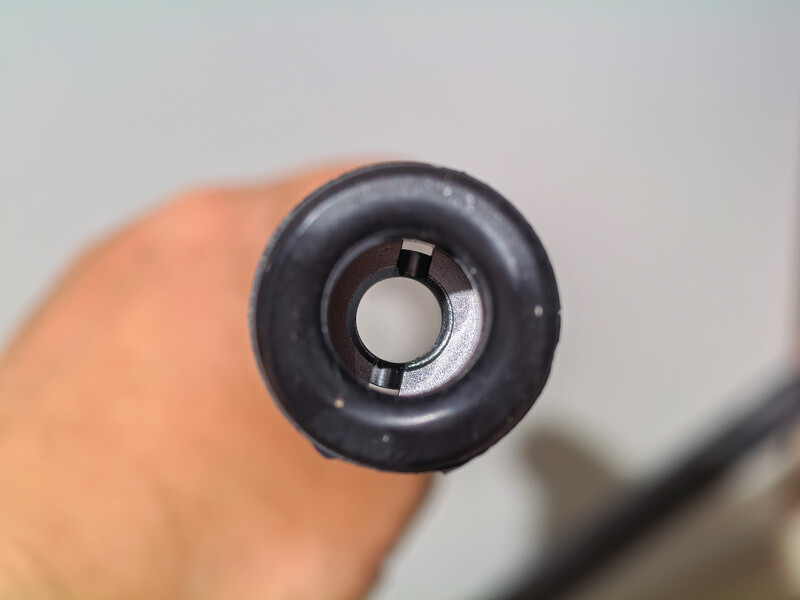
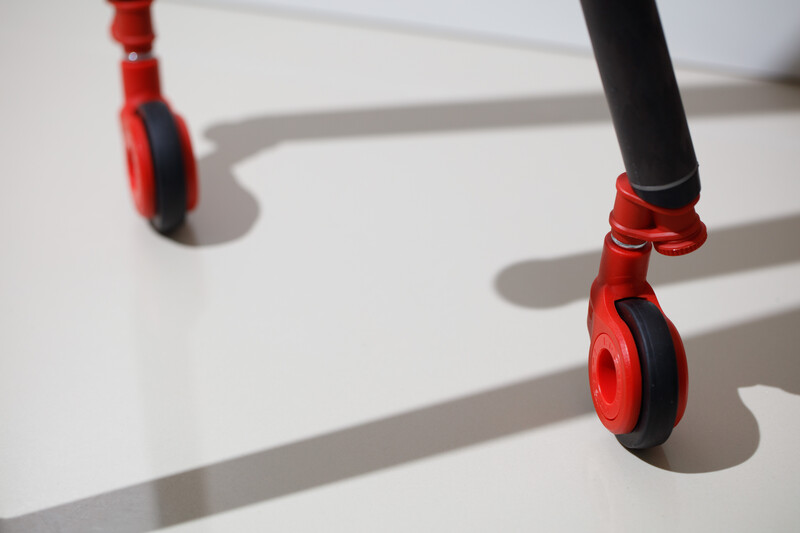
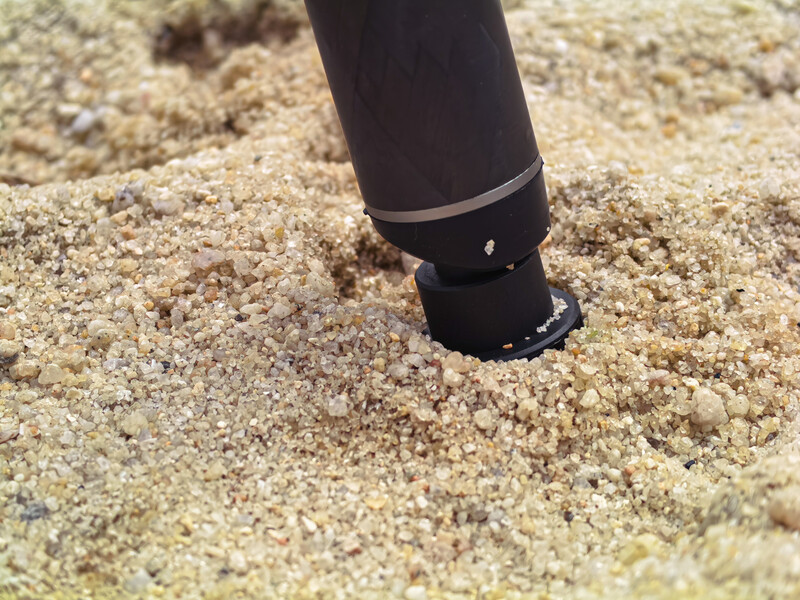
You may notice that the bottoms of the legs are also hollow all the way through instead of sealed. While this allows integration of additional accessories such as the assembler and wheels, in sandy or muddy environments, debris or water could potentially enter the inner tubing mechanism. I do think sealing the inner threaded end would improve durability, as there is no reason we need all that hollow space in the tripod leg column. To Rogeti's credit, they do provide sand feet that can be screwed on for sandy terrain. Still, that's an extra piece to carry and one that could easily be forgotten. Thankfully, the legs are easy to disassemble and clean.
The legs open to a maximum angle of only 23°. While this may seem like a limiting factor, it was a purposeful design decision made by Rogeti. They believe that photographers rarely need the tripod legs fully splayed at wider angles, as that's only fully useful when the legs are retracted for lower camera positioning. Instead, they opted for the 0° leg position design, which allows interior photographers like myself to push the tripod flush against the wall. As an added benefit, the legs will not collapse completely inward, meaning you're less likely to accidentally pinch your fingers between the legs and the center column when closing them.
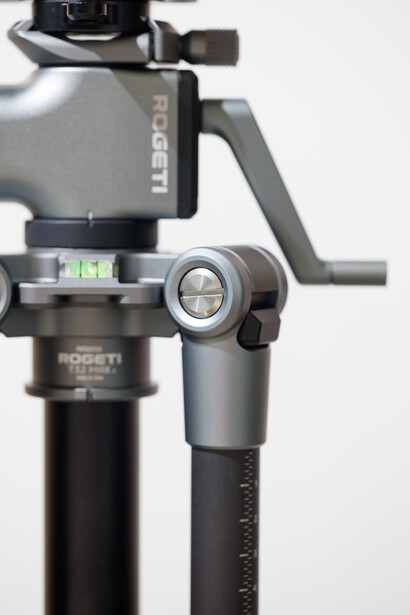
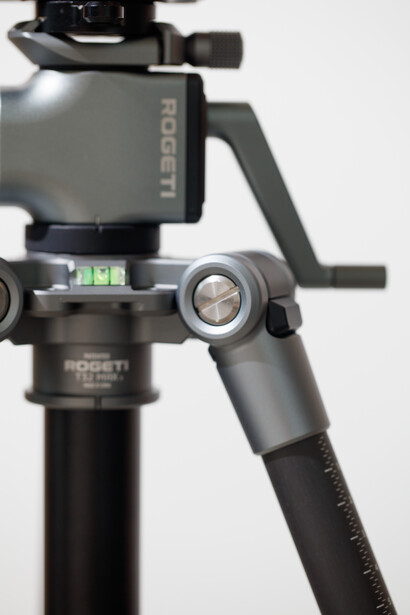
For those who may still need to reach low angles, you can do so by using the C32B center column, which transforms into a smaller tripod, or by inverting the entire center column if you are using the C32G, which when fully extended allows you to reach as low as 0.1 m. This bold design decision may bother some photographers, but for someone like me who primarily shoots architecture and hospitality work, it's not a deal breaker. In fact, I find myself backed into corners far more often than shooting at such a low angle. I'm also not a fan of awkward tripod leg positioning that requires one leg to be opened at an unusual angle, as it always seems too precarious. The three-section tripod legs, when fully extended, are capable of reaching a height of 1.2 m, which admittedly doesn't sound like much for those accustomed to a four-section tripod. But when combined with the C32GR/C32GK center column, they can reach a height of at least 2 m, and this can be further extended using the E32 series extension columns.
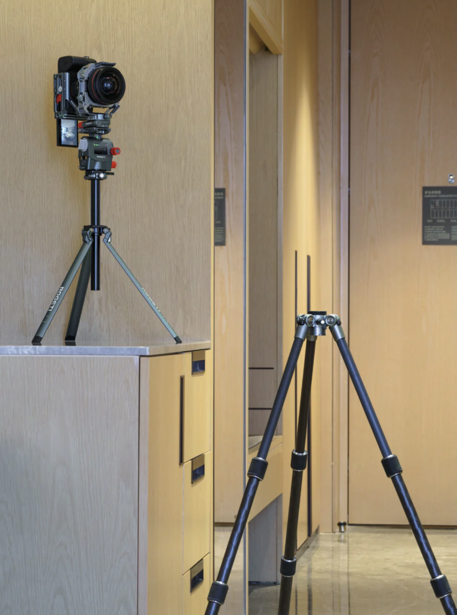
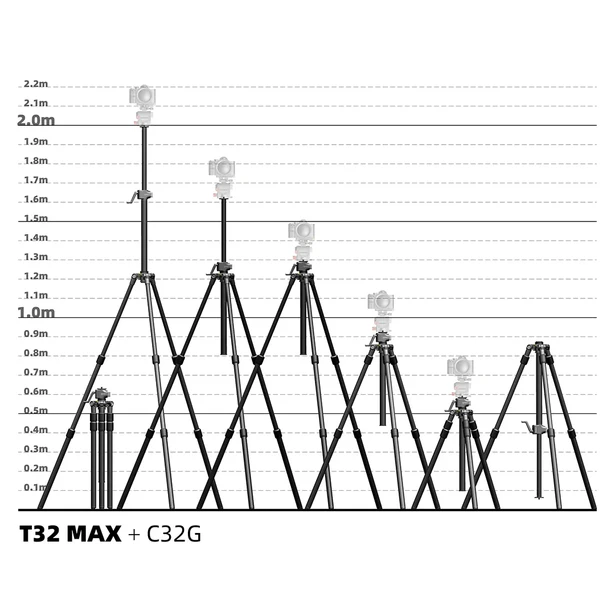
This is another intentional design decision made by Rogeti. Interestingly, they chose to compensate for the lack of height primarily with the center column for improved usability. They believe it's easier and more flexible to raise the center column than to adjust all three leg sections to gain height when the camera is attached. Therefore, the center column travel is far more crucial than having another leg section. While that fully makes sense, I personally would usually not prefer raising the center column to gain height due to instability concerns. Here, Rogeti was able to address this thanks to their 32 mm diameter center column, which ensures superior stability. It is one of the most sturdy center columns I have used, and I would not hesitate to use it — just not fully extended. Adding to the stability is the self-locking worm gear structure, which provides an anti-rollback function. This allows the geared column to handle heavier loads, and most importantly, when inverted, the camera does not drop to the ground.
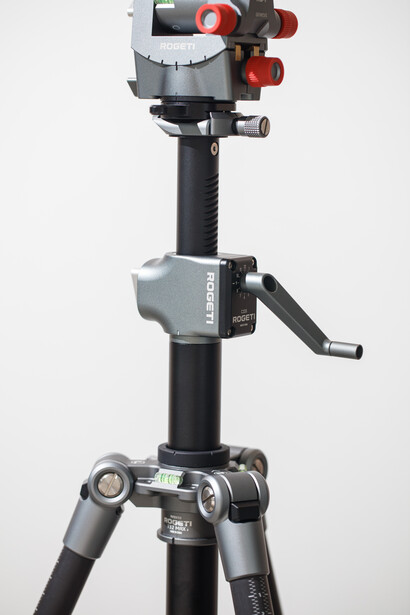
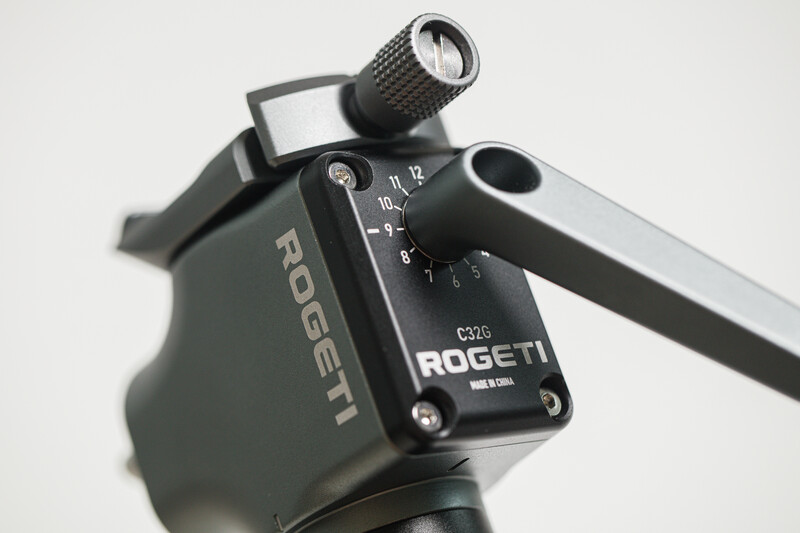
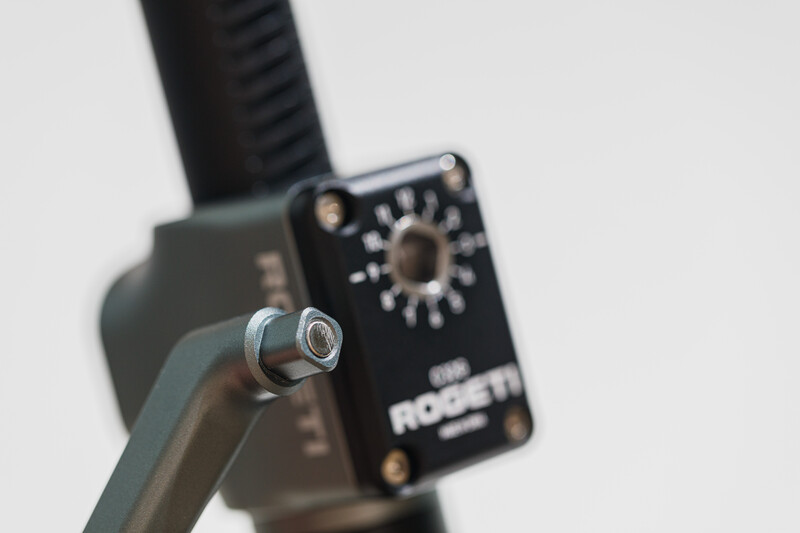
The C32GR/C32GK is where things get even more interesting. It is a two-tier geared center column, offering up to 36 cm of geared vertical travel and up to an additional 42 cm when raising the outer column, giving a combined vertical gain of up to 78 cm. This two-tier adjustment allows photographers to perform both rough and fine geared height adjustments when needed, adding flexibility to the workflow. The geared height adjustment is extremely precise and surprisingly sturdy: each division on the handle panel represents 1 mm of elevation, and one full clockwise rotation equals 12 mm of height. This level of precision is useful for elevated timelapse recording, though you will need to perform the elevation manually. Thanks to the precision and stability it offers, you can also utilize the battery-powered motorized driver designed by Rogeti to gain elevation for dynamic video recording — which also shows the level of confidence they have in their product. The newly designed magnetic handle enables effortless attachment and removal, allowing a seamless transition to a power tool for video shooting. I would think the handle could benefit from a foldable tab so it doesn't protrude as much when not in use.
https://www.youtube.com/watch?v=_MGdmfjvoWI&t=1s
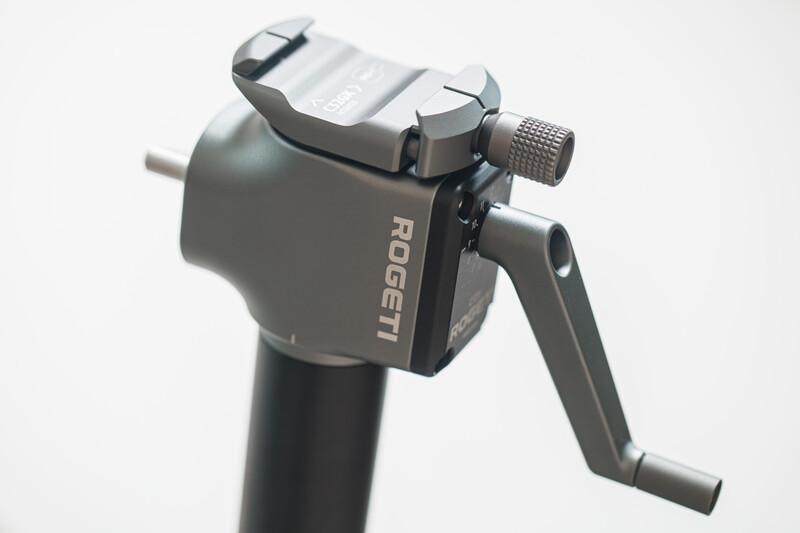
Note that both C32GR and C32GK are essentially the same; the only difference is on the top plate of the center column. The C32GR uses a universal round top with a 3/8" screw, allowing it to connect to any tripod head, including the Rogeti RG-1, via screwing. The C32GK features an Arca-Swiss compatible clamp on top for direct mounting with any equipment that has an Arca-Swiss dovetail, including the Rogeti RG-1. For those who often swap heads, the C32GK may be the right choice; for those with standard tripod heads, go with the C32GR.
Expanding the System: Accessories That Actually Make Sense
One thing worth mentioning about the Rogeti ecosystem is that it isn't just a tripod — it's a modular platform that can work in a number of ways to suit your needs. Whether you need mobility, monitoring, horizontal shooting, or transport efficiency, there's probably an accessory designed specifically for it. This is likely because Rogeti, as a company, is fully invested in growing a single product to maturity instead of launching too many products at a given time.
Assembler Center Column Integrator
The Assembler Center Column Integrator is essentially a transport hub. It can secure the fully assembled T32MAX (with center column and RG-1), two additional center or extension columns, and the S20 multifunction handle — all in one compact configuration. It also allows you to attach a strap for bag-free carrying, and it even stores three sand feet. It's a clever and compact solution that makes a lot of sense for photographers who want to move quickly between locations without juggling multiple loose components.
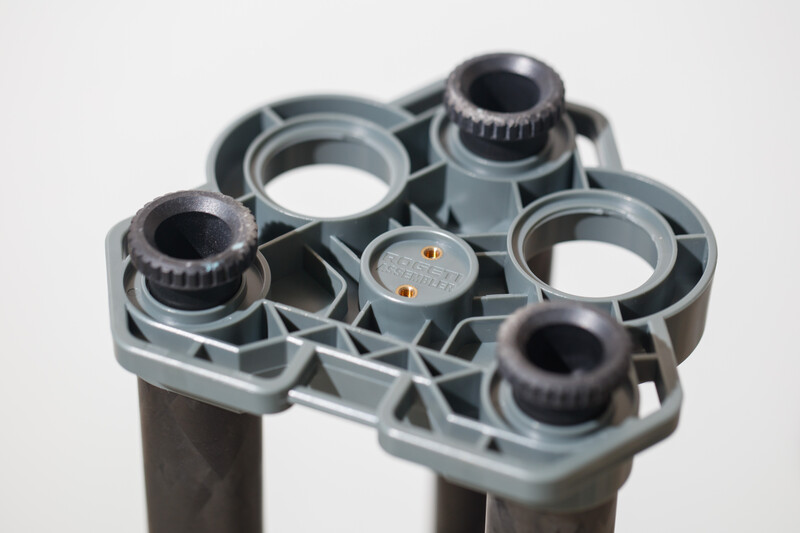
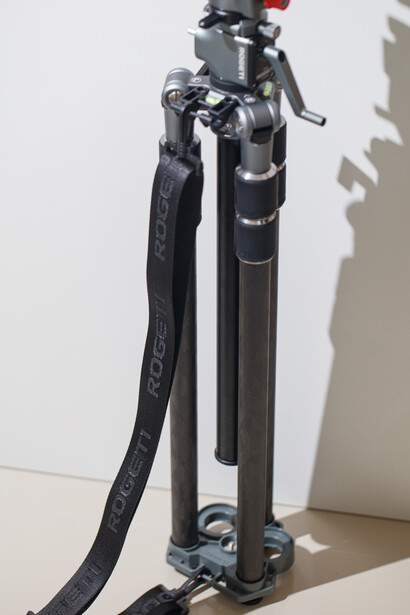
That said, I do wish it could accommodate the C32T horizontal column where it fits the C32G, since that's likely the additional column many of us would bring, and we will most likely have the C32G assembled anyway. Also, because the C32GK uses an Arca-Swiss top clamp, there's no direct mounting integration the way a screw-based system on the C32GR would allow.
Sand Feet
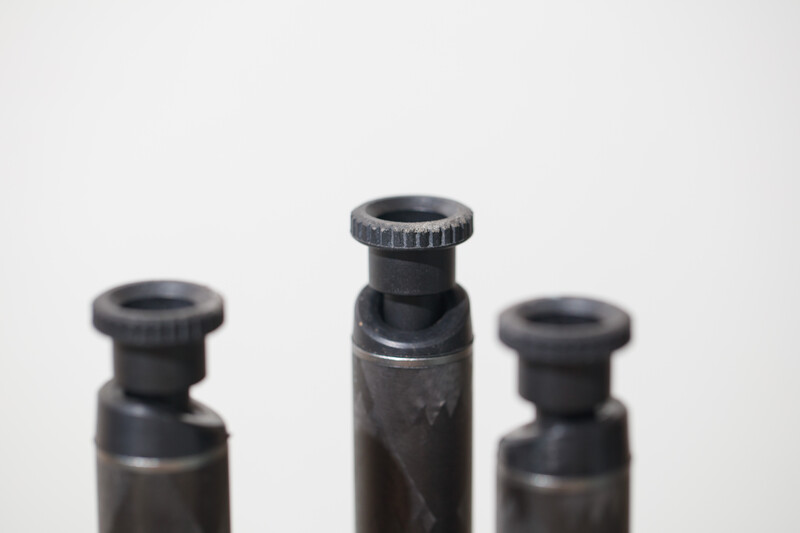
The sand feet that attach the tripod to the assembler can also be screwed directly onto the T32MAX legs to prevent debris from entering the leg tubes when shooting on beaches or in muddy terrain. Given that the bottoms of the legs are hollow, I would strongly recommend using these in harsh environments. Again, it would be nice if the internal threaded ends were sealed by default so that using the sand feet would be unnecessary. It would also be great if the sand feet had a rubber bottom so that they would not wear as quickly and could be used permanently.
Tablet Holder and Monitoring Options
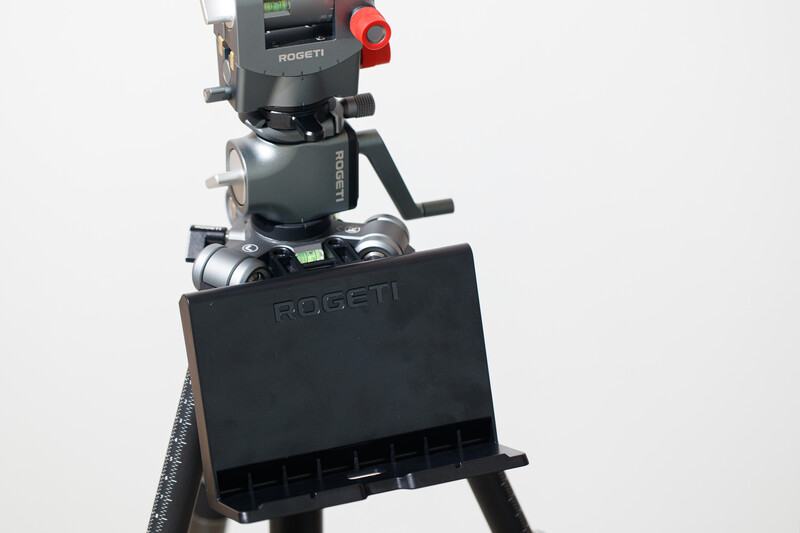
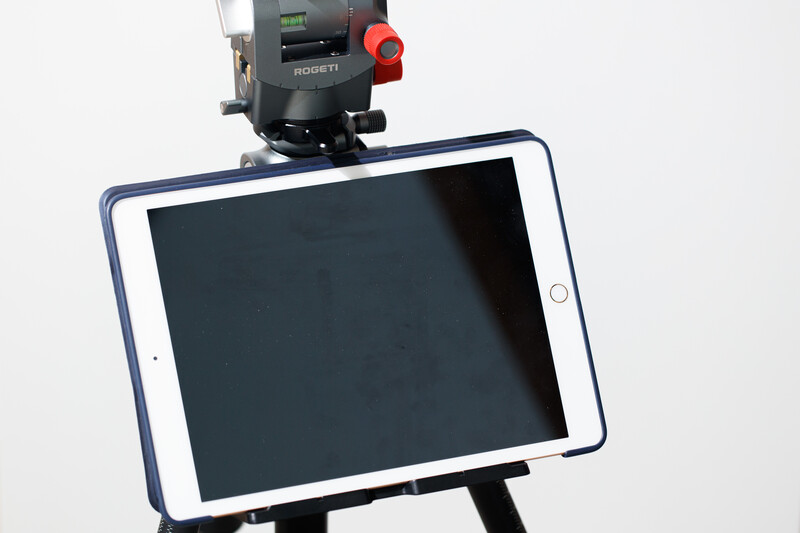
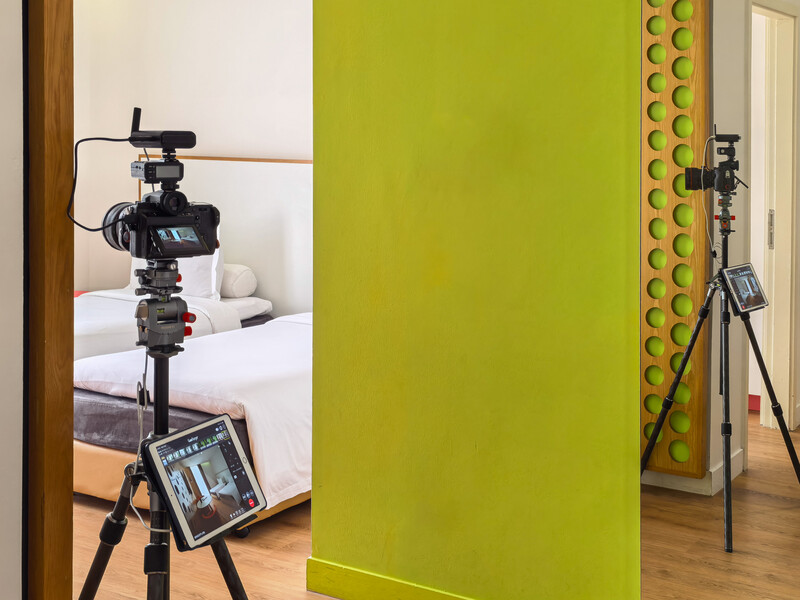
For commercial shooters working with clients on set, tethering to a larger screen is a must. This is where the tablet holder comes in handy. The T32MAX includes a custom fixed bracket that allows you to mount a tray for your tablet, monitor, or phone. You can even place your wireless remote on it if you wish. The tray can also double as a tablet stand once detached. It's very practical and quick to use during hotel shoots when both the client and I want to review compositions on a larger screen. However, I do wish there were an integrated clip system on the tray that would allow the tablet to stay attached when carrying the tripod as a whole unit.
Wrench Kit
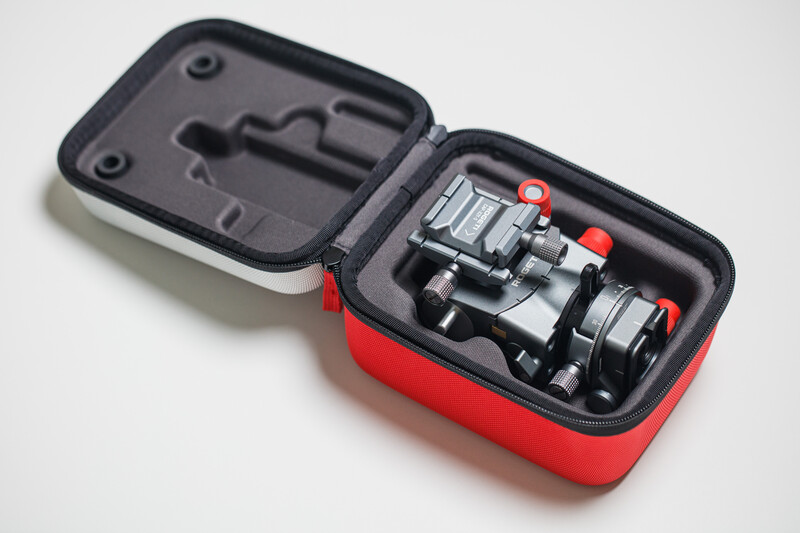
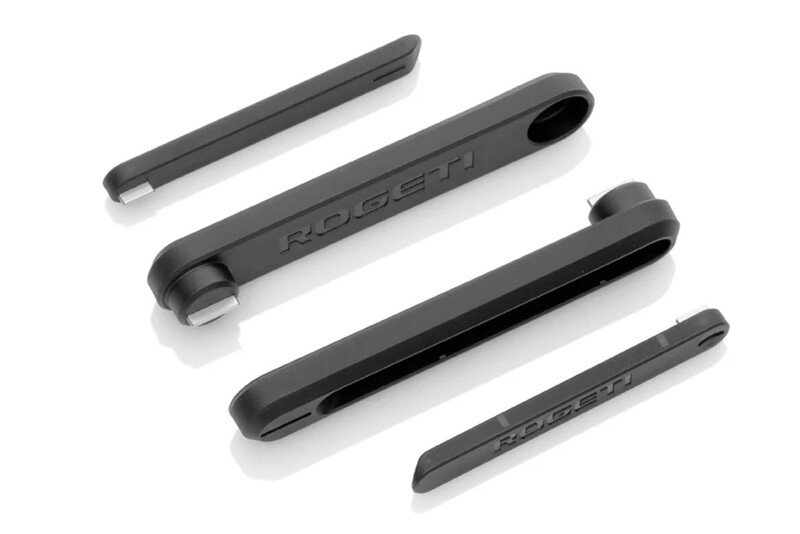
Not glamorous, but necessary and nicely designed. This capsule-style wrench kit is included as part of the package. It allows you to adjust leg tension and connectors should the legs loosen over time. It disassembles into four individual tools and is compact enough to carry without thinking about it.
Smartphone Clamp (PCL)
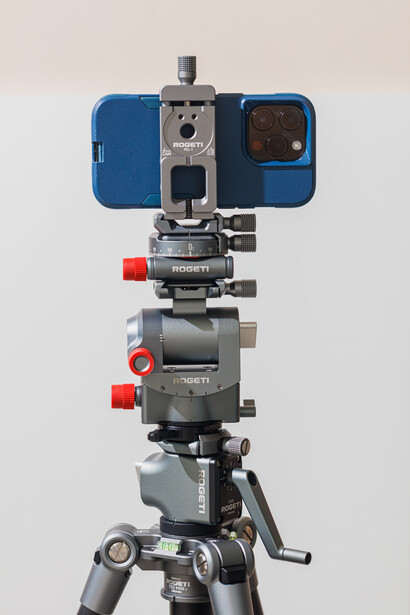
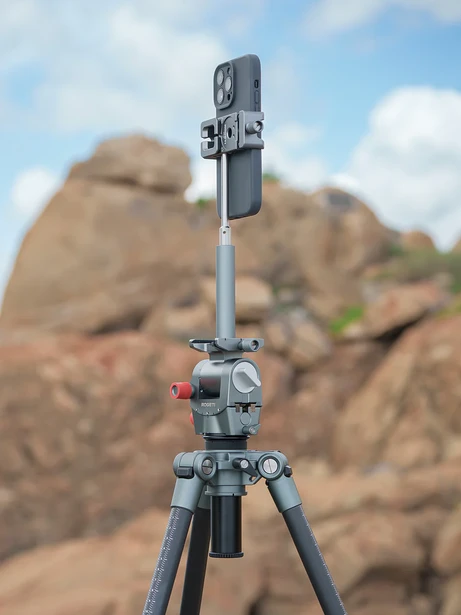
The Rogeti PCL clamp is Arca-compatible and supports 1/4" and 3/8" mounting. It fits phones between 76 mm and 88 mm wide and integrates well with the S20 handle for panoramic photography. For hybrid shooters or social media deliverables, this is actually practical. You can go from full frame interior photography to stabilized smartphone video without changing your support system.
C32T Center Column for Horizontal Shooting
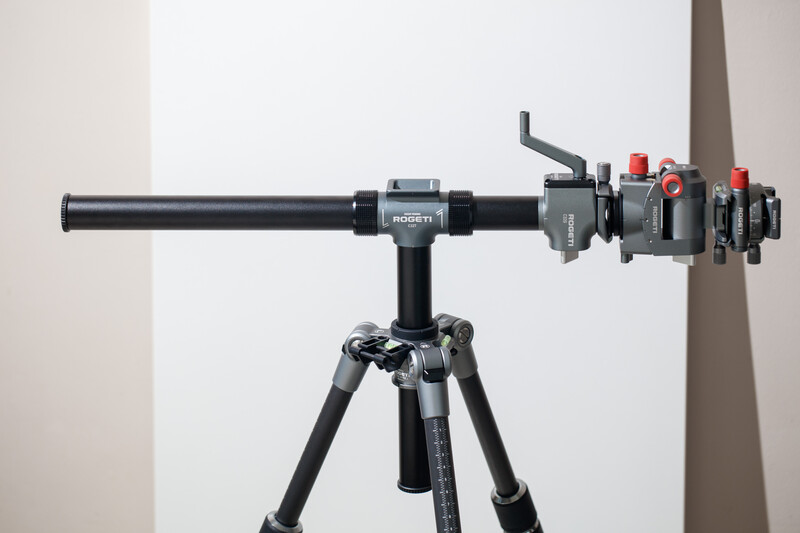
Geared center columns typically don't go horizontal, but with the C32T center column, the C32G can be positioned horizontally above or below the tripod apex while retaining geared height control. I can see this being extremely useful for product photography or overhead flat-lays. If you think slightly outside the box, you can even mount it on your existing center column horizontally to use it as a steering handle when paired with tripod wheels for some video movements.
Multi-Function Handle S20
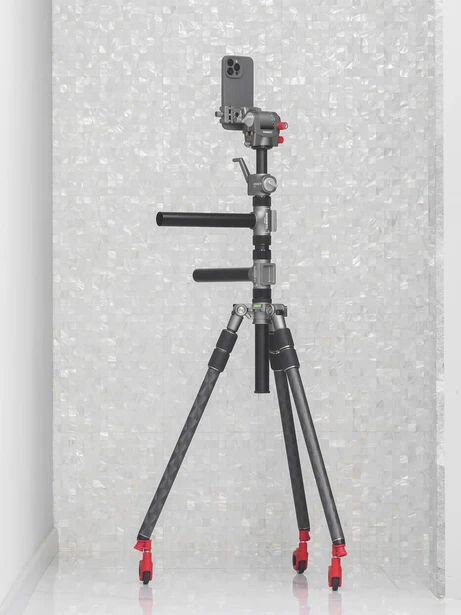
The optional S20 handle expands both video and panoramic possibilities. It can attach to the base platform for smoother panning or be mounted vertically to increase the distance between the camera and tripod for more immersive panoramic images. It's modular, detachable, and equipped with standard mounting points, making it a flexible tool without feeling gimmicky.
Wheels for the T32 Tripod
The wheels are probably the most transformative accessory. At just 0.56 kg (including storage case), they effectively convert the T32MAX tripod into a mobile dolly, achieving fluid motion effortlessly — especially when paired with the C32G center column and the precision RG-1 head. For photographers who do a lot of interior work, having wheels on the tripod can also improve overall efficiency, as you can simply roll into the next composition instead of lifting and repositioning constantly. I do wish the wheels had integrated stoppers, though — a locking mechanism would make static positioning more reassuring.
SP Accessories and Tripod Bag
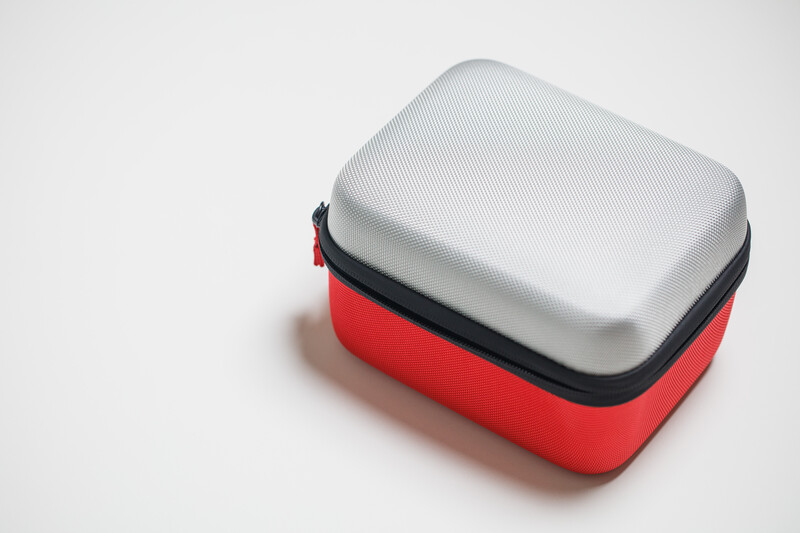
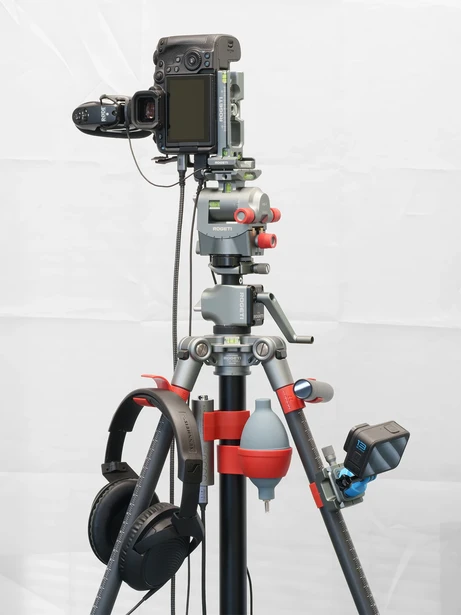
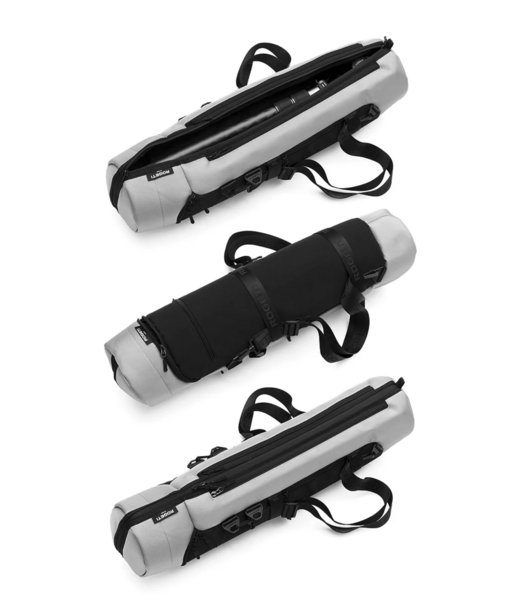
Rogeti also offers smaller SP accessories — blower holders, attachment points, and multiple modular add-ons — but the tripod bag deserves special mention. The dedicated Rogeti tripod bag is fully padded and supports single-shoulder or dual-shoulder carry. It features both side and top openings, which means you can also retrieve your tripod while standing. It even includes a luggage sleeve that slides over a rolling suitcase handle — something surprisingly rare in tripod bags. It's large enough to fit all the accessories that work with the tripod.
Real-World User Experience and Tips
Shooting hospitality and industrial work is one of those niche industries where working with a precision tripod is unavoidable. Just to name a few challenges: you're constantly fighting tight corners, dealing with precise focus, managing reflective surfaces, window light, and vertical lines that need to stay perfectly straight. A few millimeters too high or too low, and suddenly you're dealing with strange intersections and cut-off edges. The Rogeti system feels like it was built with that mindset. As a photographer, I can only respect the amount of effort and iteration that went into designing it. This is the first time I feel like a tripod has been over-engineered in the best possible way — everything you ever need or could think of can be done precisely through its modularity system. On the downside, while that modularity allows great flexibility, I can't quite shake the concern that something might work loose, especially with multiple geared modules stacked on top of one another. Also, when you build the head fully with a panning head and mounting plate, it can get a little tall, causing some wobble.
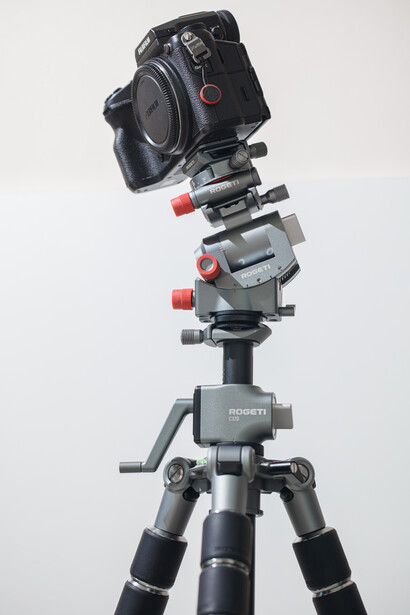
If I'm being honest, with the much improved in-camera stabilization systems available today, I haven't been bringing my tripod out for casual personal shoots. At least that's the excuse I use to convince myself I don't need it. But in reality, it was because my tripod system became too bulky and inconvenient to carry since I upgraded to a larger system years ago. The T32MAX, however, sits in that sweet spot. It's compact yet functional enough that I actually feel encouraged to bring it out again. Realistically, I'll still reserve it mainly for work, but it's nice to have a system that doesn't feel like a burden when I casually need it.
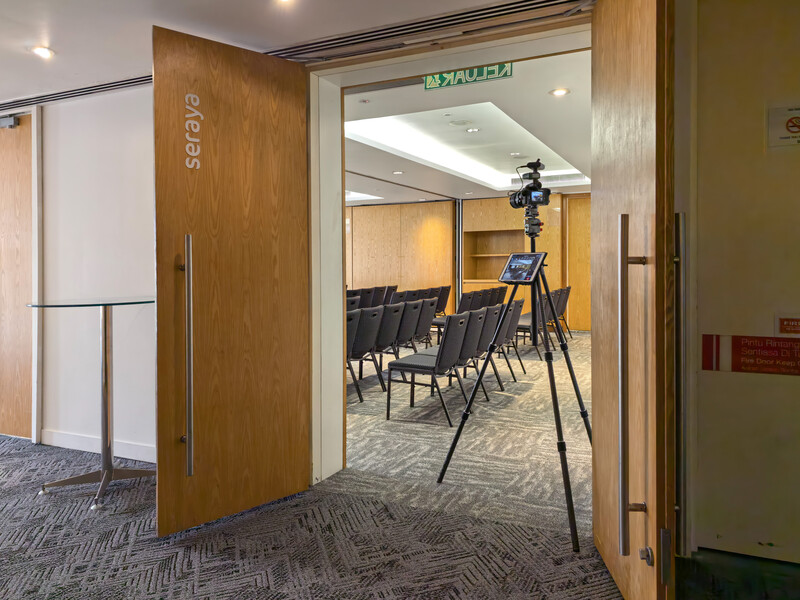
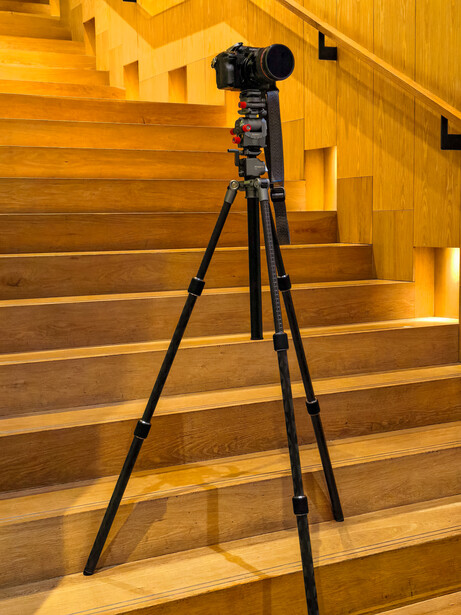
Let's dive deeper into its overall usability. I'm aware I won't be able to cover every possible scenario, but I'll share what stands out from my usage, as the system can feel overwhelming at first because of how many configuration possibilities it offers — but once you understand it, it starts to make sense. At first glance, the three-section tripod leg might feel limiting, but coming from a hospitality background, we rarely extend the tripod legs fully for most room shots. The good news is that when fully extended, I'm getting roughly 1.5 m in height with the camera mounted on the T32MAX and RG-1, which conveniently reaches eye level for me at 1.7 m tall. Any additional height can then be gained precisely using the two-tier geared column, making the operation rather seamless. Even if I need to lower it, adjustments can be made easily without crouching down because the tightening knobs are positioned higher up on the tripod legs. Another notable usability benefit is that the legs are thicker at the bottom — when unlocked, they naturally slide down due to that added weight, speeding up the setup process. Though if you let the extended leg dangle freely, it might feel slightly wobbly, once planted on the ground, that bottom-weighted design makes it very stable.
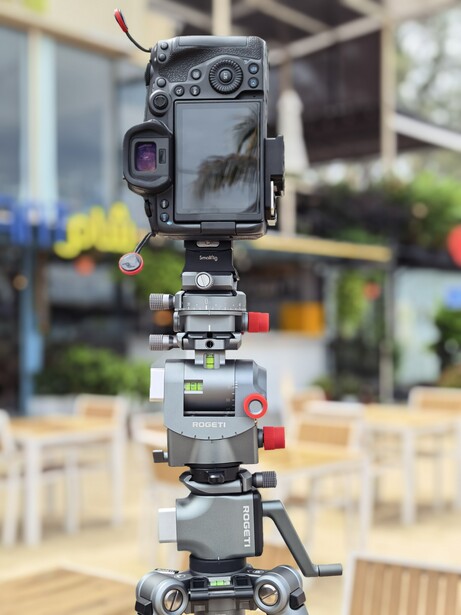
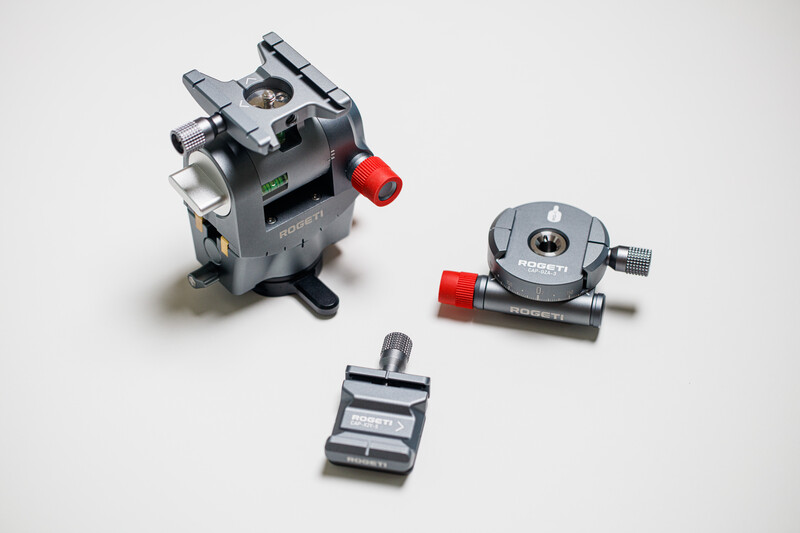
By now you know the axes on the RG-1 are parallel and independent. In hospitality work, this is huge, as I don't have to re-level the camera every time I tilt or pan slightly. Here is a practical tip: if you wish to fully utilize the RG-1 head, I would recommend adding a second pan module on top — specifically a geared one (CAP-GZA) for precision control. The native pan axis at the bottom of the head is used for rough directional framing; level the head using the roll and tilt axes, then use a more precise pan at the very top. This two-level pan practice allows you to be slightly less precise with leg balancing and still pan accurately for panoramic stitching without having to re-level the head on every pan. For budget-conscious users, the non-geared CAP-360 serves the same function as well.
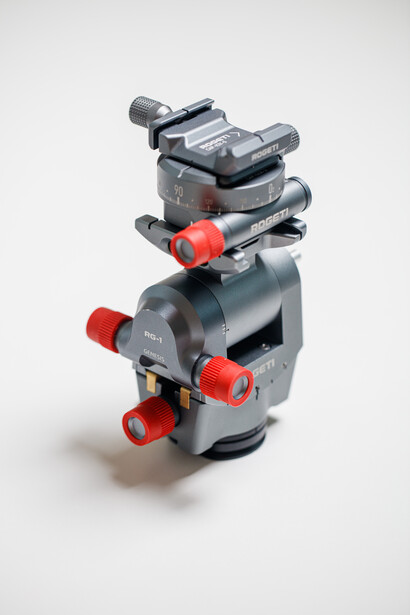
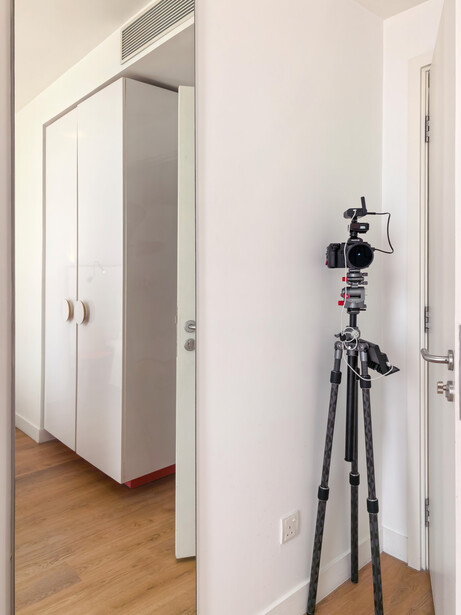
In terms of vertical shooting, it's perfectly fine to use the tilt axis to rotate the camera vertically. Having the second panning attachment will also allow you to further maximize the vertical tilt axis, which would otherwise be limited to only ±20°. However, I would recommend using an L-bracket for vertical compositions so you retain full tilt and roll axis control. Depending on which direction you mount your camera, you can freely choose either the roll or tilt axis to utilize that ±105° movement and the clutch for quicker adjustments. There is no quick-adjustment clutch for the roll axis — it's purely geared, and operation can feel slower than you might expect if you're coming from a ball head. But if precision matters to you, this minor trade-off makes a lot of sense. You should be mindful that at maximum roll adjustment, access to the tilt axis clutch can be limited. One thing to note: while the ±105° tilt movement is the RG-1's biggest advantage, it is also its biggest weakness, as it can slide down if you carry the entire tripod with the camera attached on your shoulder.
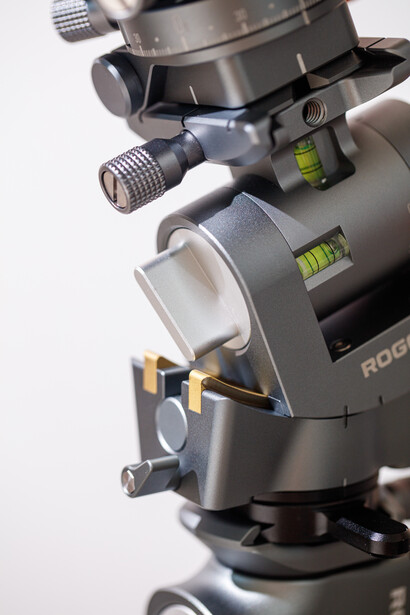
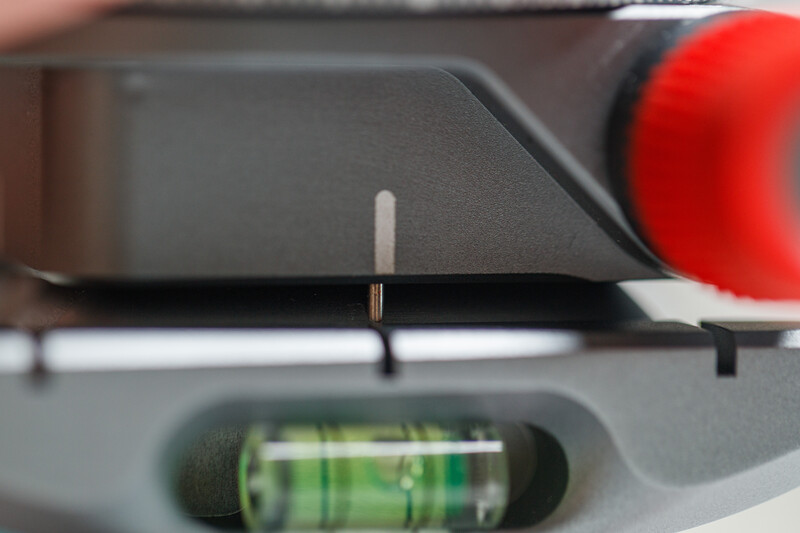
The proprietary Rogeti plate system comes with dowel pins. These dowel pins act as aligners on the attachment plates when used within the Rogeti ecosystem, adding another layer of confidence that the plates will be securely locked correctly and will not slip out easily. Note that while the Rogeti system is Arca-Swiss compatible, please refrain from using the Rogeti plates with dowel pins on other Arca-Swiss systems, as you risk damaging them.
Summary
What I Liked
- 0° Leg Position – The ability to tuck the tripod flush against walls or windows is incredibly useful for interior work. It also prevents the legs from pinching your fingers when they're fully closed, which sounds minor until you've been hurt.
- Two-Tier Geared Center Column – Offers both fine-tuning precision and additional height when needed.
- Precise Gearing (Head and Column) – The worm gear system on both the RG-1 and C32GR/C32GK offers excellent controllable precision.
- Solid and Sturdy Construction – All-metal gearing and quality carbon fiber legs make it feel engineered for longevity and durability.
- Slim Profile and Compact Footprint – Despite supporting serious loads, it remains easy to transport and maneuver.
- High Load Capacity – Easily handles professional camera bodies and heavier lenses without feeling strained.
- Invertible Geared Center Column – Gives you low-angle flexibility when needed, compensating for the limited leg spread.
- Fully Symmetrical Pitch and Roll – Balanced axis response makes adjustments intuitive and eliminates the constant re-leveling common with traditional geared heads.
- Innovative Structural Design – Thicker lower leg sections, repositioned leg locks, and the unconventional head design show genuine rethinking rather than imitation.
- Expandability With Accessories – From wheels to horizontal adapters, the system grows with your needs instead of forcing separate platforms.
- Arca-Swiss Compatibility – Makes integration with existing plates and accessories straightforward.
- Elegant Design – It looks refined and intentional.
- Pricing – Considering the engineering, materials, and modular system, the value proposition is strong for serious professionals.
What Could Be Improved
- Maximum 23° Leg Angle – The inability to splay the legs wider may limit certain low-angle or awkward terrain setups.
- Missing Counterweight Hook – A screw-in hook at the bottom of the center column would be useful for hanging bags or adding counterweight in windy conditions. It could also double as a strap attachment.
- Open Leg Ends – Sealing the threaded end inside the legs would reduce concerns about sand or water entering the internal tubing mechanisms.
- Wheel Stoppers – The wheels are transformative, but integrated locks would improve stability during static shooting.
- Axis Control Separation – Splitting the controls of the RG-1 between left and right would allow simultaneous two-axis adjustments more efficiently. This can be achieved by moving the roll axis control to the left.
- Knob Size – Perfectly usable as-is, but slightly larger knobs might help when adjusting cameras at extreme angles.
- More Educational Content – Given how modular and unconventional the system is, more streamlined tutorials would help users fully unlock its potential.
- Assembler Compatibility – It would be ideal if the Assembler could better accommodate the C32T horizontal column, since that's likely the additional piece many professionals would carry.
- Sand Feet with Rubber Base – Adding rubber bottoms to the sand feet would increase versatility across mixed terrain.
- Clip-On Assembler Integration – A clip-on solution would be ideal so the Assembler can work without having to remove the sand feet. Constantly detaching and reattaching sand feet when moving around in sandy environments can become tedious, especially when that's the only way to carry the tripod with a strap.
- Vertical Phone Mount Option – It would be useful if the phone mount supported native vertical orientation, similar to an L-bracket design. This would eliminate the need to rely on the C32T horizontal column just to achieve vertical framing.
Final Closing Thoughts
It honestly says a lot when a company is fully invested in developing and growing a single product. I genuinely hope that as Rogeti grows, it is able to maintain its design philosophy of providing innovative solutions, because we really need someone like them to solve long-standing traditional issues. The entire T32MAX tripod system packs an impressive amount of capability into a relatively compact footprint — perfect for a small production team like mine to handle without much hassle.
Overall, the RG-1 exceeded my expectations. It combines thoughtful design, solid engineering, smart ergonomics, and real versatility in a compact head that feels smooth, stable, and genuinely enjoyable to use in the field. On top of that, the practical innovation behind the T32MAX system also makes getting the job done easier. Personally, I struggle to find complaints beyond minor nitpicks. Even without further revisions, it is already highly functional and refined at this stage. If anything, this product deserves a much wider audience — and that is not easy to say coming from someone who takes equipment seriously in their work.
At the end of the day, no client will be able to tell the difference between an image made with this tripod and one made with another. Only you as the photographer will know — because you no longer struggle with precise framing, your adjustments are more controlled, and your gear is more secure. That is the level of confidence a photographer needs, especially when working with expensive equipment in demanding environments. This reliability also matters to the clients hiring you as a professional.
For those interested, the T32MAX tripod with the C32GK center column is priced at around $1,048 USD, and the RG-1 geared head at $1,000 USD. They can be purchased separately or as a bundled set for slightly under $2,000 USD. And if price is a concern, it's worth checking their outlet section via Rogeti's official website — you may be able to find used units with minor cosmetic imperfections or previous versions at a very reasonable price.
Join the Fstoppers community for free
-
Post comments and join in the discussions
-
Browse the site ad-free
-
Share your work and get featured in the community
-
Compete in the photo contests for fun and prizes
4 Comments
To be frank, looking at that tripod with the centre column and the relatively thin legs, it all looks a little bit frail. You wonder just how steady it's going to be with a decent-sized heavy load on it.
Personally, I've paired a 5 Series Gitzo tripod to an Arca-Swiss d3 geared head, and I'm not sure I'm seeing anything here that would make me want to swap.
I was skeptical too.. I came from a larger size tripod and after using this, I don't feel like I am missing out anything. But of course, my setup isn't the heaviest. Heaviest setup I have currently is GFX50s with Canon Tilt shift lenses.
I do think your setup is already good as it is. If there is anything you would want to try, I think its maybe the RG-1 geared head. Their T32max legs are convenient to work (dont have to bend up and down so much and also something with its knob, my hands dont hurt after a full day of shoot) with because of the way its design but as of now there is also some minor inconvenience (like leg angle isnt as wide). It is definitely worth considering if you need the geared center column.
Thanks - a very thorough write up on what looks like some lovely equipment. Just curious what the transmitter units on top of the pictured camera is (if that’s the author’s)… always interested in these types of accessories.
Thanks for reading, yes its mine. Its a camranger 2 on top of a flash trigger. Camranger for wireless tethering to my ipad and the flash trigger to trigger the flash