
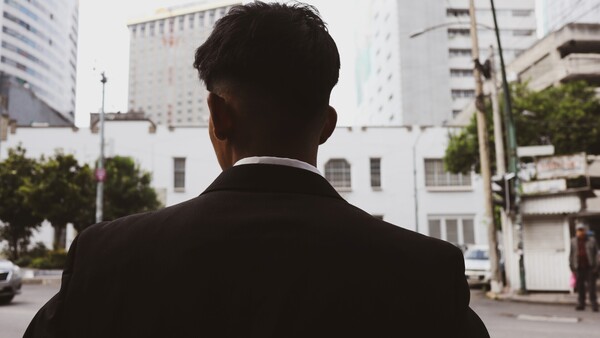
Street photography has become so codified that much of it now looks like photographers photographing other photographs. That sentence might sound unfair, perhaps even provocative. After all, we are living through a golden age of technical accessibility. Cameras have never been better, books are everywhere, and great work from every continent is just a swipe away. Knowledge that once took decades to acquire is now available in a 20-minute YouTube video. In the first years of the 2000s, we did not have anywhere near the access to information that we have today.
And yet, despite this unprecedented abundance, one question keeps coming back to me.
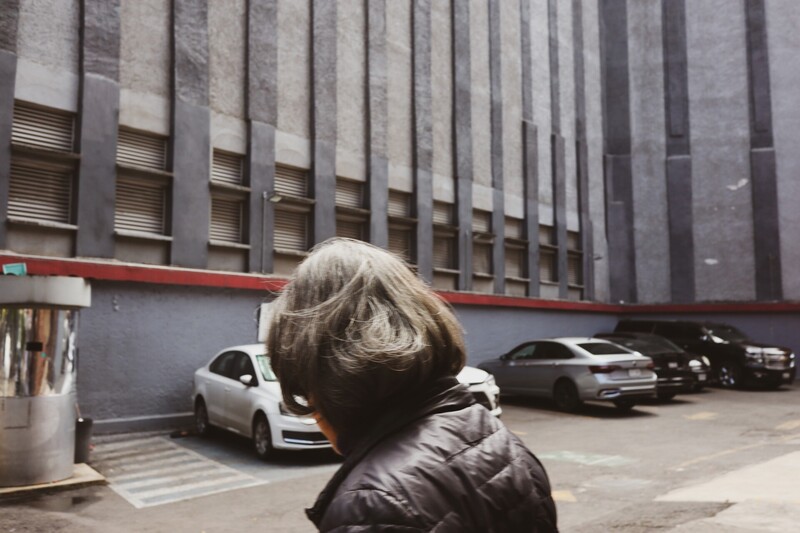
Who are the truly unique voices in street photography today? Not the most successful, not the most followed, not the photographers producing consistently strong images, but the ones whose work feels unmistakably theirs. Because perhaps the problem isn't that contemporary street photography lacks quality. Perhaps it lacks friction.
Spend enough time looking at portfolios, competitions, YouTube channels, Instagram feeds, and festival selections, and something curious begins to emerge. Everything is good. Everything is competent. Everything is recognizable. And somehow, everything starts to resemble everything else. Layers, reflections, long shadows, color palettes, juxtapositions, subjects isolated by geometry, the occasional humorous coincidence, frames within frames. Different cities, different photographers, strangely similar pictures.
Nobody planned this, of course. This is simply what happens when a visual language becomes mature. Painters once painted like other painters. Jazz musicians learned from previous jazz musicians. Filmmakers absorbed other filmmakers. Street photographers are no different. The problem arises when influence quietly turns into consensus, and consensus, by its very nature, is difficult to distinguish from repetition.
Perhaps we are witnessing something unprecedented. For the first time in history, photographers don't just study the masters; they study each other in real time. Thousands of images every day, thousands of visual references, thousands of unconscious influences. Aesthetic trends spread globally in weeks. Styles become international. Visual habits become collective. Maybe that explains why photographs taken in Tokyo, Mexico City, London, Paris, and São Paulo sometimes feel as though they belong to the same city: not geographically, but photographically.
Ironically, street photography was built by people who were not trying to belong to a tradition. Cartier-Bresson wasn't trying to become Cartier-Bresson. Winogrand wasn't looking for "Winogrand moments." William Klein wasn't asking how to fit into the existing vocabulary. Saul Leiter wasn't trying to imitate Saul Leiter. They were all responding to something larger than photography itself. They were responding to life. Yes, again, life.
Perhaps that's what made their work distinctive. Not originality for its own sake, not style, not branding, not algorithms. Just curiosity. And maybe curiosity has become harder, because today photographers spend more time looking at photographs than looking at the world. More time consuming than wandering. More time comparing than observing. More time refining aesthetics than developing questions.
We speak endlessly about gear, presets, composition, and editing. But how often do we talk about obsessions? How often do we ask what somebody is actually trying to understand through photography? Because maybe style isn't where individuality comes from. Maybe individuality comes from preoccupations, from temperament, from biography, from what keeps us awake at night.
The strange thing is that technical mastery has become democratized, while personality remains stubbornly unequal. You can learn composition. You can learn editing. You can learn timing. But you cannot download a voice.
Which brings us back to the question. Who are the unique voices in street photography today? And perhaps an even more uncomfortable question: would we recognize them if they appeared? Or have we become so accustomed to what street photography is supposed to look like that we might overlook the photographers who are quietly trying to expand its possibilities?
Maybe the next important voices are already here. Maybe they have only a few thousand followers. Maybe they don't fit neatly into the category. Maybe some of them aren't even interested in being called street photographers. Or perhaps the more unsettling possibility is this: perhaps originality itself has become less important than belonging. Because belonging is safer. Belonging gets likes, gets accepted, gets invited, gets understood. Original voices, on the other hand, are often confusing, until they are not.
So I'll ask again. Who are the unique voices in street photography today?
Join the Fstoppers community for free
-
Post comments and join in the discussions
-
Browse the site ad-free
-
Share your work and get featured in the community
-
Compete in the photo contests for fun and prizes
5 Comments
I could not cite a single contemporary photographer in any genre. Names that I recognize are long since passed away. I googled your question and did not recognize a single name from its list of street photographers. Which is not to say that there aren't numerous fine photographers in all fields, but the fact is that great photographers are on every street corner. How anyone could stand out above the crowd seems like an impossible task. The world is flooded with photography, although to your point, the large majority looks a lot the same. Nevertheless, a unique product doesn't necessarily guarantee recognition, and separating unique from ordinary is highly subjective.
When I was growing up in the 1960s, mom read Life Magazine, dad read the newspaper, I looked at the colorful pictures in National Geographic, and Walter Cronkite was the most trusted name in America for news. Nowadays the world is flooded with pictures, from unlimited sources, and there's a severe credibility problem. We live in a world where a few people get incredibly rich playing a game, while the majority of photographers, writers and musicians barely pay the bills to survive. Photojournalism is a craft that corporations have nearly obliterated. My question is not who is unique, but what is left of the craft which makes any genre of art or photography worth pursuing?
I think that's exactly the question many photographers are asking today.
I don't believe uniqueness guarantees recognition, financial success, or historical relevance. In fact, many remarkable photographers have remained largely unknown, while others became famous for reasons that go beyond the work itself.
But for me, that doesn't diminish the value of the craft.
Photography has never been only about visibility. Even in the eras of Life Magazine, National Geographic, or the golden age of photojournalism, only a tiny percentage of photographers reached a wide audience. Most worked in relative obscurity.
What's different today is that we can see the scale of the competition. We are exposed to millions of images every day, so the illusion that recognition naturally follows quality has become harder to sustain.
The question then becomes: what is photography for?
If the answer is fame, the odds are probably worse than ever. If the answer is personal expression, curiosity, documentation, storytelling, or creating something meaningful, then the craft remains as valuable as it has always been.
The economic structures have changed dramatically. Photojournalism has suffered. Attention has fragmented. Credibility is under pressure. I agree with all of that.
Yet I would argue that in a world saturated with images, thoughtful photography matters more, not less. The abundance of photographs doesn't reduce the value of seeing well. It makes that ability rarer and more necessary.
Perhaps uniqueness doesn't guarantee success. But without it, all we have left is repetition.
We could be exposed to millions of images every day, if we choose, but maybe it's time to tune out what the rest of the world is doing, ignore it, and just focus on our own photography. If it's unique, great. If it's not, what difference does it make? To your point, it's no guarantee of fame or fortune. And to my point, there's no real dividing line between the two anyway. Comparing one's images with another person's photos seems like a dangerous path to follow, for a variety of reasons. Personally, I find great joy and satisfaction in every photograph I make, regardless of whether it's repetitive, derivative, or judged as just plain boring in the eyes of the viewer. We have to please ourself first, and let the rest follow.
I do that. I am more inspired by cinema, music and other arts nowadays rather than photography in general. And yet I have some references. With that said, I mostly agree with you, especially in this era of social media and the continous streaming of images. As a writer and photographic culture analyst I need to propose some thoughts like in this article.
I think we need to give a lot more serious thought to your question: "What is photography for?"
The answer should provide a lot of guidance for why, what, how, and for whom we click the shutter. It's easy to get caught up in all the noise and influence of outside sources when we should be listening to our inner voice.