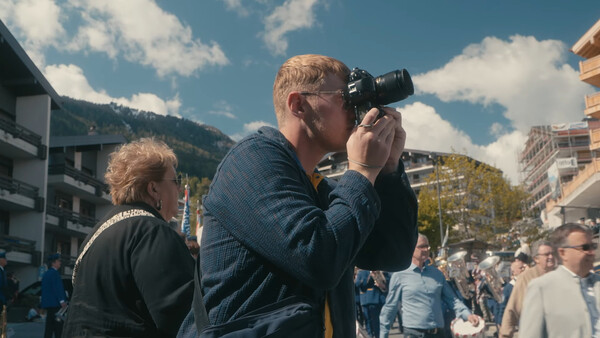
Most of your photos will be bad. That’s not a failure; it’s the price of progress. Every missed focus, awkward composition, and flat exposure teaches something that can’t be learned from tutorials. The images that disappoint you are the ones that shape your instincts, and instincts are what separate mechanical shooters from real image makers.
Coming to you from Max Kent, this thoughtful video breaks down the uncomfortable truth that taking bad photos is the foundation of becoming great. Kent points out that even legends like Henri Cartier-Bresson shot hundreds of forgettable frames for every masterpiece. It’s easy to assume pros just have a magic touch, but they’ve simply built a higher tolerance for failure. They shoot relentlessly, learn quickly, and let their bad work disappear quietly behind the scenes. Kent argues that this invisible process, the unseen contact sheets and deleted raw files, is where real skill develops. You start to see how each mistake shapes your eye and how creative persistence builds your confidence over time.
Kent’s video draws an unexpected comparison to football. A striker who stops taking shots because they’ve missed too many will never score again. The same applies to photography. If you hesitate every time you lift the camera, waiting for perfection, you’ll freeze. Bad photos are warmups, the visual equivalent of stretching before a match. They loosen your instincts, help you find rhythm, and prepare you for those moments when everything finally clicks. Kent reminds you that it’s not luck when that happens; it’s the result of showing up, shooting through the misses, and learning what doesn’t work.
He also talks about the quiet skill of self-editing that develops through repetition. Over time, you learn to sense when a shot isn’t worth taking before you even press the shutter. That ability only comes from having taken enough bad ones to recognize what “off” looks like through the viewfinder. Great photographers aren’t immune to mistakes; they’ve just spent years training their eye to anticipate them. Kent mentions how someone like Saul Leiter might have hesitated to shoot an imperfect scene and, in doing so, missed one of his defining images. The point isn’t to glorify imperfection but to normalize it. Every photo you’re proud of stands on a pile of failed experiments you’ll never post.
Kent keeps it honest to the end. He admits this very video is maybe a “seven out of ten,” but that’s the point. If he demanded perfection, it would never exist. Creative work isn’t about nailing it every time. It’s about creating often enough that you eventually do. He encourages you to get outside, take bad photos, and keep going even when everything feels flat. Because the act of trying, of pressing the shutter again and again, is how you get there. Check out the video above for the full rundown from Kent.






Join the Fstoppers community for free
-
Post comments and join in the discussions
-
Browse the site ad-free
-
Share your work and get featured in the community
-
Compete in the photo contests for fun and prizes
3 Comments
My bad photos haven't made me better 😢.
I should be a world-class master photographer by now.
I confess to not having watched the video... Max's persona has always seemed depressing to me. But reading Alex's review, and from my own experience on the subject, the one big ingredient that's the bridge between bad and good pictures is education. Learning why our pictures suck and making conscientious decisions to change bad to good doesn't happen miraculously. Just taking a million more pictures won't make them predictably better. By shear luck, maybe a few. But improving comes through getting critical feedback from better photographers who can point out weaknesses and make suggestions. Watching lots of YouTube educational videos might help too... not sure about that since I mostly learned years ago from books. But those methods talk about someone else's photos, not yours. My point is that shooting more for the sake of hearing the shutter click probably won't make a big difference in improving. Practice, practice, practice, yes, but with analytical eyes.