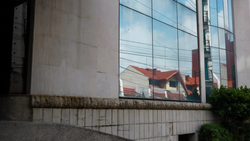
Long before many of the photographers we now refer to as masters of the art of photography, André Kertész was quietly changing what photography could be. Born in Hungary in 1894, Kertész wasn't chasing the spectacle or the drama. He found meaning in ordinary moments such as a shadow stretching across a wall, a lone figure crossing a courtyard, a fork resting on a plate, sunlight pouring through a window. He understood something that still resonates today: that a photograph doesn't need a grand subject to carry emotional impact.
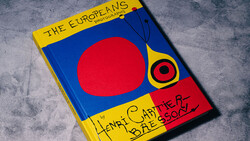
Years before Henri Cartier-Bresson gave us the idea of the decisive moment, Kertész was already making photographs with that same instinctive timing. Before Brassaï revealed the mystery of Paris after dark, Kertész had already been wandering its streets, finding beauty in staircases, reflections, empty sidewalks, and quiet corners. His influence can also be seen in photographers like Robert Frank and Saul Leiter, artists who, like Kertész, found poetry in the solitude of everyday life.
Kertész's work has an effortless appeal. It doesn't appear forced. Nothing feels manufactured. His photographs simply ask you to slow down and notice. The compositions and subjects are elegant without calling attention to themselves, and the emotion is discovered rather than announced.
When Kertész arrived in Paris in the 1920s, he became part of the city's vibrant artistic community. His use of geometry, unusual perspectives, and natural human gestures helped lay the foundation for what would later become modern street photography. Numerous photographic ideas celebrated throughout the twentieth century and today had already appeared in his photographs years before they became fashionable.
His move to New York in 1936, however, was far more difficult. Professionally, Kertész struggled. America often viewed him as a commercial photographer rather than the artist he truly was. Yet he never stopped making photographs. He continued photographing from apartment windows, rooftops, parks, and city streets, creating deeply personal images that are now recognized as some of the finest urban photographs ever made.
Kertész is often called "a photographer's photographer," and that seems fitting. His influence isn't always obvious, but it's everywhere. The visual poetry, quiet observation, spontaneity, and emotional restraint, so much of what we now take for granted in photography, was present in his work decades before the rest of the photographic community caught up.
Sometimes the most influential artists aren't the loudest. They're simply the ones who saw the world differently and taught the rest of us how to see. In the video above from Photographic Inspiration, learn more about this pioneer of photography and see just how influential he has been on the world of photography.



Join the Fstoppers community for free
-
Post comments and join in the discussions
-
Browse the site ad-free
-
Share your work and get featured in the community
-
Compete in the photo contests for fun and prizes
2 Comments
A lovely man I met in his exhibition in Toronto in the 80's I think. He gave me a lot of his time in conversation. He mentioned don't take yourself seriously, remember it's just a snap. He kindly gave me one of his photos of the Eiffel tower in Paris. My prized memory. Godspeed friend.
Fantastic video. Thank you for sharing. Seems like Kertész would have found a home for his modern photography with Alfred Stieglitz after settling in the United States.