
There's a sentence that keeps coming back in photography circles: street photography is dead.
Most people say it with nostalgia. Some say it with frustration. A few say it like a provocation.
They're all wrong. And right.
Street photography isn't dead because people stopped doing it. It's "dead" because everyone started.
The Real Problem Isn’t Death. It’s Saturation.
We are producing more images today than at any other point in history. Every street corner, every passing gesture, every accidental juxtaposition: it's all being photographed, constantly.
Scroll for five minutes and you'll see it:
- the same silhouettes
- the same reflections
- the same lonely figures framed in light
The visual language of street photography hasn't evolved nearly as fast as the tools we use to produce it.
That's the real shift.
It's not that meaningful images disappeared. It's that they are now buried under an avalanche of competent, repetitive, and instantly forgettable photographs.
Today, making a "good" street photo is easy.
Making a necessary one is not.
Smartphones Didn’t Ruin Photography. They Removed Your Excuses.
For years, photographers hid behind gear.
Better cameras. Faster lenses. Sharper optics. The illusion was simple: better tools would eventually lead to better images.
Then smartphones happened.
Suddenly:
- everyone has a camera
- everyone is always ready
- everyone can shoot without thinking twice
- everyone is going to share every single picture on social media
And most importantly: the technical barrier disappeared.
So what's left?
If your work doesn't stand out today, it's not because you don't own the right camera. It's because the camera is no longer the limiting factor.
That's uncomfortable. But it's also liberating.
Virtually everyone today is able to make a decent photograph, and that is where the misunderstanding starts. Without a real visual culture — amplified by the mediocrity that wins at festivals and photography awards — many today don't understand what makes a good photograph.
The Collapse of the Photographer Myth
There was a time when being a photographer meant something very specific.
It implied access, intention, and a certain level of dedication. It took effort just to be there, camera in hand, ready to capture something. It was like being a writer — to be a writer means being intentional about what you make.
Now?
Everyone is there. All the time.
The act of photographing is no longer rare. It's constant. It is, often, a mindless thing.
Which means the value has shifted.
It's no longer about who takes the picture. It's about who is actually seeing something others overlook.
And that's a much harder game.
Aesthetic Has Replaced Experience
A lot of what passes as street photography today is just visual pattern recognition.
People learn the look:
- hard light
- strong contrast
- layered compositions
And then they reproduce it.
Perfectly.
Endlessly.
Maybe with a filter. A film simulation.
But something is missing.
Because street photography was never just about what things look like. It was about what it feels like to be there.
And that part can't be downloaded, copied, or automated.
It requires time. Presence. Friction. It requires that your life is involved — that you are participating in the game, that you are really in the scene.
It requires being in the street not as a content collector, but as someone genuinely engaged with reality. That is not something that comes with the camera or smartphone you purchased.
So What’s Left?
If everyone can take pictures, and most pictures look the same, what actually matters?
Very little — and that's exactly the point.
What's left is:
- your ability to stay longer than others
- your willingness to observe without immediately shooting
- your capacity to recognize when something is truly worth photographing
Not because it looks good. But because it means something.
Street photography today is harder than ever. Not technically — that part is solved.
It's harder because the only thing that makes a difference now is you. Your understanding of the world around you. Or, maybe, the questions you raise through your observation. Yes, because sometimes it can be "photographing with a big question mark in the head" with respect to what you are observing in front of you.
Maybe It Had to Die
If you think street photography is dead, you're not entirely wrong.
A certain version of it is gone:
- the aesthetic formulas
- the repetition
- the idea that a visually pleasing frame is enough
That version? Yes, it's exhausted — even though many persist in repeating it still.
But let's be clear: this entire argument is a provocation.
Because something else never died.
What we often call "street photography" today is just a fragment of a much broader tradition — one that existed long before the label itself. A way of working rooted in observation, patience, and a deep engagement with reality.
Call it documentary. Call it reportage. Call it simply photography.
Photographers like Henri Cartier-Bresson were working in the streets without needing to define themselves as "street photographers." They weren't chasing an aesthetic. They were trying to understand and frame the world.
And that approach is still alive.
It just doesn't shout.
It doesn't rely on trends. It doesn't depend on recognition. And it doesn't need the label to exist.
So yes, a certain idea of street photography is dead.
But the real one?
It's still there. Exactly where it has always been.
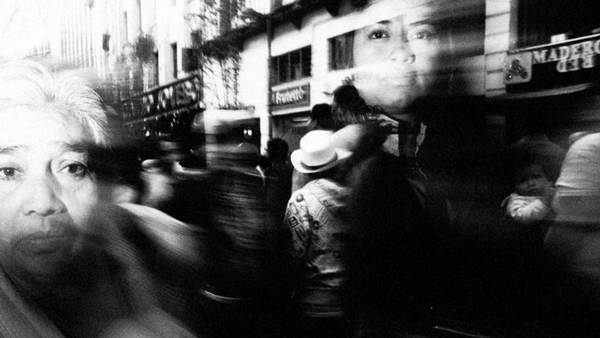
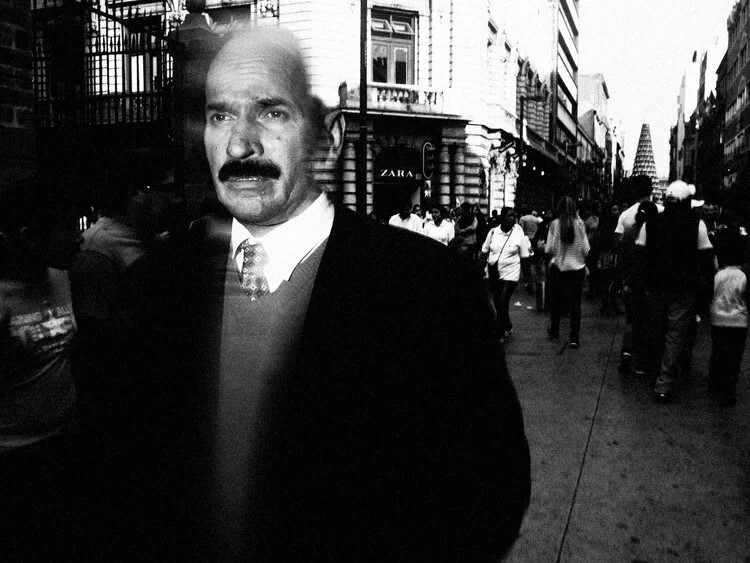
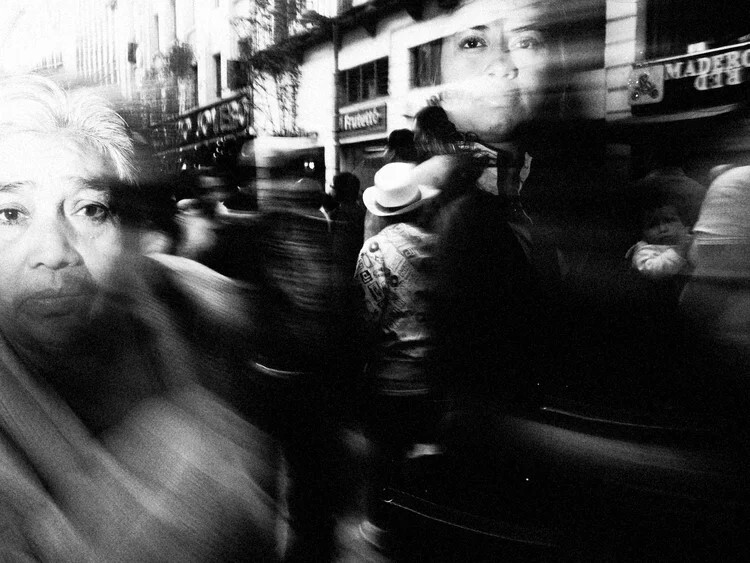
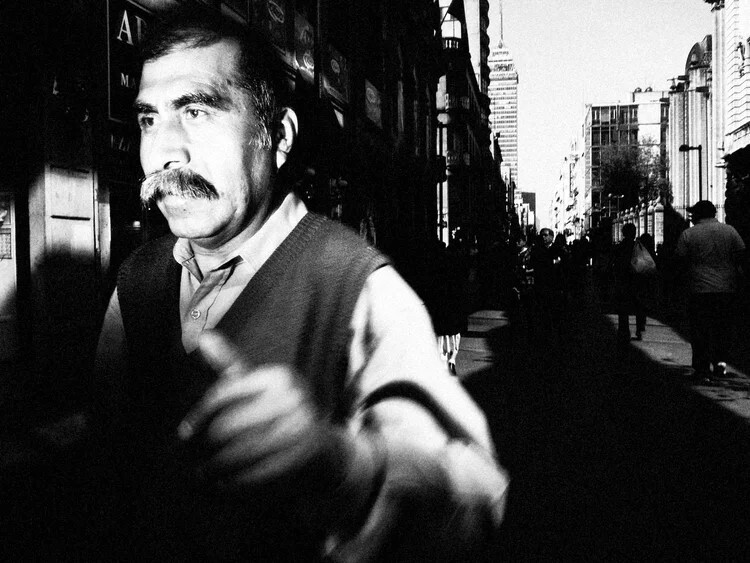
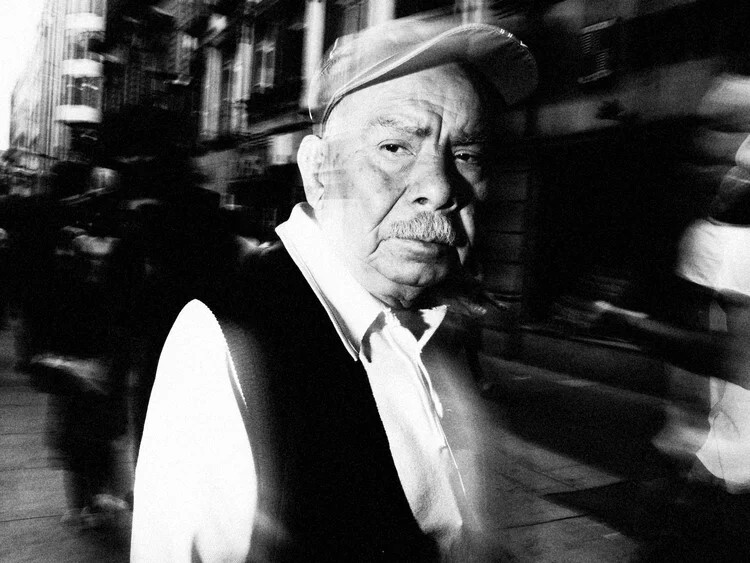
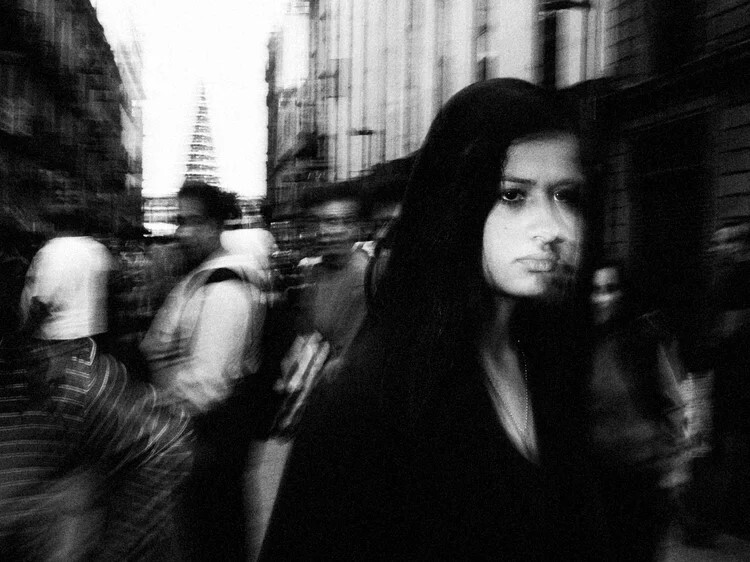
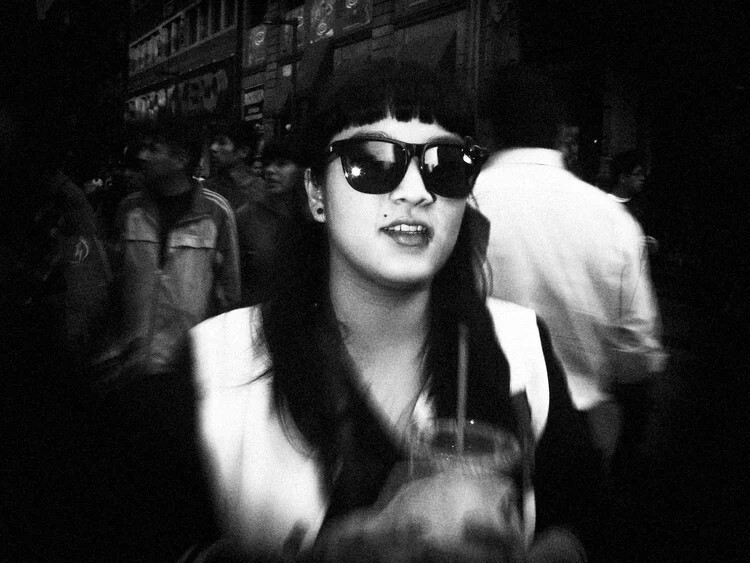
And the provocation of this article is underscored by the choice to accompany it with photos taken with a "real camera" and the creation of flash-based images. Reality Remade was a project conceived in 2011 with the intention of addressing, through a street photography approach, the volatility of existence, of life and death.
Join the Fstoppers community for free
-
Post comments and join in the discussions
-
Browse the site ad-free
-
Share your work and get featured in the community
-
Compete in the photo contests for fun and prizes
19 Comments
Yawn.
Thanks. A concise review. I'll take that under advisement.
You could have just...not read it if you think it's so boring.
Could the same thing not be said of virtually every genre of photography? Landscape and nature photography seemed to have died the day iStock photo began selling gazillions of images for a dollar. Value was instantly decimated by an inexhaustible supply.
So what to do about it? I can't say for sure that I understand the difference between a good photo and a necessary one, or that distinguishing one from the other has any practical benefit. Art rarely finds universal agreement on what is good or bad. I sympathize with the predicament of a saturated market of photography, but don't see how declaring one image superior to another guarantees that the public will see it the same way.
Ed, you're absolutely right that this extends far beyond street photography. Every photographic genre has had to confront saturation, accessibility, and the shifting perception of value. That is simply the nature of a medium that has become universally available.
The distinction between a good photograph and a necessary one is, of course, subjective. It isn't a scientific measurement, nor does it guarantee recognition or commercial success. A necessary photograph does not demand universal agreement. Rather, it feels inevitable, as if it had to be made by that particular person at that particular moment. That is where I can recognize the value of the work of certain photographers we respect as masters.
The market will always have its own logic, often indifferent to artistic merit. But photography has never been solely about satisfying the market. If it were, most of the images we now consider important would never have existed at all. Of course, as I made evident, this post would be a thought provoking piece while I don't really think street photography is dead. All over the years Over the years, I've witnessed how much has become forced, a constant repetition of "what others do," a quest for approval rather than a truly personal pursuit. This often surfaces, especially in what's promoted by festivals and awards, what's "sold" as street photography. When it becomes clear that something no longer surprises you, it clearly ends up boring. Photography, in general, feeds on life, on the experience of it. I believe observation should begin from this, by observing not so much the photos posted on social media, but rather by truly living and observing.
Nothing is more cliche than blurry, high-contrast, black-and-white images. Why do posts like these always come with Daido Moriyama image copies?
Interesting observation, though Reality Remade was made back in 2011, long before Moriyama became the near-obligatory reference point he often is today, at least to me in that period: I used flash and the model was not Moriyama, the model in my mind was: using flash and not making the copycat of Bruce Gilden. The images were chosen here deliberately, to underline the argument and provoke discussion rather than to serve as stylistic shorthand. Context matters as much as aesthetics.
I have read that another contributor to the death of street photography is that each and every image from the streets loaded anywhere, anywhere on the web not only sits out there for almost forever, but will also be scanned and indexed by the various bot scavengers and AI tools. That means every single face is potentially recognizable and preserved, and more importantly, can be linked and recalled. We know who you are. So long anonymity on the street. That makes people more reluctant than ever to have a stranger take a photo of them.
Thoughts, Alex?
Hi, Steve. That is a thoughtful point, and one that street photographers cannot afford to ignore. The streets themselves have not changed, but the permanence of images certainly has. A photograph made today can travel farther, last longer, and be analyzed in ways that were unimaginable just a few years ago.
That inevitably affects how people feel about being photographed. The traditional anonymity of the crowd is no longer quite as anonymous as it once was. Awareness of surveillance, facial recognition, and AI has made many people understandably more cautious.
At the same time, I don't believe this signals the end of street photography. Rather, it challenges photographers to work with greater sensitivity, intelligence, and respect. The essence of street photography has always been about observing society, and society itself is changing. Our approach must evolve with it.
Despite I think that street documentary photography is an important social activity, allowing to know more about society, I admit that I questioned myself recently, especially abot what is important to document and what could be avoided. And this is answering again to how we photograph on the street: I believe that respect and empathy should never forget.
Personally that leads me to have more and more a different approach too: sincerely I feel myself in a phase where the "landscape approach" is the thing I am intereste3d to exp,lore even more in future: I mean that kind of approach that I relate with new topographics, urban landscape and that metaphysical approach that made the fortune of a photographer like Luigi Ghirri. Not making the bard of taking photos of people by the shoulder, but yes, Ghirri showed us a way that could be considered more these times. Yet I think that we shouldnì't fear too much photographers and more CCTV cameras and what the system can do against us, but yes, it's definitely a topic I'm thinking about a lot.
To me, street photography tells a story. Someone simply walking down the street is not a story, whether they're creatively blurred or not. The story should not have to be understood only after reading the photographer's explanation of the image. Creative portraiture? Yes, maybe? But not street photography.
I understand where you're coming from, but I think reducing street photography solely to storytelling is a rather narrow way of looking at it. Not every photograph needs to function like a short story with a beginning, middle, and end.
Street photography can certainly tell stories, but it can also evoke atmosphere, suggest a state of mind, or capture something far less literal. Sometimes, it is about ambiguity. Sometimes, it is about sensation. Sometimes, it is about the fleeting nature of life itself.
Reality Remade was never intended as portraiture, nor as a conventional narrative exercise. It was about perception, mood, and a particular way of experiencing the street at that moment in my life. The blur, the abstraction, the distortion, they were all part of that language. The work was concerned with ephemerality, with the unstable nature of reality, rather than with neatly packaged stories.
Street photography has always been broader than any single definition, and thankfully, it still is. To give you more context, I need to share with you the entire project: https://alexcoghe.com/street/reality-remade
I looked at your project and I understand your passion, but I guess I'm confused about the purpose of this article. You dismiss the repetitive work of some street photographers, yet you show as an example of good street photography images involving repetitively blurred people walking toward the camera. Yes, you can talk a good description of feeling and nuance and atmosphere, but if you're not there to expound on the purpose of your work, what does your work say without those words?
The intention: I used a particle technique, ICM (intentional camera movement) in order to create ghosts and to suggest in that way what I was experiencing. The fact you don't get it is not universal by the moment others get it completely. Maybe you are not aware but that work, made in 2011, inspired other street photographers. What you continue to define "blurre people waliking" is not correct, by the moment the people is almost always in focus while the blurry is often the background, and that thanks to flash. The images going with the article are included as a provocation, in order to say that is possible to say something more important in street photography than what we are used to see right now, esecially in festivals and awards. The work was born through a particular mindset at that time, first year living in Mexico City, people passing in front of me, it was like they were born and they left (when I don't see them again)...it was an opportunity to talk about how fast and ephemeareal is life. You don't get it. Fine. Others do. That is the great of photography and art in general.
I'll tell you what is dead: writing a piece article and starting every sentence in a new paragraph, as if each sentence is a statement of such grave importance that it requires its own space.
You're absolutely right. Next time I'll make sure to format everything as one heroic wall of text, just as the internet intended.
The short paragraphs are deliberate. They make reading easier, especially on screens, and help control rhythm and emphasis. Not every sentence is a profound revelation, I assure you. Some are merely trying to get through the day like the rest of us.
But I appreciate your concern for paragraph spacing. It's a cause too often overlooked.
Myself, I "yawn" because the writer of this article clearly didn't write it at all, but had AI do it for him.
Sherlock Holmes you really need to go...
So I have a different view, if I may. I think the question whether street photography is dead or not depends on where you look. I have stopped using social media because my time is more valuable than scrolling around like that. But in that medium I would agree saturation is the problem and possibly the cause of any purported death. People mimic and imitate, originality is rare and precious when found. That's just life but the ease with which people can share their "great captures", "excellent shots" etc makes it more difficult to find that originality. I have a feeling a lot of those serious about street photo or any photographic style for that matter avoid social media for this reason — it is effectively the image-based lowest common denominator of humanity's creativity. Just my two Eurocents.
I agree. One person posts a silhouetted figure in a triangle of light and gets a lot of "likes," then everyone starts posting the same type of image. We've become a society of copycats, seeking out that serotonin rush that is basically meaningless.