
For roughly a decade between 2013 and 2023, Sony defined where the camera industry was going. The original a7 and a7R democratized full frame mirrorless and forced Canon and Nikon to abandon their DSLR-protective hesitation. The a9 line proved electronic shutters could compete with mechanical at the highest level of professional sports. The opening of the E mount to third-party manufacturers reshaped the lens economy across every competing system. Sony was the brand that other manufacturers reacted to, and the photography press treated Sony announcements as bellwethers for where the industry would move next. Working photographers debated which a7 variant to buy because the relevant comparisons were among Sony's own bodies.
Sony's commercial position remains formidable in the segments where the brand competes most directly, even as it shows signs of recent erosion. The brand finished 2025 as the leading interchangeable-lens mirrorless manufacturer in BCN's Japan retail mirrorless data, with roughly 29.9 percent share, ahead of Canon at 27.4 percent and Nikon at 15.1 percent. That represents Sony's third consecutive BCN Award win in the mirrorless category, though the share figure is down from 35.8 percent in the prior cycle, a drop of nearly six percentage points in a single year. Globally, Sony held approximately 28.5 percent of camera shipments in 2024 by volume, second only to Canon at 43.2 percent. The Sony a7 V launched in December 2025 at $2,899 and immediately topped Map Camera's monthly sales rankings, outselling the next four best-selling cameras combined in its launch month. The a7 V then held the number one spot at Map Camera through January and February 2026 as well. Across the segments where Sony competes hardest (Japan mirrorless retail, hybrid creator and enthusiast-tier launches, native E-mount lens ecosystem), the brand is performing strongly. Sony is selling cameras, holding share at the top of Japan's mirrorless market, and producing enthusiast-tier launches that move significant unit volume.
What has changed, and what working photographers and the photography press both notice without always naming directly, is that Sony has lost the cultural conversation around photography even as the brand continues to win the commercial competition. The brand that other manufacturers used to react to is now selling cameras into a conversation that other manufacturers are shaping. Fujifilm has captured the cultural attention around enthusiast and lifestyle cameras. Nikon is increasingly competing for the working-pro and design-conscious conversations. Sony continues to dominate the hybrid creator and working-pro segments where capability matters more than identity. The bifurcation is real, and it is worth working through carefully because it predicts where the industry is heading.
Where Sony Still Wins
Sony's strength is most visible in the segments where the buying decision is driven by capability, video performance, lens ecosystem maturity, and integration with creator workflows. The a7 V's Map Camera dominance is the clearest evidence. The body sold in volume that no other camera in the same launch window came close to matching at that retailer. Buyers reaching for an enthusiast-tier hybrid stills and video body in late 2025 and early 2026 reached for the a7 V more than for any alternative on Map Camera's shelves, and the buying signal pointed toward what the camera does rather than toward what the camera says about its owner.

Sony's lens ecosystem reinforces this commercial position. The native E-mount lens lineup is the most mature in the industry, with roughly 76 to 78 first-party Sony lenses depending on which Sony category page is counted, and an active third-party ecosystem (Sigma, Tamron, Viltrox, Samyang, others) that no competing system has matched. Three recent Sony G Master releases represent one of the most ambitious lens release sequences any major manufacturer has produced in recent years:
- Sony FE 28-70mm f/2 GM, released November 2024
- Sony FE 50-150mm f/2 GM, released April 2025
- Sony FE 100mm f/2.8 Macro GM OSS, released September 2025
A working photographer who already owns Sony lenses has substantial capital invested in the system, and the system continues to give them reasons to stay.
The video and hybrid-creator segments are also Sony's strongest territory. The ZV line is the most prominent vlogging and creator-focused camera lineup in the industry, even if its dominance is increasingly contested by Canon's PowerShot V series and Fujifilm's X half. The Sony a1 II and Sony a9 III remain genuinely competitive at the highest level of professional sports work where flagship bodies are still required, and the FX-line cinema cameras have expanded Sony's footprint in working video production.
What Sony has, in summary, is what working photographers actually need most of the time: capable bodies, mature glass, reliable performance across high-stakes work. The commercial position rests on solid product fundamentals. For working photographers thinking through the business infrastructure that turns capable gear into actual revenue, Making Real Money: The Business of Commercial Photography covers the client acquisition, pricing, and positioning decisions that make capability translate into income.
Where Fujifilm Has Captured the Conversation
Fujifilm's cultural ascendance is documented in the same Map Camera rankings that show Sony's commercial strength. Fujifilm dominated Map Camera's calendar year 2025 top 10, with four entries in the top six positions:
- Fujifilm X-M5 at number two
- Fujifilm X-E5 at number four
- Fujifilm X half at number five
- Fujifilm X100VI at number six
The Nikon Z5 II took the number three position, and Sony's first appearance in the calendar year 2025 list was the a7C II at number nine. One specialist Japanese retailer's ranking has obvious limits as a global market signal, though it captures something the broader market data also shows: at the enthusiast and lifestyle tier, Fujifilm is now the brand that buyers actively seek out.
The financial data confirms the commercial side of this cultural shift. Fujifilm's nine-month FY2025 imaging revenue reached approximately ¥485.7 billion, up about 13.8 percent year over year, with both professional and consumer segments contributing and the professional segment outpacing consumer growth. Fujifilm's imaging division is one of the few major camera-manufacturer segments showing double-digit revenue growth in 2025, even if Fujifilm's overall global camera shipments share (around 9 percent as of 2024 shipment data) remains well behind Sony's.
Why has Fujifilm captured the conversation? The answer is identity. The X100VI, the Fujifilm X-T50, the X-E5, the X-M5, and the X half are not bodies that compete with Sony on specifications. They compete on what they say about the photographer who carries them. The film simulations turn the camera into a creative voice rather than a measurement instrument. The retro-design language gives the buyer something to be seen with rather than something to be assessed by. The Fujifilm community has built around the cameras as cultural objects, not as tools, and the buying decision happens at the level of identity rather than at the level of capability. This is the photography market that Sony has not seriously contested, and Fujifilm has been allowed to define what enthusiast photography looks like in 2026.
Where Nikon Has Quietly Become Sony's Other Competitor
Nikon's cultural position is harder to summarize because Nikon has done two different things at once. The Nikon Zf, released in September 2023 as a heritage tribute to the FM2 film body, gave Nikon a meaningful entry in the design-and-identity conversation that Fujifilm dominates. The Nikon Z6 III, released in June 2024, introduced the partial-stacked sensor architecture at a mid-range price tier and produced a different cultural moment about the flagship-mid-range gap. Sony's a7 V later adopted partial-stacked sensor technology of its own, which means Sony is, in this specific case, following Nikon's lead rather than setting the pace.
Nikon's market share has grown modestly across the past two BCN cycles, from around 14.5 percent to 15.1 percent in Japan, and the brand now consistently appears in the top 10 of major retailer rankings with multiple bodies (the Nikon Z5 II at number three in Map Camera's 2025 calendar year ranking). Nikon's lens roadmap has filled in significantly since the Z mount launched, the third-party ecosystem is opening up, and the brand's product decisions have started to read as coherent rather than reactive. The acquisition of RED Digital Cinema and the launch of the Nikon ZR cinema body in September 2025 also positioned Nikon to compete in territories where Sony's FX line previously had less serious competition.
Nikon trails Fujifilm as a cultural force, though the brand has stopped trailing the conversation entirely. Nikon has taken specific, identity-driven product decisions (the Zf, the Z6 III, the ZR) and produced cultural moments that Sony has not recently produced.
Where Sony Has Specifically Lost Ground
The Sony losses are concentrated in two specific areas, and both are visible in the data.
The first is the enthusiast and lifestyle camera segment, the buyers who want a camera with personality, retro design, film simulations, or a strong community identity. Sony has effectively conceded this segment to Fujifilm. The Sony a7C II is Sony's strongest entrant in the compact-and-stylish full frame category, and it remains genuinely popular (third place in Map Camera's February 2026 monthly ranking, ninth in the 2025 calendar year ranking), but it does not generate the cultural conversation that the X100VI generates. The Sony RX1R III is positioned as a luxury object rather than as a cultural product. Sony has the engineering capability to make a serious competitor to the X100VI in volume. The brand has not chosen to.
The second is the design-and-identity conversation more broadly. Sony's a7 series has converged on a single ergonomic template that the brand has refined across multiple generations. The a7 V brings real but incremental improvements:
- A revised grip
- The four-axis articulating screen
- Dual USB-C ports
- A larger and higher-resolution LCD
These improvements operate within the same template rather than reframing it. The brand has chosen to refine the existing chassis rather than develop a meaningfully different one. The result is bodies that work superbly while looking broadly similar to their predecessors. They function well as tools. They miss the opportunity that the design-and-identity segment of the market increasingly rewards.
Sony's marketing messaging reinforces this gap. Sony's positioning around the a7 V emphasizes capability and hybrid versatility for creators. These are descriptions of what the camera does. Fujifilm's positioning around the X100VI emphasizes the camera as something to own and be seen with. Nikon's positioning around the Zf emphasizes the camera as a connection to the analog photography heritage that buyers grew up with. The latter two messages say something about the buyer. Sony's messaging says something about the camera. Both approaches sell cameras in the segments they target. Sony's approach does not extend into the segments where identity-driven buying happens, and the brand has so far chosen not to extend it.
Why It Matters
The natural objection to this argument is that cultural attention does not pay the bills. Sony continues to win commercially in the segments where it competes most directly, and the company's financial position, lens ecosystem, and overall brand strength remain a major presence in the mirrorless space. If the a7 V keeps topping Map Camera every month and Sony keeps leading the BCN Japan mirrorless category and holding meaningful share of global camera shipments, why should anyone at Sony care about Fujifilm dominating the cultural conversation?
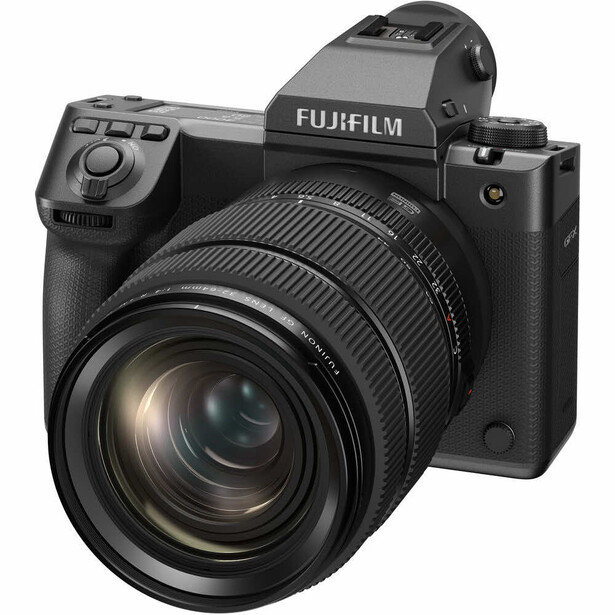
The answer is that cultural attention is the leading indicator of where commercial attention goes next. Fujifilm's imaging growth in 2025 was driven partly by recent X and GFX bodies that overlap with the identity-driven product territory this piece has been describing. Fujifilm's own Q3 FY2025 financial materials specifically called out the Fujifilm GFX100RF, X half, X-E5, and Fujifilm X-T30 III as the new products driving imaging growth, plus instax on the consumer side. The X100VI continues to define Fujifilm's cultural moment even though it is no longer one of the company's specific newer growth drivers. For Fujifilm, the cultural and the commercial have started to track each other in the company's actual financial trajectory. Sony's commercial position today rests on capability-driven buyers. Fujifilm's commercial momentum is being built on identity-driven buyers, and identity-driven buyers tend to compound into community, loyalty, and lifetime value in ways that capability-driven buyers do not.
The strategic question is whether Sony's 2026-2028 product roadmap recognizes this and responds. The brand has the engineering capability, manufacturing scale, and financial position to enter the identity-driven segment seriously if it chooses to. Several specific moves would matter: a fixed-lens compact at full frame that targets the X100VI's cultural territory rather than the RX1R III's luxury territory; a genuinely retro or design-forward Alpha body, executed with conviction rather than as a hedge; a clearer product line architecture that signals different photographic identities rather than different specifications; and a willingness to release a body that does not optimize for measurable improvement over its predecessor. None of these moves would damage Sony's commercial position in the segments where the brand currently dominates. All of them would extend the brand's reach into the segment where Fujifilm currently has too little serious competition.
Sony will be fine in the near term. The a7 V will continue selling. The lens ecosystem will continue compounding. The hybrid-creator and working-pro segments will continue producing revenue. What is at stake is not Sony's near-term commercial position but the brand's relevance to the photography conversation that increasingly drives where the industry is heading.
Fujifilm has captured that conversation by making products that say something about the buyer. Nikon is starting to capture parts of it by doing the same. Sony has the capability to compete in that territory and so far has chosen not to. The brand that other manufacturers used to react to is now reacting to other manufacturers. That can be temporary, or it can become permanent, depending on what Sony does next.






Join the Fstoppers community for free
-
Post comments and join in the discussions
-
Browse the site ad-free
-
Share your work and get featured in the community
-
Compete in the photo contests for fun and prizes
24 Comments
How am I supposed to take this analysis seriously when Canon is barely acknowledged? Seems…odd.
Canon the whole time:
https://www.youtube.com/watch?v=ztq5WpGleps
I mean. That really does sum it up.
Wait, where is Canon in this and why no mention of APS-C as a segment? When was this actually written when there is no mention of the impending A7R VI which is now a reality?
The camera industry has largely treated APS-C as an afterthought, while being priced not to sell.
For example many companies are pricing their APS-C models close to that of their full frame options. With camera sensors, the cost to make a sensor increases exponentially with the size, this they are just gouging on the APS-C side of things.
Canon likes to restrict 3rd party lenses, and people tend to gravitate to platforms that offer more options, thus canon will not be high up on the list.
As a Fuji user I'm probably going sound really biased but I love the contrast and I love the colours out of the Fuji cameras. I barely need to touch them in editing. I have used a Sony camera and I had to do a lot of adjustment to get the skin tones right? I cannot stand the skin tones on Sony cameras makes people look like jaundice yellow and it looks terrible. I'm just being really honest. It's actually terrible and I cannot believe they keep producing the same photos and people think it's okay. I think people who shoot weddings like Sony because of the auto focus as well. I've shot weddings with a GFX with very slow focusing and still made it work. It's not a drama if you know how to handle a camera but where I save the time shooting weddings with GFX is I didn't have to edit the files much after everything just straight of camera looked brilliant and that that's where Fuji is so good and same as Leica. But to be fair they really isn't a bad camera these days. They're all good. I just like Fuji colours and yeah, probably sounding like a Fuji fanboy but if that's all you've got to throw at me I can live with that. I also shoot on the Q3 28 and 43 cameras and I love those.
There is certainly an aesthetic choice behind camera systems. Some people don't care, some do. I personally use both the Nikon Z8 and the Fuji GFX 100S. I love using both; the weight and the way the Fuji slows me down, works well for me when doing landscape work. I prefer Nikon colors though. The one time I tried a Sony (a9) I hated the feel of the camera right away. That may not bother some people, but for me, how the body feel is important.
Why all the belly aching Canon and Nikon? How long did everyone follow the DSLR while the Mirrorless came. For what was like years everyone wanted and kept the DSLR at the top. All you saw in bottom stores like Walmart and Target even military stores etc. was DSLR's. What happen to all the followers they had to get rid of all of it when the mirrorless came out, big bucks lost and spent and yes that is what would of happened if earlier the eyes and minds would of seen it all earlier!
Today all are playing catchup where Sony is has the extra supper fast lenses due to the basic lineup is full covering all bases already and cameras way ahead and covering all sizes for mor users.
All the complaints of battery life and menu's the Sony user have lived and used but we do thank the complaints for the better things by non users.
The one thing I see Sony can do is hype up the past cameras for all are greatness and everyone has to start somewhere. I tell all new to photography to first look at the Sony mod 1's and 2's and ask about the on camera apps that is a great find first in learning photography with them and getting the PDF's of Brain Smith (I have the paper books). One key I point out is IBIS in the mod 2's like the A7R II in 2015 that could do 5 at +/- 2EV hand held even gone are the tripods. I went to Antelope Canyon in 2017 for a day and night tour with the new FE 12-24mm f/4 G and did both day and night tours hand held doing just 3 at +/- 2EV and when others at my hotel saw the image asking the lens and how di I do it. Everyone else doing long exposes with two DSLR cameras one on each shoulder and big heavy tripods in under.
Just asking how many $'s did you or your company loose when mirrorless finally come to your brand? What camera would you be using still instead of following the parade to the newest sweat lenses and cameras saying i can still just use what I have for awhile even just wait for the price to drop some, would that be a nice boat to be in?
The first images using the A7RM2 and Voigtlander HELIAR-HYPER WIDE 10mm F5.6 getting a panorama like image while other standing on the edge doing multilayer panoramas. 2017 all.
Every single one of this photos could have been taken by any number of cameras, so add nothing to the conversation.
That would largely be because of how heavily down scaled the images are. For example, if someone just wanted to share 0.3 megapixel images, then they could even get away with getting a cheap security camera, swapping the stock lens with a 2.8mm one for wide angle, then do a little exposure bracketing and photoshop work to get similar results. The difference comes when someone wants things where a more modern camera is needed as well as a more streamlined workflow. For example with that A7R M2, the full res image would allow for an 8x10 print or even an 11X14 inch print without much issue.
42.4 megapixel is also a decent size for general social media sharing, with a decent amount of resolution for some one to zoom into fine details and explore an image by a small amount.
Most of the modern bodies that are under consideration would not have a problem with printing big prints.
Sony and Fujifilm what a joke worthless manufacturers
Long time Fuji user here I would debate that but I won't. I made a lot of money out of a Fuji camera because the colours are beautiful and guess what? I'm not spending hours in front of the computer editing the colours to get them right. Nikon green and blue are too close together. I could never get the colours right even though I love Nikon cameras when you deeply analyse the blue and the g in the colour palette out of those cameras. It just doesn't sit right. I picked up a Fuji instantly the colours are how I want them and for me. Colour is more important than auto focus. I can make auto focus work no problems. I love my Fiji and also leica cameras.
Quite the baseless statement to make, simply tells us you don’t like either brand. My Sony cameras have served me very well and I know plenty of Sony and Fujifilm users who are more than happy with their cameras.
Unfortunately Nikon is loosing a ton of money which will limit how long they can successfully play the game unless bought by a company with very deep pockets and a commitment to the market.
I have Canon, Sony, and Nikon. I’m still not sure which I prefer.
Nikon needs to properly upgrade the Z50 series of their cameras. They need to give it at least sony's 26 megapixel sensor which while having a higher resolution, also has better high ISO performance, better dynamic range, and a faster sensor readout speed. Beyond that, they need to lower the price significantly.
Lower the price significantly?? The Z50 II is already very reasonable at $1,009.95. You want Nikon to just give away an upgraded Z50 III?? Yeah no, not going to happen.
They need to bring back the the entry level price points, otherwise they will not bring in new customers into the ILC ecosystem. With such a high entry point, they are marketing to pre-2012 DSLR users rather than trying to bring in new people. Due to that, their market will only continue to shrink due to attrition. Furthermore of they try to play the doom loop game where they gouge remaining users to maintain quarterly net income targets while the user base shrinks, then they will drive more users away.
The entry level ilc market has already lost out to smartphones plus they are not going to sell cameras at give away prices. The market has already shrunk thanks to smartphones. No longer are people wanting a cheap camera when their smartphone has a camera already and is more than good enough for their needs. Casual photographers are no longer tempted by point and shoot cameras let alone an ilc. I’ve lost count the number of people I know who have abandoned a dedicated camera and now just use their smartphone.
The issue is that there still needs to be a device that is a small enough financial step to bridge the gap. Smartphone cameras have largely replace the typical point and shoot cameras, especially the basic 1/2.3 inch sensor ones. Major camera makers essentially responded by burning that industry down and making point and shoots that are prices just as high as some full frame ILC cameras. They then proceeded to do the same with many APS-C cameras, and thus left a massive bap in the market.
Someone with a budding interest in photography and wanting to take more control, may be willing to feel that interest with a $400-500 purchase, and then as that interest grows, then upgrading within the ecosystem.
On the other hand, pushing over $1000 will mean that that such a user will decide that maybe their phone camera is good enough and it is best not to risk spending so much on a hobby with a budding interest that may or may not grow.
A prohibitively high entry price will ruin just about any industry through attrition.
Imagine if The ILC industry move happened to the microphone industry, and made it so that the entry level price for a mic that could capture the majority of the vocal range, was $1000, how many many successful podcasters would we have today? (likely not many), though because they had easy access early on, it is not uncommon to see them now with $20-30K audio setups and a dedicated studio.
When a company gets rid of lower cost entry points to their ecosystem, then they are only catering to people who are in the ecosystem, and that is only ever a shrinking market, as no matter how much someone loves photography, they will eventually exit that market ecosystem, either through the limits of the human lifespan, or from other concerns after retirement, or any other number of reasons.
This is a known fact in many other industries, and many major companies even express fears of this. For example, Many AIB companies are panicking due to the DRAM and NAND price fixing, and other issues causing the PC gaming entry price point to increase significantly when it comes to being able to play modern major releases.
They found it important to try and provide a entry point that is well under $1000 because above that, range, people tend to not move beyond consoles, and it is rare for people of typical means to jump to the high end (about as common as a wealthy individual who has never touched a camera, but decides they want to take a few photos, and that oil company money easily covers a top of the line camera, and $100K worth of lenses, even if they will lose interest after a few days and it will sit in a drawer for the next 20 years.
The only major industry that embraced ditching the entry points has been the photography industry, and unsurprisingly, it has also shrunk the most.
PS the time when PC gaming grew the fastest, was when the market was flooded with $500 gaming PC builds. With a constant flow of new builds, and many people who build their PCs many years ago, are the ones who are now using a high end build.
The amount that people are willing to spend within an ecosystem, depends on their interest level and passion for it, but that requires them to take that first step, and but if the gap they are trying to step over becomes the size of the grand canyon compared to where they are standing now, then they will look over that edge, and decide that taking a step forward is a bit too risky.
With the rise of the smartphone demand for entry level ilc’s definitely dropped, Besides, for anyone on a strict budget, there is the secondhand market where absolutely bargains can be found. Even dslr’s are worth picking up for next to nothing and higher end models can still be good enough for some working pro’s. Dslr’s are no longer current technology (other than Pentax) but don’t discount the thriving secondhand market and this could even serve as an upgrade path plus lots of working pros only ever buy secondhand. If someone wanting a bargain ilc doesn’t see themselves making money from this hobby then buying into the latest mirrorless tech is not necessary and plenty of older models, whether dslr’s or mirrorless will be perfect.
Camera companies are not going to bring back entry level ilc’s (certainly not a Z50 III with kit lens for $500) but if enthusiastic hobbyists on a budget venture into the secondhand market, they can find some true bargains.
The issue with that the 2nd hand market only offers deep discounts when you go for something very old, and that becomes a lot more risky cameras. For example, many are not prepared for the RMA battle when you get a used DSLR that has a weird picture issue that turns out to be from the previous owner trying to clean the sensor with what might have been an AC-130. Or a lens that is decentered, or a DSLR that has too many dead pixels/photosites clustered too close together, thus the bad pixel system cannot compensate for it.
Beyond that there are issues that many people don't even know to look for, and return periods for used gear can be very short. Even sites that claim to inspect the cameras, do not do a good job, e.g., You can easily find a camera with very little discount that KEH will list as excellent but with a wide range of issues. Someone looking to take their first step into the ILC ecosystem, may not be ready for, especially with many used offerings being priced just as high as new offerings.
For example, Which would be a better purchase, the used Sony A6400 (body only for $859-$870 on KEH
Or the brand new one that includes a kit lens for $847 on Amazon
With advancements in software and modern ASICs, there are many things that make ILC cameras even more appealing to users, especially things like reliable eye AF, and proper on-sensor phase detect, which effectively solved the past issues where you would spend hours calibrating your lenses.
Beyond that, there is also the issue of general age. For example, someone balking at the high prices in the PC industry due to the NAND and DRAM price fixing, can get older hardware for cheap on the used market, but chances are that the old 3 or 4th gen core i5, and a GTX 1060 and 16GB of DDR3 won't be the experience they are looking for.
The used market has largely become its own ecosystem where it is more fit for enthusiasts, and other experienced and skilled individuals, and not really for beginners looking to take their first step into the ILC camera world.
As opposed to the author, I am very impressed that Sony doesn't jump onto culture, identity and design cameras, and that it continues to provide capability-only based bodies. Culture, identity and design based bodies are toys, not cameras. Only less critically thinking... let me say it openly, dumb people could buy camera because of its fancy look or culture allegiance despite it lacks technical capability and up to date specifications. The image that this article draws is faulty one. And dangerous one. We should celebrate brands like Sony which goes the only correct way neglecting glitz, gloss, gilt and superficial brilliance. We shouldn't suggest that they should set out on the dull and empty-headed way like the other brands, eg. Fujifilm, to increase commercial success. Let's celebrate brands which drive technical excellence improvements and offer them to us. Those are the ones to admire, not the ones trying to sell us their inferior toys. Note: I am not customer of Sony but I admire it for the way it chose, the way of truth as opposed to the way of lies.