
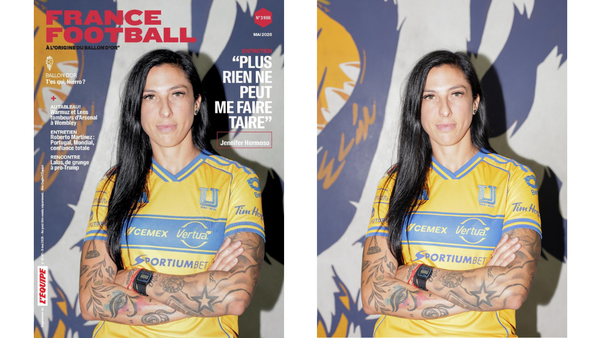
What photographing Jennifer Hermoso taught me about editorial photography, trust, and why magazine covers still matter.
Magazine covers still matter.
That may sound almost old-fashioned in a time dominated by feeds, algorithms, and endlessly scrolling images that disappear seconds after being seen. Yet the magazine cover remains a strange exception. It still carries weight, it still feels curated rather than accidental, and perhaps most importantly, it still says something about the image selected to represent an entire story.
Recently, I had the opportunity to photograph Jennifer Hermoso for the cover and main feature of France Football in Monterrey, Mexico.
Almost immediately, messages started arriving. How did this happen? How do you get a cover like that? Was it a huge production?
The reality, as is often the case in photography, is both simpler and more interesting than people imagine.
The Myth of the Magazine Cover
There is a persistent mythology surrounding editorial photography. Many photographers imagine magazine covers as highly choreographed productions involving large teams, elaborate lighting, limitless preparation, and near-cinematic levels of control. That world certainly exists, especially in advertising and luxury fashion. But editorial photography often operates much differently.
Assignments are frequently shaped by time constraints, access, logistics, travel schedules, editorial deadlines, and the unpredictability that accompanies photographing real people in real situations.
The photograph of Jennifer Hermoso was made in Monterrey as part of my ongoing editorial work for L'Équipe and France Football.
And if there is one thing editorial photography has taught me over the years, it is this: editors are not only commissioning photographs. They are commissioning trust.
That may sound less exciting than discussions about cameras or lenses, but it is probably the most important reality behind international editorial work.
How Editorial Assignments Actually Happen
Photography conversations today are often dominated by equipment. We debate dynamic range, autofocus systems, megapixels, and sensor performance with almost scientific intensity. Yet very few assignments are awarded because someone owns the latest camera body.
Editorial work operates differently. Publications need photographers they believe can deliver under real conditions. That means working quickly, adapting, solving problems, understanding the visual language of the publication, and returning with images that are not merely technically competent but editorially functional.
This assignment emerged through an ongoing relationship with L'Équipe and France Football here in Mexico. Like many editorial opportunities, it was not the result of a single portfolio email or a viral image. It was built gradually, quietly, through consistency.
And perhaps this part of photography receives less attention because it is not particularly glamorous. Relationships take time. Trust takes time. Editorial credibility takes time. But this is often how the work truly develops.
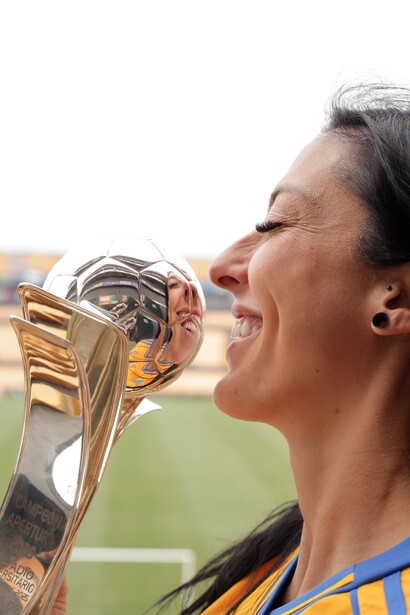
Photographing Jennifer Hermoso in Monterrey
Monterrey has its own atmosphere. Northern Mexico feels different. Its light, architecture, and emotional rhythm create a visual environment that contrasts with the romanticized Mexico often portrayed abroad. There is a tension between modernity and lived reality that I find visually compelling.
Whenever I photograph on assignment, I am not only thinking about the subject. I am paying attention to the psychological atmosphere of the place itself.
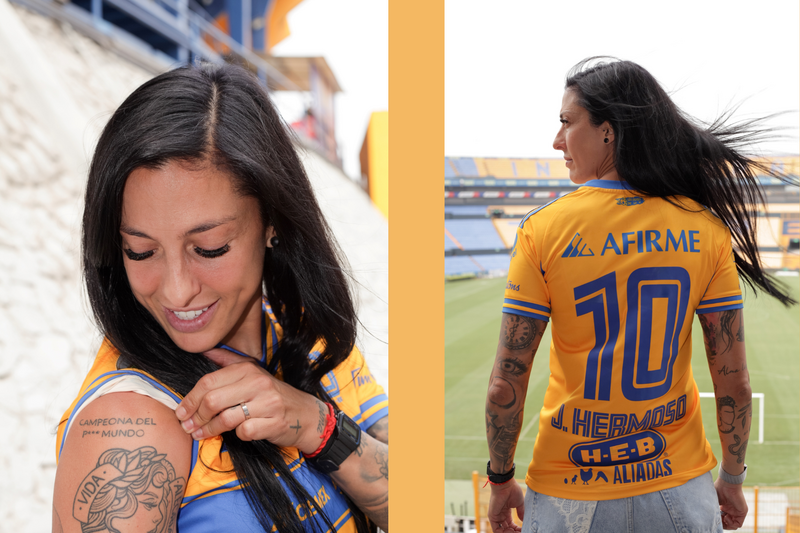
Portraiture, at least for me, has never been about manufacturing distance. I am not especially interested in portraits that feel excessively polished or emotionally sealed behind layers of production. What attracts me is presence, a sense of immediacy. And what can appear flat, with an evident presence of the flash, is my way to work, especially because I can't count on editorial assignments like this with assistants and all that paraphernalia of the big productions.
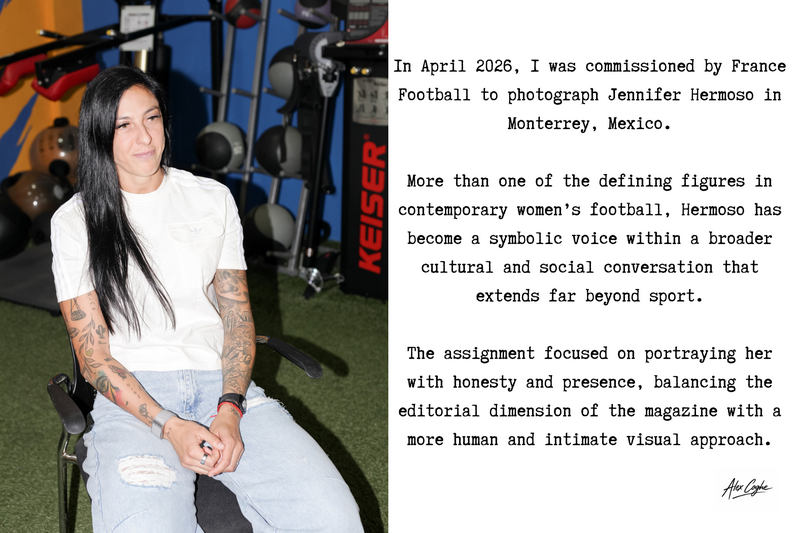
Jennifer Hermoso is, of course, an internationally recognized athlete. But during portrait sessions, celebrity or status becomes secondary. The challenge remains surprisingly simple: can the image feel human? That question matters more to me than perfection.
And editorial portraiture often becomes an exercise in balancing personality with clarity. Not performance. Presence.
An important note to keep in mind: I only had 10 minutes. I knew there was a strong possibility that this work would be chosen for the cover of the May issue of France Football, so in that limited time, I put everything I could into taking as many photos as possible, and especially two or three alternatives that could serve as hero images.
This brought to mind a famous Italian editor who, at a conference in Italy, highlighted how photographers often tend to forget the importance of vertical shooting, constructing it based on layout needs.
What Makes a Photograph Work as a Cover?
This is where many photographers misunderstand magazine photography. A strong portrait is not automatically a strong cover. The two are related but not identical.
Magazine covers have their own requirements. They need presence, immediate readability, graphic flexibility, and visual clarity. And perhaps most importantly, they need space.
A cover image must coexist with typography, headlines, logos, and the established identity of the publication itself. Sometimes photographers produce visually impressive images that leave no room for editorial design to breathe. Complexity can become the enemy.
The photograph selected by France Football worked, I believe, because it balanced multiple needs simultaneously. It retained personality and directness while remaining structurally open enough for the magazine's design language.
That balance matters more than photographers sometimes realize. The image is not competing with the publication. It is collaborating with it. And this collaborative dimension is one of the reasons I continue to find editorial photography so rewarding.
Why I Don't Believe Covers Are About Gear
Whenever photographers see editorial work, a familiar question usually follows: what camera did you use? I understand the curiosity. I love cameras too. But I have also become increasingly skeptical of the idea that equipment alone drives photographic opportunities.
No camera guarantees a magazine cover. No lens creates editorial trust. No specification sheet establishes professional relationships.
The photography industry can sometimes encourage the comforting illusion that buying better tools naturally leads to better opportunities. Reality is rarely so linear. What editors often value most is consistency, reliability, visual identity, and the ability to work under pressure without losing sensitivity.
This is not an argument against technology. Cameras matter. Good tools matter. But editorial photography remains profoundly human, and that human dimension still shapes opportunities far more than many photographers are willing to admit.
The Cover Is Not the Finish Line
Seeing your photograph on the cover of a publication with the history and cultural presence of France Football is undeniably rewarding, and I would be pretending otherwise if I denied that.
But perhaps the most meaningful aspect is not the cover itself, because covers can create a misleading narrative. People often see the visible outcome while missing the quieter process behind it: the years of photographing, publishing, traveling, maintaining relationships, adapting, and continuing to work long before any cover arrives.
The cover becomes visible. The process usually remains invisible. And perhaps that is the lesson I find myself returning to most.
Photography is rarely transformed by one moment alone. It evolves through continuity, through language, through trust.
Magazine covers still matter, but maybe not for the reasons we often assume. Sometimes they matter because they remind us that photography is still capable of existing beyond the speed of social media, that images can still be commissioned thoughtfully, edited carefully, and given space to speak. And occasionally, if everything aligns for a brief moment, that conversation finds its way onto a cover.

Join the Fstoppers community for free
-
Post comments and join in the discussions
-
Browse the site ad-free
-
Share your work and get featured in the community
-
Compete in the photo contests for fun and prizes
No comments yet