More and more photographers are slowing down on social media, and a growing number are quitting it outright. The shift traces back to a single change in how these platforms decide what gets seen, and it affects anyone trying to build an audience around their work.
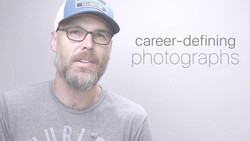
The frustration started at a community garden, where Evan Ranft made a batch of summer flower photos he loved and then realized he couldn't just post them. He had to invent some scheme to make people care. Ranft traces the problem to 2020, when TikTok introduced the interest-based algorithm and the rest of the platforms followed. He borrows the idea of "water cooler talk" to explain what got lost. Before the change, you curated your own feed by following people whose taste in music, movies, or photography you liked, and those repeated encounters built real connections. The predictive algorithm replaced that with an endless stream of whatever it thinks will hold your attention, which is why you open your phone to text your mom and lose 20 minutes to reels.
The knock-on effects hit artists hardest. Ranft lays out how the loss of that shared context forces photographers into a box. When your followers knew who you were, you could branch into a new style and still get honest feedback from people who understood your work. Now the first judge is an automated system, and a post outside your usual lane may never reach the people who follow you at all. That pressure pushes photographers toward adding text overlays, "what I see versus what I make" comparisons, and short-form video just to give the algorithm something to grab onto. A lot of people are opting out because they signed up to be photographers, not graphic designers or video editors. Ranft's own fix is to play the game at 50 percent, posting his photos with the edit and only occasionally putting in the extra work for a reel, often a behind-the-scenes clip since his face carries across each one.
There's a broader pattern here worth connecting to. What Ranft describes as a "lottery system" mirrors what writers, musicians, and small businesses have been saying for years: reach got unhooked from relationship. The value of a follower dropped when any post can go to anyone, and the rational response to a lottery is to buy more tickets, which usually means posting more and caring less about each piece. That tension between quality and quantity is the same one showing up across creative industries, and it explains why newsletters and owned platforms have come roaring back. Email lists, personal sites, and communities you actually control give you a direct line to people who chose you, immune to whatever the feed decides to do next week. If you're weighing whether to keep grinding or step back, the useful question is whether a given platform builds a relationship you own or rents you an audience you can lose overnight.
Ranft doesn't stop at the algorithm. He points to the boom-and-bust cycle it creates, where posts perform unpredictably and artists respond by trying to sell something with every single upload. He shares his preset recipes on his photo page but refuses to run automated comment funnels, because he wants the art to be the focus and selling on every post just doesn't sit right. The older model of building an audience and then offering prints, a book, or a gallery show still works, but it takes real effort to get a launch in front of your own followers, and sometimes you have to pay to promote it. He also names the final reason people are leaving: succeeding on social media now means treating it like a full-time job in itself, which leaves less time for actual photography.
Who this advice fits depends on where you are. If you're building a business and social media is your only pipeline to clients, some version of the hustle may be unavoidable for now. If you already have skills or connections, Ranft's suggestion to move toward traditional roles, agency work, production companies, or contract gigs, offers a way to treat photography as a craft again and let social media be optional. He mentions using Threads, Instagram stories, and the YouTube community tab to stay connected with people without watering down the images themselves.
Watch the full breakdown in the video above to hear how Ranft plans to adapt his own approach.

Join the Fstoppers community for free
-
Post comments and join in the discussions
-
Browse the site ad-free
-
Share your work and get featured in the community
-
Compete in the photo contests for fun and prizes
5 Comments
Why are we spending time building up a platform that steals our work and uses it to train AI? Then you have clients who primarily just want a photo session for social media images.
The kind of Instagram or what is called to be "social"-media is we feed a system for free to gain kind of "points" (called likes). We deliver by our consumption of stuff and by our feedback a quite detailed profile of ourselves for free to the owner of that site.
On the other hand the owner of the site is able to use the handed over data and resell it for marketing and ads.
We, the "users", better: feeders, keeping the machine running. That stuff the the fuel of the engine, being shown to others. They shall add their feedback (likes) on it to shape their profile.
Working for virtual "money": "points" and hope to be seen while exposing yourself to a billion dollar machinery. How crazy are we today?
My conclusion: Quite stupid, we shall exploit ourselves, working for nothing. My way out: stopping to use. Zero input. Real life, real humans, real conversations.
Fstoppers is the only social media I play with, but not for business but to share my thoughts and give help to others or give others something new to capture. Social Media places I do not think is a safe place to put my images for I am also a computer geek from the time the computer was used to do work of things the Osborne Executive Computer a CP/M operator of 1983 before the Apple or the IBM for it had a number of programs a WordStar was helpful due to the fact I became a supervisor and had to write evals of some 100 people AND I had problems with spelling could read but writing and looking up words took a lot of time. But i did not need to write out on legal paper but sending a 5 1/2 in floppy desk up the chain that also worked on the new IBM computers helped also to move me to advancements.
The main reason for not doing social media is yes I am over 70 and just a hobbyist BUT if looking at posts it is so easy to copy an image even if they have image marks they are so easy to get rid of and even a very small image can now be enlarged at will. So is it safe to put out there, I do not know even if here on Fstoppers but really sometimes why worry for it is what it is.
For me it is the sharing of info that I bought stacks of magazines to read and test in the paper days.
Playing is the name of the game or experimenting and finding your money capture or just doing something mind sees.
1. Who would believe your cameras can capture in aperture and get both sky and foreground
2. How close can you get
3. Getting a panorama looking image in one capture using a 10mm where many were on tripods on the very edge of this place doing multi layer panoramas in windy conditions.
4. Not knowing what f/# to use here f/22 and the camera captures figure in the sand looks like a pirate with a knife in his mouth and using bracketing 5 at +/- 2EV and when using HDR selection and in post and then seeing it and my foot prints where I walked over BUT did not see standing there but a little play time captured what no one sees or even believes most saying you PS it and this was before even getting PS.
This is where shared info of what we play with keep us going out there with new ideas
One share wedding photographers only go where there is light I but have not figured out why none ever think of getting a couple under the MW. It can be done shortly after sunset in June or July it is the wedding season!!!! Forever I have been out there under the stars all alone when in a location where at least 3 to 4 weddings every weekend are done!
For once I'm ahead of the curve, I stopped posting in 2025. No FOMO, no regrets.
I joined Facebook for one day in 2000 (or so). Took one look at what it was and never went back. Social media isn't for me.