Look back at a street photo from 1955, then look at one shot this morning. The old one carries something the new one can't quite reach, and it isn't that the photographer was talented.
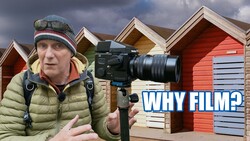
That gap between old and new photography is what Max Kent sets out to explain, and he does it without falling into the tired "film beats digital" argument. Kent starts with the gear people actually had. Early photography leaned on large format cameras and enormous negatives, so detailed you could almost count the bricks in a wall two streets away. Film ISO sat down around 25 or 50, which forced slower shutter speeds, especially indoors or on gray days. The result was images that read as razor sharp in places while carrying faint swirls of motion where something moved, and Kent argues that combination is a signature most people never consciously notice.
Medium format changed the size but kept the depth, and Kent makes a strong case for why those cameras still hold value today. The big negatives and the lenses produce a kind of dimensional separation that a phone can only fake. Portrait mode gives you AI-assisted blur that guesses where the edges are, while a real medium format frame at a wide aperture renders depth that feels physically present. Then the move to 35mm brought cheaper shooting and color, and with color came warm stocks, orange and yellow hues baked directly into the emulsion rather than applied by software. Grain, in Kent's view, works as texture rather than noise, which is why a high-ISO film shot feels authentic while a pushed digital file often looks muddy.
The part that lifts this beyond gear talk is Kent's claim that the world itself photographed better back then. He points at how cluttered modern cities have become, walls of towers where open streets used to sit, and how that visual mess makes clean composition harder to find. Busier streets, more cars, more overlapping bodies, and suddenly the foreground, midground, and background collapse into one crowded plane. A quieter street from a hundred years ago handed the photographer layers almost for free. Kent also raises how people related to a camera, from wide-eyed fascination in the early 1900s to today's guarded, self-conscious reactions, which changes what a lens can capture in the first place.
There's a useful principle hiding in all of this, and it connects to a wider shift happening right now. As phones lean harder into computational photography, blending exposures, smoothing skin, inventing depth, the images arrive pre-decided. A lot of shooters are pushing back by deliberately choosing tools that impose fewer defaults: older digital compacts, point-and-shoots, or simply shooting flatter files and building the look themselves. The takeaway you can apply this week is to control the variables Kent describes rather than letting the camera control them for you. Hunt for cleaner backgrounds, build real depth with actual distance between subjects, and pick a rendering that feels honest instead of the loudest HDR version. Whether you shoot film or a modern full frame body, the feeling comes from those decisions, not from the sensor alone.
Kent is honest that some of this is nostalgia, a longing for a time many of us never lived through. He ties it to how community used to work, his dad watching David Bowie in a village hall, versus a present where connection runs through an algorithm and a concert costs a fortune. That yearning colors how we read old images, giving them a warmth the present can't earn yet. His closing thought reframes the whole thing: the photos you take today will look nostalgic to someone in twenty years, whether or not you believe your era is worth remembering. The old aesthetic hasn't vanished, either. Film cameras still exist, old digital compacts are easy to find, and you can shoot a new camera while accepting it may not look "vintage" until time does the work.
Watch the full breakdown in the video above to hear the rest of Kent's argument about why older photos simply feel different.



Join the Fstoppers community for free
-
Post comments and join in the discussions
-
Browse the site ad-free
-
Share your work and get featured in the community
-
Compete in the photo contests for fun and prizes
5 Comments
Worth the watch. Thanks
I started shooting in the mid 60s. The criticism some use about slow autofocus or ISO things makes me laugh. We had to choose an ASA and do our own focusing. My photo career ended in 2007. I shoot digitally now. I don’t miss film much but I do miss using a cinema incident light meter. My exposures were always spot on. Focusing was handled in various accommodations. It was different. I do miss seeing a print appear in the developer tray, that never got old.
Reality is that film work looks different because it is different. Sad reality is that because film has gotten so expensive, most photographers that use film become very selective about what they photograph, at least I do. When I first started a sheet of 4x5 film cost less than $1.00, about 50 cents if I remember correctly. Now a sheet of black and white film, like T-Max 400 is about $5.00 +- depending on where you buy it. So we have to be selective. That makes us slow down. I have stopped using 4X5 color film since it is truly outrageously expensive and use a digital camera. Still, images made with film, especially black and white film, just have a different look to them. It's hard to describe. It's like they are sharply focused, but not razor sharp like many digital images I see. That is not a criticism of either media. It's just that they are different.
It seems really odd to me that the young man creating this video, 31 years old, would be yearning for the good old days. Do the math... he probably wouldn't even remember much of anything in the time in his life before the year 2000. I thought nostalgia was for old people. If you watch the video, listen to what he's saying at about the 14 minute mark:
"Nowadays if you want to meet like-minded people, it's just much harder. Community was outside most of the time. It was actually visible. People were visibly doing interesting things and meeting like-minded people. People were going to pubs and clubs and all this shit because that kind of community actually existed. Now it's all defined by your algorithm. And, yeah, it's a very different world in that respect. All of these things have accumulated to mean that older photos have such a different feeling. They have a feeling of a life we kind of yearn for, whether it was better or not. To us now, life is staring at your screen filled with anxiety, you know, for six hours a day at least for most people. Wherein the past it was probably hard, I'm not trying to say it was not hard, but I think we have that nostalgia for, you know, what we think of as maybe a simpler time. And, I mean, let's face it, things pretty much do suck pretty bad at the moment and it feels like it might get worse."
Wow... a 31 year-old person wishing for something that may never have existed except in one's imagination. Maybe that's the point. Every generation could have considered life to have been good or bad. The 1960s was definitely not easy. If life seems so bad though nowadays because of anxiety fueled by social media or the news or whatever is on that screen, then turn it off. The community that he thinks is gone still exists. People are still people, whether we're talking 2026 or 1926, or a thousand years ago. Bars and restaurants are overflowing with people after work. From a business standpoint, personal relationships still matter. Why these young people are so obsessed with producing YouTube videos, at the expense of developing productive business relationships, is beyond me. Max... life can be much better if you change what you're looking at.
Agreed.