

Ask around and you will get a confident answer: bigger pixels are better. They gather more light, so they produce cleaner images with less noise, which is why the low-megapixel low-light specialist supposedly beats the high-resolution body when the sun goes down. It is one of the most repeated ideas in photography, and it is mostly wrong. Not entirely wrong, which is what makes it stubborn, but wrong in the specific way it is usually meant.
Pixel pitch, the center-to-center distance between neighboring photosites, does have real consequences. They are just not the consequences most people assign to it, and the effect everyone cites, light gathering, is largely an accounting error made at the wrong level. Sorting out what pixel size actually controls, and what it does not, is one of the more useful things you can do for how you read a spec sheet.
What Pixel Pitch Is, and the Question People Think They Are Asking
A sensor of a fixed size can be divided into a few large pixels or many small ones. A full frame sensor at 24 megapixels has a pixel pitch around 6 microns; the same sensor area at 61 megapixels, as in the Sony a7R V, drops to roughly 3.8 microns. The individual buckets get smaller as you add more of them, because the total area they share does not change.
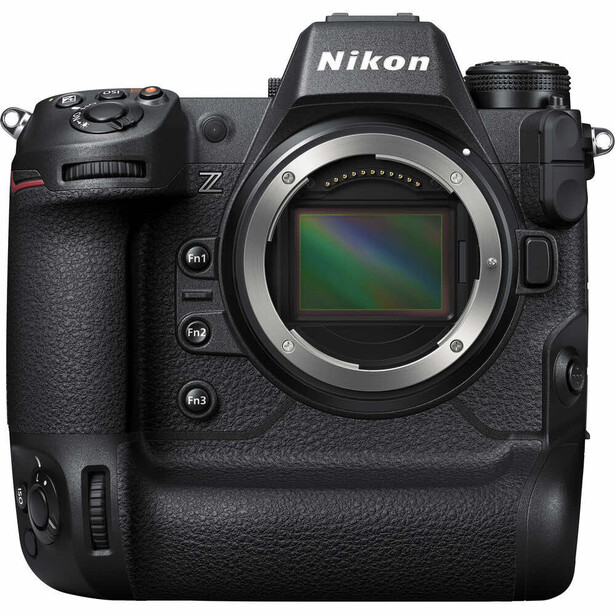
The intuition follows immediately and feels airtight. A bigger bucket catches more rain. A bigger pixel catches more light. More light means more signal and less noise, so bigger pixels must mean better images. Every clause in that chain is true except the conclusion, and the conclusion fails because of what it quietly leaves out: the rest of the buckets.
The Light-Gathering Claim Is Answered at the Wrong Level
Here is the fact that dismantles the folklore. The total amount of light a sensor collects is set by its area, the aperture, and the exposure time. It is not set by how you subdivide that area into pixels. Photons landing on the sensor do not vanish because you drew the pixel boundaries in different places. A 24-megapixel body like the Nikon Z6 III and a 61-megapixel one like the a7R V, given the same lens, aperture, and shutter speed, collect essentially the same total number of photons, because they present the same area to the same light.
Yes, each small pixel on the high-resolution sensor collects fewer photons than each large pixel on the low-resolution one, and each small pixel is therefore noisier on its own. But there are proportionally more of them covering the same scene. When you view the two images at the same final size, which is the only fair comparison, the high-resolution image is downsampled, and averaging its many noisy pixels together recovers the signal-to-noise ratio you would have measured from the larger pixels directly. The per-pixel disadvantage and the greater pixel count cancel. This is not a rhetorical trick; it is what measurements show when cameras are compared at matched output rather than at 100 percent on screen.

The 100 percent view is where the myth lives. Pixel-peeping a 61-megapixel file next to a 24-megapixel file shows the smaller pixels looking noisier, and they are, per pixel. But you are comparing a tiny crop of one image against a tiny crop of the other while pretending they are the same picture. Judge them as photographs, at the same display or print size, and the gap closes.
One honest qualification: this holds cleanly for sensors of the same format, because they present the same area to the same light. Real cameras are not identical photon counters beyond that. Sensor generation, quantum efficiency, microlens design, color-filter transmission, fill factor, back-illuminated construction, conversion gain, and raw processing all shift the result, sometimes noticeably. The point is not that two same-size sensors always perform identically regardless of pixel count. It is that pixel pitch is the wrong variable to blame for the differences that do appear.
Where the Big-Pixel Advantage Survives, and Why
The honest version of this story does not stop at "it all cancels," because it does not entirely cancel, and pretending otherwise is its own kind of misinformation.
Read noise, the noise added when each pixel's charge is read out and converted, does not scale down perfectly as pixels multiply. Downsampling reduces both photon noise and random read noise, but read noise does not always scale ideally with pixel count, and some shadow-noise components are not perfectly random or perfectly averaged away, so in the deepest shadows at very high ISO, where the signal is so faint that read noise dominates, a sensor built around larger pixels can retain a genuine edge even after the high-resolution file is downsampled to match. This is subtler than the folklore suggests. Take the low-light reputation of Sony's 12-megapixel a7S line, carried today by the Sony a7S III, against the 42-megapixel a7R II: in normalized stills comparisons the two were far closer than the pixel-pitch myth predicts, and in some tests the higher-resolution body actually matched or edged the a7S. The a7S advantage was most defensible in extreme-ISO use, in video, and in specific deep-shadow chroma and pattern-noise cases, not as a blanket stills result.
That points at a distinction the myth ignores entirely. Much of the a7S low-light legend is a video phenomenon, and video is not the same problem as stills. A stills camera can read the full sensor and let you downsample a high-resolution raw to recover signal-to-noise. In video the camera often cannot read every pixel fast enough, so it bins, line-skips, or reads a subset, and a sensor with fewer, larger pixels may simply be feeding its processing pipeline cleaner data to begin with. A low-megapixel body's practical low-light edge in video comes partly from readout, separate from the pixel-pitch argument for stills.
So the big-pixel camera does win in a specific corner: read-noise-limited deep shadows at high ISO, the domain of astrophotography, dim event and concert work, and low-light video. But that corner has been shrinking, because modern sensors fight read noise directly. On many modern sensors, dual conversion gain provides a second high-gain readout mode, often somewhere around the ISO 400 to 800 range, that sharply cuts read noise at the switch point, producing the small upward step you see in dynamic-range curves at that ISO. Combined with back-illuminated designs, this has narrowed the old shadow-noise gap so far that current high-resolution full frame bodies like the Sony a7R VI, which builds dual gain in at the sensor level, can deliver base-ISO dynamic range that would have looked exceptional by older full frame standards, while keeping high-ISO shadows far cleaner than the pixel-pitch myth would predict. The read-noise advantage of big pixels is real, but it is smaller every generation. The important correction throughout is that whatever edge remains comes from read noise not scaling perfectly, not from big pixels "gathering more light." The sensor as a whole gathered the same light. The difference is in how cleanly that light survived being counted.
The Effects That Have Nothing to Do With Noise
Once you stop asking pixel pitch to explain noise, it starts explaining the things it actually governs, and these are the reasons it belongs on your radar at all.
Small pixels reveal diffraction sooner, though here I have to be careful not to repeat the exact accounting error this article set out to correct. As you stop a lens down, the aperture spreads each point of light into a small disk, the Airy disk, and its physical size on the sensor depends only on the f-number and the wavelength of light, not on pixel pitch. At f/11 that disk is the same size projected onto a 24-megapixel sensor and a 61-megapixel one using the same lens. What differs is that the smaller pixels sample that blur more finely, so a high-resolution body shows the softening earlier when you inspect at 100 percent or chase maximum pixel-level detail. It reaches the aperture beyond which stopping down buys no more real detail sooner than a lower-resolution body does. Crucially, at matched output size the high-resolution image is not softer than the low-resolution one at the same f-stop; at worst they look the same, and often the high-resolution file still holds a slight edge. Stopping down does not penalize the high-resolution sensor against the low-resolution one. It only erases the high-resolution sensor's advantage. This still matters for landscape and macro work, where photographers reach for small apertures, because it tells you the f-stop past which extra megapixels stop earning their keep, but it is not a deficit.

Per-pixel dynamic range drops as pixels shrink. A smaller photosite holds fewer electrons before it saturates, its full-well capacity is lower, and since dynamic range at the pixel level is roughly the ratio of that capacity to the noise floor, each individual small pixel has less of it. At matched output size the many-pixel sensor claws much of this back through downsampling, similar to the noise story, but the per-pixel figure is genuine and it is why full-well capacity quietly tracks pixel size on the spec sheets that bother to list it.
Resolution eventually outruns the lens. Adding pixels only adds real detail if the lens can deliver detail at that scale. Past a point set by the optics and by diffraction, more pixels resolve the same blur more finely and hand you larger files for no additional information. This is the diminishing-return ceiling, and it is why the megapixel race periodically stalls: the constraint moves from the sensor to the glass in front of it.
Why Medium Format Looks Better, and Why It Is Not the Pixels
The cleanest proof that sensor area rather than pixel size does the heavy lifting sits in medium format. A Fujifilm GFX100 II packs 102 megapixels onto its sensor, and its pixel pitch is around 3.76 microns, actually smaller than the pixels on many full frame cameras with a fraction of the resolution. If pixel size were the source of image quality, that sensor would be unremarkable. It is not unremarkable, because its sensor is substantially larger than full frame and therefore collects more total light at the same f-number and shutter speed. The medium-format look comes from area, gathered light, and the tonal smoothness that follows from more signal, not from big individual pixels, which it does not even have.
That advantage comes with a string attached worth naming, because it is the same accounting discipline applied honestly. The larger format collects more light only at a matched f-number, and at a matched f-number it also renders shallower depth of field. Stop the medium-format camera down to match the depth of field of a full frame shot, and you raise the f-number, cut the light per unit area, and hand much of the total-light advantage back. This is why the format gap is smaller in practice than the sensor areas alone suggest, and why a modern full frame body with strong conversion gain can close on medium-format dynamic range at base ISO rather than trailing hopelessly. Area still helps, but it is not free.
The same logic runs in reverse down at the small end. A smartphone sensor with tiny pixels can produce a clean image in good light because there are plenty of photons to go around, and it struggles at night because its small total area starves it of light, not because its pixels are individually small. Sensor size is doing the work at both extremes.
So Does Pixel Size Matter?
Yes, but not for the reason it is famous for. It barely matters for noise once you compare images fairly, at the same output size, because total captured light is a property of sensor area, aperture, and exposure, and subdividing that area into more or fewer pixels does not change the light. It matters a little for noise in one real corner, the read-noise-limited deep shadows at high ISO, where larger pixels keep a modest edge that survives downsampling, and even that corner keeps shrinking as conversion-gain and sensor design improve. And it matters most for things that are not noise at all: the f-stop past which diffraction means extra megapixels stop adding detail, how much dynamic range each pixel holds, and the point past which more resolution stops buying more detail because the lens has nothing left to give.
When you next see two cameras with the same sensor size and wildly different pixel counts, the honest expectation is that their noise at matched output will be close, that the higher-resolution one will show more detail in good light with a good lens and will not be inherently softer at any given f-stop, and that the lower-resolution one will hold at most a small, narrowing advantage in the darkest, highest-ISO shadows. That is a far more useful prediction than "bigger pixels are better," and it has the additional merit of being true. If you want to see where a given camera actually lands, the derived measurements at Photons to Photos let you compare read noise and dynamic range across bodies directly, which is worth far more than counting the microns in a pixel.
For the shooting situations where these tradeoffs bite hardest, the low-light and high-ISO work that exposes the read-noise corner, the techniques in Photographing the World 2: Cityscape, Astrophotography, and Advanced Post-Processing are built around exactly the conditions where pixel-level noise stops being academic and starts showing up in your files.





Join the Fstoppers community for free
-
Post comments and join in the discussions
-
Browse the site ad-free
-
Share your work and get featured in the community
-
Compete in the photo contests for fun and prizes
14 Comments
Have you read "Exposure Time, f/ratio, Aperture Area, Sensor Size, Quantum Efficiency: What Controls Light Collection?" on Roger N Clark's website (clarkvision.com)? With your education in mathematics, you will understand it better than I. His conclusion, after much data and many equations, is that "the fundamental variables do not include f-ratio nor sensor size as commonly cited on the internet. While f-ratio and sensor size correlate with some uses of cameras and lenses, it is simply a correlation and not causation, so do not apply for all scenarios. The actual parameters that apply are the lens/telescope collection aperture (technically the entrance pupil), the solid angle of the object to be imaged, the exposure time and the system throughput."
Great explanation Alex, really good reference point for anyone :)
I wonder if the A7S III is also doing something fancy behind the scenes with that sensor that complicates things further. Allegedly its a 48MP sensor behind a 12mp Bayer filter, so I suppose there might be a small boost in noise performance from the averaging at least...
There is the app PhotoPills Spot Stars section that can answer many things including SS. You first select the camera then the lens MM then f/#. All the math is done for you so happy for this! I have both the A7RV and A7SM3 and will use many different MM lenses on each. A key thing when doing astro Milky Ways arch meaning you will do a night panorama to capture it and what you want is speed to do the 200+ degree panorama and yes most will turn off in camera NR but the best advice is to leave on why you can move to the next degree click while camera is in black out mode and then be ready capture the next image.
What you will find using the PhotoPills app is the higher MP camera will require or let you use a faster SS than the lower MP camera especially. So even using a f/4 lens like the Sony 2013 APS-C the E 10-18mm (15-27mm in 35mm) f/4 OSS works in full frame at 12mm that is so small and light atop of a Panorama rig you get a faster SS for the A7RV of 10.02s and the 15.32s in accurate selection and yes a f/1.8 is even faster. The point is both will capture the same image just one is faster to do the capturing. I like to do the capture on a beach with a tide result after merging all images as one contuse with no separation of surf levels with the whole final image.
A7RV using a 12mm f/2.8 8.37s or 14mm f/1.8 5.93s now that is very fast per image
A7SM3 using 12mm f/2.8 13.67s or 14mm f/1.8 10.47s
Most will say also the detail in the A7RV will be better also but I have not seen any difference even at 200% zoom but who is going to using a magnifying glass at a poster size print.
another point the 12-24mm and the 14mm both require up front filter holders as well as big glass filters that about $2k extra in cost to operation and extra weight meaning also extra torque on knobs when leveling the whole rig.
Both cameras have great NR to begin with on final output and to be honest yes the A7SM3 requires less ISO settings but but rarely on either camera ever above 6400 even on the darkest of places.
Yes today there are rear lens filters so the front ones are not needed.
also many want to use a higher MM lens and do multi level panoramas and on top of a tracker also so another reason to have a light weight lens but able to use a faster SS camera.
All things to think about when and what to carry out into that dark place at night and great to have PhotoPills to do the math for all things.
Thanks for the story. It's a good read.
I would like to point out that comparing sensors and pixel pitch while ignoring the camera itself, the quality and speed of the lens, image stabilization and other "tricks" done in cameras by software or hardware is missing a significant part of the argument to what makes one camera sensor better than another as it ignores other aspects of the camera design that cone into play with any given sensor.
Robert D. Fiete, while working at Eastman Kodak developed a figure of merit called Optical Q, where Q=(lamda * F#) /{pixel pitch), where lamda is the wavelength of light, that forms the basis for scientifically backed design choices camera makers have when designing a digital image capturing system.
Some references:
Robert D. Fiete, "Image Quality and λFN/p for Remote Sensing Systems." Optical Engineering, 38(7), 1999. (Introduces the Q metric.)
Robert D. Fiete, Modeling the Imaging Chain of Digital Cameras, SPIE Press, 2010, Chapter 8. This book gives the derivation, interpretation, and explains why Q = 2 corresponds to Nyquist sampling.
Some of which may be available via a web search.
Or ask your favorite AI a question such as:
How does Optical Q, as defined by Robert D. Fiete, where
Q=(lamda x F#) /{pixel pitch), where lamda is the wavelength of light,
support (or not) the argument by digital photographers that bigger pixels are better. Answer in layman's terms, but also mention and describe how diffraction comes into play.
Not to brag, but I've been told that I have gigantic pixels.
A pixel in the hand is worth 2 in the shop?
Is the photo in the story title AI generated? Or really bad stock - or both?
Stock.
Doesn't look like stock to my eye
We don't use AI images. https://shop.stockphotosecrets.com/index.cfm?/imagedetails_EN&imgid=103…
High-megapixel cameras absolutely outperform low-megapixel cameras in low light if you compare them fairly... and IMO the fairest way to compare them is to scale them similarly and adjust the noise reduction so they each have similar amounts of detail. At that point, the high-megapixel image (in my testing) is always cleaner.
When you aren't trying to do a side-by-side comparison, you just edit your photo so it looks as good as possible. In my experience, starting with a high megapixel image (even at ISO 12,800) produces better results.
Im a high iso warrior night rodeo 25600 is normal run two cameras switch to lower mp when going gets tough canon R5 canon R6ii rodeo lighting can be shocking plus need at least 1/1250 for fast action worst case scenario.
Even DXO doesnt save some images just have to bin them.
PS im out of my depth commenting on here just a knockabout semi retired farmer photographer
And no where up to standard on these pro forums but I read with interest
hi Alex, i felt that your article was enlightening
i had been using pixel pitch as a guideline for the selection of digital cameras
i had an observation which is forming slowly which is of Leica cameras which i have tried on a few occasions and examined images from the cameras in my post-processing software on my computer
i noticed that the colours of the 24 megapixel Leica SL 3-S seem to be better, i.e. more vibrant, than the colours of the 60 megapixel Leica SL-3. this was an observation based on photographic prints at our local Leica Gallery and was also the opinion of the Leica Sales Representative
i recently compared indoor photographs taken with the Leica SL-3 P and the Leica SL-3 with identical lenses of the same scene and the colours of the 44 megapixel SL-3 P seem to be slightly better although i believe good post-processing and good printing could make up for the difference.
i compared the colours of my Canon 5D Mark iv some time ago to the colours of the Leica SL-3 indoors and found the Leica skin tones to be far superior so megapixel count is not the only factor but the camera manufacturer's colour science and perhaps quality of material and technological excellence
i have two Hasselblad X1Dii's and currently three lenses and when i did a comparison of images shot at our local Leica Gallery, i found the white balance of the Leica's, in that particular instance the SL-3 and SL-2, to be better than that of my Hasselblad, however that was based on indoor lighting conditions and the two tone beige and red colour scheme of Leica Galleries, Hasselblad X1Dii image to the left and Leica SL-3 image to the right, images white balanced