Fast 35mm primes can change how you shoot everyday work, from weddings and street to casual video. A lens like the Sirui Aurora 35mm f/1.4 can give you shallow depth of field, low-light flexibility, and a look that feels high end without dropping flagship money.
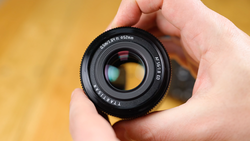
Coming to you from Adrian Alford Photography, this thorough video walks you through the Sirui Aurora 35mm f/1.4 lens in real-world use. You see exactly what comes in the box, including the padded pouch, caps, hood, and even a cleaning cloth, which matters if you want a lens that feels like a complete package rather than a barebones option. Alford spends time on the physical controls: the clicked or clickless aperture ring, the iris lock, the function button, and the AF/MF switch, all laid out in a way that lets you work by feel. The video also points out the USB-C port behind the rear cap for firmware updates, so you are not stuck with whatever AF behavior ships on day one. By the time Alford heads out into the field, you already have a clear picture of how this lens will handle in your hands.
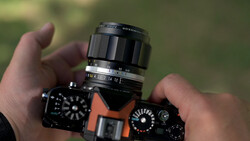
Once the lens goes on a Nikon Z7, the video shifts to what you probably care about most: rendering. Alford works through late spring scenes under blooming jacaranda and flame trees, using the f/1.4 aperture to separate subjects from busy backgrounds in a way that feels very deliberate rather than gimmicky. Focus transitions between foreground and background are silent and accurate, even if the AF speed sits in the “medium” category rather than blistering fast, which matters more for fast-paced work than for portraits or details. You also see a simple depth-of-field and bokeh sequence, stopping down from f/1.4 through mid apertures so you can judge how the background highlights clean up as you close the lens. There are more examples in the video that show how it behaves with people and motion that are worth studying closely.
Key Specs
-
Focal length: 35mm
-
Maximum aperture: f/1.4
-
Minimum aperture: f/16
-
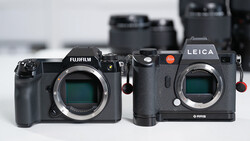
Lens mount options: Sony E, Nikon Z, Fujifilm X, Leica L
-
Format coverage: full frame
-
Minimum focus distance: 1.15' / 35.05 cm
-
Maximum magnification: 0.14x
-
Optical design: 16 elements in 11 groups
-
Aperture blades: 13
-
Focus type: autofocus
-
Image stabilization: none
-
Filter size: 62mm front thread
-
Dimensions: 2.99 x 4.05 in (75.95 x 102.87 mm)
-
Weight: 1.08 lb / 490 g
Alford also spends time on handling trade-offs you need to factor into your kit. There is no optical stabilization, so if you rely on slower shutter speeds you will want a body with in-body stabilization or be comfortable pulling out a tripod instead of trusting the lens alone. On the flip side, the all-metal construction and external controls give it a more serious feel compared to many plastic budget primes, which may matter if you are often working in tighter environments where gear takes a few knocks. In the sharpness test sequence, the center looks strong already at f/1.4, with the corners cleaning up noticeably by around f/1.8 and staying consistent through common working apertures like f/4 and f/5.6. If you already use the Sirui Aurora 85mm f/1.4 lens, this 35mm option clearly aims to be the wider companion that gives you the same smooth bokeh feel at a more general-purpose focal length.
The lens is listed at $549, which places it well below many first-party 35mm f/1.4 options while still trying to compete on build and optical quality rather than just being “cheap.” That combination of a fast aperture, respectable sharpness, and attractive bokeh is why Alford calls it a strong candidate for weddings, portraits, and low-light work, especially if you want one lens that can stay on your camera most of the day. There is more nuance in the way flare, contrast, and real-world AF behavior look across different scenes that you can only really judge by watching the clips rather than reading specs. Check out the video above for the full rundown from Alford.



Join the Fstoppers community for free
-
Post comments and join in the discussions
-
Browse the site ad-free
-
Share your work and get featured in the community
-
Compete in the photo contests for fun and prizes
No comments yet