

It's not megapixels, and it's not the autofocus system. The real difference between budget bodies and flagship cameras comes down to three terms you've probably seen but never understood: BSI, stacked, and global shutter.
Why You're Confused (and Why It Matters)
Every new camera announcement is a flood of acronyms. BSI, Stacked, Global Shutter. Who cares? It just sounds like marketing hype, right? Another spec sheet filled with jargon designed to make you feel like your current gear is obsolete. But here's the thing: you should care. These terms aren't just buzzwords thrown around by marketing departments. They represent the three biggest leaps in digital imaging since the megapixel wars ended fifteen years ago. Understanding them is the key to understanding why a new camera is (or isn't) a true upgrade, and more importantly, why that upgrade might actually matter for your professional work.
This isn't an engineering paper. This is a "decoder ring" to explain what these terms actually mean for your professional work, from low-light performance to rolling shutter. By the end of this article, you'll understand exactly which sensor technology matters for your specific type of photography, and you'll be able to cut through the marketing noise when evaluating your next camera body.
The Old Way: FSI (Front-Side Illuminated)
Let's start with the baseline: FSI, or Front-Side Illuminated sensors. This is the "classic" sensor design that was used for decades and still appears in plenty of cameras you can buy today. To understand why the newer technologies matter, you need to understand the fundamental problem with this design.
Think of a sensor as a bucket (the photodiode) trying to catch rain (light). An FSI sensor is a bucket with a "wire mesh" (the sensor's metal wiring and circuitry) sitting on top of it. The problem is that the wiring and transistors that read each pixel block a portion of the light from ever reaching the photodiode underneath. It's like trying to collect rainwater in a bucket, but someone put a screen door over the top of it. Sure, some water gets through, but you're losing a significant percentage right off the bat.
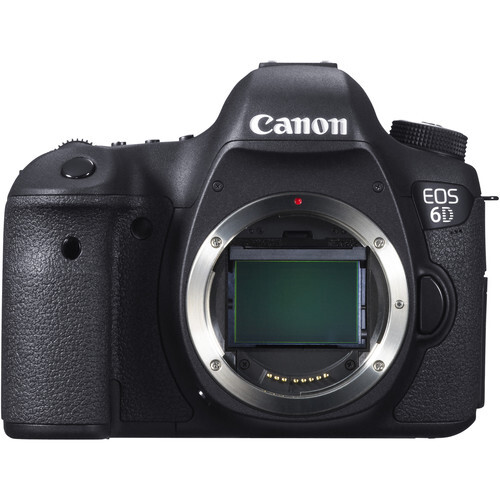
Where will you find FSI sensors today? You'll still encounter this technology in new entry-level cameras like the Canon R100, or in many older models on the used market. Interestingly, some current professional bodies still use FSI sensors. The original Canon EOS R5 and the R6 Mark II both use conventional front-illuminated sensors. To be clear, these are still excellent, capable cameras that produce beautiful images and are more than good enough for most professional work. The FSI architecture does mean they're giving up some of the light-gathering efficiency that BSI provides, but it's not a deal-breaker for many photographers. If you're buying used or looking at budget options, FSI is the technology you're likely dealing with, and it's important to understand its limitations.
The "Modern Standard": BSI (Back-Side Illuminated)
BSI (Back-Side Illuminated) sensors represent the first major revolution in sensor design, and they've become increasingly common in pro-grade cameras, though not universally adopted. If FSI is the "old way," BSI represents the modern standard that many serious cameras now use.
The fix for FSI's light-blocking problem was surprisingly simple in concept, even if it was difficult to manufacture: they flipped the bucket over. In a BSI sensor, the "wire mesh" (all that circuitry) is now on the bottom, the back of the chip, and the bucket (the photodiode) has a 100% clear, unobstructed view of the sky (the incoming light). By moving the "guts" of each pixel to the back side of the silicon, the light-gathering photodiodes get a direct, clean path to capture photons without any obstruction.
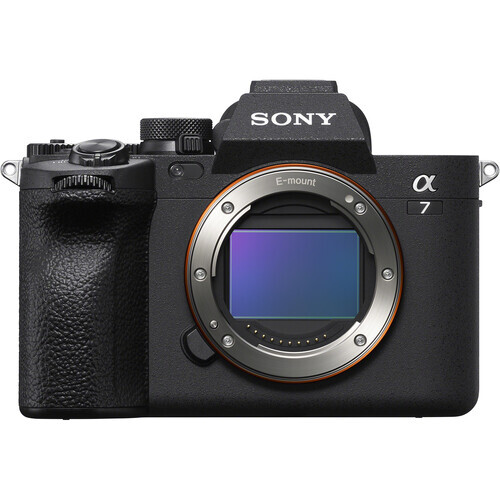
Where will you find BSI sensors as of late 2025? This is the "pro-standard" and "sweet-spot" technology. You'll find it in the majority of new mirrorless cameras targeting serious photographers, like the Sony a7 IV and Nikon Zf. It's also the foundation for high-resolution models like the Sony a7R V and Fujifilm X-T5. If you're shopping for a professional camera body today and it has a BSI sensor, you're getting modern light-gathering technology that represents a significant step up from older FSI designs.
The "Speed Revolution": Stacked BSI
BSI sensors solved the light-gathering problem, but there's another bottleneck in sensor design: speed. A Stacked BSI sensor represents the "next level" of sensor technology, and it's the most important feature for sports, wildlife, and video shooters. If you care about burst rate, rolling shutter, or silent shooting, this is the technology you need to understand.
Here's the analogy: a BSI sensor is a bucket with a clear view of the sky. A Stacked Sensor is a BSI sensor with a high-speed drainpipe (a dedicated RAM/memory chip) bolted directly onto the bottom. The problem it solves isn't about gathering light anymore. BSI already fixed that. The new problem is getting the data off the sensor fast enough. A traditional sensor reads each line of pixels sequentially, which takes time. A stacked sensor still reads line-by-line, but does it at an insane speed by having dedicated, ultra-fast memory and processing sitting right underneath the imaging layer.
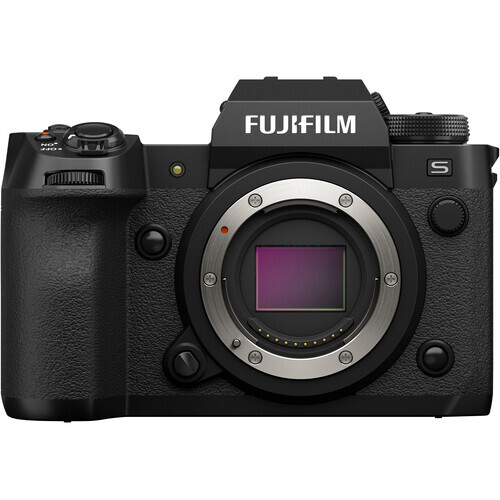
Where will you find stacked sensors as of late 2025? This is "flagship" technology. You'll find it in the Nikon Z9, Nikon Z8, Canon EOS R3, Canon EOS R5 Mark II, Sony a1, and the APS-C Fujifilm X-H2S. These cameras represent the cutting edge of speed and performance, and they all share this common technological foundation. The stacked sensor is what makes these cameras capable of the seemingly impossible burst rates and silent, distortion-free shooting that defines modern professional sports and wildlife photography.
The "Holy Grail": Global Shutter
Global Shutter represents the "future" of sensor technology for consumer stills cameras, and as of late 2025, it has just begun to arrive in the mirrorless market. Global shutters themselves aren't new technology. They've been used for years in industrial machine-vision cameras and in some cinema cameras, but bringing this technology to full frame stills cameras at a reasonable price point is a recent breakthrough. If stacked sensors are fast, global shutter sensors are instantaneous. Understanding the difference requires going back to how sensors actually capture an image.
Every sensor we've discussed so far, including the blazingly fast stacked sensors, uses what's called a "rolling shutter." They read the image line by line, from top to bottom. A stacked sensor is so fast at "reading" the rain in the bucket line-by-line that it's almost instant, fast enough that rolling shutter becomes imperceptible in most situations. A Global Shutter is instant. It doesn't "read" the lines sequentially at all. Instead, imagine it puts a "lid" on every bucket at the exact same microsecond, capturing all the light at once. It captures every single pixel on the entire sensor at the exact same moment in time, rather than scanning through the frame.
There is an important catch to discuss, however. This technology is brand new and expensive to manufacture. Early versions may have compromises to make the technology work at all. Some global shutter sensors have a higher base ISO than their rolling shutter counterparts, or slightly less dynamic range, or other trade-offs. These are engineering challenges that will likely be solved over time, but for now, they're real considerations. You're getting that perfect motion capture and unlimited flash sync speed, but you might be giving up a stop of dynamic range or clean low-ISO performance. Whether that trade is worth it depends entirely on what you shoot.
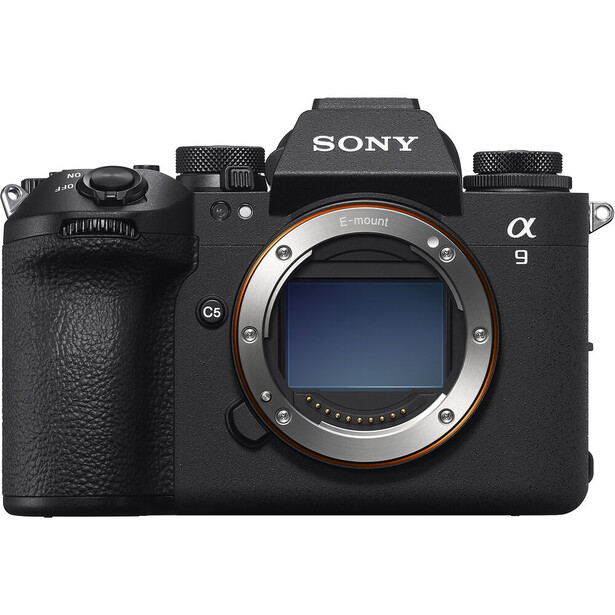
Where will you find global shutter sensors as of late 2025? This is the absolute bleeding edge. The main camera pioneering this technology in the full frame market is the Sony a9 III. This is a specialized tool for photographers who must have absolutely zero distortion in fast motion, and it represents the beginning of what will likely become the standard in professional cameras over the next decade.
Which "Tech" Do You Actually Need?
So now you understand the technology. But which one matters for your work? Let's break it down practically.
FSI: This is older technology that sacrifices some light-gathering efficiency. You'll find FSI sensors on entry-level cameras and some older bodies. Interestingly, a few current professional cameras still use FSI sensors, and they can deliver excellent results. However, if you're choosing between two cameras at a similar price point and one has BSI while the other has FSI, the BSI model will generally give you better low-light performance and cleaner files at high ISOs. If you're looking at a camera and it doesn't explicitly say it's using a BSI and/or stacked sensor, it's likely FSI.
BSI: This is the pro-standard and sweet spot for 90% of photographers. It offers the best balance of price and performance, and it's more than capable for the vast majority of professional work. If you're a portrait photographer, landscape shooter, wedding photographer, or general commercial shooter, a BSI sensor will give you excellent image quality without breaking the bank. Look at cameras like the Sony a7 IV or Nikon Zf for all-around work. If you need high resolution, the Sony a7R V uses a BSI sensor and delivers stunning files. Unless you have a specific need for speed or absolute zero rolling shutter, this is where you should be shopping. It's worth noting that some excellent professional cameras, like the Canon R5 and R6 Mark II, still use FSI sensors and deliver great results, but BSI represents the current standard for light-gathering efficiency.
Stacked BSI: This is the game-changer for speed. If you are a professional sports photographer, wildlife photographer, or event photographer who needs to capture peak action, this is your upgrade path. This is the technology inside the Nikon Z8/Z9, Canon EOS R3, and Sony a1. The speed, silent shooting capability, and blackout-free EVF are worth the price premium if your work depends on capturing split-second moments. For video shooters, particularly those shooting fast-moving subjects or working handheld, the reduced rolling shutter alone can be worth the investment. The question to ask yourself is simple: do I regularly miss shots because my camera isn't fast enough, or do I struggle with rolling shutter artifacts in my video work? If yes, stacked BSI is the answer.
Global Shutter: This is the "holy grail" for distortion-free motion, but it's a specialized tool. It's revolutionary for photographers who must freeze perfect, unwarped motion, like photographing a golf swing for swing analysis, capturing propellers or helicopter blades for aviation work, or doing high-speed flash work where you need sync speeds faster than any mechanical shutter can provide. Right now, this technology is pioneered by the Sony a9 III, and it's aimed at a specific subset of professional shooters. For most photographers, the benefits don't outweigh the costs and potential compromises yet. But if you're in that niche where global shutter solves a problem that's been holding you back, it's an incredible tool.
Conclusion
The sensor is the new film stock. A decade ago, we stopped caring about megapixels because they all became good enough. Now, the sensor architecture is the spec that actually matters. Choose the sensor technology that matches your work, and you'll get a camera that's a genuine tool upgrade, not just a spec sheet improvement.





Join the Fstoppers community for free
-
Post comments and join in the discussions
-
Browse the site ad-free
-
Share your work and get featured in the community
-
Compete in the photo contests for fun and prizes
5 Comments
It's a lot more than sensor tech that separates a $6K camera from a $2K camera. Speed, build quality, features, and many other factors determine the cost. The responsiveness of something like a Sony A1 II is WAY ahead of a camera like their A7 V series.
It would have been nice if you also mentioned the OM System OM-1, OM-1 II and OM-3, in your list of cameras with a Stacked BSI sensor.
especially since they are much cheaper than most other stacked BSI options…
Interesting how you call front side illuminated sensors having a problem then try to say the Canon R5 I and R6 I are still excellent professional cameras (despite their FSI sensor) and produce very good images. So what's the problem? Too many megapixels? From many reviewers the image quality of the older technology R5 is as good if not better than the R5 II.
I know it’s been said, but it’s worth repeating — you missed the OM System cameras with stacked BSI CMOS sensors: the OM-1, OM-1ii and the OM-3 — all professional-spec cameras that excel at High ISO performance, 120fps, 50fps raw files with AF and AE, and silent shooting.