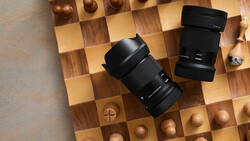
A lens that can replace a bag full of primes, while still being lighter and smaller than its predecessor, is not something you see every day. The Sigma 17-40mm f/1.8 DC Art lens pushes APS-C systems into territory that used to be reserved for much more expensive gear.
Coming to you from Gordon Laing, this thorough video takes you through the Sigma 17-40mm f/1.8 DC Art’s strengths and what sets it apart in a crowded field. On Canon APS-C bodies, the lens gives you an equivalent range of about 27 to 64mm, and on others, it’s around 25.5 to 60mm. That means you get coverage from wide angle to slightly beyond standard, all while enjoying a fast aperture. The f/1.8 maximum makes it a unique tool, giving you get flexibility for portraits, low-light work, or general walkaround use. Laing points out that if you’re satisfied with f/1.8, this one zoom could easily stand in for several primes.
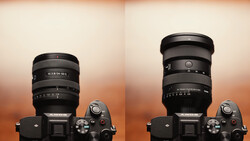
This lens builds on Sigma’s track record with fast APS-C zooms. The classic 18-35mm f/1.8 DC Art lens for DSLRs was beloved for a reason, but it was heavy and big. Now, the 17-40mm is slimmer, shorter, and about a third lighter at 560 g, all while extending its range at both ends. It uses 67mm filters (more affordable than before) and maintains weather-sealing, including a rubber gasket at the mount. The design tweaks for each mount are practical: on the Canon RF, you get a clicky control ring for exposure adjustments; on other versions, there’s a traditional aperture ring. You also get two custom buttons and a switch for AF/MF. Importantly, there’s no optical stabilization, so you’ll rely on your camera body if you want that feature.
Key Specs
-
Focal Length: 17 to 40mm (25.5 to 60mm equiv.)
-
Aperture: f/1.8 to f/16
-
Lens Mounts: Sony E, Canon RF, Leica L, Fujifilm X
-
Format: APS-C
-
Min Focus Distance: 28 cm
-
Max Magnification: 0.21x
-
Optical Design: 17 elements in 11 groups
-
Aperture Blades: 11, rounded
-
Autofocus, no image stabilization
-
Filter Size: 67 mm
-
Dimensions: 72.9 x 115.9 mm
-
Weight: 560 g
If you shoot JPEG, lens profiles for distortion and vignetting are automatically applied, but raw shooters will want to add them in post to avoid barrel distortion, especially at the wide end. Autofocus is quick, quiet, and smooth for both stills and video, with face detection performing well for environmental portraits and presentations. At 40mm, you can easily blur backgrounds for portraits or small group shots, and focus breathing is kept in check, especially at the longer end.
Sharpness is strong across the frame, even wide open at f/1.8. Stopping down just slightly brings a small boost in detail, but for most uses, you’re already getting crisp images. Vignetting and corner softness are there, but not to the point of distraction, and lens corrections handle most of it. Background blur is well-behaved, with minimal outlining, and the rounded aperture blades keep bokeh smooth even when stopped down. Macro performance isn’t this lens’ focus, but you can get decently close for small subjects if you need to.
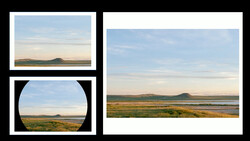
Laing’s video also covers how the lens behaves on a full- rame camera and how much of the frame you can actually use, depending on crop mode, but that’s an area you’ll want to see demonstrated in the video, so check out the video above for the full rundown from Laing.


Join the Fstoppers community for free
-
Post comments and join in the discussions
-
Browse the site ad-free
-
Share your work and get featured in the community
-
Compete in the photo contests for fun and prizes
No comments yet