
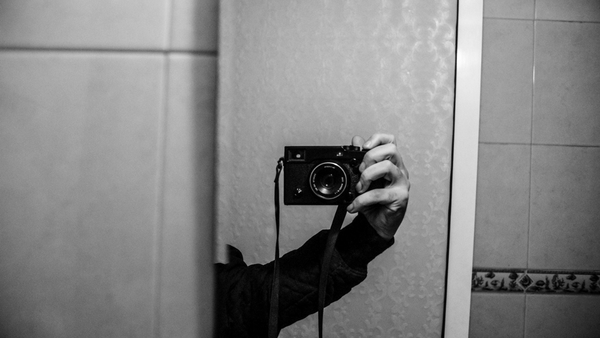
Photography, despite what the internet has spent the last fifteen years trying to convince you, is not about photography. It is about life. Photography is simply what happens when life collides with awareness. The camera is not the source. It is the witness.
This sounds obvious, which is precisely why so many photographers miss it. We live in an era in which an astonishing number of people can explain the optical formula of a lens but struggle to explain why a scene moves them. They know the difference between global shutter and rolling shutter, yet remain curiously unfamiliar with grief, solitude, ecstasy, exile, lust, or the particular melancholy of seeing your childhood home turned into an Airbnb.
The camera industry, bless its relentless capitalist heart, has done a marvelous job of selling machinery as destiny. Every year, another miracle box arrives, promising revolutionary autofocus, cinematic dynamic range, and enough computational wizardry to compensate for the fact that the owner has never read a novel longer than an Instagram caption. And still, the masterpieces refuse to cooperate. Cameras do not create photographs any more than fountain pens create literature. If they did, every office supply store would be a publishing house.
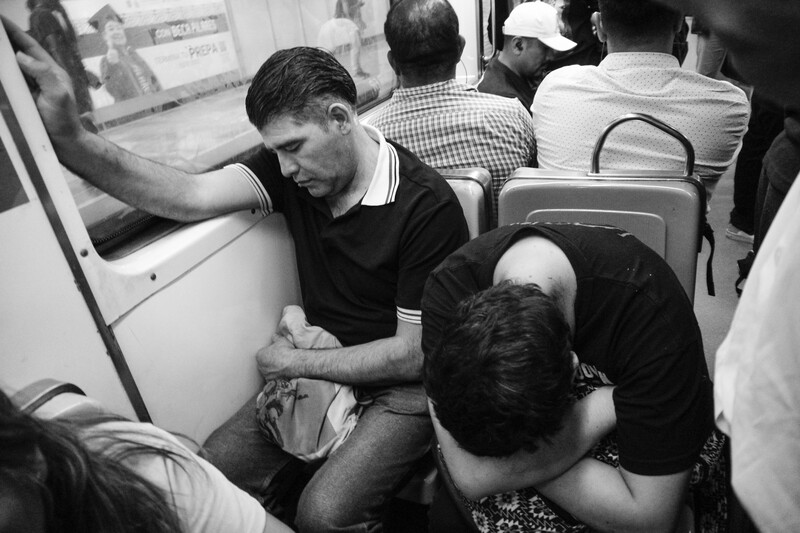
"The artist's world is limitless," James Baldwin wrote. "It can be found anywhere, far from where he lives or a few feet away. It is always on his doorstep." Notice what Baldwin does not mention: megapixels.
Henri Cartier-Bresson understood painting before he understood photography. Robert Frank carried jazz, Beat literature, and the uneasy pulse of postwar America into every frame. Josef Koudelka photographed displacement because he had lived it. Nan Goldin did not document intimacy from the outside. She bled into the work. Her photographs are a punch in the stomach. Photography has always borrowed its blood from elsewhere.
The great photographers are rarely obsessed only with photography. They are readers, wanderers, listeners, thieves of culture. They steal from cinema, from poetry, from architecture, from overheard conversations on trains, from lovers who left, from cities that refused to welcome them. They know, instinctively, that art is a borderless republic. A photographer who studies only photography is like a chef who eats only salt.
Akira Kurosawa once said, "To be an artist means never to avert one's eyes." That is not a technical instruction. It is a way of living. To photograph well, you must first become someone worth trusting with a camera. Someone porous. Someone attentive. Someone capable of being changed by what they see.
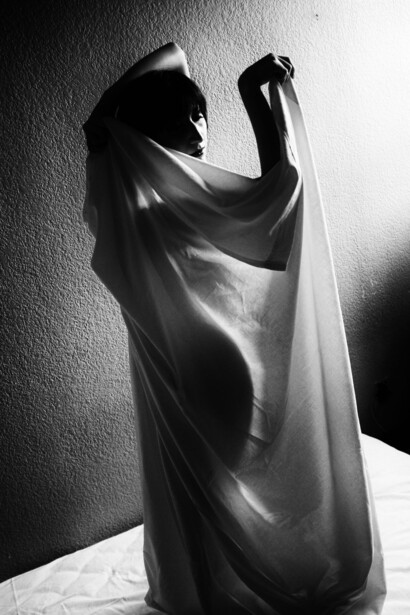
How much life is there in your photography? Not style. Style is often just repetition with better marketing. Not technique. A machine can learn technique. Some already have. Life. Your life.
Have you ever been truly lost? Not in the charming, cinematic sense, but in the real sense, where the language is unfamiliar, the streets are indifferent, and you realize how little the world requires your understanding. Have you loved someone who altered your sense of time? Have you sat in a hospital corridor at three in the morning? Have you walked through a city after midnight, when it seems to belong only to drunks, insomniacs, and photographers? Have you read Dostoevsky and felt slightly less certain about human nature afterward? Have you watched a film by Tarkovsky and understood, perhaps for the first time, that time itself can be sculpted?
These things matter. Not because they make you interesting at dinner parties, though they may help. They matter because photographs are, at their core, accumulations of consciousness. Every frame contains not just what you saw, but what you have lived.
Susan Sontag wrote that photographs are a way of imprisoning reality. True enough. But before reality can be imprisoned, it must first be recognized. And recognition requires experience.
Walker Evans knew literature. Saul Leiter knew painting. William Klein knew design, cinema, typography, chaos. Stanley Kubrick began as a photographer, and one can see it in every obsessive frame he ever directed. Wong Kar-wai photographs longing even when using motion. Federico Fellini understood that memory is often more truthful than fact. Good photographers study photographers. Great photographers study everything. Omnivores. And hungry for curiosity.
There is a reason why the work that endures tends to feel larger than photography itself. It speaks not merely about composition or light, but about loneliness, power, desire, absurdity, tenderness, alienation. It addresses the same themes that animate Tolstoy, Bergman, Morrison, Caravaggio, and Miles Davis. Art is one long conversation conducted across centuries. Photography does not sit outside that conversation. It either joins it, or it becomes decoration.
The danger of the digital era is not that photography has become too accessible. Accessibility is a gift. The danger is that photographers can now spend their entire creative lives trapped inside a hall of mirrors, consuming endless photography content made by people who themselves are consuming endless photography content. An ecosystem of aesthetic inbreeding. Images referencing images referencing images, until the original experience has been diluted beyond recognition. Walter Benjamin worried about the loss of aura in mechanical reproduction. He would have had a field day with preset packs.
Read Baldwin. Read Sebald. Read Didion. Watch Ozu. Watch Antonioni. Watch Claire Denis. Listen to Coltrane. Listen to Piazzolla. Listen to the way a city sounds at dawn after rain. Visit museums. Learn history. Pay attention to people who have no interest whatsoever in photography. Especially them.
Photography is not an isolated discipline. It is an extension of your relationship with existence. If your life is narrow, your photographs will eventually confess. This can be uncomfortable. It is far easier to buy a new lens than to cultivate a richer interior life. Amazon delivers lenses overnight. Wisdom, regrettably, ships much slower. But the camera cannot compensate for emotional illiteracy.
Personally, I've been influenced by a wide variety of things, but I particularly love neorealist cinema and the nouvelle vague. As for music, I go from The Clash, Motörhead, and Judas Priest to Björk, Tom Waits, and Herbie Hancock. In literature, my favorites include Alberto Moravia and Henry Miller. All this and much more flows into my photographic vision.
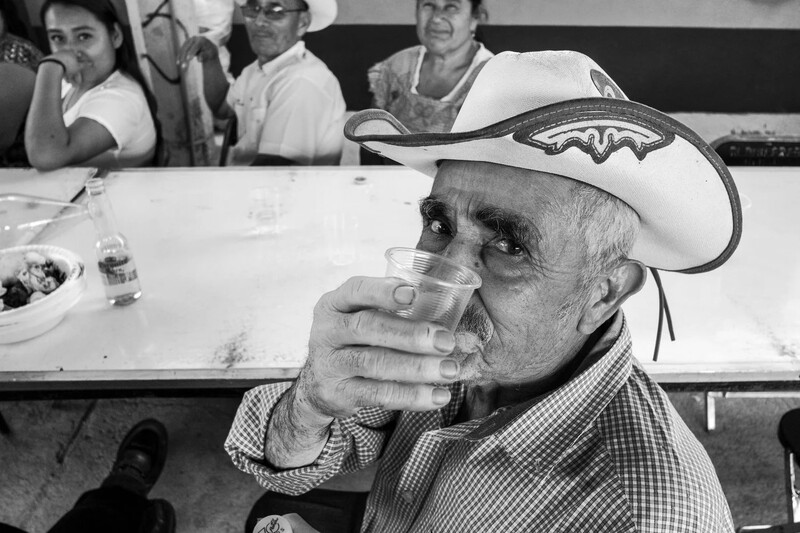
Marcel Proust wrote, "The real voyage of discovery consists not in seeking new landscapes, but in having new eyes." Photographers quote this line endlessly, usually while standing beside a tripod worth more than a used car. But it remains true despite the company it keeps.
New eyes come from living. From failing. From reading. From suffering. From paying attention. From allowing the world to leave scratches.
Photography is not about collecting scenes. It is about developing a way of seeing. And seeing is not neutral. It is shaped by every book you have loved, every city you have wandered, every humiliation you have survived, every person you have forgiven, every lie you have told yourself and eventually abandoned. That is why two photographers can stand in the same place, at the same time, with the same camera, and produce entirely different images. They are not photographing the same world. They are photographing themselves encountering it.
The question, then, is not whether you own the right camera. It never was. The question is whether you are living in a way that gives the camera something worth recording.
Because in the end, photography is not about photography. It is about curiosity. It is about empathy. It is about memory. It is about desire. It is about mortality. It is about standing in the stream of time and saying, however briefly, I was here, and this mattered. The photograph is merely the evidence.

Join the Fstoppers community for free
-
Post comments and join in the discussions
-
Browse the site ad-free
-
Share your work and get featured in the community
-
Compete in the photo contests for fun and prizes
15 Comments
This is a great article and spot on insight. When I was a young man I was influenced by John Berger's "Ways of Seeing" (TV series and book) and I think Alex captures a lot of the essence of Berger's message and makes it contemporary.
"The camera industry, bless its relentless capitalist heart, has done a marvelous job of selling machinery as destiny." says it all.
Thanks a lot for your comment, Marcus! Wow, john Berger is one of the great ones in writing certain essay. The simple fact you quote him here makes my day.
I enjoyed reading the article. So if photography is not about itself, what then is about itself - or nothing at all? Just curious to know.
Also, I am reminded of Thomas Beechman, a famous conductor of yesteryear who apparently said: "The plain fact is that music per se means nothing; it is sheer sound, and the interpreter can do no more with it than his own capacities, mental and spiritual, will allow, and the same applies to the listener." This applies to a great deal of the arts, including photography, if you rephrase it.
Thank you, I'm glad you enjoyed it.
That's a fascinating question. My point wasn't that photography is about nothing, but rather that photography, at its best, is a medium rather than a subject. We often talk about cameras, lenses, techniques, and genres, yet the photographs that stay with us are usually about people, relationships, emotions, history, beauty, conflict, memory, or the human condition: to make it shorter, about life.
As for what is "about itself," perhaps very little. Most meaningful things seem to point beyond themselves. Language is not about language, but about communication. Music is not about notes, but about expression. Photography, in the same way, is often at its strongest when it helps us see something beyond photography itself.
At least, that's how I see it.
As with many things, it may come down to a definitions but maybe more than that. What is photography? By pointing beyond itself does it not include itself? Does not everything point beyond itself. Meaning of something is entirely relational and words are linked to words are linked to... etc.. I like your comment about photography being about life. I agree. But my take is that conventional photography is mostly less about life than about a technically good picture. On occasion it says soemthing about life and sometimes includes a narrative. If one wishes to know more about life, experimental and avant-garde and contemporary photography are the way to go - at least in my opinion. In conventional photography, one usually asks - is this a technically good image? Is there a decisive moment? It is largely based on rules that are very structured (rule of thirds etc. Am I so tired of that mantra). In the other genres mentioned, the question is mostly why did you take the picture and what does it say about the human condition? What is hidden and what does the photograph suggest beyond its image? The focus is a lot less on technical proficiency but on questioning the world. There are exceptions and conventional photography can do an exceptional job in this regard, but in general, less so.
I agree that photography becomes more interesting when it asks questions about life rather than merely demonstrating technical proficiency. Where I differ is in separating "conventional" photography from experimental or contemporary practices. Some of the deepest reflections on the human condition have emerged from documentary and street photography, while some highly conceptual work can remain purely formal. For me, the distinction is not between genres, but between photographs that merely describe and photographs that reveal. Technical skill and meaningful inquiry are not opposites. The best photography, regardless of category, points beyond itself and ultimately returns us to life.I could see this even in my work on assignments, where for sure I am asked to stay under certain guidelines, but in the end I find myself there, with people in front of me. And that is life. No matter how structured the brief may be, no matter how much attention is paid to composition or technical execution, what ultimately matters is the encounter itself and what it reveals. To me, meaning is not exclusive to experimental or contemporary photography. It can emerge anywhere, because photographs are made by human beings looking at other human beings. The question is not so much which category a photograph belongs to, but whether it is able to say something beyond its own surface.
I am afraid that I mostly disagree with you. While there is obviously some overlap between some genres, to argue that for example, conventional and avant-garde / contemporary / experimental photography's differences are merely nuanced is to not appreciate avant-garde / contemporary / experimental photography’s, origins, and different purposes. They ask radically different questions to that of conventional photography (although at times contemporary photography can include the conventional and avant-garde). To say or imply that they are more or less similar by virtue of meaning creation or to use meaning creation as a universal umbrella, is incorrect. Avant-garde photography is radical, disruptive, and oppositional in ways that conventional photography can seldom (I did not say never) produce. Conventional photography is, well, conventional (tried tested and repeated many times over. Repetition and fine tuning is what it mostly seems to love), and it is not avant-garde by a country mile. One will not find repetition, fine tuning, and a keen interest with the rule of thirds, ISO, aperture and shutter speed among avant-garde photographers. One will find that often (I did not say always) among conventional photographers where tinkering at the margins is de rigueur more often than not. Conventional photography and avant-garde photography are fundamentally and radically different. There is little agreement between the two there, other than both proponents hold a camera. In short conventional photography is there to please and perfect, while contemporary, experimental, and avant-garde photography is there to provoke, overturn, and disrupt. When taking a photograph, one ideally should have a theory or an approach guiding one to figure out one’s purpose and how one will take the photograph. Merely taking a photograph without that in mind is like shooting with the hope that one of one’s images will hit some mark or other or produce some meaning or other.
I appreciate your thoughtful reply, and I certainly agree that avant-garde and experimental photography emerged from different historical contexts and often pursue different aims. I would never argue otherwise. My disagreement is with the sharp division you draw.
I don't believe conventional photography exists merely to please and perfect, nor do I believe experimental photography exists solely to disrupt. History offers countless examples that complicate those categories. Much of documentary and street photography has challenged assumptions and transformed the way we see society without belonging to the avant-garde. Likewise, not every experimental work is necessarily radical simply because it rejects convention.
I also question the idea that theory must always precede the photograph. Sometimes it does, and sometimes the encounter itself produces understanding. Many great photographers have spoken of discovery rather than execution of a preconceived thesis. The camera can be a tool not only to illustrate ideas already possessed, but to arrive at ideas not yet known.
When I photograph, whether on assignment or not, I am not merely hoping that meaning will accidentally appear. Meaning often emerges through attention, through being present, and through the relationship established with the world in front of me. Life itself is not theory first and experience second. Often it is the opposite.
Ultimately, I think the most interesting distinction is not between conventional and avant-garde, but between photographs that merely repeat formulas and photographs that reveal something, however quietly, about ourselves and the world. Both traditions are capable of producing either.
All of photography, from my point of view, is an act of discovery. I sincerely believe that my conventional photographs of nature explore life every bit as much as any contemporary art form, as do your images which capture the human spirit.
After all, what is life? A flower, a rushing stream, a moment of grief... all of these images reveal the essence of life. And so photography becomes my relationship with life. Modern art merely adds another dimension; another technique. Impressionist art, abstract art, cubism, and ICM photography don't say any more or any less about life than an old-fashioned photograph... they're just new or different ways of expression.
Fantastic article... the best I can remember reading here in Fstoppers. My love affair with black and white photography was initially inspired, not from seeing Ansel Adams's famous landscape photos, but from Humphrey Bogart and Ingrid Bergman in the film Casablanca. Lost track of how many times I've watched it.
My best photographs are those which I've had a deep personal connection with the subject: a place that felt like home, a person, a flower. I dabbled in commissioned headshot photography for a year or two, but never succeeded in producing anything more than something which looked like a passport photo. I am not a portrait photographer. Put my wife in front of the camera though, and the photograph comes alive. I know her... I know her thoughts, emotions and expressions. Making a photograph is not made with the intent of winning a trophy. It's not just a destination. It's a personal connection with what we hold most near and dear to our hearts. We see with so much more than our eyes. Thank you for taking the time to write and share such an inspiring article.
Thanks to you, Ed because in your comment you show to get the sense of my speech so well. I know that my opinion is rare in this world where everything needs a label and, as you say, about winning a trophy. Yet even though I'm a professional photographer and therefore photography involves a lucrative pursuit, what keeps me most attached to continuing to practice photography isn't the filthy money, but all the experiences I've gained through photography, the human connections, the pains and joys. Photography as a tool for translating human experiences.
It's not complicated. Photography is more about the relationship between the photographer and the subject of his or her picture, and less about the relationship between the photographer and the camera. People who are happy with that relationship are often more satisfied with the images they make.
Money is not a bad thing though. It pays for a lot of the experiences in life that you'll look back and cherish when you get older, as well as some good food and drink along the way too. But the goal of making money for the sake of making money does not solve everything. Money can't guarantee good health, mental or physical. I always felt like the freedom of working for myself – setting my own hours, never having to set an alarm clock, quitting work early in the afternoon to play some golf, making friends that spanned decades – was worth far more than navigating a high-paying corporate job stuck in some cubicle. The commute to my office is about ten steps down the hall at home. It's what has made work not seem like work.
It is nice to find a way to reason like yours in this era and I completely agree with you.
Perfect Article. How true! I wish i could be so eloquent.
Thanks for your appreciation, here, Robert.