
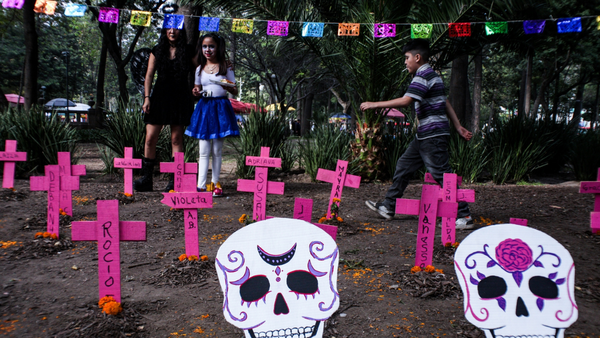
The first mistake people make when photographing Día de Muertos is thinking they already understand it.
The makeup seems easy to understand.
The candles seem symbolic enough.
The flowers, the smoke, the parades, the altars. Everything appears visually generous from the very beginning, almost too generous. Mexico City during those days feels like the kind of place photographers dream about: chaos, beauty, theater, death, celebration, all colliding in the same streets at the same time.
And this is exactly why it can deceive you.
Because Día de Muertos is not difficult to photograph technically.
What is difficult is photographing it with patience and the understanding that goes with it. Because Día de Muertos is not a sort of Latin American Halloween, despite how many people think so now.
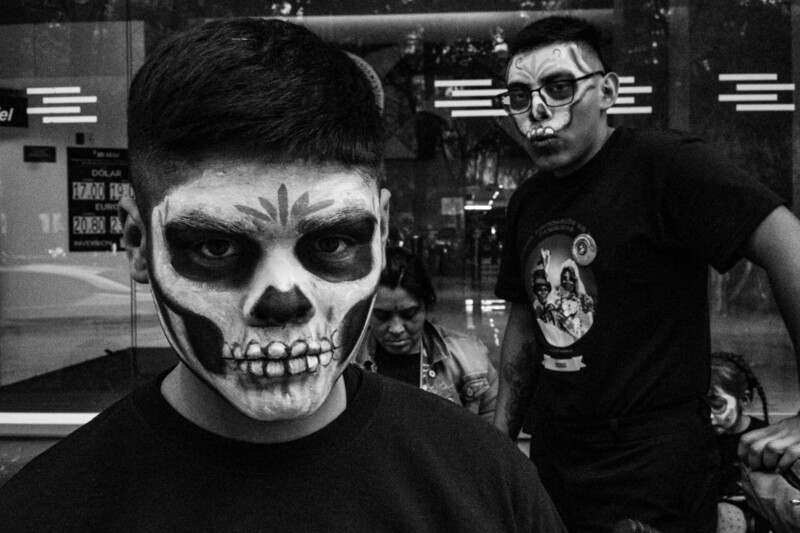
At first, the city overwhelms your senses completely. Every corner demands attention. Every face appears loaded with symbolism. The temptation is to photograph constantly, reacting to the surface of things before truly understanding their rhythm.
But after a few days, something changes.
The spectacle begins fading into the background.
And that's when the real photographs start appearing.
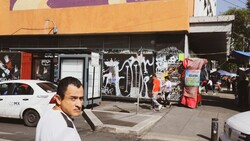
You notice exhaustion on faces late at night after hours inside costumes and makeup. You notice moments of silence between celebrations. Families sitting together near altars without speaking. Workers dismantling decorations before sunrise while the city slowly returns to ordinary life. Teenagers scrolling through their phones still dressed as skeletons. Street vendors eating alone surrounded by marigolds and smoke.
Life continuing calmly beside the performance of death.
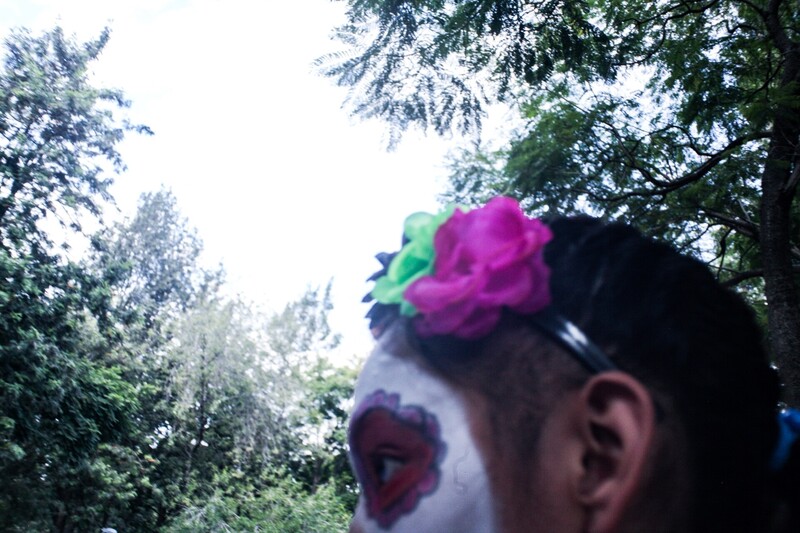
That contradiction is where the emotional power of Día de Muertos truly exists.
And honestly, this is why photographing an event like this requires a different mentality than ordinary street photography.
You cannot approach it like a collector searching for isolated trophies. A strong photograph may still emerge that way, of course. But a meaningful body of work requires something slower. More observant. More human.
You have to live inside the atmosphere long enough for your eyes to stop chasing only the obvious things.
Because the obvious things are endless here.
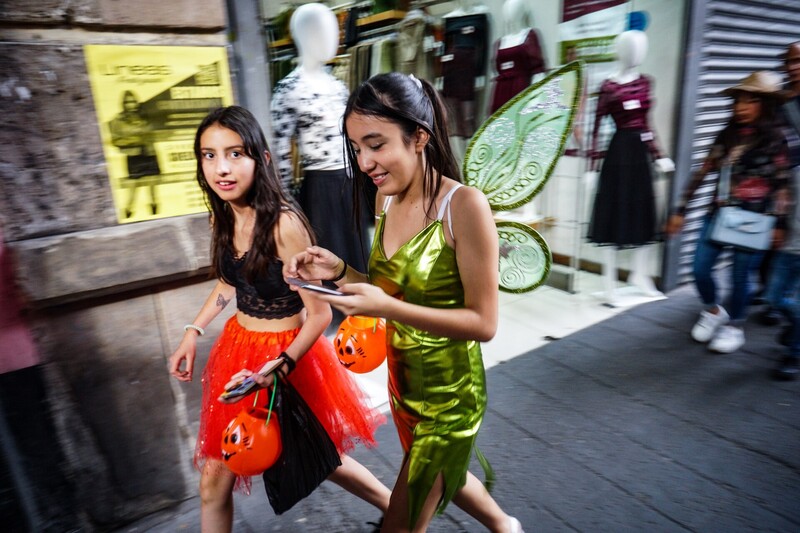
Mexico City during Día de Muertos gives photographers too much visual stimulation. The danger is becoming intoxicated by aesthetics alone. The city can easily seduce you into making photographs that are visually dramatic but emotionally empty.
And Día de Muertos deserves more attention than that.
Not because it is sacred in some romanticized sense, but because it contains emotional complexity that cannot be reduced to colorful surfaces.
This is not simply a festival.
It is memory becoming public.
It is people finding ways to coexist with absence, grief, humor, irony, religion, family, commerce, and daily life simultaneously. Mexico has always possessed this unusual ability to place death directly inside everyday existence without removing its humanity.
That coexistence changes the way you should photograph.
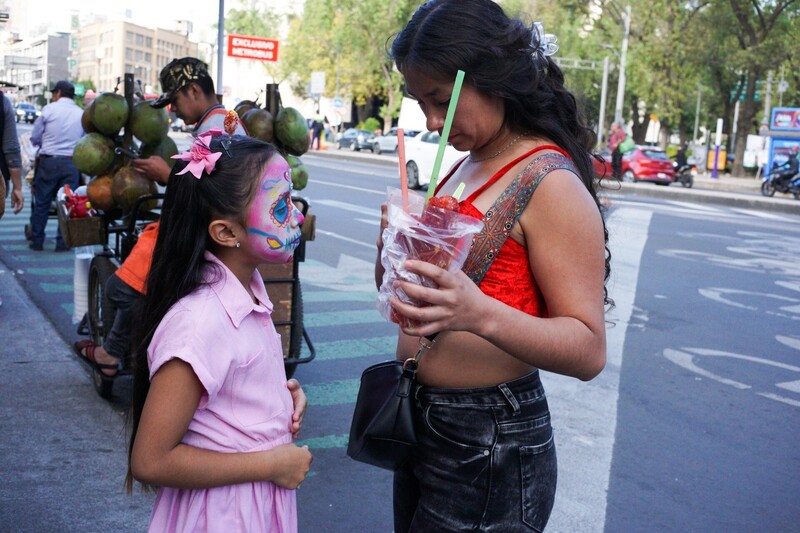
The strongest images often arrive in quieter moments. Not necessarily during the parade itself, but before it. After it. At the edges of it. In transitions. In pauses. In the moments where people stop performing and simply exist again.
And this is where time becomes essential.
Photographing Día de Muertos seriously means accepting repetition before clarity arrives. The first day, you mostly react. The second day, you begin recognizing patterns. By the third or fourth day, the city slows down visually in your mind. You stop chasing photographs and start anticipating emotions instead.
That is a completely different kind of seeing.
It is also why editing this kind of work matters enormously. A multi-day event cannot be reduced to ten loud photographs fighting for attention independently. The images must breathe together. Quiet frames matter. Details matter. Distance matters. Fatigue matters.
Without those elements, the work becomes visually loud but emotionally flat.
And maybe this is what I love most about photographing Día de Muertos in Mexico City.
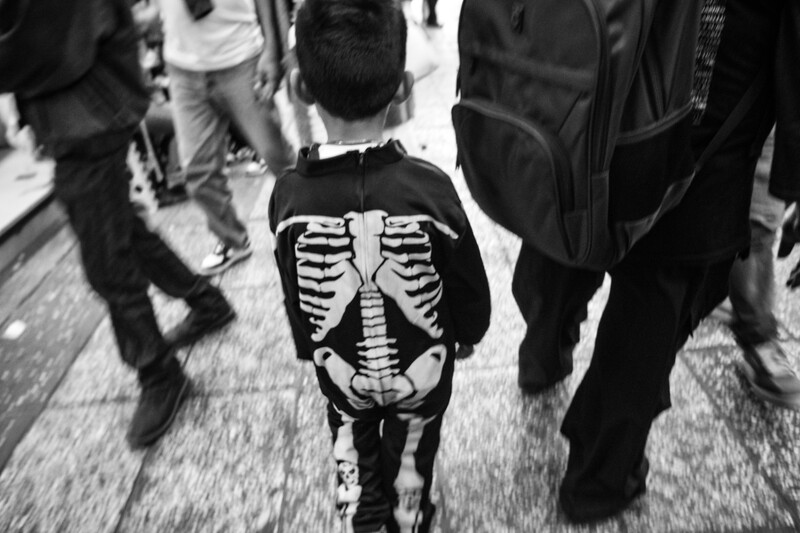
The city never becomes a stage set entirely separated from reality.
Real life constantly interrupts the symbolism.
Traffic still moves.
People still work.
Children still become bored.
Couples still argue.
Someone always has somewhere else to be.
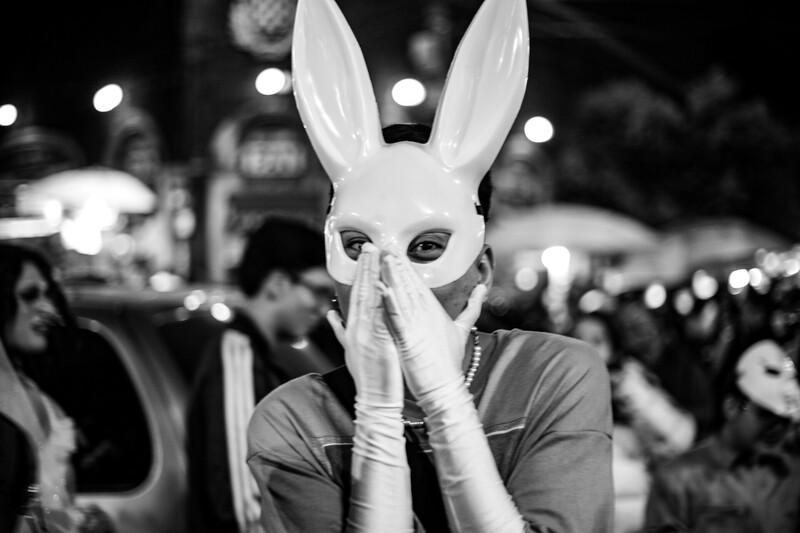
Death walks beside ordinary life here instead of replacing it.
If you stay long enough to notice that balance, the photographs begin changing naturally.
They become less about spectacle.
And more about people.
That is the most important part, in my opinion.

Join the Fstoppers community for free
-
Post comments and join in the discussions
-
Browse the site ad-free
-
Share your work and get featured in the community
-
Compete in the photo contests for fun and prizes
2 Comments
"Death walks beside ordinary life here instead of replacing it." I love this sentiment! Events like this (Dia de muertos, Halloween and the likes) have always been very interesting to me because it's about the part of life we have a lot of stigma around I know some cultures dislike the mere thought of celebrations like this but I think it's actually amazing: trying to ignore something only increases the stigma and the sense of fear around it. Acknowledging it, on the other hand, helps not only understand the cultureal background better but also takes away the mystery that surrounds trivial things.
Besides, it's just fun! Where I live Halloween is treated as an event mostly for the kids, but I have my share of fun by making smartshow 3d slideshow and attending/organizing local themed events.
I completely agree, Catherine. One of the things that struck me most while photographing Día de Muertos is that death isn't treated as something distant or forbidden. It's present, acknowledged, and woven into everyday life, memory, and community. That is so special in Mexico.
As an outsider (after 17 years now a little less anyway) looking in, it felt less like a celebration of death and more like a celebration of connection, remembrance, and continuity. And you're right: when a culture can openly engage with something as universal as mortality, much of the fear and mystery surrounding it begins to fade. The experience changed my ideas about life and death.
And you are right, there is also joy, creativity, and fun in it. That's part of what makes these traditions so fascinating to photograph. They reveal how differently societies can approach the same human experience.