
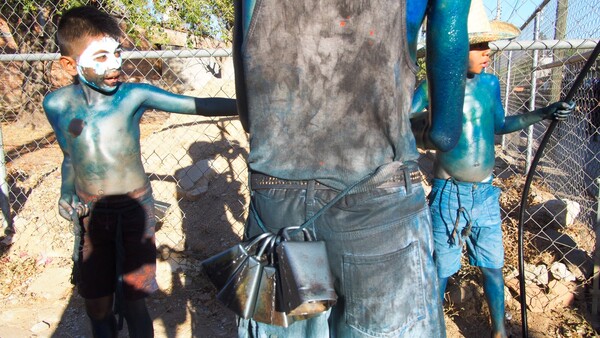
I've studied the exotic and colonialist gaze in photography extensively. I began to develop an interest in it through some texts I read in the Mexican magazine Cuartoscuro, and then I delved deeper into it through a book a friend gave me. Other readings helped me develop an even more complete understanding, such as the National Geographic book on portraits, in which the agency itself acknowledged the colonialist gaze and the exploitation of the "naked bodies of African tribal women" to sell more copies of its magazine.
Photography is often celebrated as a medium capable of capturing the truth of the world, of restoring a gaze to lived experience, of bearing witness to conditions and lives otherwise invisible. However, when this visual capacity is contaminated by logics of power, class, and domination, the act of photographing risks becoming (also) an act of appropriation and repetition of colonialism. And it's not just this, but the degree of egotism present in the photographer's approach.
In this article, I want to offer a reflection on the relationship between exoticism and colonialism in photography, and on the persistent classist and paternalistic legacy that sometimes creeps into the photographic gesture, however "well-intentioned."
1. From the Origins: Photography, Empire, and the Construction of the Other
Since the dawn of photography in the 19th century, the colonialist visual apparatus has found a perfect ally in the photographic medium. As the article "Introduction: Science and Visual Colonialism" observes, "images...were powerful allies of colonialism, not only in the phase of conquest but also in the space of everyday visual culture."
More precisely, photographers and imperial institutions deployed what scholar Edward Said called "imaginative geography": a visual geography that divided the world between "us" (Europe/the West) and "the Others" (the colonized).
Under these conditions, photography is not merely a recording, but becomes an instrument of power: visually "tracking" what is considered exotic, primitive, distant, and therefore justifiable as an object of observation, study, or domination.
A central example is so-called "Orientalist photography." As noted in Photorientalist, the idea of the West representing the "familiarly ordered" and the East as a static, collectible "other" was also reproduced in photography.
Just think of the often studio-produced, staged images of "exotic" environments, which served less to convey the experiences of the photographed subjects than to satisfy the Western gaze of the time.
In this context, a class dimension emerges: the photographer travels, chooses, arranges, and directs the subject; often the subject is "other" than the photographer: ethnicized, colonized, a spectator of the camera object. The result is a visual relationship in which power infiltrates the composition, the set, the framing, and the posture.
2. Exoticism, Gaze, and Class
The term "exoticism" is often used in photography with a romantic connotation: distant beauties, ancient cultures, wild landscapes. But if we look closely, we see how often this exoticism is constructed according to colonial models: selected "authentic" costumes, "natural" poses that are actually orchestrated, the spectacularization of otherness. As a recent text warns, "Photos in 'authentic' costumes are in high demand among tourists, and these 'original' costumes are produced solely for tourist needs." In practice, it is the fake presented as authentic.
This dynamic conceals a dimension of visual class: the Western (or at least external) photographer who has access, equipment, and know-how decides to "represent" the Other. This creates an implicit relationship between the viewer and the viewed, between the person who disposes and the person who is disposed, between the subject and the object.
This is where the accusation of paternalism (or of false empathy, "not looking too much") becomes legitimate. Photographing "with" the Other is different from photographing "on" the Other. Without a reflection on the power of the gaze, photography risks reaffirming a hierarchy: I photograph, you are photographed. Even when the photographer believes he is "empathetic," he can act as if he were "better," more informed, freer, while the subject remains immobile, exotic, silent.
In this sense, exoticism can function as an anesthetic for criticism: "Look how beautiful that different world is," "Look how fascinating these people are." But we rarely ask ourselves how we got them to become the subject of someone else's gaze, and what role photography plays in that process. Often, the stories behind a shot are also cruel.
3. Visual Colonialism: Study and Power
A fundamental point of reflection is the notion of the "colonialist gaze." The DSM Museum describes it like this: "the ideology of the superiority of the white race was articulated in the colonialist gaze"—which "represented" indigenous people as objects, equated with animals or the landscape.
Photography, from this perspective, becomes not simply an aesthetic tool, but a classification device: ethnic types, "primitive" scenes, pristine environments. The text "Photography and History in Colonial Southern Africa: Shades of Empire" examines how colonial prison albums, German police photographs, African photo studies, and identity documents are intertwined with the history of domination.
From this perspective, it becomes clear that it is not enough for photography to be "beautiful" or "documentary": it must be questioned in its genesis, its social function, and the power relations it presupposes. Because even a seemingly innocuous photo, a studio portrait, can embody the subject's subordinate position to the photographer. And this is of profound interest to us, as portrait photographers.
4. When Empathy Isn't Enough: The Critique of Photojournalism and "Visual Tourism"
In recent decades, critics have also turned their attention to contemporary photography: to photojournalism that chronicles "exotic poverty," to images circulating through visual tourism and social media, often without self-reflection. Nathaniel Gaskell, former director of the Tasveer Gallery and co-founder of the Museum of Art & Photography in Bangalore, in an interview published by Vogue Italia in 2019 on the occasion of the exhibition "Returning the Gaze: From the Colonial to the Contemporary" said: "The work of British colonial photographers represents a period... in which racism, discrimination, and patriarchy were barely being questioned in the West."
The statement is particularly interesting because Gaskell was comparing British colonial photography with the work of contemporary Western photojournalists, arguing that the latter, unlike nineteenth-century colonial photographers, would have been aware of the racist nature of exoticization and would therefore have made a conscious choice to continue to represent the East as an exotic and "other" place.
And we might add: if contemporary photographers don't question their positioning, class, origin, equipment, and purpose, they risk repeating the same pattern: "I'm here, you're there," "I record your otherness." Empathy, however sincere, alone does not compensate for the underlying power structure. In other words: being "at the service" of the Other is not enough if the dominant role occupied behind the camera is not undermined.
In this sense, the critique of the photographer's "visual class" becomes urgent: it often begins with a condition of privilege (economic, technical, geographical) that makes it possible to shoot in remote, "different," "elsewhere" contexts. Photography thus becomes another chapter in mobility and exploitation: travel, equipment, markets, and the Western public that consumes the image.
5. Toward a Conscious Approach: Decolonizing the Photographic Gaze
Yet I don't want to end on a purely negative note: because photography also has the potential to shatter these hierarchies. The work of visual re-appropriation (such as that documented in "From Model to Sitter: On Reclaiming Colonial Photography") shows that what was presented as an "ethnographic model" can be restored as a portrait, as a subject that looks and speaks.
Here are some suggestions for us photographers, including those who work in "Elsewhere" territories, in workshops, reportage, and travel, so that the photographic gesture is less implicated in the mechanisms of exoticism and visual colonialism:
- Ask yourself: who holds the camera? What is my position of privilege (economic, technical, cultural)? What "gaze" do I adopt?
- Avoid the passive representation of "diversity" as an object: instead of photographing something different, seek dialogue, collaboration, and establish a more equal visual relationship.
- Don't simply immortalize the "exotic" or "different" for its difference, but try to represent the person or community as an agent: one who can observe, choose, and intervene. Key word: collaboration.
- Make the context explicit in your work: materials, choices, limitations, errors. Transparency about the process makes photography less naive.
- Offer space for counter-narrative: allow the communities portrayed to participate, to tell their stories, to construct their image. Know that the camera should not create "the story of the Other," but rather collaborate in the story the Other wants to tell.
6. Final Reflections
Ultimately, photographing the "other," whether in an urban, rural, indigenous, or migrant context, requires awareness of our gaze. Exoticism and colonialism are not just historical terms: they are a living part of the visual structure within which we move. If a photographer simply asks "how beautiful is this scene," without asking "what story am I helping to tell?", he risks becoming complicit in a vision that perpetuates hierarchies, silences voices, and objectifies bodies.
This is why the photographer's work must include not only aesthetics and technique, which are obviously vital, but also an ethics of gaze, a reflection on one's position, and narrative responsibility. In this sense, the gesture of photography rises: not as a neutral document, but as a visual act that can emancipate or oppress—we choose the path.






Join the Fstoppers community for free
-
Post comments and join in the discussions
-
Browse the site ad-free
-
Share your work and get featured in the community
-
Compete in the photo contests for fun and prizes
4 Comments
And I thought your defensive article regarding your taking non-consensual photos of hot girls was stupid. Remember when you wrote "WOMEN ARE BEAUTIFUL" in all caps, and I responded "You like to take non-consensual photos of hot girls. We hear you." I notice you deleted what you wrote and you deleted my reply, too. So when National Geographic takes photos of African people who consent to being photographed, that's "exploitation". But it's totally cool when you take non-consensual photos of hot girls, right? It's "colonialism" when Europeans visit non "Western" countries and take photos of it. But it's totally cool that you, an Italian, takes photos in Mexico City, right?
It's the typical progressive "THAT'S WRONG!!!! (But it's OK when I do it)" defense.
I understand why you have written this boilerplate progressive screed: You are trying to prove that you are still a Good Person (TM) by showing off that you can use the jargon from an Intersectional Trans Decolonial Anti-Racist Studies course from university. You made sure to use all of the "I am a Good Person!" buzzwords:
- empathy
- colonialism
- gaze
- one's position
- narrative
- classist
- And more! Did AI help you write this?
Dear FStoppers: please fire this regressive, vile hypocrite.
What a load of Woke buzzword bingo.
Ok I am a white European. The worst of the worst.
I think we were supposed to respond with "Slay, queen!" or something like that. But I am also a white European, a vile oppressor by definition because of my evil white skin, so I doubt I have enough empathy to generate the correct canned response. I'll try to do better.
Sadly, it's this kind of article that plays well in red states and validates their viewpoint of what's wrong with the left.