
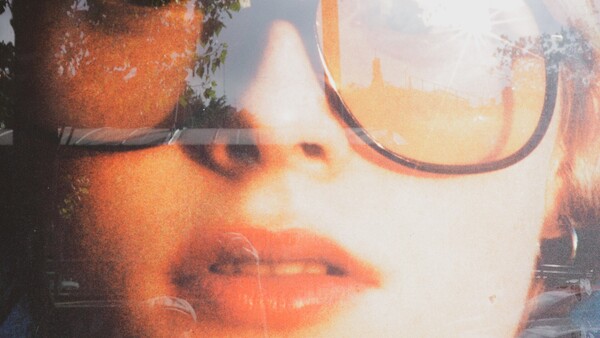
First there was the word, from a creative point of view, but in terms of reasoning, first there was light. Image and content travel within it. If light travels faster than sound, its content is also received much earlier. If, before speaking, we communicate through sight, we must restructure the way we learn.
The image has been with humankind forever. It lives with us, we make it and unmake it, and in truth, most of the time we don't realize the places the image takes us, without being able to resist. The concepts of the image have changed as much as human experience itself. Theories about the image are created and contradicted.
In the field of photography, contemporary genres and discourses demand new strategies of reading, along with the need to raise awareness about the use and purpose of the image. The training of an audience interested in photography and the other visual arts appears urgent. This training must be careful and deliberate, so as to reflect the interests of those learning, whose vision of photography, very often, is reduced to the use of the camera.
Such a complex subject as the understanding and creation of the image should draw on many elements: turning to myth as well as history in order to build the platform that allows the image to be conceptualized from its origin to the transformation of its functions. The image, as a result, helps us materialize our ideas and bring them into the realm of reality.
Visual literacy is that domain which allows us to reason about what we observe, to interact with and question the visible world in which we are immersed. And understanding the world we live in necessarily passes through a reading of images, a reflective decoding, starting from the study of the elements that constitute visual language. By completely redefining, at a pedagogical level, the strategy for understanding and retaining information, we could probably change the very perception of learning itself, and take advantage of the fact that today, more than at any other point in human history, information is conveyed through the image. This would likely lead the individual toward a different kind of evolution, one capable of dismantling the mechanisms of understanding that make so many things appear complex to process for many people today.
Visual education is the second phase, tasked with developing the skills of perception in the realm of the aesthetic. Now that we are already equipped with the tool of visual language, the task is to refine and define it. Unfortunately, even today, visual education remains uncharted territory. Even today, we see that visual contamination remains explored only on a superficial level. And what also influences all of this is the question of how genuinely interested the system, the institutions, really are in investing in art education and training.
Everything I have written in this article is part of readings and reflections in support of visual education that I have noted down over these years, in which my role as a photo coach and photography instructor has led me to hold teaching positions at prestigious universities such as Tec de Monterrey and the Antiguo Colegio de San Ildefonso in Mexico City, which claims to be the oldest university in Latin America. The goal is not photography alone, but more broadly, understanding our visual surroundings. Education is not only reading. This is an invitation addressed to all educational authorities in the world. The question remains: is there a real will to make this happen? Because the suspicion that the system finds it convenient to maintain a base of visually illiterate people is more than legitimate.


Join the Fstoppers community for free
-
Post comments and join in the discussions
-
Browse the site ad-free
-
Share your work and get featured in the community
-
Compete in the photo contests for fun and prizes
1 Comment
I’ve always been a technically proficient photographer, especially when I was doing lab work involving E6 processing. With Ektachrome processing there is no room for error at all. Sometimes I produced something I could call art almost by accident and I learned from that. I think I love the black-and-white photography I did during that period of high volume lab work. One of the students doing their musicals or plays in black-and-white and then get the photos onto the wall often 16 x 20 or 11 x 14 it was the closest I ever got to “performance art” because within one to two weeks those photos should be taken by the students when everything was cleaned up after the show was done and I never minded because I didn’t have a storage room to keep all that stuff. Sometimes when I was through hanging 30 or 40 shots around the lobby I would stand back and just look at it and I would realize I had actually created something decent. I’m so old now. It’s probably too late to understand the esoteric parts of photography, but I think I should try to do that.