
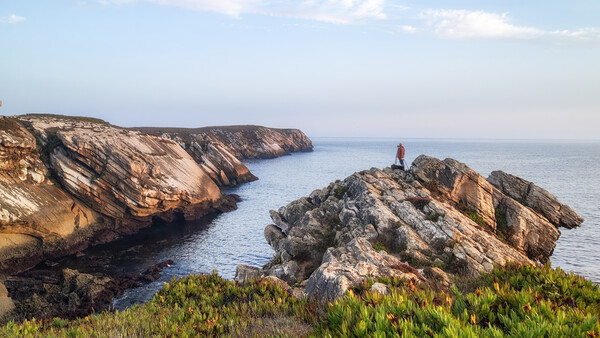
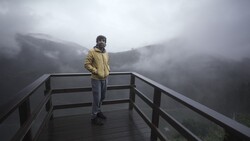
You close the car door, and then it hits you like a stealthy ton of bricks: silence. I don't know about you, but for me, when I am in the throes of such profound silence, an unacknowledged sense of anxiety starts to creep in. It is the undeniable truth that, even with a camera in hand, I am alone.
One thing I am trying my best to overcome as I get older and travel more is being comfortable in uncomfortable scenarios. I have begun to understand that the initial discomfort and that odd sense of forced solitude are not hurdles, but essential gateways to being genuine in the creative works I set out to make. As an artist, this may sound odd, but the camera acts as a means of true connection with nature and, on some level, with myself. Today, I would like to explore the themes of self-confrontation, overcoming the ego, how the camera can ironically act as a barrier, and, finally, how removing the need for external validation fuels unique visions in the landscape.
The Ego and the Audience: The Burden of Performance
The unfortunate reality is that the way social media towers over the landscape creates a conditioning of sorts. I have a feeling in my guts that the modern creative process has been undermined—or dare I say, corrupted—by a constant anticipation of the audience. By "audience," I mean any viewership; you don't have to be a major YouTuber for this to be applicable. While many of us head out into the field with a pre-visualized idea of what we want to capture, somewhere in the back of my mind, an Instagram caption is already being formed, or a voiceover is being constructed. In many respects, this has stolen from me what it was that made me pick up the camera in the first place.
There is no denying the pressure of external validation when shooting with others or thinking about how a set of images will present in a video. The remedy, at least for me, is to simply be alone more. By creating art purely for myself—no sharing, no posting, no voiceovers—I am forced into a direct confrontation with my own creative standards.
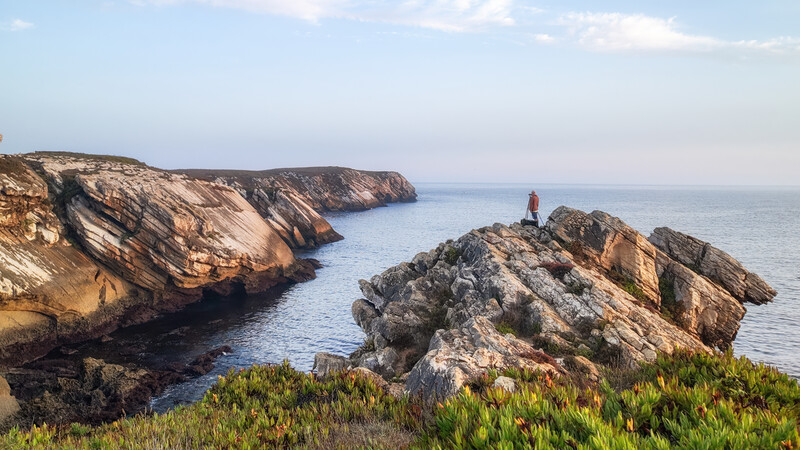
This culminates in a very real discomfort. Solitude offers no distractions, no conversation, and no one to blame for shortcomings in composition or poor light. There is an internal battle that happens, and the outcome forces me to reconcile with my own creative failure and self-doubt, highlighting the very real vulnerability of my artistic pursuits.
The Camera as a Shield: Observing vs. Connecting
I love the power my camera has over me; it is my vehicle to push myself out the door and my excuse to hike a trail. But upon recent reflection, I can't help but feel like the camera is a barrier of sorts. It becomes a shield or a bubble—a stopgap between observing nature and participating in it. It's as if the camera keeps me busy more than it keeps me present in the moment.
Over the course of my professional life, I have had a wonderful time to reflect. It has dawned on me recently that I feel the highest level of connection with my surroundings when I simply put the camera down. Without sounding too much like Walter Mitty, when the distraction of the camera is removed, you discover moments of stillness and even boredom. This is when the analytical mind is able to quiet down, giving me a deeper understanding of what surrounds me.
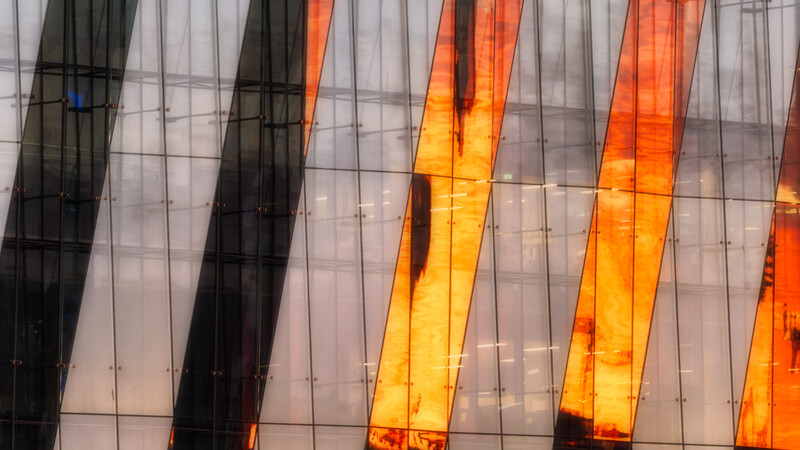
Being alone when the "epicness" stays in bed forces the hand to find subject matter different from what was pre-visualized. When the absence of spectacle shifts the focus, it moves toward details, textures, and intimate landscapes. I recall many times overlooking the Atlantic coast, hoping for a sunset, only to wander off in another direction. While there is disappointment, there is also a challenge. This is when the telephoto lens comes into its own, hunting smaller compositions that oftentimes yield wonderful results.
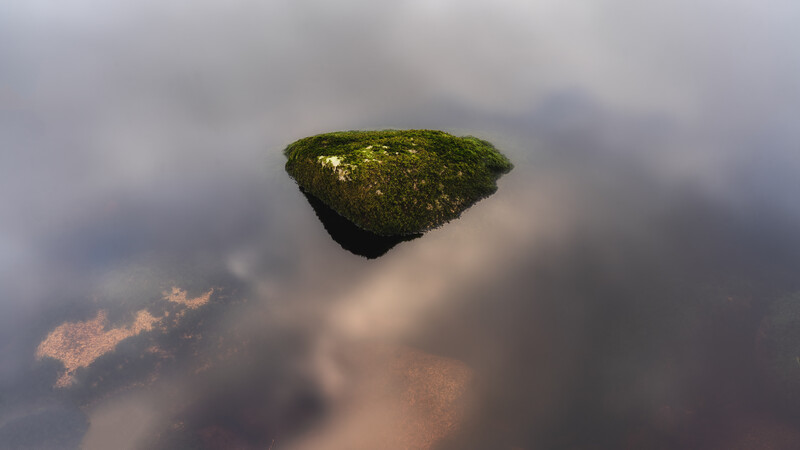
The Necessary Vulnerability of Creative Solitude
I would assume I am not alone in talking about creative breakthroughs. There have been many times when I found myself on the edge of discomfort—alone and very cold—where the silence acted as a catalyst. It strips away superficial concerns, leaving only the core artistic impulse. In retrospect, this feeling of discomfort became a tool for learning, which I now relish.
This sense of solitude invokes the process of slowing down. Without the pressure of clients or the camera itself, I feel extra encouragement to scout a little deeper and position myself out of sight to find better compositions. Having the ability to return to specific locations as often as possible provides a wonderful opportunity to watch for subtle changes in the environment over the course of hours. This practice has become a non-negotiable ingredient for the work I pursue.
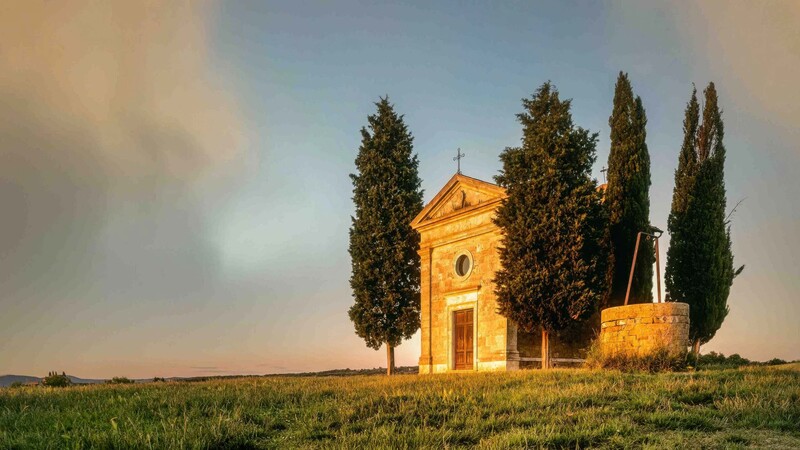
This renewed sense of connection stems from a van life trip to Tuscany. I was photographing a classic scene of a chapel and cypress trees at golden hour, and it was wonderful. It came to me that the scene under the Milky Way could be just as compelling. So, bag packed and headphones on, I meandered into the darkness. Surrounded by tall fields of wheat, I decided to remove my headphones and embrace the silence.
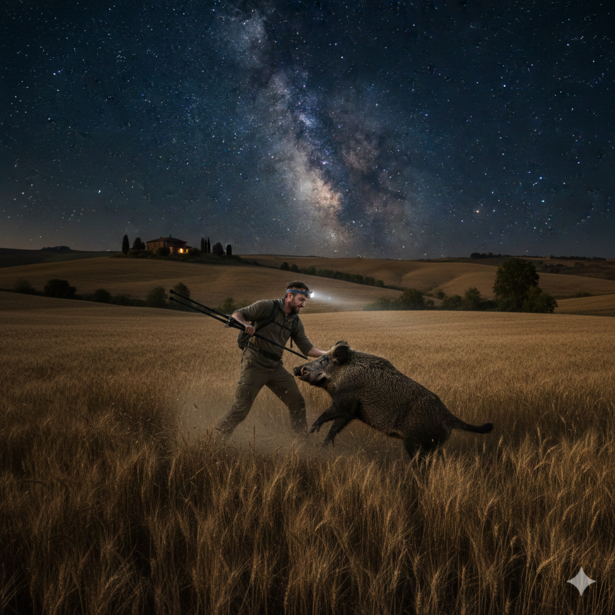
In that moment, I heard rustling. My panic-stricken mind catastrophized to the extent that I believed I was being followed by ghosts and demons. I turned and quickened my pace back to the safety of the van. It turned out to be wild boars in the area—which can be dangerous—but I could have approached the scenario differently. Ever since, I have made a solemn promise to respect nature and my surroundings to a much higher standard. Mental resilience to the inherent fears of the darkness comes when you learn, research, and understand the landscape. You can better understand what lies within the shadows. (Though if you ever meet me in person, this becomes a mythical battle of Man versus Boar where I slew the beast in a Conan the Barbarian-style encounter!)
Practical Solitude: How to Lean Into the Uncomfortable
If you are inclined to find comfort in discomfort, there are practical steps you can take to overcome the initial struggle with solitude.
The "elephant in the room" is your phone. If you do not require it for GPS, I highly recommend leaving it at home. This was a significant change in how I found comfort in solitude. If you do need it for maps, download them offline and keep the phone in airplane mode. The persistent "beeps and bongs" shouldn't pull you from your mindset. The stories of your adventures can be posted after you have returned home.
Another practical step is to simply schedule "sitting." Practice sitting motionless for 15 to 30 minutes before even taking your camera out of the bag. Use this time to simply observe and listen to everything around you. Before you commit to the deep wilderness, try this in a local park or your back garden. This has been instrumental in how I approach all of my creative work.
Finally, try redefining success. Shift the metric away from the number of "bangers" or keepers captured. Instead, mark success by the depth of experience gained and the clarity of vision realized during the solitary session. When numbers and algorithms get left at home, it is truly liberating.
To Wrap It All Up
Solitude is uncomfortable because it forces self-confrontation and removes the distraction of the wider world. Sitting on the edge of this discomfort is the cost of admission for meaningful art.
The greatest photos you take within the landscape will be the ones that required you to be most patient, most observant, and most vulnerable with yourself first. That is when you will find yourself in an artistic flow state.
Call to Action: Commit to One Solo Shoot This Month where you spend at least half of your time observing the landscape without the camera in your hands. Keep this in mind when reviewing the images you eventually return home with. Are there any noticeable results?
Join the Fstoppers community for free
-
Post comments and join in the discussions
-
Browse the site ad-free
-
Share your work and get featured in the community
-
Compete in the photo contests for fun and prizes
5 Comments
Interesting reflection, Neil. There is a lot of truth in the idea that an audience-first mindset corrupts the initial impulse.
However, I’d argue that the camera only becomes a 'shield' when we lack a structured methodology for using it. In my own practice (and in the mentorships I lead in Amsterdam), I view the camera not as a barrier to participation, but as a tool for authorship.
The 'anxiety of silence' you mentioned is often just a lack of technical and narrative anchors. When you move from a 'reactive' state—hoping for the epic sunset—to an 'intentional' state where you are building the structure of a frame and waiting for the moment/subject/light to inhabit it, the camera doesn't keep you busy; it keeps you present.
I think instead of putting the camera down to find stillness we need to strip away the technical noise until the instrument recedes and only the inquiry and vision remain.
Solitude is my normal. Nothing about it is uncomfortable, in fact quite the opposite. I revel in the salubrious solace that it solitude.
I logged in to see if anyone else would say this. Solitude is a must for me and as you stated not uncomfortable at all. I even love hiking in the dark. It's one of the reason I do landscape photography, no people. I never go out and shoot with others, actually I can't. I even struggle to shoot when my dog is with me. There is no better way to approach landscape photography then alone, for me anyway.
Very funny, thanks for morning laugh, Just grab your camera/phone and get out there. no complication needed.
Like me I have spent a lifetime, 70+ years old, and never knew about introverts and extraverts. But I am classed a Lone Wolf Introvert! I get so relaxed at night milky way captures and with a May, June and July all night captures it is like a day time life. Also like I watch so many other Photographers here at Fstoppers out to the far walks with videos of their travels I see other introverts, remember also the alone time editing on the computer most times in silence. If one is lucky you will have a introvert spouse who does their thing while you do yours, very hard to find.
Also as a photographer there is all the mechanical knowledge of the camera and lenses to study like back when the first cameras with plates of glass and knowing the chemicals needed. We as photographers have minds like lighting and I call the Mad Scientists of Light Capture (sounds like a great Tee Shirt).
I have seen at night a gator crossing my path as well as a real big and long rattle snake come out of a swamp and go across the sand not more than 20 feet in front of me also out in Arizona capturing a sunset not one but two long Rattle snakes going on each side towards the Casa Grande Ruins, you can not miss with or you will be arrested.
How about the Grand Canyon with Elk roaming all around at night and with BIG CAT crossing sings and all alone while all are asleep. I carry Bear Spray works on gators also and snakes Wear snake boots also or shin guards when on a trail at night. Also if you can wear Armor light police type and if allowed just carry a .22 LR but for the big things a .45 and extra clips big bears in all federal parks Ever go to Connect the black bears will in broad day light will come to you trash can even with you insight!!!
Casa Grande Ruins night time while doing long exposure a rattle snake crawled by on the other side.
Grand Canyon Elk all over the place is there a hungry cat around, wear a watch cap with big eyes on the back they will think you are looking at them.
Lonely times on a beach at night but once your eyes adjust and doing a 30s exposure you look down at the sand you will see little round lights on the sand you can wave your hand over and it does not get blocked have no idea about.
While doing the capture with the chairs I heard some munching behind me, it was two deer easting the salty grass while just behind my hotel, the first time yes spooked but it happens all the time.