
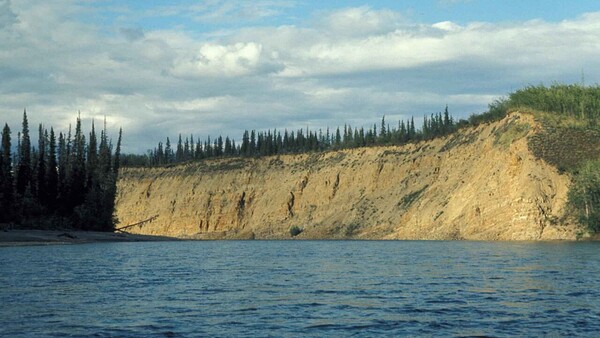
In March 1981, an amateur wildlife photographer named Carl McCunn arranged to be flown deep into the Alaskan bush to spend the summer alone with his cameras. He brought 500 rolls of film, 1,400 pounds of provisions, two rifles, and a shotgun. He never secured a dependable way to get back out, and that failure turned out to be one of several. He died at that lakeside camp before the winter was over, and the detailed diary he left behind became one of the most haunting accounts in the literature of wilderness survival, precisely because it documents, one entry at a time, how a preventable predicament became fatal for an experienced, resourceful man.
Editor's note: This article discusses suicide. If you are struggling, support resources are listed at the end.
The story is often told as a tale of a single fatal oversight. The fuller record is harder and more instructive. McCunn brought extensive supplies and real wilderness experience, but his plans for getting out, for staying in contact, and for handling an emergency were all dangerously incomplete, and the failures compounded one another.
A Man Who Knew the Country
McCunn was not a naive tourist chasing a fantasy. Born in 1947 to an American military family stationed in Germany and raised in San Antonio, Texas, he served four years in the Navy, drifted north, and made his life in Alaska around 1970. He worked blue-collar jobs, including a stretch on the pipeline, and he had meaningful prior experience in the country. In 1976 he spent five months alone in the Brooks Range, the vast and empty mountain wilderness of Alaska's far north, photographing wildlife, and returned safely. That prior success is part of what makes the story so hard to read. He was experienced, and he had done a version of this before.

Carl McCunn Dec 25, 1982 The Register-Guard (Eugene, Oregon) Newspapers.com
A pipeline coworker quoted by Jon Krakauer in Into the Wild remembered McCunn as friendly and capable but also a little dreamy and out of touch with reality, someone who could be very responsible but who also tended to wing it and get by on bravado. By that account McCunn had spent the better part of a year thinking through the 1981 trip, talking over gear and logistics, which makes the holes in his planning all the harder to square.
The Way Out He Never Secured
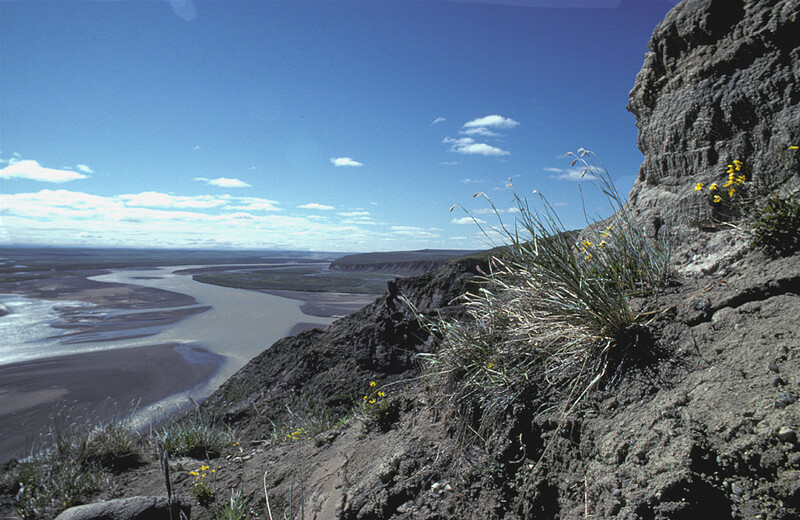
In March 1981, McCunn hired an air taxi to fly him to a small, unnamed lake roughly 225 miles northeast of Fairbanks, near the Coleen River on the southern edge of the Brooks Range. He intended to photograph the tundra and its wildlife through the summer, staying until around mid-August.
He was flown in as planned. The flight out barely existed. McCunn had paid the air taxi to bring him in but, by the accounts given later, did not have the money to pay for a flight back out, and was counting instead on a friend, a pilot named Rory Cruikshank, to come collect him before winter. The trouble is that this pickup had been discussed but never firmly arranged, and the two men appear to have understood it differently. The inbound pilot testified they had been told a friend would retrieve McCunn before winter by float plane. Cruikshank, for his part, said he had warned McCunn not to depend on him because he might be working in Anchorage, and denied that the money McCunn had given him amounted to payment for an outbound pickup. There was no confirmed date, no confirmed aircraft, and no backup. The single most important logistical element of the trip rested on a hopeful, unconfirmed understanding. McCunn also lacked the money to buy a commercial flight out, so even the option of simply paying his own way was closed to him.
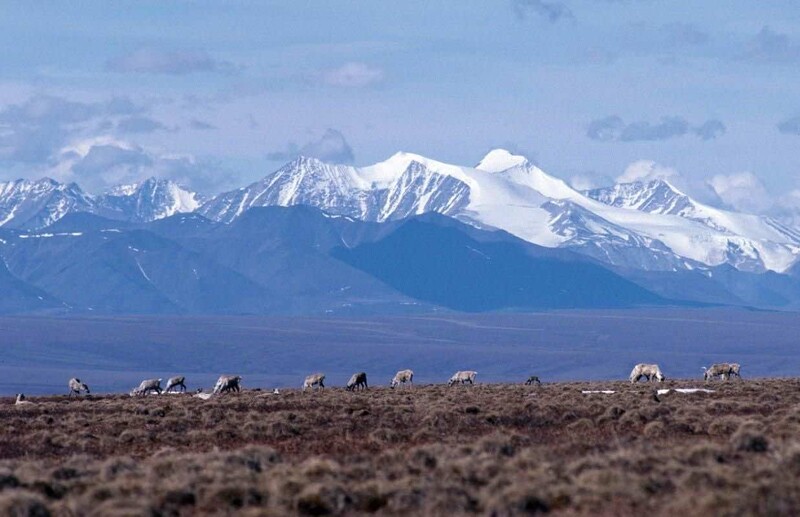
He made the situation worse in ways that would matter enormously later. His camp sat off the regular air traffic routes, so he could not count on a passing plane noticing him. He was vague with the people who might have raised an alarm: he sent maps marking his campsite to his father and some friends but was not clear about his itinerary or expected return date, told his father not to worry if he stayed past the end of summer, and, after a previous trip, had asked his father not to call the authorities on him again. And early on, feeling he had badly overpacked, he threw nearly all of his shotgun shells into the water near his camp, keeping only about a dozen. He had brought five boxes and felt faintly ridiculous for it. It was the kind of tidy, reasonable-seeming decision that only becomes a catastrophe in hindsight.
The Summer Turns
The early diary is happy. McCunn wrote about the loons and the swans, the animals returning to their summer grounds, the strangeness and beauty of being so far outside the modern world. "Humans are so out of their modern-day element in a place like this," he noted. For a while it was exactly the trip he had imagined.
By August, as his food began to run low and no plane appeared, the tone shifts. "I think I should have used more foresight about arranging my departure," he wrote. "I'll soon find out." It is one of the most understated lines in the whole record, a man beginning to grasp the size of his mistake and still, at that point, hoping it might resolve itself.
It did not. The days shortened, the weather turned, and the plane he had half-imagined never came.
The Plane That Almost Saved Him
The most painful passage in the story is the one that almost ended differently. Late in the summer, an aircraft appeared over the lake. It was, it later emerged, an Alaska State Trooper flying over to check on him after friends had begun to wonder. McCunn saw it and waved his bright orange sleeping-bag cover to catch the pilot's eye.
The plane was on wheels, not floats or skis, and could not land on the terrain around the lake. After the first pass, McCunn stopped waving the orange cover. On a later pass he raised his right arm and shook his fist, a small, exuberant gesture, "like when your team scored a touchdown," he wrote, and then began walking back toward his tent, assuming he had been seen and would be retrieved. Only later, studying the signals printed on the back of his hunting license, did he understand what that raised, shaking fist had communicated. The chart identified one raised arm as the sign that everything was all right and no assistance was needed.
"It's certainly my fault I'm here now," he wrote, absorbing it. He estimated it might be five months before another plane crossed that sky. The trooper, David Hamilton, had seen a man near an orderly camp waving casually and then walking unhurriedly back toward his tent, and read the whole scene as someone in no distress and needing no help. McCunn concluded afterward that his fist gesture had sealed the misunderstanding. At the later inquest, Hamilton's testimony supported the conclusion that McCunn had not communicated an unmistakable request for emergency help.
The Long Decline
From there, the diary becomes a record of a capable man trying every practical thing and losing anyway. He shot ducks and muskrats. He salvaged and dried the meat of a caribou that died in the lake. He snared rabbits and, as winter closed in, found wolves and foxes repeatedly raiding his traps. He ate rose hips and, eventually, tree bark. He thought constantly of the shotgun shells he had thrown into the water, the shells that might have allowed him to take more game. "Who would have known I might need them just to keep from starving," he wrote.
There were escape routes he could not, in the end, take. A trooper who had spoken with McCunn before the expedition later said a hunting cabin stood about five miles from the camp; published accounts do not make clear whether McCunn knew its precise location or, once he weakened, could have reached it. By November, with the food gone, McCunn considered walking roughly 75 miles to Fort Yukon, but the snow, the cold, and his failing strength led him to conclude he would not survive the trek. He had realized he was trapped, and that the realization had come too late to act on.
Frostbite progressively impaired his hands. "Hands getting more frostbitten every day," reads one entry. His writing, which had begun in tidy block letters, deteriorated across the hundred pages into the scrawl of a man whose frostbitten fingers were becoming increasingly difficult to use, until he could no longer reliably set his snares. Even so, flashes of the person survive in the diary excerpts reporter Kris Capps later published: starving, he wrote a rueful note to the IRS about back taxes, promising to make it right once he got home.
He never stopped being himself, which is part of why the diary is so hard to read. It is not simply a tale of recklessness or ignorance. It is the record of a resourceful man who made a chain of avoidable mistakes and then fought their consequences competently, for months, in the cold, entirely alone.
The End, and the Finding
By November, the food was gone and the temperature was collapsing toward the deep Arctic winter. McCunn understood where it was heading. In his final entries he asked forgiveness and thought of his family. "Dear God in Heaven, please forgive me my weakness and my sins," he wrote. "Please look over my family." He burned his remaining fuel and firewood, wrote instructions for whoever found him, including how to develop his film and a request that his belongings go to his father, and pinned his driver's license to the note so he could be identified. After months of starvation, exposure, frostbite, and physical decline, McCunn died by suicide, using his .30-30 rifle. His final diary entries were undated; his death is placed sometime around December 1981, when he was 34.
Hamilton's late-summer flyover appeared reassuring. Those who knew McCunn assumed he had since left the bush and taken work elsewhere, and no full search was requested until January 19, 1982. Bad weather grounded the aircraft; on January 26 a trooper flew over the camp and saw no sign of life in a temperature reported as approximately 46 degrees below zero Fahrenheit. On February 2, 1982, a ski-equipped plane landed at the lake and troopers cut open the zipped, snow-covered tent. They found his body and the 100-page diary beside it.
A coroner's inquest that July ruled the death a suicide and assigned no blame. Testimony indicated that McCunn and Cruikshank had never established a firm pickup arrangement, and that Hamilton had not been given an unmistakable signal of distress. McCunn's father gave reporter Kris Capps access to the diary and two rolls of film, and excerpts ran in Alaskan and Texas newspapers late that year, which is how the story reached the world.
Why the Story Endures
Carl McCunn is sometimes mentioned alongside Christopher McCandless, the young man whose death in an abandoned Alaskan bus became the book and film Into the Wild. Krakauer in fact devotes part of that book to McCunn. The two cases are not the same. McCandless entered the wilderness with deliberately minimal equipment and without several items experienced Alaskans considered essential. McCunn arrived with the opposite, enormous quantities of food, weapons, and photographic supplies, but without a dependable way out, without a reliable way to raise the alarm, and without a workable emergency plan. Both men, in their different ways, were undone less by the wilderness than by their assumptions about it.
That is what has kept readers and outdoorspeople returning to McCunn's story for more than forty years. It is not simply a tale of recklessness or ignorance. It is a tale of a capable, experienced man whose preparation was lavish in food, weapons, and photographic equipment but dangerously thin in extraction, communication, and emergency planning, and of how those gaps reinforced one another until there was no way back. He had the film, the food, the guns, and the experience. He did not have a confirmed flight out, the money to buy one, a camp on a regular flight path, or a clear plan for who would miss him and when. No amount of the first list could substitute for the second.
Film from the expedition was found among his effects, and he left careful instructions for developing it and passing his belongings to his father. Two rolls were later made available to the reporter who told his story. What became of the rest of his photographs is not clear from the published record. What has endured publicly is the diary's account, preserved through Capps's excerpts and the retellings that followed, and the plain, patient voice of a man who came to understand exactly what he had gotten wrong.
A note on sources: this account draws on Kris Capps's five-part 1982 series in the Fairbanks Daily News-Miner, which first published extensive excerpts from McCunn's diary; United Press International reports of December 13 and 14, 1982; the December 19, 1982, report in The New York Times, "Left in Wilds, Man Penned Dying Record"; reporting on the July 1982 coroner's inquest; and Jon Krakauer's account of McCunn in chapter eight of Into the Wild. Several details are reported inconsistently across these sources, including the exact camp location, the date of death, McCunn's age at death (his January 25, 1947 birth date makes him 34, though some accounts say 35), and the timing of the late-summer aircraft encounter. The article reflects that uncertainty where it exists.
If you are struggling with thoughts of suicide or self-harm, help is available. In the United States and its territories, you can call or text the 988 Suicide and Crisis Lifeline at 988, or chat online at 988lifeline.org, for free, confidential support, 24 hours a day. If you are outside the United States, your local emergency number or a national crisis line can connect you with someone who can help.
Lead image by Cline David, U.S. Fish and Wildlife Service, Public domain, via Wikimedia Commons.




Join the Fstoppers community for free
-
Post comments and join in the discussions
-
Browse the site ad-free
-
Share your work and get featured in the community
-
Compete in the photo contests for fun and prizes
5 Comments
No definitive plan to get picked up in the middle of nowhere is definitely reckless and dumb. Sad.
It's a tragic situation all around with everyone involved. My 'Type A' brain cannot comprehend not having a plan, a backup plan and a backup plan for that plan. If there were no money to get a return flight, I would not go. Same with no confirmation from the friend, or the detailed timeline. But I can understand why he might have went with it despite all of that. The thrill of being able to be alone in your element, in a place far removed from the world, is magical. It's quite sad, and a harsh lesson for the rest of us.
Totally agree. I'm way too nervous a person to do something like that.
This was a beautiful tragedy. It’s a story of deadly overconfidence. Reading the story was enough. I don’t think I have the strength to seek out his journal entries. Though I do hope to see his photographs one day. Thank you for sharing this story with us.
It is a sad tale and may be even more relevant today. Too many modern day "adventurers" set out into the backcountry relying on sat phones and GPS to keep them safe. Failing to have simple contingency plans or understanding basic ground to air communication signals could easily put someone in this same situation today.