Most landscape advice tells you to pack up when the sun climbs high and the shadows turn hard, yet some of the strongest work happens in exactly those conditions. Learning to read harsh light gives you far more hours to shoot and a look most people never chase.
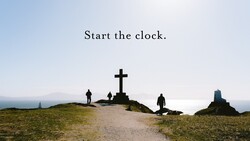
Around 95% of the time, James Popsys shoots in blue skies, harsh shadows, and midday sun, and the video above breaks down how he makes it work. His first rule is to keep the sun in front of him, never on his back, which guarantees you can see shadows in the scene. Even light flattens everything, while shadows build depth. Popsys treats this as the foundation for everything else he does, and it's a simple habit you can adopt on your next walk. Point yourself so the shadows fall toward you, and the frame gains dimension immediately.
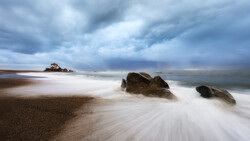
Space is the second idea, and it pairs with light in a way that's easy to feel but hard to name. Popsys leans on the notion that luxury comes from light and space, so he shoots wide and leaves large stretches of empty sky above his subject. A bright, detail-less sky pulls attention straight to the subject because there's nothing else competing for it. He's careful, though, at the coast: a bright sky only works when the water below it is bright too, calm and reflective under a high sun. When the water is darker, the sky has to match, and that decision shapes how you expose and edit. Many of his examples come from beaches, where clean horizons suit this kind of light, though he's clear you don't need the coast to try it.
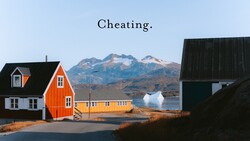
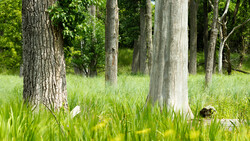
Contrast is where the approach really separates itself from softer shooting. Instead of chasing an even histogram with detail from shadow to highlight, Popsys embraces blacks that go fully black and highlights that blow out. A featureless wall stops distracting you from what a subject is pointing at; trees with no visible detail push your eye toward a cable car instead. He also uses those crushed shadows for mystery, hiding parts of a scene so you wonder what's tucked inside the dark. That question is what keeps you looking. It's a tool you can apply deliberately rather than treating deep shadow as a mistake to fix in post.
This whole method arrives at an interesting moment for the field. Modern sensors keep pushing dynamic range, and much of the marketing around new cameras sells the ability to recover shadows and tame highlights until an image looks evenly lit. Popsys works in the opposite direction, using the camera's limits as a creative choice rather than a problem to engineer away. That fits a broader shift among photographers who are tired of the identical golden-hour look flooding every feed and want frames that feel harder, cleaner, and more graphic. If your work has started to blend in with everyone else's, midday light is one of the few conditions still largely avoided, which makes it fertile ground. The principle to take away is that contrast and negative space are compositional tools, not technical failures, and you can build entire photos around them.
His last point addresses the reason most people dislike harsh nature shots: messy shadow detail. Broken, tangled shadows clutter a frame fast, so Popsys keeps compositions extremely simple when the light is unforgiving. A centered lighthouse with a single cloud, a centered tower in Istanbul, a washed-up buoy with the entire shadow included rather than cut off. He treats cutting a shadow in half as something to avoid, and simplicity as the fix when a scene threatens to become chaos. There's more in the video on how he balances all of this across specific images, including a storm-lit shot that reads like golden hour hours before it began. Watch the full breakdown above to see how Popsys applies each of these ideas to real photos from beaches, cities, and even Antarctica.

Join the Fstoppers community for free
-
Post comments and join in the discussions
-
Browse the site ad-free
-
Share your work and get featured in the community
-
Compete in the photo contests for fun and prizes
1 Comment
Traditionally called "contre jour" photography (i.e. photographing into the light).
Many years ago, using Kodachrome film, I usually preferred to have the sun behind me. Today, with modern digital cameras, I usually prefer to have the sun in front of me.