Sony's new FE 100-400mm arrives with an f/8 aperture on the long end, and that single number will push a lot of shooters to walk right past it. That aperture is also the reason the lens exists, because it lets Sony build a 400mm you can carry all day and handhold without a second thought.
The Sony 100-400mm gets a full workout in the field from Jan Wegener, who has spent more than 20 years shooting birds professionally. The lens weighs just 654 g, or about 1.4 lbs, and uses an external zoom design with a variable f/5.6 to f/8 aperture. It skips the tripod collar and lens foot but includes a hood, and the stiff zoom action means no lens creep while you walk. Out on a beach at sunrise, Wegener tracked pelicans and terns in flight and found the autofocus locked on and stayed with the birds through their dives. The handheld video he pulled from the Sony a7R V ranked among the steadiest footage he's recorded with a Sony lens.
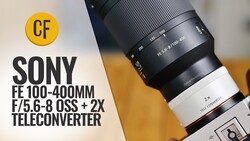
Sharpness held up better than the price and size would suggest, with fine detail across the frame. There are compromises against Sony's G Master glass. The 67mm front element lacks the high-end coatings, so you may see some flaring or chromatic aberration, and Wegener found it a little harder to wipe clean. He tested both teleconverters too. The Sony 1.4x drops the aperture to f/11 and held image quality well with only a small dip in tracking, while the Sony 2x at f/16 asked too much of the autofocus for him to recommend it. The close-focusing surprised him as well, with 0.4x magnification and an 86 cm minimum distance that got him a tight shot of a duck's eye.
The bigger conversation here is reach, and where you land depends heavily on what you shoot. At 400mm, distant songbirds stay small in the frame, and that's where Wegener leans on an APS-C body like the Sony a6700 to stretch the effective focal length to 600mm without giving up light or autofocus speed. This points to a wider shift in how wildlife shooters are building kits. Rather than one giant lens that does everything, many now run a small, light telephoto they'll actually pack alongside a larger prime or a 400-800mm. The crop-sensor trick is the cheapest way to add reach you'll find, and it costs you nothing in aperture. The catch on the crop path sits with the camera bodies, since Sony's current APS-C ergonomics and small off-center viewfinders trail the full-frame line, and a stronger APS-C body would make this lens sing.
Price is where the design philosophy comes into focus. At $849, this lens undercuts Sony's original 100-400mm G Master, which runs above $2,500, and it sits far below the new constant-aperture 300-600mm at over $4,000. Canon's RF 100-400mm lands nearby at around $749, though it doesn't include a hood. Against third-party options like Tamron's 50-400mm or 150-500mm, the native Sony glass unlocks teleconverter use and up to 30 frames per second, while third-party lenses on Sony cap out at 15 frames per second and can't take a teleconverter at all. For a sequence like the magpie lark snatching a fly mid-air, those frame rates and Sony's stabilization make a real difference.
This lens fits the shooter who wants extra reach without hauling a heavy setup, and it works as a solid entry point for beginners or a light second lens next to a bigger wildlife optic. If you're constantly chasing small, distant subjects, a 200-600mm or 400-800mm will serve you better despite the bulk and cost.
Watch Wegener put the lens through low light, teleconverters, and background rendering in the video above.


Join the Fstoppers community for free
-
Post comments and join in the discussions
-
Browse the site ad-free
-
Share your work and get featured in the community
-
Compete in the photo contests for fun and prizes
2 Comments
Panasonic’s 45-200 has about the same zoom range and is roughly the size of a soda can. Great for long mountain walks.