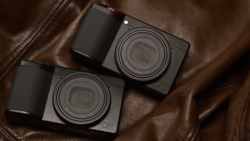
A monochrome-only camera that costs more than its color twin sounds like a hard sell, until you see what a dedicated black and white sensor actually does to an image. The Ricoh GR IV Monochrome strips out the color filter array entirely, and the results push well past what a converted color file can offer.
Hashem Moukaddem, who runs Pushing Film, spent about a month carrying the Ricoh GR IV Monochrome everywhere and built the review around real-world use rather than spec sheets. The camera is an APS-C compact that fits in a palm or a pocket, paired with a 28mm equivalent f/2.8 lens. Because the sensor reads luminance directly instead of interpreting light through an RGB filter, you get sharper detail, cleaner shadows, and stronger high ISO performance. He compares it to shooting black and white film versus shooting color and desaturating later. The tonality is its own thing, and the sensor even responds to color filtration the way black and white film does.
Handling is where the camera earns its keep day to day. It powers on fast, the button layout feels improved, and there's 53 GB of built-in storage, which he argues more cameras should copy. A built-in physical red filter sits inside the body, which makes obvious sense here for adding drama to skies and skin. He mostly shot in aperture priority or program mode with ISO left on auto, and found the exposure compensation rocker and the locking mode dial genuinely pleasant to use. The lens renders with character, including a heavy vignette he likes and can switch off with a correction profile. Straight-out-of-camera JPEGs hold up well enough that they don't feel like a downgrade from the 14-bit DNG files.
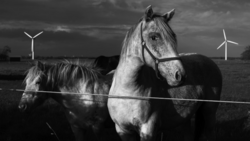
The dynamic range is the part that stands out most. You can pull back shadow and highlight detail aggressively, and even night shots handled by the in-body stabilization stay usable at extreme gain. He stress-tested it handheld in the dark, and while ISO 25,600 shows visible noise up close, the noise pattern itself stays reasonably clean. Because the sensor sees so far into the darkness, he found himself dialing in negative exposure compensation to protect highlights, since recovering shadow detail is easier than saving blown highlights. The highlight roll-off is softer than he expects from most CMOS sensors, closer to how film lets go of the brightest tones.
If you've been curious whether a monochrome sensor can slot into a film-based routine, this is where the case gets interesting. Moukaddem printed a GR file on Ilford Gold Fibre Rag, a baryta-style cotton rag paper that mimics traditional silver halide prints, and cropped in while still printing to A3. The look reminded him of Fujifilm Acros 100, and he makes the point that a monochrome DNG is a strong starting canvas for a film emulation, since you're adding grain and texture to a clean, filter-free capture rather than fighting a Bayer array first. This matters for anyone running a hybrid workflow in 2024, where the line between shooting film and finishing digitally in Lightroom has gotten blurry. The takeaway you can apply anywhere: expose to protect highlights, then build tonality in post, because a monochrome file gives you more room to shape the midtones than a converted color file ever will. It's a principle that carries over to any black and white work, film or digital.
Not everything lands. At $2,200, it carries a real premium over the standard GR, and Moukaddem is upfront that this is a niche within a niche, justified only if you're committed to black and white and comfortable with a 28mm view. He'd trade a 25% size increase for weather-sealing, a flash, or longer battery life, and he misses the Pentax-compatible TTL hot shoe from the earlier GR. The current hot shoe offers no TTL, though Ricoh sells the GF2 flash with some auto metering that he didn't get to test. Autofocus is snappy in most situations but can miss when pushed hard or in very low light, where the snap focus feature, preset to a fixed distance like 1 m, becomes a reliable fallback. Battery life is fine and charges over USB with the cell in the camera.
For most people, the regular GR makes more sense, and he says so plainly. But if black and white is the whole point of picking up a camera, this one does the job and does it extremely well. Watch the full review sitting above to see the film comparisons and print results for yourself.


Join the Fstoppers community for free
-
Post comments and join in the discussions
-
Browse the site ad-free
-
Share your work and get featured in the community
-
Compete in the photo contests for fun and prizes
No comments yet