
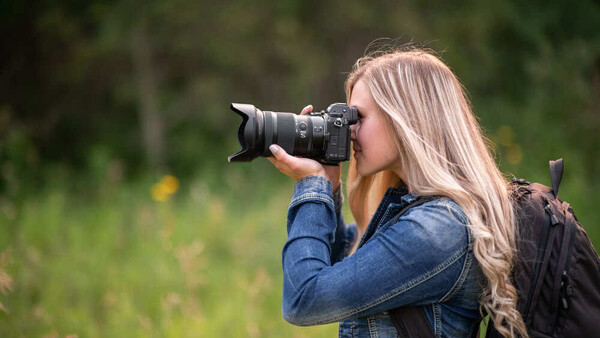
Somewhere in the path from enthusiast to professional, most photographers absorb a belief they were never quite taught directly: that going pro means owning the holy trinity. A fast wide zoom, a 24-70mm f/2.8, and a 70-200mm f/2.8, all at that magic constant aperture, bought as a set, treated as the cost of admission. The gear becomes a credential. You are not a real professional until the trinity is in the bag.
It is worth saying plainly what that costs. A current premium trinity from Canon, Nikon, or Sony runs in the neighborhood of $8,000. Framed as the entry ticket to professional work, that is a serious sum to ask of someone who has not yet been paid for a single job, and much of it buys capability that large parts of professional photography never use. The belief is not baseless, but as a rule for who gets to turn pro, it is wrong, and it is worth understanding exactly where it comes from and where it breaks.
Where the Myth Earned Its Truth
This did not appear from nowhere. For a long stretch it was essentially correct, and that history is why it clings.
Through the late film era and into the early digital years, the fast constant-aperture zoom genuinely separated professional glass from everything else. Zoom lenses had been mediocre for decades, avoided by serious shooters, until Canon and Nikon introduced 80-200mm f/2.8 lenses aimed at professionals and proved a zoom could be sharp, tough, and fast at once. A real gap opened between those pro zooms and the variable-aperture consumer lenses below them, in glass quality, build, and the constant aperture that kept exposure and autofocus consistent across the range.
The aperture mattered more then for reasons that have since faded. Usable film speed topped out low, and even early digital sensors turned ugly by ISO 800 or 1600, so the extra stop of an f/2.8 lens was often the difference between a usable frame and a lost one. Autofocus systems of the era needed that light too; many depended on the wider aperture to focus quickly and accurately at all. In 2005, buying the trinity was close to a rational requirement for a working shooter in low light. The myth is a true statement that outlived its conditions.
The Conditions That Changed
Two things collapsed the old logic, and neither is subtle. One scope note before I move on: this argument is mainly about modern full frame mirrorless systems, where high ISO, stabilization, and autofocus have all moved far enough to change the economics. On older bodies, entry-level cameras, and smaller formats, it holds more weakly, a point the crop-sensor section returns to.
Sensors improved by an order of magnitude. A modern full frame body at ISO 6400 produces cleaner files than a mid-2000s camera did at ISO 800, and current AI-based noise reduction extends that further still. The one-stop advantage of f/2.8 over f/4, once decisive, is now a convenience rather than a rescue in most situations, because you can simply raise the ISO and keep a clean file. Stabilization compounds it: modern in-body and in-lens systems can add several stops for a static subject, depending on the body and lens combination, though not for freezing a moving one. The specific problem the trinity was built to solve has largely been engineered away for still, well-lit-enough subjects.
Autofocus changed character too. Modern mirrorless systems focus well at f/4 and detect subjects, eyes, and animals with a reliability that DSLRs never had at any aperture. The wider aperture still helps AF in the worst light, and that is a real point returned to below, but it is no longer a precondition for the camera to focus at all.
Where f/2.8 Zooms Still Genuinely Win
An honest version of this argument does not pretend the trinity is pointless. It is not. There are specific, describable situations where an f/2.8 zoom remains the correct professional tool, and pretending otherwise would be its own myth.
The clearest case is fast-moving people in low light where you cannot swap lenses. A wedding reception, an unlit ceremony, an indoor sporting event, a press scrum: you need a fast shutter to freeze motion, you need low light performance, and you need to recompose across a range of focal lengths instantly without pulling a prime off and hunting for another. The f/2.8 zoom does all three at once. A prime gives you the aperture but not the range; an f/4 zoom gives you the range but costs a stop of shutter speed you may not have to spare. This is the trinity's home ground, and for event and photojournalism professionals it is a real reason to own the lenses.
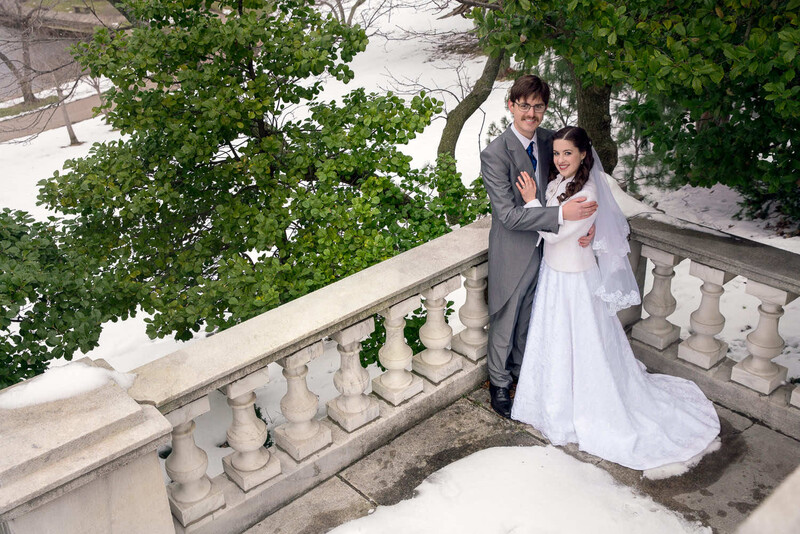
Hybrid and video work is the other strong case, and it is the one a stills-only argument misses. Many working photographers, especially in weddings, commercial, editorial, and social content, are now expected to shoot motion as well, and the calculus shifts on video. You usually cannot throw strobes at a moving scene, so the lens aperture carries the low-light load directly, and pushed ISO in a Log profile produces uglier, harder-to-clean noise than the same ISO does in a raw still. On top of that, the current f/2.8 zooms are increasingly built as video tools: internal zoom that holds balance on a gimbal, heavily suppressed focus breathing, quiet autofocus, a de-clickable aperture ring, and a constant aperture that keeps exposure steady if you zoom while rolling. Nikon's latest 24-70mm and 70-200mm f/2.8 S II lenses are marketed squarely on those features. For a hybrid shooter, that package is difficult to replicate with primes or f/4 zooms, and it is a legitimate reason to buy.
There are smaller cases too. Autofocus in genuinely marginal light still benefits from the wider maximum aperture, since the system has more light to work with. Consistent depth of field and exposure across a fast-changing scene is easier with a constant aperture. And there is a working reality worth acknowledging: some clients and some photo desks still expect to see professional zooms on the bodies, and in a few corners of the industry the gear is part of the pitch. None of these are illusions.
What none of them establish is that you need these lenses to turn professional. They establish that certain genres, in certain conditions, are served well by them.
The Genres That Never Needed Them
Step outside low-light event work and the case thins quickly, because enormous swaths of professional photography are shot in conditions where f/2.8 is irrelevant.
Anything lit with strobes ignores maximum aperture almost entirely. Studio portrait, product, food, beauty, and most commercial work is shot at f/8 or f/11 for depth of field and sharpness, with the light supplied by flash rather than the lens. The aperture ceiling of the lens simply does not enter the calculation. A studio photographer shooting tethered at f/9 gains nothing from an f/2.8 zoom over an f/4 one except a lighter wallet.
Landscape, architecture, real estate, and interiors are the same story from the other direction. These are stopped-down, tripod-based disciplines where you are chasing front-to-back sharpness at f/8 to f/16, often with the camera locked down and shutter speed irrelevant. The f/4 zooms are not a compromise here; they are frequently the better choice, lighter to carry and optically superb, which is why so many working landscape and travel shooters have quietly switched to them.
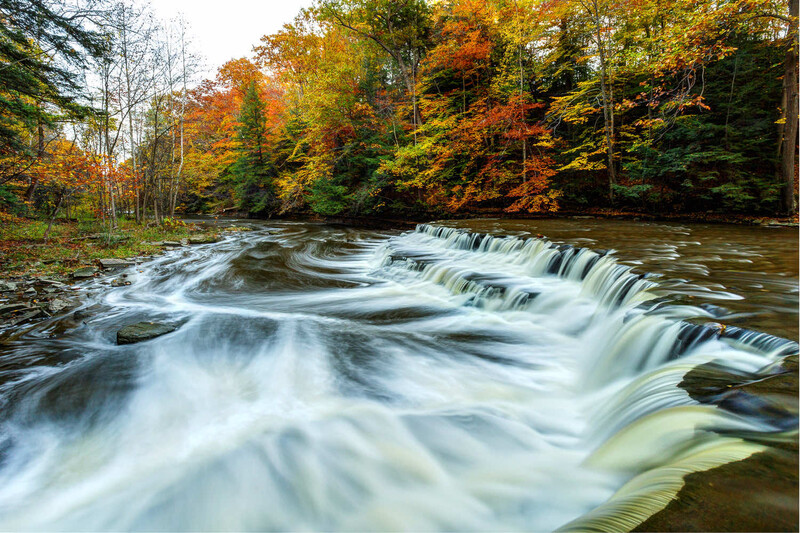
Even in portraiture, the genre most associated with fast glass, the f/2.8 zoom is often not the tool producing the most subject separation, though here the case is narrower than the others and worth stating carefully. A 70-200mm f/2.8 at the long end is a genuine professional portrait staple: at 135mm or 200mm, the focal length and working distance do much of the background-blurring work, and the compression and separation it delivers are exactly why the lens is a fixture at weddings and in the studio. What a fast prime adds is more blur at the same focal length and framing, since a 50mm or 85mm at f/1.8, f/1.4, or f/1.2 opens well past f/2.8. Photographers chasing the shallowest possible rendering reach for those primes; photographers wanting reach, flexibility, and strong separation in one lens keep the 70-200. Where the zoom is genuinely beside the point is the standard 24-70mm range for portraits, where f/2.8 is neither fast enough for the extreme-blur look nor necessary for strobe-lit or environmental work.
What to Buy Instead, and What It Costs
The practical point is that a photographer can build a fully professional kit for a fraction of the trinity's price, and in many genres end up better equipped for the actual work.
For a generalist or travel professional, one f/4 standard zoom covers most of it. The Sony FE 24-105mm f/4 G OSS, Canon RF 24-105mm f/4L IS USM, and Nikon Z 24-120mm f/4 S each run around $1,200, weigh less than their f/2.8 siblings, and give up a stop most working generalists rarely miss while adding useful reach. That single lens handles the bulk of editorial, travel, event daylight, and environmental portrait work.
For subject separation, a fast prime does something no f/2.8 zoom can match at the same framing, and does it cheaply. A Sony FE 50mm f/1.8 or Canon RF 50mm f/1.8 STM sits around $220, and Nikon's characterful Z 40mm f/2 is under $300. Add a short portrait prime like the Sony FE 85mm f/1.8 and you have shallower rendering than any zoom delivers, for a combined cost lower than a single f/2.8 zoom. A wide, normal, and portrait prime kit can often be assembled around or below the price of a single premium f/2.8 zoom, especially with budget-native or third-party glass, and it will earn money, win clients, and hold up in professional use.
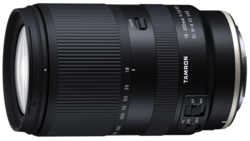
The most important point for anyone who does want a constant f/2.8 is that on most systems the first-party trinity is no longer the only, or the sensible, way to get one. On Sony E and L-mount, and increasingly on Nikon Z, third-party glass has collapsed the price. The Sigma 24-70mm f/2.8 DG DN II Art runs about $1,139 and the Tamron 28-75mm f/2.8 G2 about $899, both optically excellent and used professionally every day. On those mounts a full third-party f/2.8 set across wide, standard, and telephoto lands around $3,000 to $3,500, roughly what the first-party f/4 zooms cost and well under half the premium trinity.
Canon RF full frame is the real exception. So far, Canon has opened the RF mount to Sigma and Tamron mainly for APS-C autofocus lenses, so as of now there is no native full frame third-party autofocus f/2.8 zoom trinity for RF. An RF full frame shooter's cheaper routes are adapted EF-mount glass or the f/4 and prime options, not a third-party f/2.8 trinity. So the real financial choice, on most systems, is not $8,400 versus a bag of primes. It is $8,400 versus a third-party f/2.8 kit at a third of that, or a first-party f/4 kit, or primes, any of which is a fully professional answer. The $8,400 figure is what you pay for first-party branding and the last increment of optical and autofocus polish, not for the ability to work.
At the far end, if a specific job truly demands the fastest possible zoom, the Sony FE 28-70mm f/2 GM exists for those who need a full stop beyond f/2.8, but that is a deliberate tool for a narrow purpose, not a rite of passage.
One real exception cuts the other way, and it is worth stating plainly rather than hiding: on smaller sensors, the f/2.8 zoom is closer to a baseline than a luxury. A crop-sensor professional gets less background separation and less total light from any given aperture than a full frame shooter does, and how much less depends on the format. On APS-C, an f/2.8 zoom behaves roughly like an f/4 zoom on full frame for depth of field and image-level noise. On Micro Four Thirds it is closer to f/5.6. That does not make those lenses unprofessional; it means the full frame argument transfers imperfectly to smaller formats. For crop-sensor pros, especially in the Fujifilm and OM System worlds, the fast zoom is often the standard working lens, and the reasoning above, built on modern full frame latitude, applies to them only in weakened form.
What Actually Makes You a Professional
The confusion underneath the myth is a category error. Professional is a description of how you work and get paid, not of what is mounted to your camera. A client hires you for the images, the reliability, the way you handle a shoot, and the results you deliver. Nobody has ever been turned into a professional by a maximum aperture, and no one has been kept out of the field by the lack of one.
Buy the fast zoom when the work in front of you asks for it, when you are shooting moving people in poor light and cannot change lenses, and it will pay for itself. Buy it because a specific job needs it, not because you think it is the toll you pay to be taken seriously. The photographers who succeed are the ones who match their gear to their genre and put their money where the work actually is, which for most of them is not $8,000 of fast zooms bought before the first paying client.
If you are working out how to turn a serious skill into a living, the business and workflow decisions matter far more than the aperture on your zoom. Making Real Money: The Business of Commercial Photography and The Well-Rounded Photographer: 8 Instructors Teach 8 Genres of Photography are built around exactly that question, which is the one that actually determines whether you turn pro, long after the argument about lenses is settled.

Join the Fstoppers community for free
-
Post comments and join in the discussions
-
Browse the site ad-free
-
Share your work and get featured in the community
-
Compete in the photo contests for fun and prizes
5 Comments
All I thought I needed to turn pro was paying customers.
The same reasoning works for APSC with f2.8 primes built for apsc, like Sigma 18-50 or Tamron 17-70.
I would add that general need for faster lenses came with SLRs. SLR introduced light loss trough the prisma system and viewfinder. Much before auto-focus it became clear that manual-focusing using split-prism or other solution in viewfinder lack at low light and slow lens. Getting viewfinder brighter become important goal.
needed in my case