Most side-by-side tests of APS-C and full frame end the same way, with differences that barely show up in the photos people actually print or post. Far fewer people act on that result, because selling a full frame kit means walking away from money already spent and from a long-held idea of what a serious camera is supposed to be.
Rick Bebbington owns a Sony a7R V and a Sony FX3, and he's selling nearly all of it to move to Fujifilm. For close to eight years, Sony made sense. He shot photo and video for clients, and back then it was the strongest hybrid system available. His work has since swung toward personal photography with a defined point of view, and the a7R V hasn't taken a single picture since May. Bebbington calls out the reason he held on anyway: sunk cost bias, the urge to stick with something because of what you've already put into it. He also makes the point that cameras carry identity the way clothes or a car do, which goes a long way toward explaining why camera choices get so heated and feel so hard to reverse.
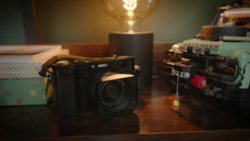
The evidence he lays out is simple. When he looked through his strongest images, most came from his Fujifilm X100VI, a compact with an APS-C sensor. Even so, every ad for something like the Sony a7C II sent him back to second-guessing, and he spent about two years arguing with himself. He walks through that argument as a back-and-forth between head and heart. Size and weight win easily. Resolution, dynamic range, and editing latitude keep pulling him the other way, and features like pre-capture, fast bursts, and top-tier autofocus are hard to give up on paper. Then he asks what he actually shoots now, which is ordinary scenes, traffic cones included, that sit perfectly still.
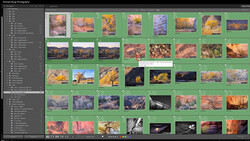
Fujifilm has been building cameras around that kind of shooting for a few years now. The Fujifilm X-T50 and Fujifilm X-M5 both arrived in 2024 with a physical film simulation dial on the top plate, and the Fujifilm X-E5 carried the idea forward in 2025. A dedicated dial for color and tone means the company treats the in-camera look as a reason to buy, alongside the spec sheet. The X100VI sat on backorder for months after its 2024 launch, which says plenty about what a lot of buyers want. You can test the principle against your own work in a few minutes. In Lightroom's Library module, the Library Filter's Metadata view lets you filter by camera, so you can compare your picks and highest-rated images across bodies. If one camera keeps producing your keepers while the other mostly sits on a shelf, you have data for a decision that usually gets made on feel or forum opinion. The same filter works for lenses, and it often shows that a single focal length accounts for most of your best frames.
Bebbington's attraction to Fujifilm comes down to how the cameras make him feel while shooting. His Sony bodies remind him of briefs and deadlines, while the Fujifilm bodies push him toward seeing and treating photography as an experience. He likes the dials, the lenses, and the handling. The recipes do the heavy lifting. He rarely keeps the straight-out-of-camera JPEGs, but loading a recipe lets him see roughly how a scene will look once it's edited, something he struggles to picture on his own. Seeing that in the moment makes him more likely to press the shutter. He's already picked up an X-E5, rented a Fujifilm X-H2S earlier in the year and now has one on order, and he's buying used where he can to reduce the loss that comes with any system switch. Low light is the one area that still needs some thought, he says. He also runs every camera he owns or considers through a set of three questions, and each question needs a pass for the camera to stay.
Bebbington's full reasoning for the switch is in the video above.




Join the Fstoppers community for free
-
Post comments and join in the discussions
-
Browse the site ad-free
-
Share your work and get featured in the community
-
Compete in the photo contests for fun and prizes
No comments yet